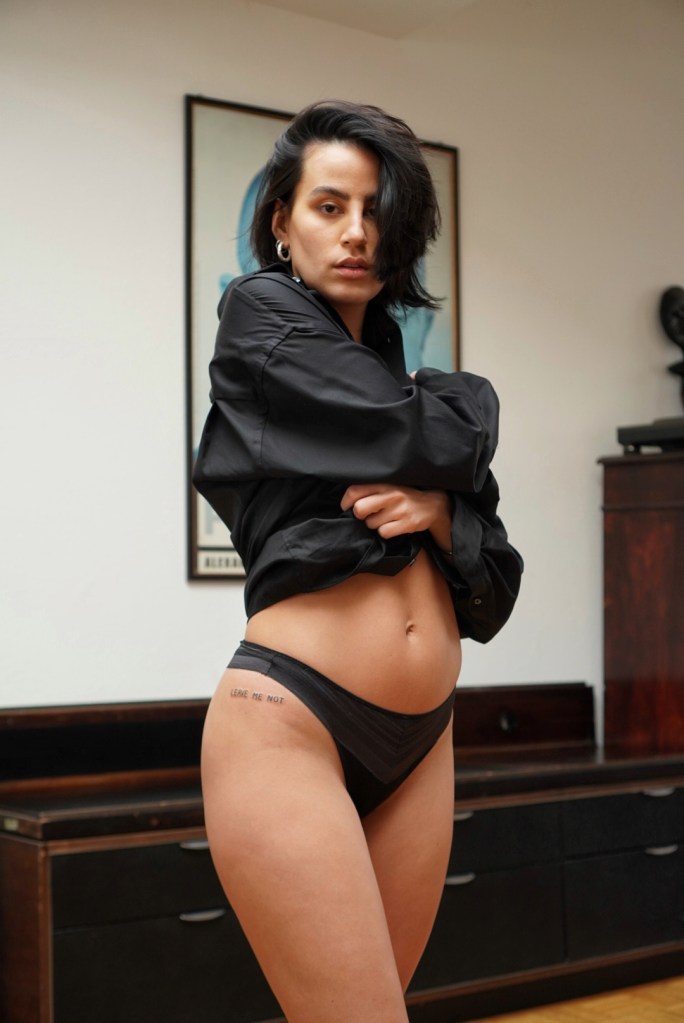
Aurora rushed into my Berlin flat, cradling her newborn in her arms, with a nanny following closely behind, laden with bags of baby supplies. She was the epitome of youthful energy, a mother in her twenties, radiating vitality. The living room was centered around a glass coffee table surrounded by a comfortable sofa and two large armchairs. The nanny settled on the sofa while Aurora sank into one of the armchairs.
“What’s your baby’s name?” I asked. “Tallulah,” she replied, shaking a bright red rattle in front of the baby. “I have two girls—Feelija and Tallulah.” “Those are beautiful names. May I ask what you do for a living?” “I do a lot of modeling and influencing, but my real passion is music—my instrument is my voice.” “Is it easy to balance modeling and influencing with motherhood?” “It works well with being a mom because it gives me time for my kids while still earning money. That’s the most important thing for me—giving all my heart to them. I’d never take a job that isn’t compatible with their needs. But if you want to be creative in this field and not just a typical blogger, it’s not that easy.”
“What do you appreciate most about yourself?” “That I’m arty and have a free mind.”
“Are you a happy person?” “Yeah,” she laughed. “I’m always happy! Even when I’m tired or the world feels upside down, I stay positive.”
“What’s the most important lesson life has taught you?” She sighed. “That love is everything. Even letting go…” She sighed. “I’m in a tough place right now with the daddy of my kids. We’re best friends, and I love him deeply, but we’re going through what I’d call a breakup. What I’m learning is that letting someone go doesn’t mean losing them. My kids have also taught me so much—probably more than I’ve taught them.” “Could you share an example?” “When I’m utterly exhausted, when I feel like I can’t go on, I just look at them,” her voice softening. “They remind me they need me, and that keeps me going. When I was younger, I’d let myself collapse if things got too hard—just lie down and let everything go. But now, when I look at my kids, I know I don’t have that option. I have to be there for them, always.” “That sounds tough.” “It is,” she admitted with a small, weary smile. “Very tough. But it’s also the most beautiful thing in life. My older girl has shown me the wild side of living.” She sighed. “She’s easygoing and uplifting, but also incredibly sensitive. She’s taught me to slow down and act differently than I normally would. I’m used to being active, always on the move, surrounded by people. With her, I’ve learned to pause, to stay home, to meet her where she is. It’s not natural for me, but somehow, I’ve grown to love it.”
“What is love?” “Love is a deep connection where you let go of your ego for someone else.”
“Is there something you feel is missing in your life?” “I’m happy with my kids and where I am.” She was rocking Tallulah, who grunted and hummed in her arms. “But my passion for music isn’t fulfilled. Also, I have a best friend, but I miss someone who’s made out of the same stone as I am.” “Do you feel your partner is from a different stone?” “In a way, yes. We understand each other, and we share the same sense of humor, but there’s a depth he won’t explore with me. I think he’s afraid to go there.” “Why do you think so?” She hesitated, her gaze drifting to the baby in her arms as Tallulah blew a tiny bubble of drool. “I can’t really say why—it’s more of a feeling. When I talk to him, I sense this wall, like he’s disengaged from the deeper parts of my mind. It’s not that he doesn’t care, but his curiosity stops at the surface. Conversations beyond fun or humor feel… unreachable.”
“Do you still find yourself interested in his mind?” “Of course. I’m always trying to reach through, to get behind the wall he’s built.” “Why do you think he built that wall?” “I think he’s scared. Scared to show what’s really going on inside him.” Tallulah interrupted the moment with hiccups, as if adding her own commentary to the conversation.
“What are the essentials of a relationship for you?” Aurora passed Tallulah to the nanny, taking a moment to gather her thoughts. “To feel love. To feel appreciated.” Tallulah whined, her little nose running. “Oh, bébé,” Aurora cooed, gently drying her daughter’s nose before glancing back at me with a polite, “Sorry.” Tallulah, pleased with her mother’s attention, giggled, and Aurora couldn’t help but smile back. “Yeah,” she continued. “To feel loved and appreciated. Not through gifts, but by being truly seen—seen for who I am. I want someone to be genuinely interested in what’s going on in my head.”
“Do you have a dream?” “Maybe to give myself enough self-worth that I don’t need validation from others. I don’t want to depend on anyone—it pulls me away from myself.” Tallulah’s hiccups continued. Aurora reached for her, taking her from the nanny. She lifted her shirt and guided the baby to her breast. A serene silence fell over the room as Tallulah latched on, the hiccups fading into contentment. If I were Rembrandt, I thought, this would be a scene worth painting.
“How do you know when to feed her?” “She starts putting her hand in her mouth. And my breasts give me signals too,’ she explained with a laugh.
“How often do you have sex?” “Not often. It’s just who I am. I don’t need sex unless there’s a really deep emotional connection. Without that, it feels… dirty. So, it’s been a long time.”
“What’s your greatest fear?” “To be forgotten.” “Do you mean after your death?” “No, while I’m still alive.” She sighed, cradling Tallulah closer. “Take the daddy of my girls, for example. My fear is that if I let him go, he’ll forget about me.”
“And how would you like to be remembered?” “As feelings. I’d love to leave a feeling inside others. When they think of me, I don’t want them to see something; I want them to feel something.” “What kind of something?” She laughed. “Something good!” “What’s the hardest decision you’ve ever made?” “To stop caring about what others wanted me to do. I was in ballet school with Sasha (our mutual friend) — that’s where we met. I was very good at dancing, and everyone kept telling me, ‘Oh, you’re so good, it’s perfect for you!’ But it was never what I really wanted. I kept doing it for a long time, just to please others.” She paused. “Quitting was the hardest decision I’ve ever made.” Aurora stopped breastfeeding, and Tallulah let out a brief cry of complaint, her tiny voice filled with protest.
“Describe yourself in a couple of words.” “Loving, caring, wild, and authentic.” “What’s wild about you?” She laughed, her eyes sparkling with mischief. “What exactly do you want to know about it?” “What comes to your mind?” “I go where others don’t go.“ “For example?” She stood up, rocking Tallulah. “While others went to high school, then university, I got pregnant and started earning my own money. I was 21.”
“What made you decide to get pregnant?” “I wasn’t afraid of it. My partner wanted to wait, saying, ‘Let’s wait till we’re older, wiser.’ But for me, it was like, ‘No, I want to do it now. Why wait? It’s life!’ And life also comes with pain, you know? When I gave birth, I didn’t take painkillers. I never judge people who do, but for me, I couldn’t imagine going through it without feeling everything.” Tallulah sneezed, the sound drawing laughter from both Aurora and the nanny. “Bless you!” the nanny said.
“You said earlier that you’re going through a breakup. What do you mean by ‘going’?” “It’s been over three years now. It’s a mix of letting go and taking him back, being scared to lose him. Only now am I starting to understand that letting go doesn’t mean losing him. We’re not lovers anymore, but we’re growing into something else—friends, teammates, a family.”
“Will you still be a team if you have a new lover?” “Well, there are always two people in this constellation—it’s not just my choice. For me, another man wouldn’t change the team we have, but it’s also up to him. I know it’ll be hard for him because he’s very jealous and possessive.”
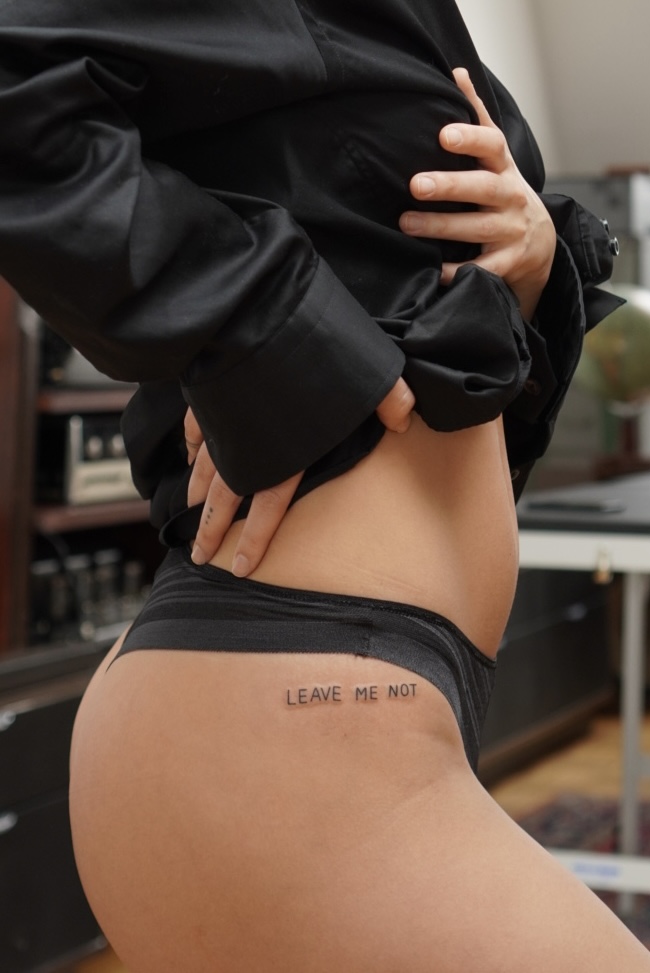
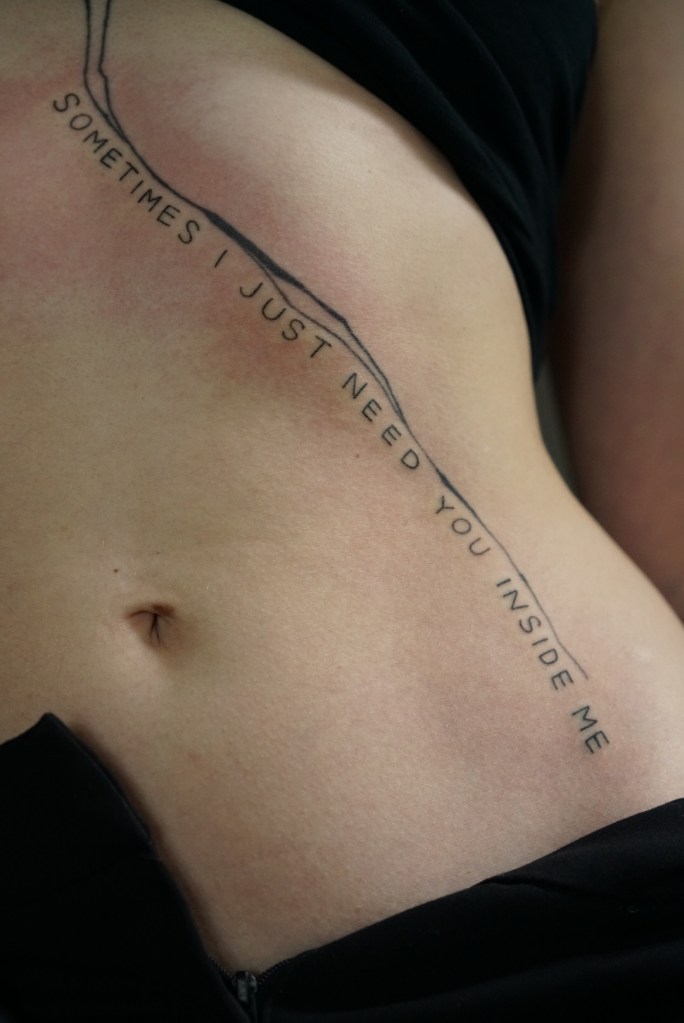
If I recall correctly, it was the first interview I conducted in a tattoo studio. It took place in Berlin at the end of August 2023. She and I settled onto a black sofa tucked into the far corner of the studio. The air buzzed with the hum of tattoo machines, loud pop music, and the murmur of voices—an energetic backdrop we had to tune out to focus on our conversation.
“You mentioned you were at the office earlier today. What were you doing there?” I asked. “Sorry, what?” she said, leaning closer. “Did you work before coming here?” I repeated, raising my voice slightly. “Ah, yes.” “And what’s your job?” “I work at…” She paused, then continued, but I can’t disclose her position—it was something she asked me to keep private. Let’s just say, to me, it felt like she might as well have said, “I’m Agent 007.” Naturally, I was eager to know more, so the start of our interview focused entirely on that.
Is there something that keeps you awake at night? Thoughts, she said with a chuckle. I imagine meeting someone and spending time together—thinking about how fun it would be to do this or that, to go here or there. Those thoughts fill me with excitement, and I just can’t fall asleep.
What excites you the most in life? Spending time with friends, losing track of time and place, laughing—just being myself in the moment, sharing thoughts with people I care about. And moving my body, feeling its energy and strength. I’ve been playing tennis since I was twelve, and when I hit a perfect kick serve, I feel pure excitement and joy. Especially in doubles, when I’m working with a partner toward a win—it’s such a thrilling connection.
What is your greatest fear? I have a book where I answer questions every evening. I’ve been doing this for over seven years, and once, when I answered the very question you just asked, I wrote, ‘Losing someone I love.’ For example, last year, I got to know someone, and we had an intense connection. Then, suddenly, from one day to the next, that person was gone. I had that fear when we first met—what if I lost this person? Sorry, do you mean he passed away or broke up with you? Broke up. So you faced your greatest fear? Yeah. Her eyes filled with tears. And how did it feel? It hurt deeply.
What makes this fear so great? Because when it happens, it feels like a big part of my life is taken away. For me, it’s so important to have people around me with whom I can build deep connections. Her voice trembled, and her lips quivered as tears streamed down her face. I’m really trying to find that, but it’s so difficult. Most people are already so busy with their lives, their friends, their partners—they don’t have the time or energy to connect deeply with someone new. I can’t be satisfied with just meeting a friend once a week or having the occasional small talk over a messenger. That’s not enough for me. I need to tell someone about the person I met on a train who asked if I thought their outfit looked good. Or to share the little things, like what crosses my mind when I’m in a supermarket. I miss having someone by my side for those moments. I miss listening to music together, reading poetry, just being with someone who isn’t caught up in the rush of daily life. Sometimes I think, okay, I can do these things alone, but… sometimes I just need people. Her voice broke, and she was overwhelmed with sobs.
I stood up and brought her a paper towel, staying silent as she collected herself. After a moment, she continued. I don’t know if I’m impatient. Maybe those people are out there somewhere. And it doesn’t have to be sexual or romantic. I just want to explore the different kinds of connections I can have. For example, I have friends I want to be physically close to—hugging, touching—but without any sexual element. That’s hard because most people have rigid ideas about friendship and romance. But I think there’s so much more in between.
If you could sum it up, what do you miss the most right now? The physical connection, she said quietly. Even though I don’t have consistent emotional connections with friends, I do experience them occasionally. But physical closeness… I miss that the most.
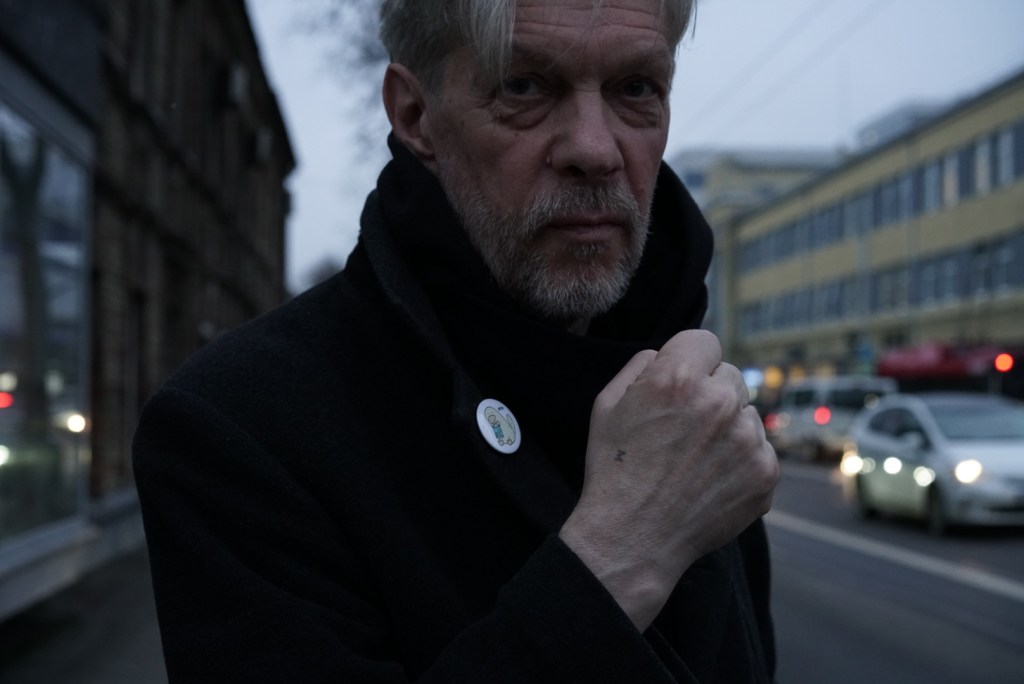
“What is freedom?” I asked him as we settled at a small table in a coffee shop in Vilnius, just across the street from his temporary residence. “Freedom is an experience—something you must strive for, perhaps even earn. It comes at a price. The extent and intensity of your freedom are directly tied to the price you’re willing to pay.” He replied, his gaze gripping mine.
“Do I understand correctly that the price you paid was life in exile?” “Yes, exactly. And that decision was critical for me. Two things pushed me to emigrate: first, when my close friends began to be imprisoned, I realized the shells were landing very close. Second, and even more importantly, I knew I couldn’t stay silent. If I spoke out, they would come for me. And so, I chose freedom—freedom of speech, the freedom to have a voice, the right to be myself. This was essential for me; I couldn’t imagine my life without it. My experience of cultural dissidence and the alternative cultural scene I was part of for nearly two decades in Minsk shaped me profoundly, perhaps even decisively.”
“How did it happen that your friends were detained, but you were not?” “I don’t know. Just as I don’t know why they were imprisoned. It seems to me there was no logic to it, no clear sequence of events. What is the logic of a meat grinder? It’s a machine that grinds meat into mince—blind mechanics. One of the Soviet dissidents once said something profound: ‘I have aesthetic disagreements with the Soviet government.’ I feel exactly the same—a deep, visceral aesthetic disagreement with the regime in Belarus. I couldn’t shut up. Silence disgusted me; it was impossible not to speak. And at that breaking point, I knew the decision had to be made—I had to leave. In doing so, I took with me the one thing I couldn’t live without: the chance to remain internally free.”
“And what do you think? Is there freedom of speech here in Vilnius? Or is it just that what you want to talk about doesn’t pose a threat to the authorities here?” “I don’t think in terms of threats here at all. In this regard, I feel absolutely safe. Can I speak publicly about what I consider important and necessary? Yes, I can. The difference is that no one here really needs it. While the people who might possibly listen to me, they probably don’t hear me at all.”
“But can you also speak freely about what is happening in politics here?” “I’m not interested in that right now. This isn’t my politics. I don’t have the right to vote or the status of someone involved in Lithuanian politics, so I don’t feel qualified to judge it—especially since I don’t understand much about it. Of course, I’m deeply grateful to this country for accepting me. What they’re doing to support Belarusian political refugees is invaluable and important. As for everything else, I still need time to experience it, to live it. For now, I’m not an insider. What can I possibly say about the current state of affairs here when I’m essentially a tourist? Just a set of banalities.”
“It turns out that when we emigrate, we exchange the status of insider for outsider…” He cut me off mid-sentence. “It’s a bit more complex than that. When a new wave of emigration begins, especially in a country undergoing crisis, it’s not just individuals leaving—it’s an active, explosive mass exodus. And who leaves? It’s always the same types of people: the dissenters, the inconvenient ones, those who challenge and compete—conflicting structures, divisions, personalities. Conformists and adventurers leave. Prophets and madmen, poets and rock men, opportunists and swindlers—they all leave. This whole chaotic wave, with all its contradictions, which in a stable country might coexist and even drive societal progress, gets pushed beyond the geographical borders. And what happens next? Instead of building relationships with the host country, we continue our old battles. We settle scores, divide resources, measure influence, seek alliances or stir disagreements. In essence, we export our internal struggles abroad. Emigration doesn’t resolve these contradictions; it simply relocates them. And that leads to a redistribution of limited resources—resources that, in emigration, become even scarcer. I’m talking about symbolic influence and public status. Maybe someone’s financial situation improves, but socially, we lose everything. We become a performance, not for the country we’ve arrived in, but for ourselves—a closed club, interesting only to its own members. Who in Lithuania cares about Maxim Zhbankov? No one. In reality, we’re only relevant to a specific audience: our fellow Belarusians who, like us, are caught in this strange cycle of exile and conditional significance.”
“Don’t you think it’s a matter of language? After all, we could discuss internal struggles with Lithuanians too.” “Maybe. But it’s hard for me to predict how Lithuanians would respond, because I’m very unfamiliar with their perspective. On a broad conceptual level, imagine this: a spaceship lands on Gediminas Avenue and three hundred Martians step out, saying, ‘Okay, we’re going to live here now.’ We’d probably say, ‘Listen, you’re kind of strange.’ And they’d reply, ‘Yes, we are strange.’ We’d add, ‘But we don’t understand your language,’ and they’d say, ‘We don’t understand yours either, but we’re staying.’ To me, Belarusian emigration to Lithuania feels a lot like that. We’re the aliens—people with different logic, different vocabulary. Take the concept of ‘tutejshy’, what is it?” “Local.” “But no, ‘tutejshy’ is a conformist opportunist. You approached it through grammar, and I’m explaining it through context. What I mean, when unfamiliar people arrive—strangers—you have to figure out how to negotiate with them, how to build relationships. That takes effort. It’s work, it’s financial strain, it requires education and resources. And the host side already has its own problems, its own budget constraints. So, we’re perceived as a challenge—one that’s not entirely clear how to handle. On our side, despite all the respect and gratitude we feel toward the host country, we know we’ll probably never fully become one of them. We might become understandable, we might become partners or even friends—but that’s not the same thing.”
“Can you tell me about your personal internal struggle today? Who is it between, and why?” “I suppose it’s a conflict between creative ambitions and the ability to realize them. Sometimes it feels like I can do anything; other times, it feels like I can do nothing. There are moments when I believe my work has meaning and significance, and others when it seems like no one gives a shit. In the first case, I find a kind of justification for my presence here. In the second, I feel completely stripped of it. It’s like a pendulum—constantly swinging, no matter what I do. Each project begins with quiet despair, moves into complete hopelessness and internal anxiety, then anger and excitement take over. Something eventually clicks, and there’s a result. But once it’s done, the cycle starts all over again. It’s an existence in sine wave mode, where you’re always managing your emotions, convincing yourself, persuading yourself, healing yourself. On one side, you make yourself sick; on the other, you’re your own doctor. When we talk about the loneliness of an emigrant, this is what it means—you’re your own scriptwriter, director, healer, and poisoner. It’s actually a powerful position because there’s no one else to blame. And it’s rewarding, too, because every victory is fully yours. Every result, every achievement, every success belongs to you, even if it lasts only as long as the project itself. And yes, in six months, you might have to search for funding all over again, with no guarantees that you’ll find it.”
“And what was different for you in Belarus?” “In Belarus before 2020?” “Yes.” “There was a clear division of functions. I had my own Belarusian reality, one that existed apart from the official Belarus, where there was no place for the president, no concern for who the minister of culture was, or how many films “Belarusfilm” produced. I created an inner world populated by crazy musicians, eccentric writers, alcoholic poets, and audacious lecturers. The authorities didn’t interfere with this reality because it posed no threat to them. We had an unspoken agreement: the strange guys like us wouldn’t seek power, and the authorities wouldn’t crush us. With this division, both sides could coexist. In this underground world, we were internally free. But in 2020, everything broke. Philosophers were imprisoned, artists were killed, bankers entered the political arena. That delicate balance—our fragile freedom and tolerated lack of freedom—collapsed. It felt like a complete reset. At that moment, I believed we were leaving the country to build a new Belarus abroad. But what actually happened? We carried our same diseases with us. Instead of healing them, we preserved them. Now, we’re caretakers of those old dysfunctions. We remain ideologically fractured, incapable of consensus, replacing dialogue with propaganda. I’m still waiting for the seeds of a new Belarus to grow, but I see no signs of it yet. Maybe I’m waiting too little, doing too little. Maybe I’m doing the wrong thing? Our conversation turns somehow gloomy.”
I couldn’t bring myself to ask any questions; I was too absorbed in silently empathizing with what Maxim was saying. After a brief pause, he began speaking again. “I have a friend who moved here a year after me. He wrote a text, in fragmented paragraphs, the kind I like to write. Each paragraph ended with the same refrain: ‘I’ve been here for two weeks, and I don’t understand what I’m doing here.’ ‘I’ve been here for two months, and I don’t understand what I’m doing here.’ ‘I’ve been here for two years, and I don’t understand what I’m doing here.’ It’s a beautiful poetic form, but the essence remains the same: there’s no overarching narrative behind our actions. And who, exactly, is supposed to provide us with that story? Maybe it’s for the best that no one does. Perhaps we’re learning to be alone, learning to be Europeans—if being European means being alone, creative, and, in the end, self-sufficient. What used to sustain us—the sense of solidarity, the alternative brotherhood that flourished in the underground resistance to the regime—has changed. It’s harder to feel like part of a unified movement when I’m in Vilnius, my comrade is in Warsaw, and another is in Lisbon. We’ve been stripped of a stable locus. The mosaic of our shared experience has shattered, and the pieces don’t form a coherent puzzle anymore. Instead, each of us, in our separate places, works within our own context. We’re learning to be not just Belarusians, but Lithuanian Belarusians, Portuguese Belarusians. By joining someone else’s narrative, we begin to live by new rules, adapting to different realities. And in doing so, we ourselves become as fragmented and ambiguous as the contexts we inhabit.”
“When you supervised my thesis, you told me about movement within the system according to a personal plan.” “Yes.” “Doesn’t this apply to the fact that when we leave and find ourselves in a different context, that this does not mean that movement according to a personal plan becomes impossible?” “Of course. It’s just that in the situation of emigration, the emphasis of political confrontation is removed for most people. That is, you go beyond the aggressive political order, where the political agenda becomes less significant for you because it affects you personally to a lesser extent. This changes your personal design, linking it not with the search for general freedom, but with the search for personal self-actualization, some kind of individual creative movement.”
“Do you feel self-actualized?” “I think I could be more. I think I could shine brighter. But it’s not just about what I want—it’s also about how ready the environment is to embrace me.”
“Could you tell me about your relationship with Dasha, your wife?” He was silent. “What does it look like?” He chuckled. “And what is it supposed to look like?” “I don’t know. I think it’s different for everyone.” “I just don’t understand what it’s supposed to look like.” “Besides the fact that she’s your wife, what else could you say about her?” “Well, first of all, she’s a friend and a comrade—someone close to me, the closest person. I realize now that this is exactly the kind of relationship I’ve been searching for all my life but hadn’t been lucky enough to find until her. When I talk about how the alternative cultural environment shaped me, it applies to our relationship too. Dasha came to study with me in this informal educational project I was running. If it weren’t for that, none of this would have happened. That’s why I think of it as a wonderful, amazing result. We don’t even agree with each other in a conventional way—it’s always beautiful, always constructive. With her, I feel like an entirely different person. And what’s more, I like this new version of myself far more than the one before. It’s completely natural, and deeply important, that she’s by my side. I never imagined that with all my self-sufficient loneliness, I could feel the acute ache of missing someone if I don’t see them for 15 minutes. It’s inexplicable to me—and yet, it’s wonderfully so.” “Sounds like love.” “Yes, of course. And like any profound feeling, it’s multifaceted. There’s room for anxiety, sometimes confusion, and even concern—like the fact that there’s a twenty-year age gap between us. Realistically, I know I’ll likely die before she does. I’m not counting the years, just acknowledging the reality of the situation. And Edith Piaf is singing for us,” he added, laughing. “Sometimes reality throws up a soundtrack so on-the-nose it would feel absurdly clichéd in a movie.”
“Returning to the idea of a personal plan, as far as I know, your cultural heroes, in addition to Belarusian ones, have often been, and perhaps still are, figures from Western culture. What I mean is that there’s a context that can feel like mere decoration, allowing you to live in a world where it doesn’t matter from which speakers Edith Piaf is singing.” “Of course, yes. My story in this regard is quite telling. When we left Belarus, like many others, we took just two small suitcases because we didn’t know where we were going or how long we’d be gone. I left my entire music collection behind—a collection I’d been building for 20 years. I never counted how many discs I had, but it was my life’s work in a way, and all of it stayed there. When we arrived here, and it became clear we’d be staying for more than just a few weeks, I began buying records again. Dasha laughed at me, saying, ‘What, didn’t you have enough of those already?’ But I really missed them. I started with early Elton John, then David Bowie, then Tom Waits. I wasn’t just buying these records to own them. For me, it was about reassembling the club—a place where all my cultural heroes are near, lying in a pile on the table. There’s this warmth they bring, this feeling of companionship. You can touch it at any moment, and you’re no longer alone. And yes, this ties to my Belarusianness, because, God forgive me, my Belarusianness isn’t just about speaking Belarusian. It’s a place of assembly—a way of gathering things that resonate deeply with you. Bukowski and Kerouac, Miles Davis and John Coltrane—they’re all part of me, all embedded in me in some way. They’ve shaped me, and they’re inseparable from my sense of self, my sense of Belarusianness.”
“Why Belarusianness? Isn’t part of the magic of being human that you can meet someone from Argentina who loves Davis and Coltrane just like you, and suddenly realize you see the world through almost the same eyes?” “Yes, of course. But I’m talking about the context of origin. The things that happened to someone in Buenos Aires or San Francisco happened to me in Minsk. And then, when a match occurs”—he clapped his hands—”it creates a spark. Like when I was in Stockholm, talking to one of the leaders of the Swedish Union of Journalists. At some meeting, some banquet, after the second glass, I said, ‘Ola Håkansson.’ And he immediately replied, ‘Oh, Ola & the Janglers, ’69,’ and clapped his hands just like this. Suddenly, there was a connection. Do you know what it was through? A match—two people coming from entirely different places but meeting at a single shared point, a specific record by a specific musician of a specific era. That’s why, for me, Belarusianness is an open project. It’s about flexibility, the ability to actively appropriate and reinterpret, to make anything your own. But no matter where we live, we will always wear Belarusian glasses.” “What kind of glasses are these?” “They’re the lens of experience—of the Soviet cultural province, of being from a border nation, of nurturing inner freedom. They’re the glasses of learning to escape the empire—a process that, as practice shows, never really ends.”
“And how do you imagine the endpoint of this escape?” “I almost want to say something stupid, like ‘the Bahamas,'” he laughed, “but I think it’s more about time passing, about letting the pain subside. Right now, it still hurts—this sense of inferiority, this dependence, this humiliating subordination to the empire. But let’s leave it here; I’ve talked enough for one day.”
“What moment from the past do you remember as the most beautiful?” I asked her. “There are so many. My life is made up of beautiful moments. I think it’s my specialty—being a profoundly happy person. Even in times of difficulty, devastation, or pain, I can find beauty. When the puzzle pieces fall into place over time, even the hardest moments reveal their meaning and their beauty. In fact, I often find more beauty in those moments than in ones that others might immediately see as joyful.” Alina pulled the bubble gum from her mouth, rolled it into a ball, and set it on the black desk between us.
“Can you give an example of a time that was especially difficult, but later became beautiful to you?” “I had a complicated relationship with my father. We only found peace and unity after his death. While he was alive, I didn’t keep in touch with him. When I heard of his passing, it shook me to my core. The pain, the shock, the regret of not reaching out—it was overwhelming. For ten days, I couldn’t get off the sofa where I’d collapsed when I heard the news. But then, the most extraordinary thing happened: I felt a deep sense of connection with him, almost like meeting him for the first time. I began to turn my attention in his direction, even though I had long closed my eyes to the past—a form of escapism, when you have both parents but choose not to see one. When I finally decided to face him and truly get to know him, I traveled to Petersburg, where he is buried. I crossed the city on foot, walking from the Gulf of Finland to the cemetery. The weather was incredible: the sun was shining, with dramatic cumulus clouds building, hints of thunderstorms, and the rising heat shimmering off the asphalt. Along the way I found some soap bubbles. I was smiling, realizing I was going to meet my dad. And when I came to the cemetery, I saw my grandmother, my father’s mother, for the first time. It turned out that my grandfather was also buried there. I sat there for hours, talking to them about all the things we never had the chance to share in life. That day holds so much beauty for me. It was a moment of reconciliation, a sense of wholeness I didn’t think was possible.” She referred to the city specifically as Petersburg—not by its familiar nickname, Piter, as I would have called it. It added a layer of formality, even reverence, to her story, much like the city itself: poised, dramatic, and timeless. Her voice was calmly alive, “her eyes made of the bluest ice,” as Vasiliev from the Piter band “Spleen” once sang.
“Why didn’t you stay in touch with him while he was alive?” “He had a difficult personality. But, you know, I later realized it wasn’t really my relationship with him that was the problem—it was my parents’ relationship. That shaped everything. My mother’s impressions of him deeply influenced me. Like many children, I took her side, clung to it stubbornly. When my father reached out to me, we had a conflict, and I held my ground. Looking back, I see how unfair it was, but at the time, it felt like the right thing. When I visited Petersburg once or twice a year, I often thought about contacting him. But there was always a reason not to—excuses that felt justified in the moment. And yet, when the day came, I realized it all unfolded the way it needed to. Now, I see my relationship with my dad as beautiful. It may have taken time, but it’s whole.”
“Tell me in more detail—what kind of relationship is this with a dead person?” “It’s a real relationship. I believe the connection between us isn’t just blood or memory—it’s something deeper, something I can revive. Let me give you an example. You know Sadhguru, the famous teacher? He has millions of followers, and at the Isha Center, there are nine million volunteers working all over the world. Do you think these volunteers, many of whom have never met him in person, have a relationship with Sadhguru?” “They may feel related to him, but it’s not an interrelation.” “I see it differently. I believe it’s possible to have an interrelation with someone even after losing contact with them.” “Only in your imagination.” “Yes, if you expect feedback. But it doesn’t have to rely on that. Interrelations can exist in the form of a monologue. It can evolve, change color, deepen over time. Think about an epistolary exchange—you can write letters to someone for years without receiving a single reply, yet the relationship remains.”
“You said you found unity and peace with your father after his death. What does that mean? Have you accepted who he was and let go of any resentment?” “Many realizations came to me gradually. It was like an engine was set in motion, allowing me to focus on the painful moments of my life and truly understand my relationship with my father. I explored this in different ways—classical psychology, even through the game ‘Leela’. But the most profound insights came about five years ago. I realized that my father was who he was, and that only the present moment exists. I’m not talking about those philosophical clichés you find in books nowadays. I mean truly living in the present, because the now is all we have. Nothing else exists. The world is made of inputs that only exist in this moment. Even if God himself intervened in our conversation, he wouldn’t do so now, but in the next moment. Do you understand?” My face must have betrayed my lack of comprehension, because she continued. “Let me give you an example. What moment are we in right now?” “Now.” “And now?” “Also now.” “And can this moment be repeated at any other time in your life?” “No.” “That’s exactly it. This happens to everyone and in everything. Realizing that my father is gone helped me grasp this deeply: everything that has happened is already over, and all I have is this moment, right now. When we focus on what influenced us from the outside, we shift responsibility away from ourselves. Instead, we should turn inward. So when I say I found unity with my father, what I mean is that I first found unity with myself. Understanding my relationship with my dad was really about understanding myself. When something happens, I ask myself one question: ‘What am I feeling?’ Because we’re all part of a single whole. Everything that happens to you personally is happening to the world at the same moment.”
“But what happens to me is different from what happens to you.” “Of course. We perceive the world through our own experiences, so our realities differ. But we share the same present moment. If a volcano is erupting somewhere right now, it erupts the same for you as it does for me. You know, I’ve recently fallen in love with the word responsibility. I rediscovered it during a trip to India. You can see responsibility as something heavy, a burden placed on your shoulders—by someone else or even yourself. Or, you can see it as the ability to respond. That shift in perspective changes everything. Take the volcano. You can say, ‘A volcano is erupting out there, and it has nothing to do with me,’ or you can say, ‘I am responsible for the volcano erupting.’ You might wonder—how can you possibly be responsible for a volcano? But it’s not about guilt or obligation; it’s about your ability to respond to what’s happening. Consciously or unconsciously, we’re always responding—or not responding. For instance, if someone falls on the road, you might say, ‘I’m not responsible for that.’ But the question isn’t about blame or duty—it’s about how you choose to respond. Do you help them? Do you walk past? Responsibility means recognizing that you are connected to everything and that your actions—or inactions—matter. We are responsible for everything, even a volcanic eruption.” “That reminds me of a song by Auktyon (another great Piter band): ‘I am in charge of everything, and everything is because of me.’” “Those are very wise words.”
“What adjectives would you use to describe yourself?” “Must I use only adjectives?” She laughed, a deep, ringing sound that resonated with a maturity I remembered from my mother’s office. It was the kind of laughter I often overheard when her friends gathered to discuss things beyond my understanding. Pure coincidence or not, Alina’s answer was, “Ringing.” Then, as if changing the subject, she turned her head toward the bookshelf. At its center stood a large red book with gold lettering: Yoga. “Yoga,” she said. “Do you practice?” “Yes,” I replied. “What kind of yoga do you practice?” “Ashtanga Vinyasa.”
“What does it mean to be a profoundly happy person?” “A combination of luck, circumstances, clarity of mind, and the ability to see the world’s predisposition toward you.” “Explain that last part.” “You know, people who blame fate for their unhappiness rarely stop to ask themselves: Who really made me unhappy? Fate? To me, happiness is rooted in the understanding that everything in life exists to help you discover your purpose. That doesn’t mean everything is predetermined, but I believe all events in life, no matter how random or challenging they seem, lead to some meaningful result.” “What do you mean by result?” “I believe every soul has a task, and the entire universe works to guide us toward fulfilling it.” “Can someone fail at their task?” “Of course. That’s why we have thousands of lives. I believe in reincarnation.” “And what is the task of your soul?” “I’m in search.” “In search of the task?” “Not the task itself. I already know I have a desire to help people and an ability to inspire and guide them. I feel that through this, I am fulfilling the purpose that was set before me. Or at least, I hope I am.”
“Aren’t you afraid that you might send someone in the wrong direction?” “There is no such thing as ‘wrong.’ If someone ends up in front of me, it means they needed to. What kind of portrait of me do you have so far?” “I can only say that it’s still taking shape.”
“It’s interesting, that the words ‘Future’ and ‘Past’ are crossed out on your face, but ‘Here and Now’ isn’t. People are drawn to each other for a reason.” “I don’t know if it’s for a reason or not, but I’ve noticed that after meeting someone once, there’s often a high chance of seeing them again—sometimes years later.” “Or maybe we meet tomorrow?!” I wasn’t sure if it was a question. While I was deciding how to respond, she asked, “Why did you decide to write to me?” “I was curious about what you’d share with me. Instagram suggested your page. I clicked, looked through your stories, found them intriguing, and wrote to you.” “Do you believe in coincidences?” “Yes.” “Okay, fair enough. Why not.” “So you don’t?” “I don’t. Every meeting, no matter how random it seems, can significantly influence your life. You might just not realize it in the moment.”
“Are you an open person?” “Yes. Otherwise, I wouldn’t be sitting here in the apartment of a stranger who found me on Instagram.”
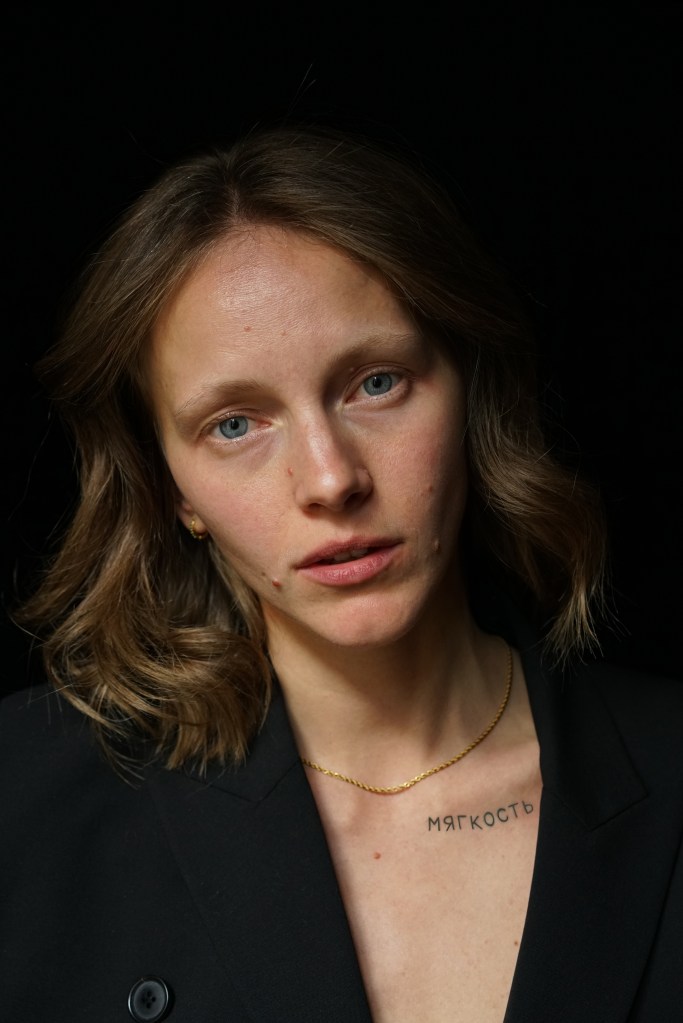
“What would you like from life?” “There is a direction in psychology called ‘systemic constellations,’ previously known as ‘family constellations.’ It’s a relatively new method developed by Hellinger. The idea is that we are all part of systems—our family system, society, culture, state, and even the universe. Each of us influences others in the system and plays a role, which creates a kind of ‘constellation.’ Hellinger’s method allows people to see, in real 3D, what is happening within their family system. This typically takes place in group therapy, with around 20 participants and a therapist guiding the session. When there’s an imbalance in the system—say, when a child unconsciously steps into the role of a parent—it creates dysfunction. I’ve attended these sessions frequently. And answering your question, at my most recent one, I articulated my request: I wanted wealth and independence. Through the process, I realized I had completely internalized the behavior patterns of my family. When my father once went bankrupt, I unconsciously aligned with my mother. In doing so, I adopted a dynamic where one person is the victim, another the aggressor, and myself the savior. This isn’t about who is good or bad. In family conflicts, a child unconsciously chooses whom to ‘save’—to whom they’ll devote their energy or even their life. This choice is driven by survival instincts: who seems to need me more, or who offers me a better chance of safety. As children, we don’t recognize our own limits or strength; we simply act on what feels necessary. These patterns form very early in life and often shape our behavior for years, even decades. That’s why it’s so important to ask yourself: Where does the goal that drives me come from? When you understand its origins, you gain the ability to choose how to approach it. For me, the realization gave me an option: to live through my experiences with softness instead of punishing myself with harsh, rigid goals that strike at my most vulnerable places. Understanding my patterns means I no longer have to chase success or independence in ways that recreate old pain. Instead, I can move forward softly.”
The tattoo, translated from Russian, reads: Softness
“Who or what inspires you?” I asked. “Traveling. I’m the happiest when I’m not at home. Okay, that doesn’t sound great,” she laughed. “But I love seeing new things. Where I live, 40 minutes away from Hamburg, it’s just so boring, and people aren’t as open as they are in big cities. When I have my gap year, I’ll go to New York. I’ve been there before with my best friend, and it made me so happy.” Her voice was calm and soft.
“What’s the first thing you do when visiting a new city?” “I try to see what the people are like.” “And what are people like here in Vienna?” “Yesterday, I went to ‘Zum Schwarzen Kameel’, and I noticed people there had their noses up, not even glancing at me, as if they were better than me. The way they spoke to the waitress stood out too. For example, a man accidentally knocked a cup off the table, and he didn’t even look down or say anything to the waitress.”
“And what is it about New York that attracts you so much?” “I went to a football game—it’s not really my thing—but the people were so friendly. They just talked to me, genuinely wanting to get to know me. And New York itself? I love the vibe of it, you know?”
“Is there a question that’s been bothering you recently?” She answered immediately, “What I want to do with my life. I’ve been struggling to figure that out for a lo-o-ong time. I should’ve finished school two years ago, but I couldn’t do that because of my mental health for such a long time. Just a year ago, I started going to school again, and it was really hard for me. But I think I’m starting to find myself—though I still don’t know what my purpose is. I’ve always felt like I’m just alive but not really living, you know? I want to find out what will make me feel like I’m truly living, so I can finally be happy.”
“Would it be fair to say that you believe it’s possible to always be happy?” “I think it’s 99% possible. I remember traveling for the first time after Covid. I went to Spain, to the beach, and in that moment, I felt so happy. But then I had to go back home, and everything felt shitty again.”
“What is it about your home that feels shitty?” “I don’t even know—that’s the problem,” she said, shaking her head. “I feel like I should be okay, given everything I’ve overcome. I always thought that once I eventually got through it all, I’d be happy.”
“What have you overcome?” “I struggled a lot with socializing and had so much anxiety. For a long time, every day was spent in a mental clinic. I had to do one big thing a day and earn a reward for it. My ‘big things’ were simple things, like going to a cafeteria and ordering something. Because I couldn’t do things like that.” “What was difficult about it?” “I don’t know—I’d just panic. But I did it because I really wanted to. Another hard thing for me was learning to say ‘no’ to someone. That was actually the hardest. And now, when I see where I am, how easy those things are for me, I’m proud of myself. But for some reason, coming to you caused me a lot of anxiety. Still, I’m proud that I came.”
“What exactly about coming to me caused your anxiety?” “The unknown. It’s very scary for me. I’ve been in therapy since I was four because something really bad happened to me when I was very young. I think that’s what destroyed my trust in other people.”
“Would you mind sharing what happened?” “I was…” she began, but her voice faltered, and nothing came out. She took a deep breath. “I’m sorry. I had to stay at… When my mum and dad needed to go somewhere, they’d leave me with our relatives. And my grandma’s boyfriend… sexually assaulted me. At the time, I didn’t understand what was happening, but it still affects me. He also threatened me, saying, ‘If you tell anyone, I’ll hurt your mum.’ And my mum is my favorite person in the world. I always felt super safe with her. But without her, I’d panic. Even being in a room without her was unbearable.”
“Did you do homeschooling?” “My mum always wanted to, but in Germany, it’s not allowed. I think it’s so shitty because I would’ve been so much happier if I didn’t have to go to school. In total, I only spent about five years in school, and even then, not consecutively—I had months or even years of breaks. I was kind of okay with the kids, but the teachers… when they raised their voices, I’d start panicking, even if it wasn’t directed at me. I still feel it now with people older than me. Even when they’re being nice, it makes me anxious.”
“How does your panic attack feel?” “My heart races, like there’s this huge weight pressing on me. And I always feel like there’s a belt around me, tightening so much I can’t breathe. I remember when I was twelve, my mum drove me to school, and I told her, ‘I can’t go there anymore.’ Her voice cracked, and she started crying. “I said, ’I can either go like… not being here anymore, or you just stop taking me there.’ I’m sorry.” “There’s no need to apologize.” “That was the moment she decided to put me in a clinic.” “Did you like it there?” “As far as I remember, yeah. But those first few weeks, I just sat there motionless while the other kids played with each other. I wouldn’t move until my mum came to take me out.” “What has changed since then?” “I don’t know exactly. Somehow, I became more confident. I got real friends, and they’ve helped me a lot. When I’m out with them and get anxious—like in front of a cashier—they’ll order for me. But they also encourage me to do things myself. I don’t really know what changed. Maybe I just grew up a little bit. I certainly haven’t forgotten anything, but I think I’m trying to walk past it now.”
“What would you say is the most important lesson life has taught you?” “Don’t trust anyone except my mum.” Her tears streamed down her youthful, beautiful face. “Oh my God, I’m so sorry.” “It’s okay,” I said, offering her a paper towel. “Thank you!” She dried her eyes and then, after a pause, added, “There’s no one in my life, except my mum, who hasn’t let me down at least once.”
“Do you let yourself down as well?” She choked on her tears. “I let people walk over me again and again.” “For example?” “My ex-boyfriend treated me terribly. He cheated on me, abused me, and made me believe that everything he did was my fault.” She paused, then smiled faintly. “I forgot the question. What was it?” “I asked if you let yourself down.” “Yeah. I let him do that so many times. And not just him, which is dumb of me.” She fell silent for a moment before continuing, her voice quieter. “When this thing happened when I was four, I never got an explanation for why it happened. Even worse, no one believed me or my mum.” She paused, gathering her thoughts. “I didn’t really understand what he had done, but I told everything my mum because it gave me a weird feeling. She wanted to sue him, but the police didn’t believe her. They said there was no evidence, that it could’ve all been in my head. And there was even another girl he’d done the same thing to a few years before me, but they still didn’t believe us. I couldn’t comprehend it.” Her voice wavered. “A four-year-old kid can’t come up with something like that on their own.”
“Aside from that incident, is there anything in your past you’d want to change?” In a tearful voice, “That I would have gone to school normally. I feel like it would’ve changed so much for me now. When you go to school, that’s when you meet all your good friends—the ones you see every day for so many years. Now, in the class I started in September, I met a really good friend, but we’ll only be together for a year. Then the school will be over. I think if I had more people I could trust, I’d be so much happier. I wouldn’t just sit in my room and do nothing.”
“And what is it that you’d like to entrust to people?” “I just need to trust someone. It’s a good feeling—to tell them things I can’t share with anyone else, you know? I want to feel comfortable enough to say whatever is on my mind. But it’s more than that—I want to trust someone with my body, too. It’s been taken advantage of so many times. That’s a very good question you asked. I think if I want to feel comfortable around people, I have to trust them.”
“How do you cope with loneliness?” “I cry,” she chuckled. “I can manage being on my own for a day or two, but sometimes it gets so bad I can’t even get out of bed unless someone takes me out. The worst thing in those moments is my phone. I scroll through other people’s stories, and I’m just sitting there in bed thinking, ‘Why can’t I have that kind of fun?’ But I know my anxiety won’t let me. I can’t handle being in a room with strangers. I get so mad at myself for missing chances. Like on New Year’s Eve in Hamburg—just over a week ago. I could’ve gone to a party with people I know, had a good time, but I was too anxious, too scared of the unknown. So I stayed home. At midnight, it was just me and my mum. I was so, so sad, watching stories of my friends having fun. It would’ve been so cool to be there too. But I’m trying to work through those fears—like coming here to meet you.”
“To whom would you most likely say sorry, and why?” “My mom. I know she feels sad whenever I’m sad, especially when I say I don’t want to be in this world anymore. I know how much that hurts her. She’s done so much to make me feel good—she’s done everything. But when it came to that law that I had to go to school, she tried everything to prevent this. So when she was finally forced to send me, it broke her heart. I feel so sorry for making her go through all of that.” I handed her more paper towels.
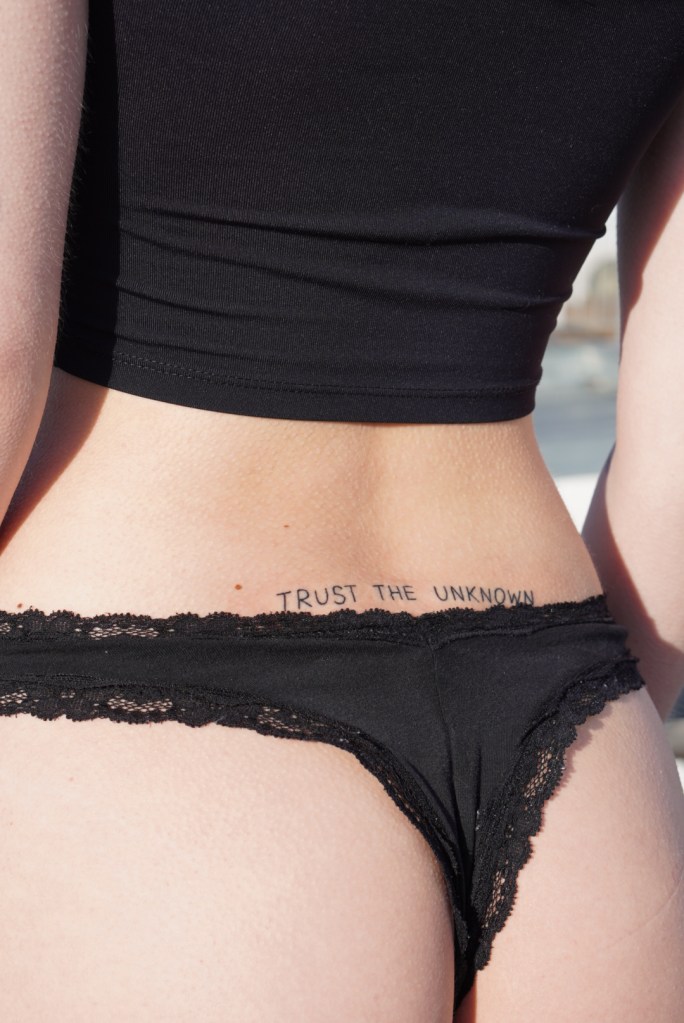
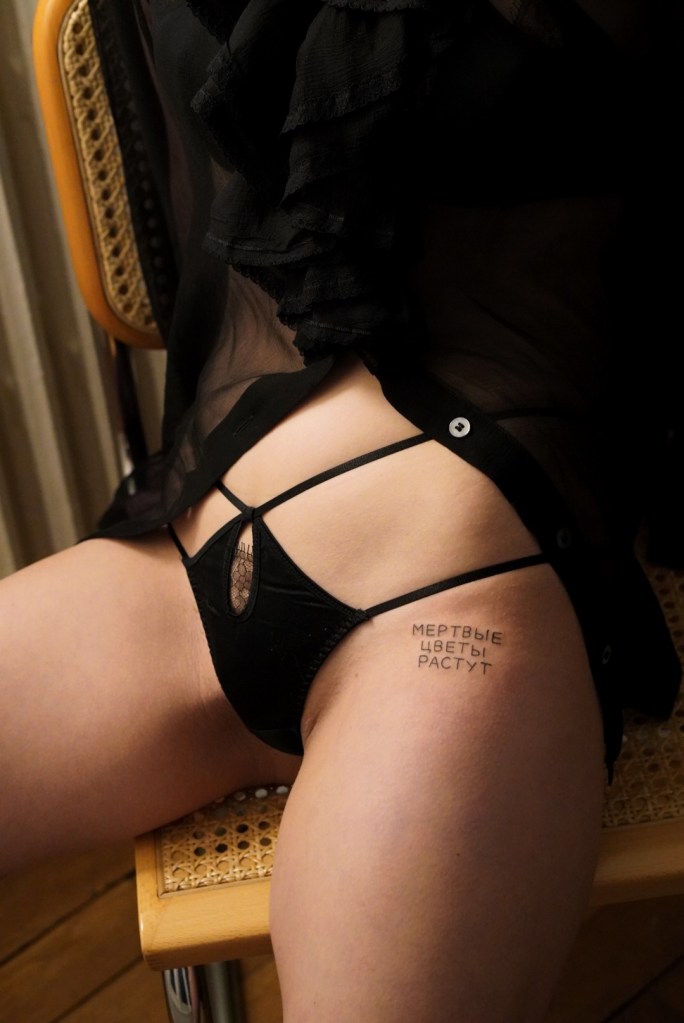
The tattoo I had proposed to her was “trust the unknown.” She liked the idea so much that no other suggestion stood a chance. Perhaps that’s what she truly needed at the time. I conducted this interview almost two years ago, and now, reflecting on her story, I realize those words no longer feel appropriate—in light of what she endured. As I write her story, with tears welling up inside my chest, the only words I would offer her now are, “tread your path with care.”
I placed the recorder in front of him. He chuckled and said, “This thing is scary.” “I used to have a more discreet recorder,” I replied, “but it broke.”
“Where’s your space for relaxation?” “Probably in the distant past. It’s not here yet.” “And what was in the distant past?” “There was a bed. But I can’t really say Chelyabinsk was great. On one hand, my parents. On the other, there was school. And then there were my ambitions that never aligned with where I was. So, I’ve never really felt a sense of home.”
“And what is home to you?” “I don’t know. I think I found something like home when I started dating Julian. He’s my first in every sense of the word. We’ve been together for almost seven years now, and what’s fascinating is that it just keeps getting better—better sex, better understanding. Maybe it’s because we don’t see each other often. Sometimes, he’s gone for a year or more for work. But we don’t have an open relationship.”
“And how do you cope with his absence?” “It’s his return I have to cope with now. You get used to one way of being, and then it’s a challenge to readjust to each other all over again.”
“Do you ever feel lonely without physical intimacy with him?” “Not at all. I masturbate, and that’s fine. Honestly, I feel more comfortable without intimacy. I never had warmth in my family, and I don’t have it now. My life has always revolved around art, and working feels easier than trying to navigate closeness with someone. I guess work is my home. The only time I can truly relax is when I’m consumed by something—when I’m creating, chasing an idea, or lost in a fantasy. But when the work stops, I feel empty. It scares me every time. You finish a book, release it into the world… and then what? It’s terrifying! I know it’s not entirely healthy to think this way. I should take better care of myself, especially since my health isn’t great. I’m sick again, actually. But I still made it here!” His smile persisted, unwavering.
“Describe the feeling of emptiness.” “It’s like confronting my own ridiculous fears.” “For example?” “It’s the fear that comes with growing up and realizing that life isn’t how you imagined it would be. And with that, the fear of missing out on something important.” “So when you’re not working, do you feel like you’re missing out?” “Exactly. I fall into this neurotic need to always be doing something.”
“What’s your biggest fear?” “I often think about it, that I’m dying like this,” he laughed, “thinking, ‘Oh, shit, everything sucks.’ It’s tied to missed opportunities. But what’s strange is that when I finally get what I thought I wanted, it turns out it’s not what I wanted at all, and there’s always this sense of disappointment. The more successful my career becomes, the more disappointed I feel. And after talking to others, I’ve realized I’m not alone in this. Success is like this beautiful, enticing candy. It looks perfect, and you think it’s going to taste amazing. But then you take a bite,” he gasped as if reliving the moment, “and you realize it’s not satisfying at all, and you start craving something else. But at the same time, you can’t just walk away. You’ve spent your whole life working to get that candy, so how could you not eat it? It’s such a paradox. A career, it turns out, looks nothing like what I thought it would.”
“Then why do you keep going?” “There’s nothing else to do. I’d gladly choose another job. I don’t want to sound like a victim, but honestly, I’d love to have a job where I could actually take a vacation,” he said, bursting into laughter.
“What would you do if not art?” “That’s the problem—it’s a vicious cycle, like a terrible drug I just can’t quit.”
“What disappoints you?” “The endless difficulties that seem pointless. All the books, exhibitions—they take so much effort, and in the end, I don’t even feel any satisfaction from them. The problem is, I can’t do it any other way. I don’t know how to do anything else. It’s like a cross I have to bear, forcing me to keep doing something that doesn’t always make me happy.”
“And what are the moments when you’re happy?” “When I’m actually doing art. It’s like a swing—there are highs and lows. When the difficulties hit, I’m not happy, but I guess that’s normal. For me, happiness is in the process of searching. When my career shifted into business—about four years ago, when I started working with producers—I realized how much of it has nothing to do with creativity. There are so many rules you have to follow. I used to think those rules could be broken.”
“What rules can’t you break now?” “The rule of doing what I want. Because when I try, there’s no response. That’s why I don’t want to go to America—though I probably will—because I know exactly how I’ll be seen there: the Russian who fled to a ‘free America’ after being let down by his homeland. Oh, it’s such a tired cliché. It’s so easy to lose yourself in that narrative.”
“And what are you really like?” “Reverent, thrilled, kind, not confrontational. Even before I moved to Paris, GQ Germany wrote this piece—something like, ‘Vlad Zorin on Putin’s Russia and how gays are humiliated there.’ And you realize they’re not really interested in YOU. I’m talking about one thing, but they want to hear something else. It makes you feel like a hostage to the system.”
“What makes you reverent and thrilled?” “I don’t know. I was thinking about it recently and even asked my friend, ‘Katya, have I become tougher?’ She said yes. It terrified me—maybe war affects us all, hardens us, turns us into robots who lose their sense of awe. And for me, awe is everything.”
“What is being a robot like?” “It’s when you do everything in a standard, mechanical way, and everything around you feels standardized too. Though I have to say, this doesn’t really apply to France. People here are so lively, even with all their formal greeting and farewell rituals. I’ve noticed how loudly they yawn—it’s oddly freeing. They seem so unrestrained. But I’ve become more rigid, probably because of all the responsibility I carry.” “What kind of responsibility?” “To do everything right, for the people on the team.” “And what is ‘right’?” “Professionally—making sure I don’t let anyone down. Growing up is terrifying. I’m 25 now, and it feels like a turning point—close to 30, but still at 25.”
“Do you have a dream?” “A few. Small ones, like seeing the northern lights—how the lights fall so beautifully while you lie in the snow. It’s fantastic. Snow has a special meaning for me because I grew up in the Urals. I love frost and snow.” “What’s your most cherished one?” “To express and fulfill myself as much as possible through creativity. That’s where the fear comes from—the fear that I won’t have enough time.” “And why do you need it?” “I’m telling you, it’s like carrying a cross—I’m a hostage to it. There’s no grand purpose in it; I just can’t do it any other way. That’s what disappoints me: other people choose their work, but I didn’t. I’ve been doing this since I was a kid, and I just keep doing it. Meanwhile, someone else says, ‘Well, at 23, I realized what I want to do.’ And I think, wow, that’s fucking amazing. And here I am, stuck in this constant creative limbo.”
“If you could change something in the past, what would it be?” “Oh, I’d rather sort out the present. I just got back from a two-week trip where I barely slept—three and a half hours a night, waking up at four in the morning to work on a new book. What would I change? Honestly, who knows? It feels like no matter what I’d change, everything would still turn out the same. I used to think I was in control of my life—that I was the one shaping it. That used to be a pretty common belief. But now, I see that everything unfolds on its own, and I try to surrender to it. If I have even a little strength, I give it. If I have more, I give that too. It might sound dramatic, but if you see yourself as an artist, then you have to walk this path with dignity, no matter the toll it takes on your health. I remember being invited to the ‘Rain’ TV channel for an interview after my book came out. I hate the whole aesthetic of TV. I’d only slept three hours, and I was sitting there thinking, ‘I’m going to run away. I’m going to run away!’ Then they clipped a microphone on me, and I thought, ‘No, you have to do this.’ And it’s like that every time.”
“A young woman came to me for an interview recently, and the first thing she said when she sat down was, ‘I want to run away.’ It took me a moment to figure out what to say to put her at ease.” “Wow! I think you could’ve just said, ‘Run away,’ and she wouldn’t have gone anywhere.” “That would’ve been too harsh.” “Why did she want to run away?” “She was nervous. At that moment, there was a camera filming us, and behind it stood a director who had made a documentary about my project.” “What did you say to her?” “I asked her a question—something I thought would resonate with her mood and gently guide her into a more reflective state.” “Did it work?” “Yes.”
“How would you describe your background?” “A guy from a small town who was always fighting some kind of battle—in kindergarten, in school. I won first place in ballroom dancing at the Russian Championship, then competed in the World Championship, and ended up in the hospital after that. It’s never been easy for me. When things are easy, it scares me. I recently realized it’s better not to focus entirely on one thing in your work. If it doesn’t pan out, you’re left with nothing. But at the same time, I am nothing beyond what I’m working on now. Julian always says I’m one-sided, and it’s true—I have nothing but my career.”
“What about your personal life?” “Nothing, really. I work on projects with Julian. My first project with a bunny was dedicated to him, and now I’m dedicating an exhibition of installations and sculptures to him. In a way, he’s my project.”
“And what is love to you?” “It’s cute. There’s so little cuteness in the world, but love is cute. When Julian and I see each other, we smile, and it’s just… cute. That kind of thing doesn’t really exist in my world because I don’t have many friends and I don’t communicate much.” “Why?” “Well, what for? When?” He laughed. “Communication doesn’t give me much. I like it when I’m lying in bed,” he stretched out the “e” sound, “which is probably why I often film my characters in bed. It’s a kind of comfort zone. When I lived in Chelyabinsk, my bed was also my safe space, where I could close myself off and create. When you live in a place like Chelyabinsk, where it gets dark around three in the afternoon and dawn doesn’t come until ten in the morning, it does something to your imagination. I didn’t have any friends, so I stayed home and drew.” “What did you draw?” “What didn’t I draw? Mostly sunrises.” “Were you lonely?” “Of course. That’s why I drew.”
“What do you do now when you feel lonely?” “I write poetry or have conversations with myself.”
“What is success to you?” “Something unattainable, something you can’t actually feel, because success is an endpoint—a stop.”
“Have you ever had moments in your life when you thought, well, that’s it, now life will change and never be the same?” “It always feels that way, but then it still ends up being some kind of fucked up thing. It’s all an illusion, so I try to accept that it’s always going to be difficult.”
“Are you afraid of death?” “Well, yes. But sometimes I feel like I’m not afraid of anything, and everything is fine.” “What do you think happens after death?” “I actually think about it often, at least once a week. Just a couple of days ago, I was in Greece, staring at the stars—there were so many of them—and I thought, ‘Fuck, where does the soul go after death? Can you really just hide a soul in a coffin?’”
“What do you love most about yourself?” “I usually don’t think about things like that. It’s hard for me to even figure out how to shift my mind to not only think about it but to actually come up with an answer. What do I love about myself? That I’m brimming with ideas. And what about you? What do you love most about yourself?” “My efforts and aspirations to understand others. I rarely give up on that.” “So that’s what you love most about yourself?” “Right now, yes. If you ask me in an hour, I might say something completely different.” “Oh-ah-ah, so I could’ve answered it like that?” “I don’t know how to do it any other way. When people ask me, ‘How are you doing?’ I genuinely stop to think about it.” “It’s the same for me! I never know—should I tell you everything? Or just what you want to hear? But if I answer your question, what I like about myself right now, I’d say,” he paused, “I’m fairy enchanting. I can solve problems and make everything around me feel fairly. I love creating magical atmospheres. In my future projects, there are wings everywhere—and blue eyes.”
“What is the most important thing in life for you?” He paused, thinking deeply, and the silence grew so profound that the distant sound of trains arriving at the Gare du Nord in Paris suddenly became audible. “Probably to find myself,” he said at last, “to understand what my reference points are. My ideas about the world keep changing, so much and so radically, it feels like I’m flying high, untethered. I want to understand, to touch the ground. But it’s definitely not money. I’ve never really had it, and I don’t want it. And… I’d like to find my people.” “Is Julian not one of your people?” “No, he’s not. But we love each other, of course. To understand who my person is, I first need to figure out who I am.”
“Do you feel like you’re opposing something or someone?” “Of course. When I see that people don’t share the same desires as I do, it feels like I’m the only fool who thinks this way. It makes me feel lonely.”
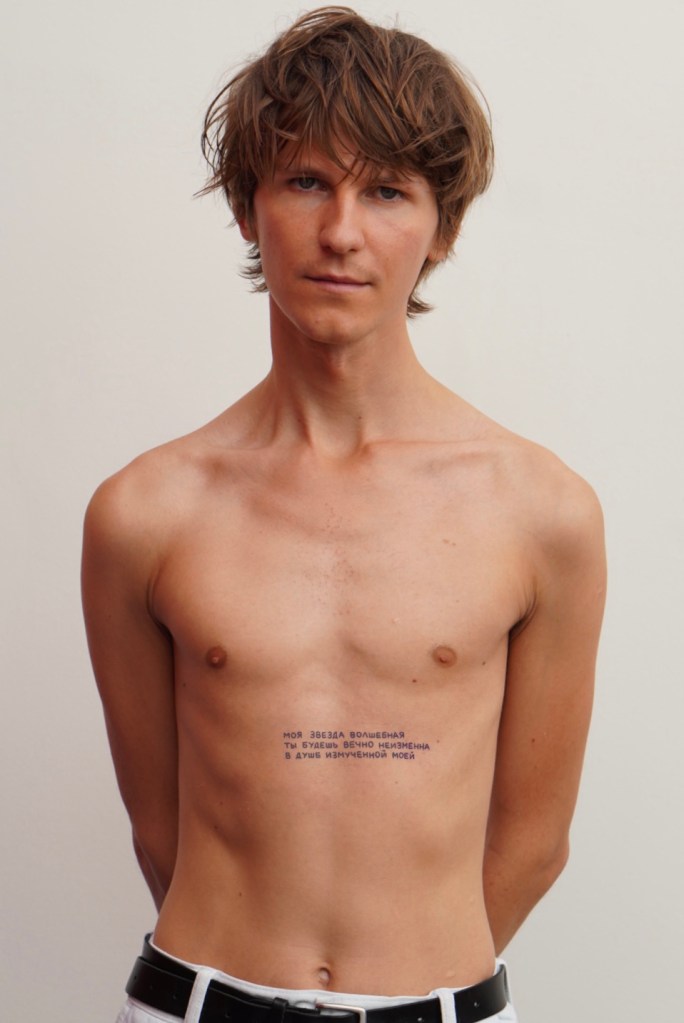
The tattoo, translated from Russian, reads: My Enchanted Star, You Will Remain Unchanged Forever In My Tortured Soul.
Hi! I’m a clinical psychologist working in psychiatry and especially with psychological traumas. I find your approach fascinating—it seems to offer a kind of healing. It would be really nice to get a chance to meet you! Best regards, David
“Do you like your name?” I asked him when we met for the interview. “Oh, I like it,” he began. “It was either David or Frederick, so I guess I won.” His voice was gentle and clean, reminiscent of Brian Molko’s, with an undertone of melancholy. His huge eyes framed by black eyeliner added to the association.
“How would you describe your relationship with your parents?” “Complicated, but today it’s okay. It was hard with my father and my mother, though at different times. When I was young, it was mostly my mother; later, in high school, it became particularly difficult with my father. He’s very strict. But, honestly, every family has its fly in the ointment. Mine just happened to come with a mix of depression, isolation, and conflict. My father worked a lot, so I didn’t see him often. On weekends, he’d sit with me to do math, but it wasn’t really fun. My mother struggled with depression and suicidal thoughts. And it was really complicated because my brother and my mother didn’t get along at all, so he would isolate himself. While my sister was close to my mother but clashed with my father. And I was caught in the middle. I was actually close to both my sister and brother, but my sister… she cut her wrists, even tried to jump out of a fifth-floor window. It was chaos, but at the time, I didn’t realize it wasn’t normal.’
“What caused your sister so much pain?” “Her relationship with our father. He didn’t understand her—her mind, her struggles at school. She’s brilliant, with an IQ of 148, but she was bored and disengaged, which my father interpreted as rebellion, as if she was deliberately trying to anger him. He couldn’t see it was a mismatch between her unique way of thinking and the system. So it was difficult. My memories are filled with my mother crying, my sister crying. My brother wasn’t crying outwardly, but he was the same as my father—unable to express emotions. They just couldn’t talk about what they felt.’
“Does it still hurt you?“ “Yes! My father has an obsessional personality. He’s a Cartesian, a scientist—someone who doesn’t deal with things he can’t control. And control has always been central to our family. For us, losing control feels like dying. It’s something we need all the time. My father was born in Egypt in 1954. He and his family had to leave because of the Nazis and relocate to France. They had nothing. My grandparents couldn’t even afford food, so they drilled one rule into him: work. Work hard so you never end up in the same situation. That rule turned him into a robot—he doesn’t feel things, and if he does, they don’t matter. Only work is important. If you adopt the same mindset, you can get along with him. That’s what my brother did. Being the first child, he had no model to follow. He had to figure out how to deal with my father on his own, and he made the easiest choice—to conform. My sister, though, couldn’t do that. She and my father couldn’t speak to or understand each other. She fought with my father constantly. My mother was different. She had no issue with control. She wasn’t academically brilliant, but she always said, ‘If you’re doing your best, that’s okay with me.’ My father, on the other hand, when I came home with an 18 on my math test, the first thing he’d say was, ‘Those two mistakes were very stupid.’ So, growing up, I saw two models: one that kind of worked and one that didn’t. And I made my choice—I followed my brother’s path. I became the good student, worked hard, stayed in line. I built my life around control. But it was never enough. And by the time I got to university, I couldn’t keep it up anymore. That’s when it started getting really difficult between us.”
“How often do you think of your family?” “A lot. I’m a psychotherapist, after all—it’s almost my nature. I don’t work with psychoanalysis; I work with cognitive behavioral authority. There are many theories in CBT about how we learn through experiences, forming associations based on positive or negative feedback. Our behaviors adjust accordingly, either increasing or decreasing in frequency. So, I guess that’s how it is with me. I don’t consciously think about my family—it’s not something I choose to focus on. It’s more like they’re always there, following me in the background.”
“Is there something else that comes to your mind on its own?” “OCD. It’s a mental illness defined by two key components: obsessions and compulsions. I’ve been living with it since I was 15.”
“Do you mind giving me an example of an obsession?” “Venereal diseases. I have an irrational fear of them, even though I studied sexology for three years. It’s not about knowing the actual risks; it’s intrusive thoughts that pop up—‘Be careful, we’re in danger, don’t do this, don’t do that.’ I also used to have a lot of anxious thoughts about pedophilia. I was terrified that one day I’d wake up and realize I was one of them. It’s completely irrational, but that’s how OCD works—it takes an idea, plants it in your consciousness, and you have no choice but to deal with it. You end up performing compulsions to try to reduce the anxiety. I think a lot of it ties back to my homosexuality. CBT helped me with some of the physical compulsions of OCD, like the need to clean or rearrange things to be perfect, but the thoughts about pedophilia or HIV are harder—they’re tangled up in my past. My family is Jewish, and my homosexuality wasn’t accepted. I couldn’t talk about it, and I didn’t even know what I was myself. I was harassed as a kid—people would say, ‘You’re gay!’—and I was only five or six years old. I felt so ashamed and afraid. I didn’t even have time to figure it out for myself; everyone else decided for me before I knew who I was.”
“What made others think you were gay?” “Stereotypes. I mostly hung out with girls, and people made assumptions—stupid, baseless connections. That made it impossible for me to talk about it or figure things out for myself. When I was 14 or 15, I turned to the Internet to try to understand myself. It was the biggest mistake of my life. I was desperate to make sense of who I was, separate from what everyone else was saying. But I was vulnerable, and I made bad decisions. I ended up interacting with people who were pedophiles. They showed me videos of twelve or thirteen kids having sex together and asked me to masturbate on camera. I was completely lost, desperately needing someone to notice me without judgment. I didn’t care who it was. They turned out to be very bad people, threatening to find me and rape me. After completing CBT for my OCD, my psychologist and I realized that while some issues improved, others didn’t respond to treatment. That’s when it became clear I wasn’t just dealing with OCD but also with complex post-traumatic stress disorder. Trauma at a young age has a way of embedding itself into your personality. The symptoms don’t feel separate from you—they feel like they’ve always been there, like they’re part of who you are.’
“Do you think it’s possible to heal from it?” “I believe so. That’s why I’m going through therapy. In theory, healing is possible. When you heal from trauma, you don’t erase the memories—they stay with you. Healing means putting those emotions in the right place so they no longer overwhelm you. In my case, I’ve tried psychoanalysis, CBT, hypnosis… but nothing has fully worked yet. Still, I keep trying, searching for new therapies. I haven’t given up.”
“What is the most important lesson life has taught you?” “My grandma used to say it all the time: ‘Be happy! That’s the only thing that matters. Do what makes you happy.’” “And what does happiness mean to you?” He drew in a deep breath and let it out in a heavy, resigned sigh. “I’m not sure I know. Maybe it’s a life without OCD, without trauma—a life where I’m not constantly living with fear, shame, guilt, or anxiety. Those emotions have ruined so much for me. I try to see them differently, to view them as experiences that helped me grow. But honestly, it’s hard to think like that. When you’ve watched someone you care about hurt themselves, knowing there’s nothing you can do to stop it… how do you find anything good in that?”
“What helps you the most to feel better?” “Music. But… it’s not enough to feel safe, or good, or happy.”
“When was the last time you felt happy?” “Six or seven years ago, when I was with my boyfriend. We’re not together anymore—I ended the relationship last May. But that first month with him, I was really happy. I had just started recovering from burnout in medical school and was in my first year of studying psychology. It was like an epiphany—‘Oh my God, this is what I was meant to do all along!’ At the same time, I met him, and everything seemed to fall into place. I think that’s probably the only time in my life I felt truly happy. But as we approached our first anniversary, it’s like my brain decided, ‘Okay, now it’s been a year, you’re safe, so it’s time to deal with other things.’ That’s when the intrusive pedophilia thoughts and OCD began.”
“Do you have the desire for kids, or are you afraid of the possibility that you might?” “Maybe I have the desire, but I don’t want to admit it. Or maybe I don’t have it now, but I’m scared I’ll develop it later. It’s completely irrational, but my brain fights so hard to convince me that it’s true. So I deal with this by… I don’t even know how I deal with it. I remember talking to my psychologist about this. I told her, ‘When I see a man on the street with his kid, I’m looking at the father, not the child. I know I don’t want anything sexual with children, but my brain doesn’t stop arguing. It says, no-no, you’re wrong, you’re lying to yourself—I know better than you—you want this but don’t want to admit it.’” He spoke quickly, his words tumbling out with raw intensity, as if he feared he wouldn’t have enough time to say everything he needed to within the span of our meeting.
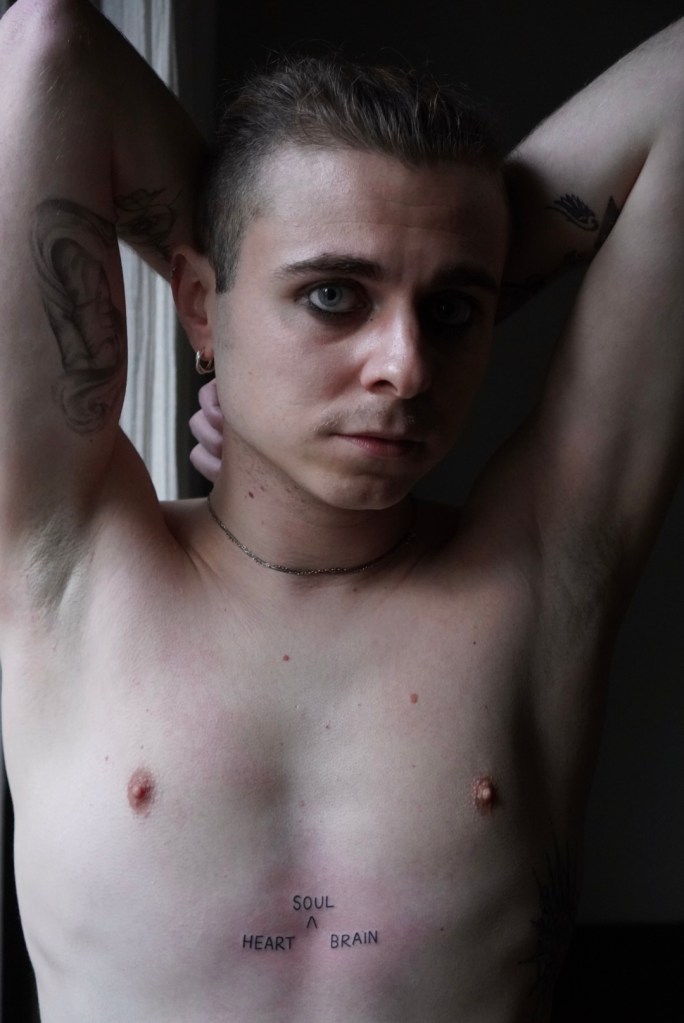
“How do you differentiate yourself from your brain? It sounds like you’re describing two different people.” “Kind of,” his speech slowed down as he reflected. “Many of the people I treat with trauma feel that way too, like their brain is a separate entity—something outside of their control. And for now, I’d say my brain is stronger than me.” “And who are you? A soul?” “Yes, a soul that is renting space in my brain. So it’s either deal with my brain or end up out on the street.” He paused, then added with a calm, musing tone, “It’s the first time someone’s talked to me about my brain as a separate entity.”
“How come you see your brain as a stranger?” “Because it all comes back to control. I can’t control my brain, so it doesn’t feel like it’s mine.” “Can you control your soul?” “I’d say it’s easier to control the soul than the brain.”
“So now we have three of you. The soul you, the brain you, and—” “Yeah,” he cut in. “And I feel like my brain hates me.” “And who’s the one trying to control both soul and brain?” “I don’t know. That’s a good question. I really don’t know.”
“What is it that you hate about yourself?” “A lot,” he said without hesitation. “The way I look, the way I always feel the need to talk, my constant anxiety, my obsessive tendencies… and the fact that I’m such a pessimist.”
“And what do you appreciate the most about yourself?” He smiled faintly. “My psychologist asks me this question all the time, and I always find it so hard to answer. I guess I don’t really know. Maybe that I can be funny—at least, that’s what people tell me. And that I’m generous. I don’t care about money as long as I have enough to live properly. A friend of mine once described me as someone who can seem cynical or poking like a needle. But she also said that behind all of that, there’s a big heart, full of generosity and love.”
“What is your soul?” “I think my soul is desire, for better and for worse. But my brain—phhh, it doesn’t want to listen to my soul. It keeps saying, ‘No, you can’t live by desire. That won’t work. You need control. You need to focus on working, studying.“
“What are your desires?” “I think every behavior we have comes from some desire. It’s desire that drives us to act—it’s like a motor. The day I stop desiring is the day I’m dead. I’m going through therapy because I have the desire to heal, to feel better. That desire keeps me moving forward.”
“Why can’t you be desireless and alive at the same time? You’ve probably heard that desire is a cause of suffering.” “Yeah, sometimes, but what a sad life it would be without desire. Sometimes I come home from work so tired that I have no desire except to eat, smoke, and sleep. But no desire? That’s the void. And the void is death. When I’m at work, I don’t eat, I don’t drink—I just take appointments, one after another, from nine in the morning until eight at night. I smoke my cigarettes to get through it. And if a patient doesn’t show up, that’s when the void creeps in. And with the void comes anxiety, and I can’t stand it. It brings thoughts—suicidal thoughts.”
“Could you explain what the void feels like?” “When I was young, there was no space for the void. There was always something—tension, illness, arguments, sadness, tears. But never the void. I grew up in an environment that was constantly full of… things.”
“When did the void first appear in your life?” “I’m not sure. It started growing gradually… but I remember it becoming really significant when I was with my ex-boyfriend. We were together for over three years, and at one point, he asked me if we should move in together. It was the best proposition at the time, but I said no. I was 19, studying, and still living at my parents’ house. I told him, ‘I can’t live with you because I need to live on my own first. When he asked why, I said, ‘Because I need to learn how to deal with the void. I don’t want to move in with you now and then, ten years down the line, if we’re no longer together, have to confront it for the first time in my 30s. Living alone means facing the void now, giving it space.”
“But you can’t control the feeling of the void, can you?” “I know. But like I said, in my family, if you don’t have control, it feels like you’re going to die. That belief is ingrained in me. My first psychologist once told me, ‘You have to learn that not having control isn’t the same as being dead or in danger.’”
“Isn’t the idea of controlling everything disappointing?” “Yeah,” he whispered vulnerably. “I agree with you. That’s why I’m trying to learn how NOT to be in control. My work actually helps with that because I interact with people I can’t control, and I like that. But on the other hand, when a patient starts to get better—when we’ve found the way forward—I feel bored. There’s no chaos anymore. And all I’ve ever known in my family is chaos. No chaos means the void. And the void means anxiety.”
“How does your anxiety feel?” “It’s when I see no sense in anything and start asking myself, ‘Why do I keep trying?’” “And how do you answer that?” “With something my grandma used to say, ‘When you’re at the ball, you dance.’”
“What is death to you?” “It’s the last option. It’s like driving a car through a tunnel on the highway and seeing those green exit signs. For me, suicide is like those green doors—an escape, the opposite of anxiety. Knowing that I can stop everything at any moment is… strangely comforting. It’s how I know I’m not condemned, not stuck in my life. I keep going because I know that option is there. If life becomes unbearable, if the suffering becomes too much, it’s reassuring to think that I can turn it all off—like switching off a lamp.”
“How would you like to be remembered?“ “I don’t want to.”
“You said earlier that your soul is desire. What does your soul desire?” “I want to help people and have a man. Work is something I can control, and I think I’m good at it—at least, that’s the feedback I get from my patients and colleagues. But when it comes to love, I keep failing. I want to find someone I can truly love, someone I can protect and who can protect me in return—a partner to share my life with. But when I go on dates, the men don’t seem interesting to me. And if I do feel something for someone, it’s always so complicated. Either they’re complicated themselves, or they’re more involved with women than men.”
“I don’t know what you’re thinking, but it seems like you’re deep in thought.” “Yeah,” I said. “Let’s take a smoke break.” “With great pleasure!” “We can smoke here,” I added, gesturing toward the room. “Let’s just move to the window.”
“How are you feeling?” “Cold.” “Are you talking about the temperature outside or your general mood?” “The temperature outside, but in general, it’s also kind of cold.”
“What usually warms you up?” “Strong emotions—something intense and explosive, something that creates energy. It doesn’t even have to be positive in the usual sense. Even something painful can warm me. For example, I love music. I get completely lost in it, and it warms me up, even if it’s a heart-wrenching song that can never fill the emptiness in my soul. It still brings a strange kind of heat.”
“Where is your soul?” “Somewhere far away.” “And the hole?” “The hole is here,” she answered with a grin. “But if there’s a hole in the soul, doesn’t that mean the soul must be where the hole is?” “Maybe the soul slipped away through the hole, but it can come back. And when it does, I’ll let it back in.”
“What’s your definition of a soul?” “It’s what makes a person’s physical shell an individual,” she replied softly, sadness in her voice.
“What makes you sad?” “Thinking about the past. Sometimes the future, too—not because it’s uncertain, but because it’s sad to see how much of it feels predetermined.” “What do you mean by predetermined?” “The catastrophe of it all. I don’t have the faith or strength to pretend everything will be wonderful and joyful. And honestly, I don’t think I need that. I like my sadness, my melancholy. I even cherish it.”
“What do you like about it?” “It’s comfortable. I like to feel it, to live through it. I like crying, even the hysteria. I know it’s a kind of masochism. Most people find comfort in happiness, but I feel at home in sadness.” “But you say you feel good when you’re sad. Isn’t that happiness in its own way?” “Yes, in my way. It’s not happiness as people usually define it. Society expects happiness to look like smiles and laughter, not tears and melancholy.”
“What can make you cry?” “A song, a line from a book, a memory. So many things.”
“Do different things make you cry differently? Are some tears sadder than others?” “Absolutely. The depth of the feeling and how much it consumes you varies. Sometimes I cry so deeply that nothing else exists but the emotion. Other times, I cry lightly, still aware of the world around me, thinking about what I’ll do next.” “I can’t imagine that kind of detachment. When I cry, it fills everything.” She laughed. “Does it happen often?” “Only three times in the last ten years.” She looked surprised. “I’ve cried like that three times this week.” “What for?” “Mostly the past.” “What about the past?” “It’s hard to talk about. One time, it was about someone I lost. He died.” “Do you mind telling me what happened?” “He overdosed. It was his decision to go. That’s hard to accept because I couldn’t do anything about it. It wasn’t my choice—it was his. And I just have to live with that. But it’s devastating.” “I’m sorry. How do you think, do people have the right to end their lives?” “Yes, and I don’t think it’s unfair to me. But it still hurts deeply, especially in winter. So much has happened in winter.” “Didn’t much happen in summer?” “I don’t like summer. Everyone’s so happy, smiling, and carefree. It feels invasive, almost offensive. Like their happiness mocks me.” “Why?” “Happy people seem suspicious, like there’s something fake about them. Something’s off, but I don’t know what.”
“What gives you strength?” “Intensity. Passion. People. Music. Art. Literature.”
“What were the other reasons you cried last week?” “I cried because someone treated me badly.” “Did you feel sorry for yourself?” “Yes. I didn’t understand why this person treated me that way. I also cried over music—a few times.” “What did the person do?” “He traded me for someone else. A man. That hurt deeply.” “Why did he trade you?” “He said I was too complicated—a woman with demons. He wanted something simpler.”
“What makes you difficult?” “I’m a person from nowhere. Sure, I was born and raised in Moscow, and now my home is Paris.” “Why Paris?” I interrupted. “I have a theory: only broken people stay here. Paris is a kind of purgatory, a place where people arrive and then drift along, searching for their Virgil. Finding your Virgil is essential here—someone who guides you, shows you the layers of this city. Paris is like an endless black hole where everything is mixed up. In seven years, I’ve seen people fail the test of Paris and leave. But I love this city because it breaks people.” “And for those born here?” “Of course, it’s different for them. But I’m speaking about my experience. I love the way Paris constantly drags you to the bottom, forcing you to confront your own hell. Some people learn to live in their personal hell, finding small joys—hedonistic French pleasures or profound human ones. Others can’t stand it and leave, retreating to stable, predictable lives. Stability doesn’t exist here.”
“What’s your greatest achievement?” “That’s hard to answer. Last week, at a party, I met a woman who runs a popular Telegram channel for Russians about life in Paris. She asked to interview me, saying she wanted to show her readers what successful people look like. I laughed and said, ‘Great! Which successful people are we going to talk about?’ And she said, ‘You, of course.’ I told her, ‘But I’m not successful. I don’t have achievements to share.’ So to answer your question—my greatest achievement hasn’t happened yet.” “What exactly hasn’t happened yet?” “I don’t like the word ‘achievement.’ I prefer ‘path.’” “Okay, and where are you heading?” “I’m just walking. I don’t know what tomorrow holds. Yesterday, I had a thriving career in luxury—heavy, soul-sucking luxury. For some, that made me a success. I built that career before I turned thirty, but I left it all behind.”
“Can you give me an example of what you did?” “I worked on a project for Yves Saint Laurent. It was based on the things he loved—art, music, culture. Since he was openly gay, we sold condoms. Because he admired Basquiat, we sold his books. I curated music he liked so we could sell vinyl records. But then I gave it all up to wander through museums and embroider at home. I don’t know what’s next. Maybe I’ll become an artist or a writer. It doesn’t matter. For me, the journey itself is what’s important.” “You say that so easily.” “Well, I can spiral into panic and say, ‘I don’t know what I’m doing or where I’m going.’ For some, that would sound like madness. For me, it’s not madness—it’s the path.”
“What are you seeking in life?” “I want to fall in love. It’s terrible to go through life without being in love. I miss it so much.” “What is love to you?” “Love is when the entire world condenses into one person, into one look. It’s wanting to hide under a blanket with them and never let them go. Oh, now I’m crying,” she said, smiling through her tears. “I want to hide from the whole world and have nothing left but love.” “How long would you stay under that blanket?” “Forever,” she whispered. Then, after a pause, she added, “No, maybe not forever. You could crawl out sometimes, hand in hand. I’d also like to believe in myself more. I don’t know why so many amazing people around me believe in my talents when I can’t see them at all.” “What talents?” “My friends say I write well. I write stories about Parisian demons. My last bad date was… I was rushing down Rue de Bac—no restaurants there, just galleries—when I spotted a fork on the ground. I picked it up and, still holding it, arrived at my date. I said to him, ‘Can you believe it? I just found a fork on Rue de Bac!’ And he shrugged, ‘It probably fell off a bistro table.’ I told him, ‘But there aren’t any bistros there. Nothing! So either someone dropped it or it fell out of a window. If it fell out of a window, maybe an old Italian lady with dementia thought it was New Year’s Eve and tossed it out?’ Then I got a little wild. I said, ‘But what if it’s the Parisian Demon’s fork? The devil usually uses a spoon to scoop up sins, like Dali’s or Dante’s devil, but in Paris, the demon is an aesthete—he eats with vintage silver. Maybe he dropped it in a hurry to punish someone?’ After that, my date stood up and left.” “Do you still have the fork?” “Yes! It’s on my altar of strange finds.”
“What is your greatest fear?” “The death of someone close to me.” “Who is that person for you right now?” “At the moment, no one. And that’s what scares me too—the fear of being completely alone.” “What is it about loneliness that frightens you?” “It’s the kind of loneliness you feel in a crowd. When you’re at a party, your eyes are open, and figures move and flash around you. People are laughing, having fun, but you feel as though your eyes might as well be closed—nothing changes. You’re as alone as you were before. The only thing that keeps me from giving up is the hope that, one day, it will be different.” “Has it been different before?” “Yes. I was married once, but it felt fleeting. One day it was ‘I love you,’ and the next, ‘I think I don’t love you anymore.'”
“What question do you most want an answer to?” “Does love have a scale—a maximum and a minimum? It feels like it does. The question isn’t just whether you love or don’t love, but how you love. There needs to be some nuance. For example, if I love poking you with a fork—isn’t that love too? I wonder if infinite, boundless love exists, the kind where nothing else in the world matters.” “I think it does. That’s the kind of love where the word ‘you’ becomes ‘everything.’ You earlier said that when you fall in love, the person becomes your entire world. What if that went further? What if there were no division between the person and the world itself—where loving them also meant loving the whole world with the same intensity?” “That’s a beautiful idea.” “It’s something that helped me once. I realized love doesn’t disappear when the person you love isn’t there. Love is already in you, and it won’t vanish.” “I don’t think I’ve felt that yet. But what you described reminds me of the saying that the depth of our understanding comes from the breadth of our perspective.”
“What’s the most important lesson life has taught you?” “Not to trust people’s words. Everyone lies.” “Yesterday I was writing one of my interviews where the person told me you should trust everyone until they give you a reason not to.” She paused, considering. “That’s the lesson life taught me, but I don’t necessarily follow it. Actually, I don’t follow it at all.”
“What does happiness mean to you?” “I don’t think I know what it is. But I can describe what a happy day might look like.” “Go ahead.” “Alright. I’d wake up at dawn, go to the park with someone I love, and spend the day surrounded by art. I love doing things together—drawing, sculpting. Recently, I was breaking vases to practice ‘kintsugi’. I ended up leaving only one piece whole—it was an antique head with dead roses growing in it.” “Growing?” “They didn’t grow taller, but their state kept changing. Growing in the sense of constantly transforming.”
*the tattoo translated from Russian means Dead Flowers Grow
She came with court shoes in a bag. Without removing her black coat, she swapped her winter boots for the sleek heels, and seemed more than ready. “Did you change to keep your feet warm?” I asked. “No, it’s to complete my outfit,” she said, matter-of-factly. “That’s very unusual for East Europeans,” I thought. She sat a few meters away from me. White lace-trimmed cuffs were peeking out from the coat sleeves. Lips red.
“How have you been?” I asked, tapping the nib of my fountain pen against the paper. “I’m in a foreign country, so I really need to earn money. I try to exhibit my art, but making it here feels like going through fire and water—and I’ve tried. I’ve learned I can’t outright say I’m from Belarus; I can only mention it casually, making sure it doesn’t sound like an excuse. Then there’s the constant pressure to attend events, to rely on my face for connections—I can’t. I tried again recently, but it left me feeling awful. I’ve decided I won’t put myself through it anymore.”
The ink flowed from the pen as I began the interview. “Alright, let’s start from the beginning. A foreign country—what does that mean to you?” “I wasn’t born here. It’s not my home.” “And what is home?” “Belarus.” “But isn’t ‘home’ just a concept tied to the nation-state? How is it different from Poland?” “We’ve had this conversation before,” she said, exhaling. “Everything here feels strange to me—the trees, the cemeteries.” “I still don’t get it. We’re less than 200 kilometers from Belarus.” “Alright,” she said, leaning forward. “When something happens here, I think, they did it—not us. I feel detached, like I’m an alien element in this society. It’s them building the Museum of Contemporary Art. I want to live in a society where I can say, we build it.”
“Them and us. That division is dangerous. The wars we witness often stem from this idea. When we claim a piece of land as ours—land that, in truth, belongs to no one—we create enmity, turning others into strangers to ourselves.” “What enmity?” she countered. “I’m not hostile. I just feel unwell and stressed. Wherever I go here, I’m in the third role.” “In the third role,” I repeated, jotting down her words in my notebook. She let out a hearty laugh, her black coat slipping from her knees and revealing legs clad in black nylons.
“And you want to be in the first role?” “It’s not just that. Emigration is hard. Maybe, over time, I’ll be like you—loving all the trees, seeing the whole world as my home. But for now, I’ve never had a heart-to-heart talk with Poles,” she said, pulling her coat back over her legs. “This isn’t really about heartless Poles, is it?” “Okay, it’s not,” she admitted. “But I don’t fit into their system. What can I do about that?” “What system?” “I don’t know,” she sighed. “I just don’t have a home, that sense of safety. That’s all.”
“Did you feel safe in Belarus?” “Of course.” “How come?” “I understand anyone could be imprisoned, and economically it was tough… but still, I felt the ground there. I could visit my grandma’s house, the cemetery where my relatives are buried. I felt connected, like I belonged to everything,” she explained. “Long story short, my mom and I were poor, but I worked hard and always brought something home. I did the renovation, bought a washing machine. By the time I was 25, I realized, that’s it; now I need to do something for society. So, I designed an entire bar in Grodno. Everything valuable I had at home, I moved to the bar. When people came in and I saw their happy faces, I stood there and cried. Two months later, this fuck happened (she meant the 2020–2021 Belarusian protests that faced violent persecution by the authorities). My friend was imprisoned. Then another.”
“May I ask a stupid question? Where were you during the previous elections?” “I didn’t participate in them.” “It sounds like you were happy back then because you weren’t fully aware of the political repressions that have been happening since Lukashenko was elected.” “Yes, totally. But what I’m talking about here is belonging. I’ve been refused so many times to exhibit my art in Poland because my topics aren’t interesting to them. And now, since I moved from Belarus, I’m also rejected by the Belarusian artist community. I’m all alone.”
“Do you have an art idol?” “Yes, Vrubel.” “Was he supported by the Academy of Arts?” “No.” “You see?” “Yeah. But sometimes it’s just too much, all of it together. People can’t even bother to leave a damn ‘like’ on my paintings. And I started thinking, am I that bad? It really made me question myself.”
“Are you making art to gain recognition?” “No, but it’s strange not to have it, even among colleagues. Imagine you’re a cardiologist, and all the other cardiologists ignore you. That really crushed me. But I stood up, went to therapy, and decided to take a strong position: I don’t care about it anymore. Still, there must be someone who tells me that I’m okay.” “Who’s someone?” “A good question,” she said, laughing.
“Why do you make art?” “I want to change the world for the better. For example, to end dictatorship. My recent work was about the suffering of political prisoners in Belarus.” “Do you think your paintings can release political prisoners?” “Yes. And I know it’s absurd.” “I didn’t say that.”
“I think we have to define the limits of our responsibility. I used to take everything too close to heart, and it only made me suffer. I didn’t do any good that way. But then I decided—the political situation in Belarus is my responsibility. I can’t care about everything. If kids are dying from cancer, I feel for them, but I can’t carry that weight. I simply can’t be responsible for everything. Can I smoke on the balcony?” “Yes, feel free.”
When she returned, she said, “You know, I don’t feel free because I’m afraid of life. I think it will squash me. If I can’t sell my art and have to work in Żabka (the largest convenience store chain in Poland)—they won’t even take me, and I’ll die.” “You’ll die anyway.” “I know. Life is cruel; it guides me. I’m not the one in command.” “So why not accept that and stop resisting what’s natural? Maybe then you’ll stop being afraid of it.” “True. It will squash me anyway.” “Relax then. It’ll squash you, me, political prisoners, and sick children alike.” It wasn’t meant to be a joke, but somehow we both laughed.
“What drives you to live?” “Voicing, the sonority of forms, the mind, the moments, the will to feel beauty.’ “And what is beauty?” “The moments when I create something that allows beauty to happen, when I feel it—me, within her,” she said, her words carrying the weight of the feminine Russian word for beauty, krasota. “Me within her, I like it. On your skin, it could read as ‘you are in the body of this woman.’”
She had thought it would be difficult to give consent to get tattooed—after all, she’d had no tattoos when she came—but me within her proved to be the correct password to give her confidence.
Her high-heeled slingbacks rested side-by-side near the wall of the apartment that she rented for a couple of nights. “FENDI” was embossed on the insoles. She had worn the same shoes two days ago, at the opening of her new tattoo studio in Paris—the seventh in her career. The low vamp design, crafted from transparent fabric, nicely revealed her dark red pedicure and the crystal cluster tattoos on her insteps. She was sitting with an unknown-to-mewomanon a bench, when I sat down next to her and extended my hand in greeting. By the end of our conversation, we agreed to meet for my interview.
“Did you sleep well?” I asked Sasha who was looking at me from her rumpled white bed, clad in blue jeansand black crop top; her well-groomed and impossibly long hair lay beside. “Yes!” she replied, smiling. “Even though a mosquito was biting my face.” “I had the same problem. You know, I don’t kill mosquitoes?” “I don’t either! My husband says a mosquito will stop bothering you when it’s full.” “Then the one I had must’ve been insatiable. Do you mind if I record our conversation?” “Not at all.”
“You mentioned earlier your father died in a car accident when you were six. How did that loss affect you?” “Talking to my psychologist, I realized I have a trauma of being abandoned. I never thought my dad had abandoned me, but no one ever talked to me about his death. I was left with this feeling that a loved one could leave me at any moment. That shaped how I built relationships—I started tying people to me, often with money, hoping they wouldn’t leave. When I recognized this pattern, I had to learn to untie people. It was terrifying, especially when it came to rebuilding relationships with my family, where I was no longer the savior. Even now, when I fear someone might leave me, I unconsciously try to prevent it.”
“What do you mean by ‘tying people’? Your father didn’t leave you intentionally—he died.” “Yes, but to my child’s mind, he disappeared. It planted the idea that anyone I love could vanish at any moment—not just through death, but in any way.” She rose from the bed to close the window, shutting out the cold, humid air and the urban rhythms of Rue Rambuteau (people produce completely different noises when cars stop: feet and words*) from coming into the room.
“Some people believe we’re responsible for the feelings of others, while others think it’s impossible to predict how people will react. What’s your take?” “I wouldn’t do something knowing it would hurt someone, but I also won’t compromise on voicing my position or setting boundaries when it matters.”
“What are the positions you’ll stand for no matter what?” She laughed. “I’m not sure, actually.” “Maybe moral or ethical positions?” “Yeah, there’re some things that come from upbringing… albeit no, those are questionable. I can’t find the answer, can you rephrase the question?”
“Can you recall a moment when you felt the urge to stand up for something? What was it?” She nodded, her gaze distant. “It was with my grandma. I was driving her to the dentist when she started sharing these horrific stories about the war in Ukraine. Even though it happened months ago, I still think about it sometimes. She began with, ‘Do you remember Anya from the fourth floor? She was near the metro, passing by the shopping mall, when a shell hit. Everyone ran into the metro—some were injured. Anya was so mentally shaken it took her weeks to recover.’ I gripped the steering wheel, just listening, trying to process. Then my grandma continued, ‘And Anya’s mother—imagine—she found a video online. It showed a little girl playing on a teeter-totter when a shell hit. The girl was decapitated.’At that point, I couldn’t hold back. I stopped her and said, ‘Grandma, why are you telling me this?’ That was the moment I knew I had to draw a boundary. I told her I didn’t want to hear such stories anymore—ever. I even asked her to take it all back, to understand that I didn’t need those images in my reality. It was harsh, and I could see how upset she was, but I stood my ground. For the first time, I realized the importance of protecting my mental space, even if it meant being firm with someone I loved.”
“It sounds like you were protecting your sense of reality. Why is that so important to you?” “I feel like it directly impacts the quality of my life. When I focus on the negative, it has a way of manifesting itself in my reality.” “Would you say you prefer to see the world through rose-colored glasses?” “In a way, yes. But it’s more than that. My inner state shapes my outer world. Like I said, I don’t want to dwell on the negative—on destruction or that anxious, unsupported feeling. So, I consciously filter the information I take in. It’s not about ignoring reality but choosing what to focus on for my well-being.”
“Would it be fair to say that you control your feelings?” “Yes.” “But unpleasant feelings still arise?” “Of course.” “Do they come because you fail to control them?” “No—they’re inevitable.” “So what is it you control?” “I choose which feelings I want to experience less by focusing on the positive.” “And how do you do that?” “By paying attention to what is positive.” As the conversation circled back on itself, I began to sense a growing monotony—for both of us.
“Do you have any unfulfilled desires?” She smiled. “Yes. Last year started with questions I’d never asked myself before. I always thought I had everything—a good family, a job I loved. But then I realized something: I can’t afford to buy a house. I really want one, but for some reason, I keep walking away from it. I don’t save enough money. I wondered, is it because of my low financial literacy? So, I started learning—reading, taking courses. I even reached out to realtors to help me find a house. But at some point, I realized what I want isn’t available to me. That was a first. I’ve never faced something I couldn’t have before. It was uncomfortable—extremely so. I thought, Am I doing something wrong if I can’t achieve what I want? It made me question everything. I decided to take a year off from tattooing, to explore something new, to figure things out. But then it hit me: I don’t even know what I want anymore. What started as a question about how to save for a house turned into a full-blown crisis about not knowing how to move forward.”
“And yet, two days ago, you told me that just being a mother isn’t enough—you want something bigger. A house doesn’t sound very big.” “You’re right,” she admitted, a thoughtful smile playing on her lips. “Now, when I think about it, a house feels like something small. Actually, I already have one in LA. I’m renting it, but it’s still mine in a way. Honestly, I have everything I need. The idea of buying a house? It’s probably something society has imposed on me. When I look at my life, I already have everything to truly enjoy it.”
“Why do you keep your hair so long?” She laughed. “You mean the hair I sit on and sometimes gets in my way? I love it so long. I can’t promise I’ll never cut it, but for now, I think it’s pretty cool.”
I suggested her to tattoo “having everything” in Russian—всё есть, literally “everything IS.” She lay down on the bed, her hair spread about the pillow. I knelt beside her, placing my left hand near her right shoulder. Leaning over her, I inscribed the words at the center of her chest. “I know you skipped breakfast. What about we have lunch together?“