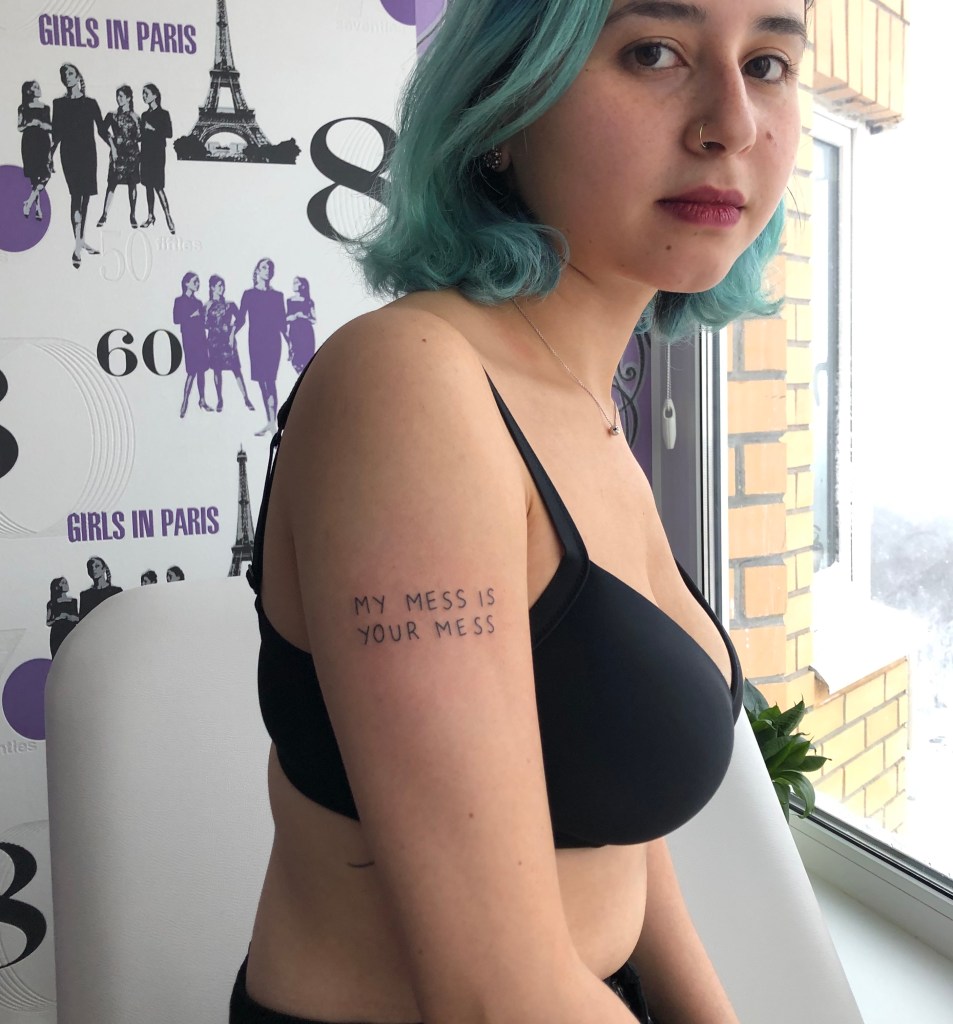
I was born in Tunisia, in a small town near the sea. I came to Moscow three years ago to study medicine, and my story is fucked up. So said Farah, a 22-year-old woman with blue curly hair, red lips, big cheeks, and a tiny ring in her neat nose.
What have you done? I failed my exams, and I was excluded three times. Saying this, she hid her eyes.
In what language do you study? In Russian, of course.
Так ты говоришь по-русски? I do know Russian, Farah said, as if it were something ordinary. But I find it easier to communicate in English. Reading your posts, I noticed that you know English, and I was very happy that here in Moscow I could finally speak English with someone. She offered a wide smile.
What caused you to fail the exams? I don’t know. I was depressed, the exams were very hard, and I never actually loved what I was doing.
Why did you choose to study medicine in Moscow? My mum decided for me. She wanted me to become a doctor because it is a respectable job in Tunisia. Since she met my father, she had dreamed of being a doctor, so by default she wanted all her six children to fulfill her dream.
I understand. But why Moscow? My high school grades were not good enough to allow me to study medicine in Tunisia, so my parents offered me the opportunity to study in Moscow. While talking about it, Farah kept smiling. I agreed because I wanted to leave Tunisia.
After this, I fell into thoughts about Farah and her parents. Her story, of a child suffering from the unaccomplished dreams of frustrated parents, sounded familiar to me. One way or another, we all face similar pressure, don’t we?
According to Western liberal opinion, young people like Farah first need time to understand what is going on, to experience different ways of living, to fall in love, to destroy something, maybe later to find the meaning of life, and only then choose a profession.
How do your parents feel about your exclusion from the university? They don’t know about it. When my mum finds out, she will kill me.
How do you think your mother will react when she sees the tattoo? She won’t forgive me for it, Farah said with confidence.
Why, then, do you want it? I like tattoos, and I like your work. I especially like the idea of your project. I couldn’t miss that opportunity.
I went through my notes and circled the keywords from the interview. Having done so, I decided to write a message to Farah’s mother: that the mess of her child was caused by her own ineptitude.
“Hi! Yes, I am. Do you already know what tattoo you want?” I replied.
“I have cancer, so I want something strong.”
“Tell me more about your story.”
“It’s simple. I was diagnosed with lung cancer a year ago. Doctors say I have three years left. But that’s not what I want to say. I want to say that I’m a fighter.”
I had never tattooed someone with lung cancer before. I had had clients missing limbs, people with severe obesity—but this was different.
“What does your doctor think about you getting a tattoo?”
“I have a two-week break from treatment. The healing might take longer, but that’s not a big deal for me.”
“Then it’s not a problem for me either. Let me think about it, and I’ll get back to you soon.”
Even as I said that, I felt uncertain. Who was this person with no profile picture, messaging me about his illness? Was Noam even his real name? Man or woman? How old? Bald from chemo? What if he was allergic to cat hair and collapsed in my studio?
“Hey, I’ve been thinking a lot about your story, but I’m stuck. The only thing that comes to mind are some Russian sayings,” I admitted. “If you could share more details, it might help me focus and get inspired.”
“I like the idea of Russian words. What sayings do you have in mind?”
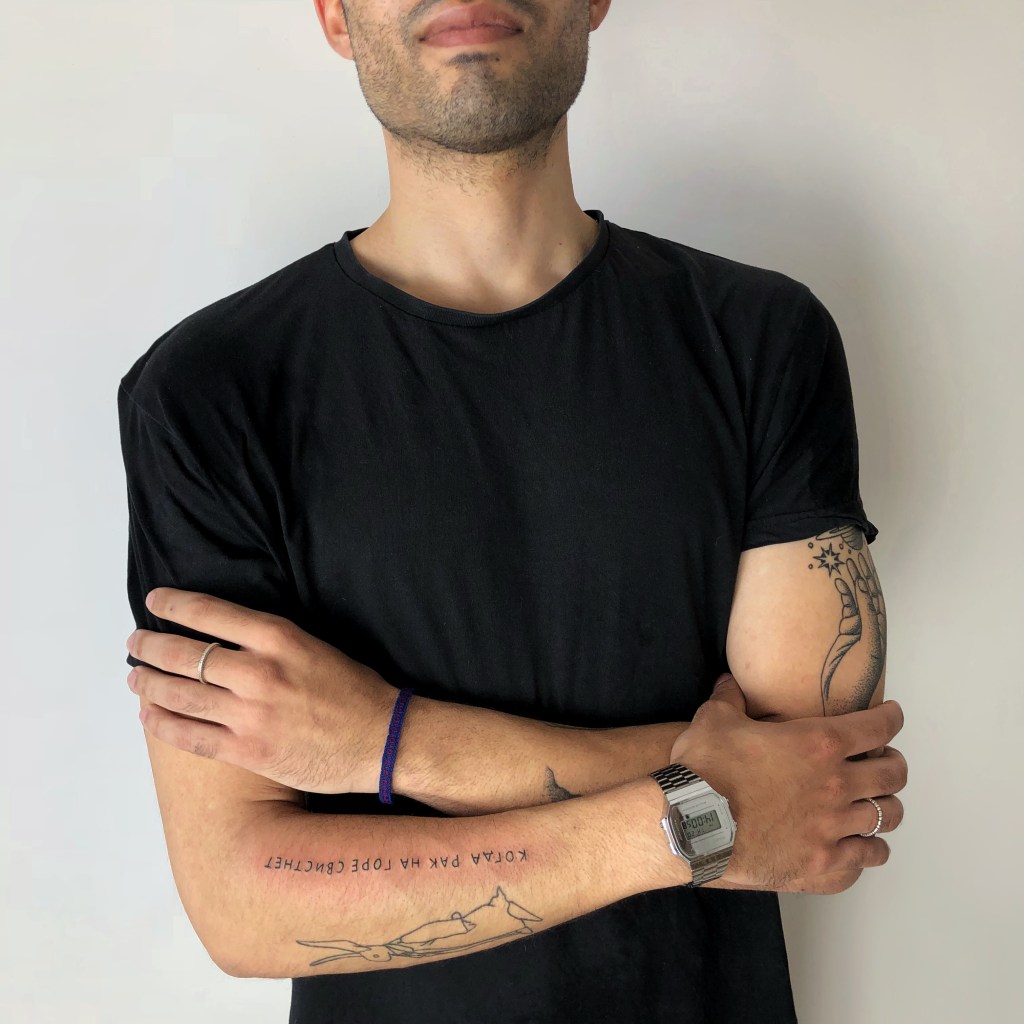
“Когда рак на горе свистнет,” Ityped. “Literally: ‘When the crab whistles on the mountain.’ It means something uncertain, something you can’t predict. The funny part? In Russian, ‘cancer’ and ‘crab’ are the same word.”
“That’s… provocative.”
“If you’re up for something ironic, I’m in.”
“Something poetic and humorous. I like it.”
“See you tomorrow.”
“See you.”
────────────────────
“You have an interesting face. What are your origins?” “My father is French, but originally from Guadeloupe. My mother is Portuguese.” “Sorry, your father is from…?” “Guadeloupe.” “Ah, Gvadelupe,” I pretended to understand, not knowing where it was or how to spell it.
Noam appeared to be about my age, my build—pale white skin, but with African facial features. I had never seen that combination in real life.
“Please, take off your shoes and come in,” I said, motioning toward the workspace. “Sure,” he replied, then coughed.
As I prepped my equipment, I asked, “Where do you want the tattoo?” Noam pointed to his forearm. Then he coughed again.
Despite the coughing, he did not seem weak—more like he was trying to hide his weakness. He would lower his chin to his chest, turn away, and cough carefully, as if afraid to break the silence or seem impolite. He never turned back until he was sure it had passed.
I admit, I did not know much about lung cancer before. Now I know it is most common in developed countries. Now I know that in 90% of cases, it is caused by smoking. The warning labels say “Smoking kills,” but nobody really listens—until they have to.
“How did you find out?” I asked. “I was leaving university when I started coughing up blood. So I went to the doctor, and he told me I had three years to live. That was a year ago.”
Three years. How little, how much can be done in that time? The words burned in my mind like neon. Three years. I still think about it sometimes. Three years.
“What were you studying?” “Philosophy and sociology at the Sorbonne. Then I did a master’s in communications at ESP.” “Sounds interesting. Who’s your favorite philosopher?” “René Descartes.” He fell silent. Normally, I would have left it at that, but something made me push further. “Why him?” Noam suddenly launched into a rapid explanation, mixing French and English, his words spilling out faster than I could follow. I had to stop him. “Sorry, I’m not great at Franglish. No idea what you’re saying.”
He kept trying—I will give him that—but a few familiar French words and some scattered English were not enough to get his point across. Sometimes, that is enough to understand what a client wants. But not this. Still, I understood something about him. His quietness was not just shyness—it was language, a gap between expression and comprehension. Some stories, I realized, would stay unspoken.
“And what do you do now?” “I’m a project manager in a communications agency.” It did not interest me much. Most of my clients worked in fashion or communications. Nothing unusual for Paris.
“Do you want the text facing you or me?” “My side.”
As I transferred the stencil, I caught an unfamiliar scent. Not unpleasant, just different. Maybe it was the after-effect of chemo.
“You have someone?” “Yes, a girlfriend. She’s traveling. She needs time to figure things out.” “I get it,“ I came back to reality just as I messed up the second “O.” Curved letters are tricky. You have to poke at just the right angle to get a perfect shape. Mistakes in tattoos cannot be undone, only corrected. I switched to a finer 2505RL needle and fixed the crooked letter.
When I finished, I realized the tattoo looked more like a handwritten note than a polished design. That did not bother me. It was a reminder. You never know when the damn crab will finally whistle. Maybe today. Maybe in three years. No one knows. Not your parents, not your doctors. Not even Google.
I thanked Noam for his trust and walked him to the door. Without a word, he got dressed and stepped out.
“Wait—you forgot to pay,” I said suddenly. He tapped his pockets, found his wallet. “Sorry, my mistake. Thanks for the work.” He handed me the money. “You’re welcome. Take care,” I called after him as he disappeared down the stairwell, the elevator still broken.
After greeting me, Camille quickly slipped through the narrow corridor, ignoring my usual rule about taking off shoes indoors. It’s not a common practice in France, so I normally ask my clients to do it right away. But not this time—Camille was already a step ahead of me and my rules.
I like teenagers like Camille : confident in themselves and their desires, open-minded, easygoing, and very active. They just come in and find their place. I like to think I was the same when I was eighteen.
Camille was dressed in black, just as I had asked. She wore a tight top, loose pants with pockets, and worn-out sneakers. She also had small golden hoop earrings—classic ones that looked tasteful yet understated on her beautiful, tanned, freckled face. Maybe one of her relatives had given them to her; who knows.
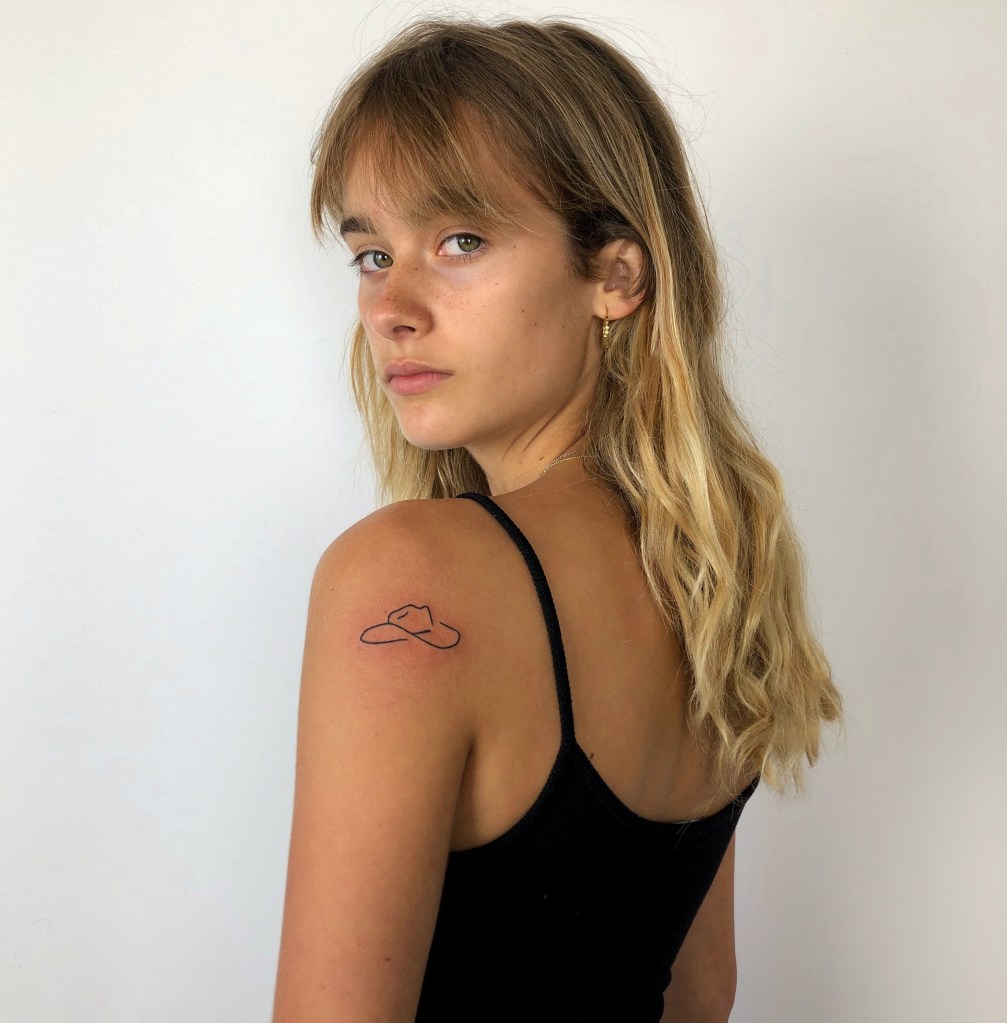
“Why do you want a tattoo of a cowboy hat?” I asked. “I spent the best summer of my life in LA, and I want to remember it like that,” she answered fluently—that was Camille. “Sounds good, I like it. I have a tattoo that reminds me of one summer too. But it was in West Crimea, not Los Angeles.” I lifted my pant leg and showed her the big tattoo of a UAZ-469 on my calf. She laughed. “How come you speak English so well?” “My parents are English. They moved to Paris before I was born, so I speak English and French equally well. The American accent I picked up from my friends while I was in LA.” “Cool! I’m picking up the accent from my friends too,” I tried to joke, but it didn’t quite land.
During the session, Camille seemed dreamy, thinking about LA—the city where her boyfriend is, her friends, high-quality weed, and cowboy hats. She was eager about her life and didn’t ask me a single question about tattoos.