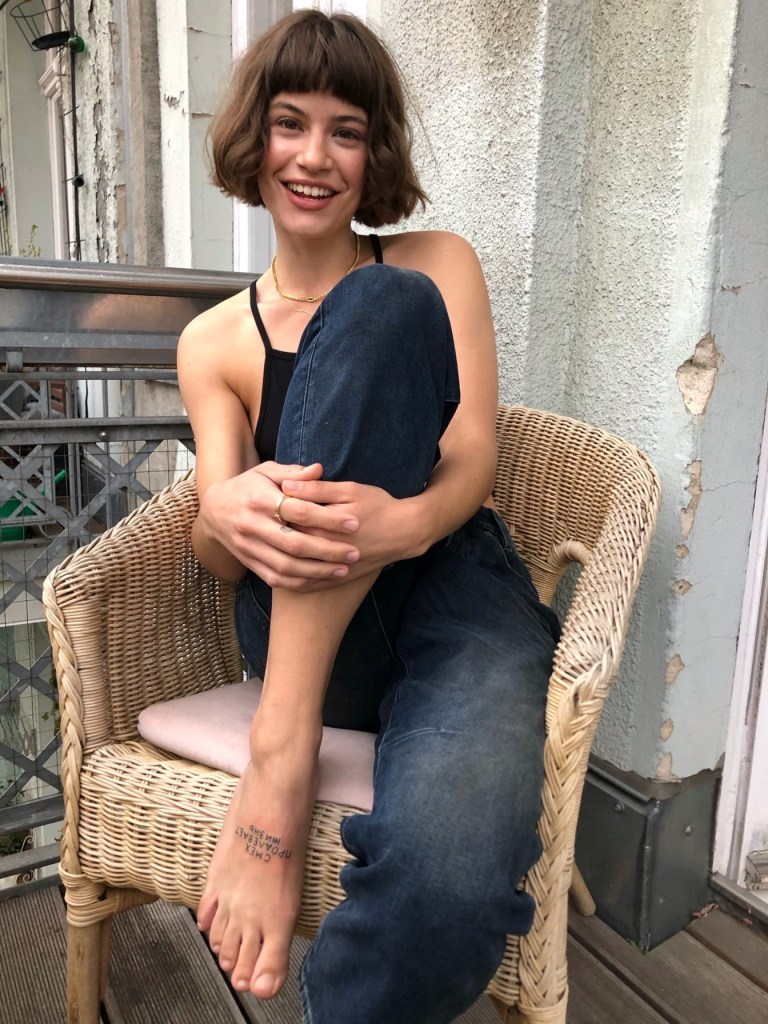
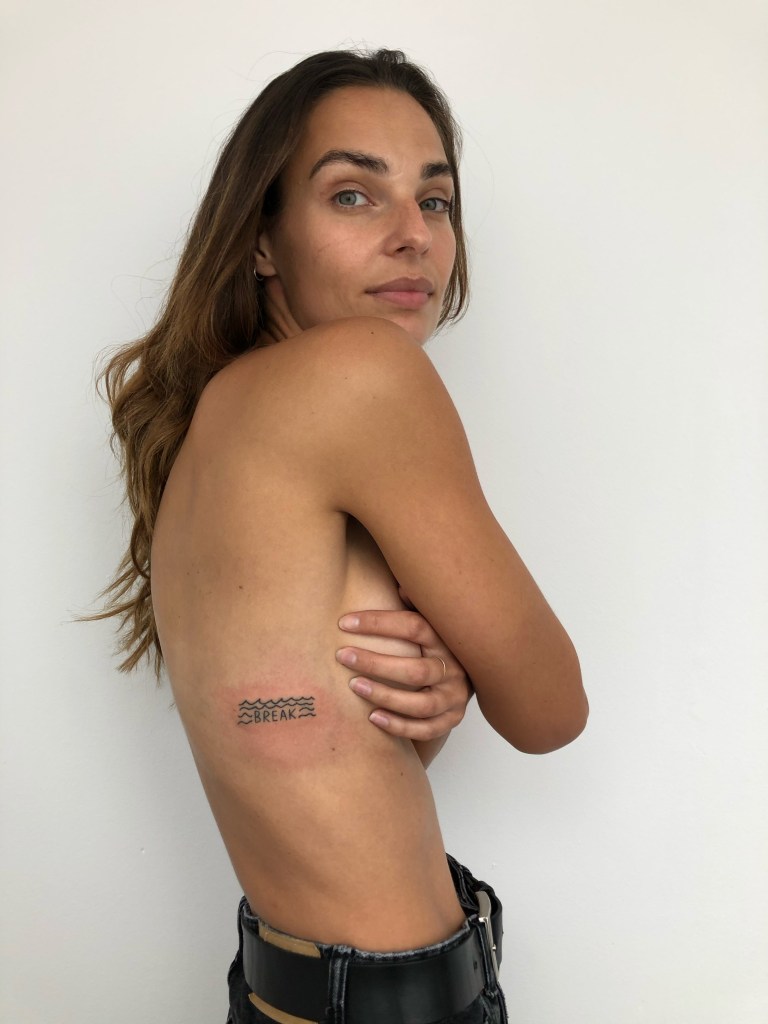
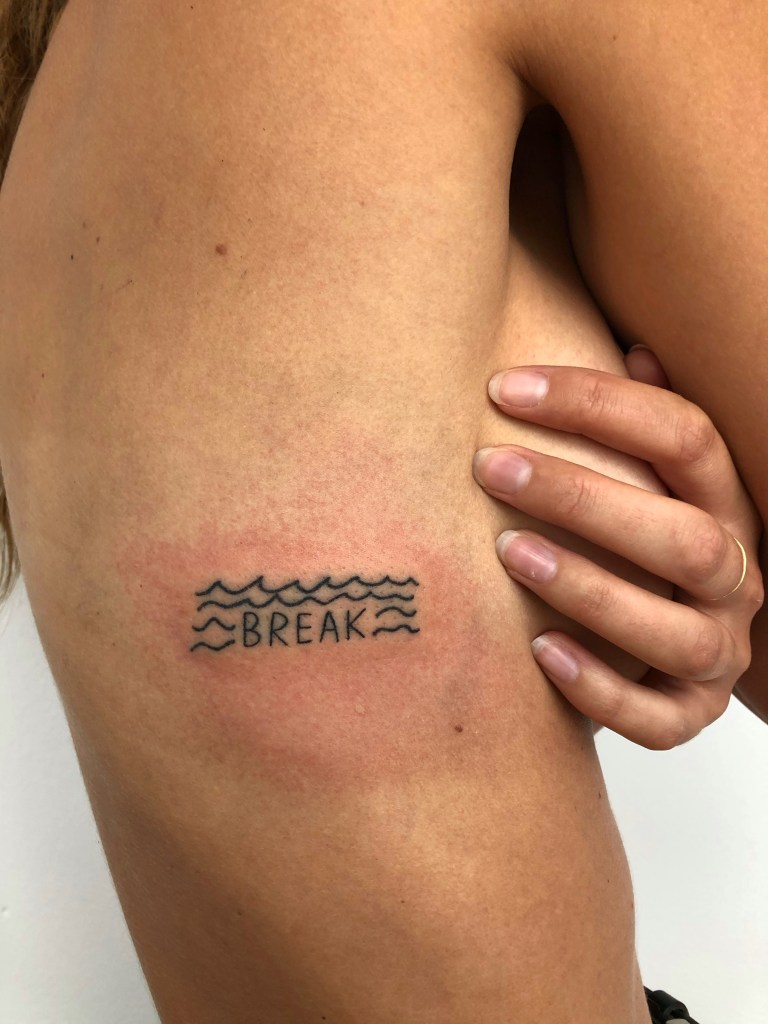
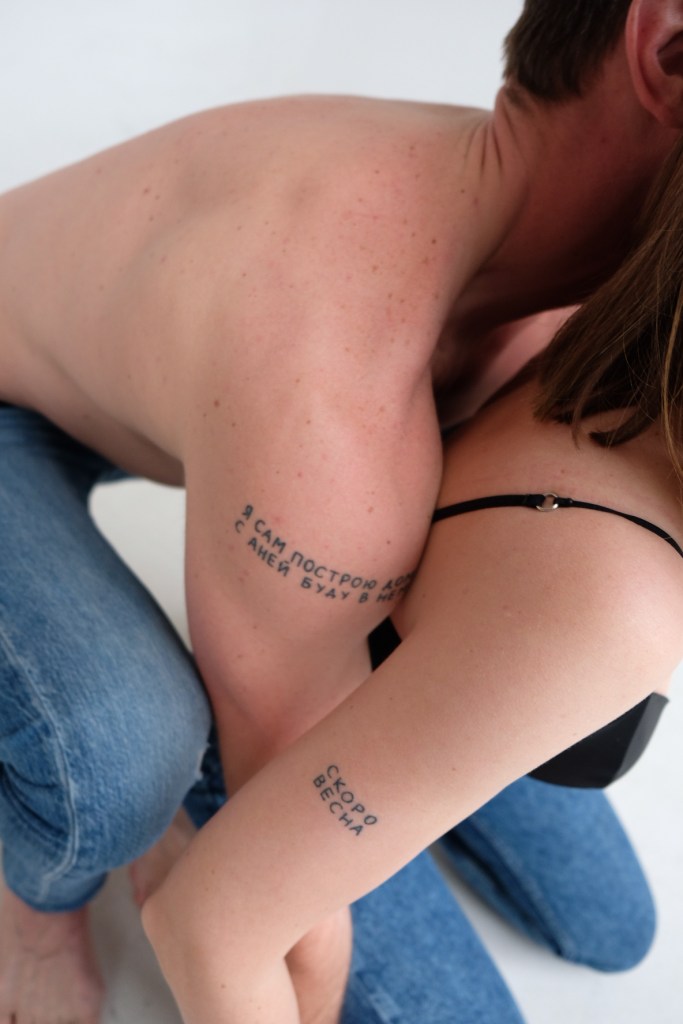
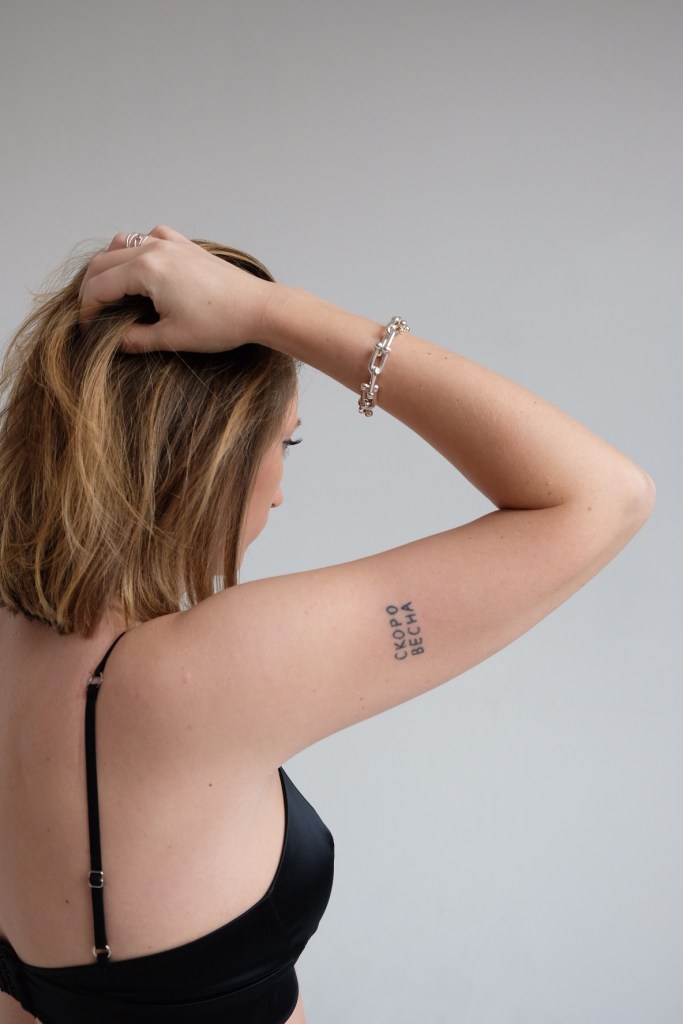
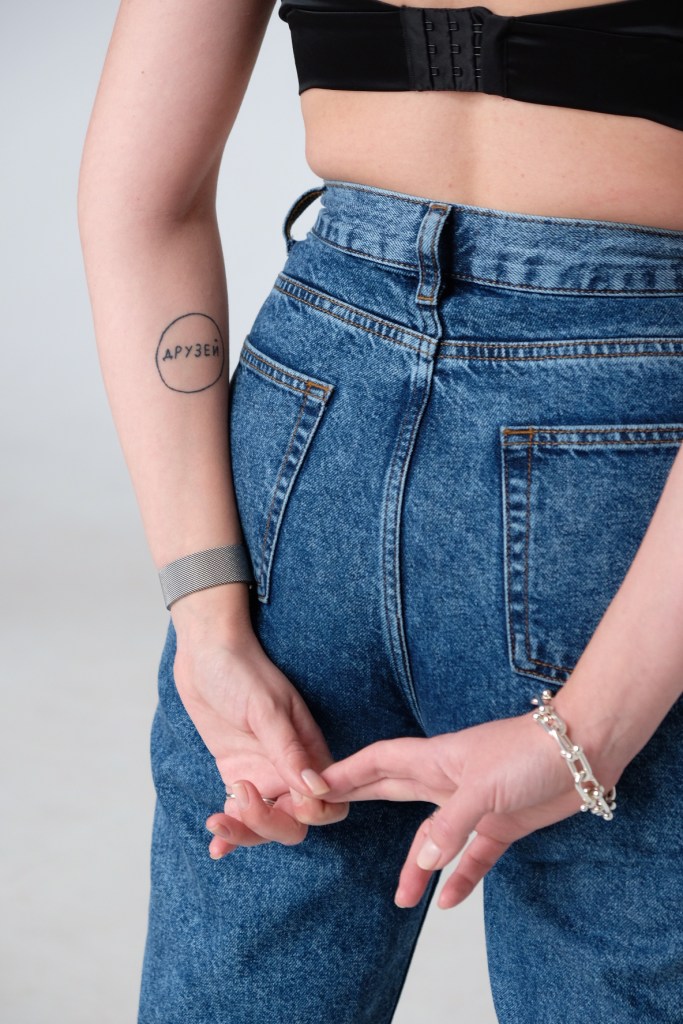
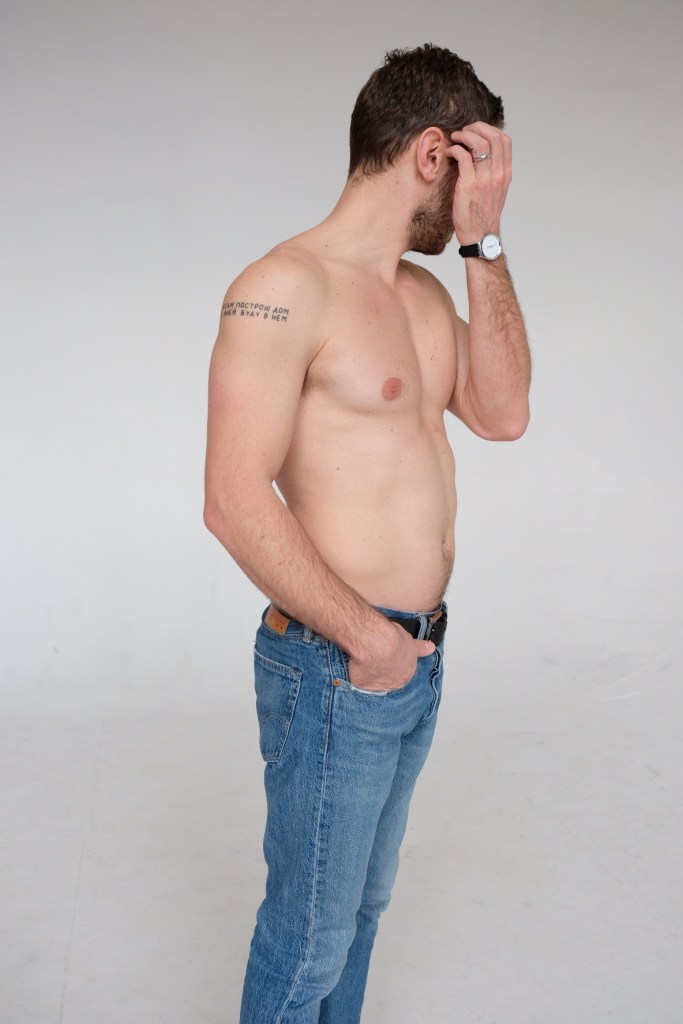
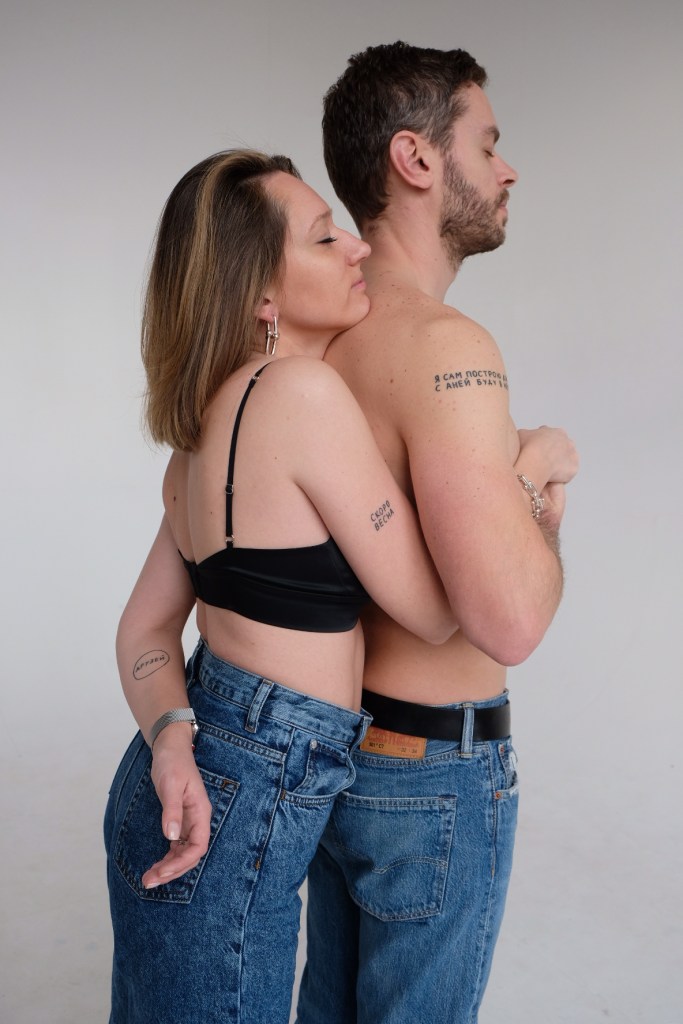
‘I was born in Bremen and grew up in the Black Forest. Then I studied nursing, first in Freiburg before moving to Berlin and finishing my studies. For almost two years I worked on an ICU (department that provides intensive care medicine), but I quit my job this year and became a freelancer. Now I do modelling, influencing, promotions,’ Lea smiled widely, exposing her full set of white teeth. I smiled back.
‘Why did you want to study nursing?’ ‘I wanted a safe job and I always liked working with people.’
‘What did you like most about nursing as a job?’ ‘Most of the patients are elderly people, they have the wisdom, I’m thankful for that. One emigrant told me that Germans are cowardly, they get settled into a proper job, find a safe home, and they don’t want to change anything, but change brings you joy and makes life interesting. Sometimes you just have to do things, to try them out. Sometimes this works and sometimes it doesn’t. It’s a view that’s really stuck in my head and it’s like a mantra for me today.’
‘Why did you become a freelancer?’ ‘I like being in front of a camera and find myself inspired by all the process of shooting. Do you mind if smoke a cigarette?’ She gently retrieved from her purse the pack of cigarettes. ‘No, go ahead.’ I replied. She lit her cigarette and looked me in the eye.
It was end of August 2020, my second time in Berlin. We were sitting at the table in a nice, big and bright room, part of an old apartment I had rented in Kreuzberg.
‘Who or what do you appreciate most in your life?’ I asked. ‘That I’m living my dream,’ she replied, laughing.
‘Is there something that you hate?’ ‘Yes, when people can’t be friendly.’
‘What is your philosophy?’ ‘There is no way to happiness, happiness is a way.’
‘What do you like most about yourself?’ ‘That I am honest, I know what I want and I’m always helpful to people.’
‘What do you need to feel happy?’ ‘Being healthy, not hungry, and having a lot of sunshine.’
‘If you can choose a superpower, what would it be?’ ‘To heal sickness.’
I marked the word ‘heal’ and thought of the watermelon, sitting in my fridge. ‘Would you like to eat watermelon?’ I asked. ‘Yes! I love watermelons a lot!’ she replied happily.
We were eating watermelon together, sometimes looking at each other.
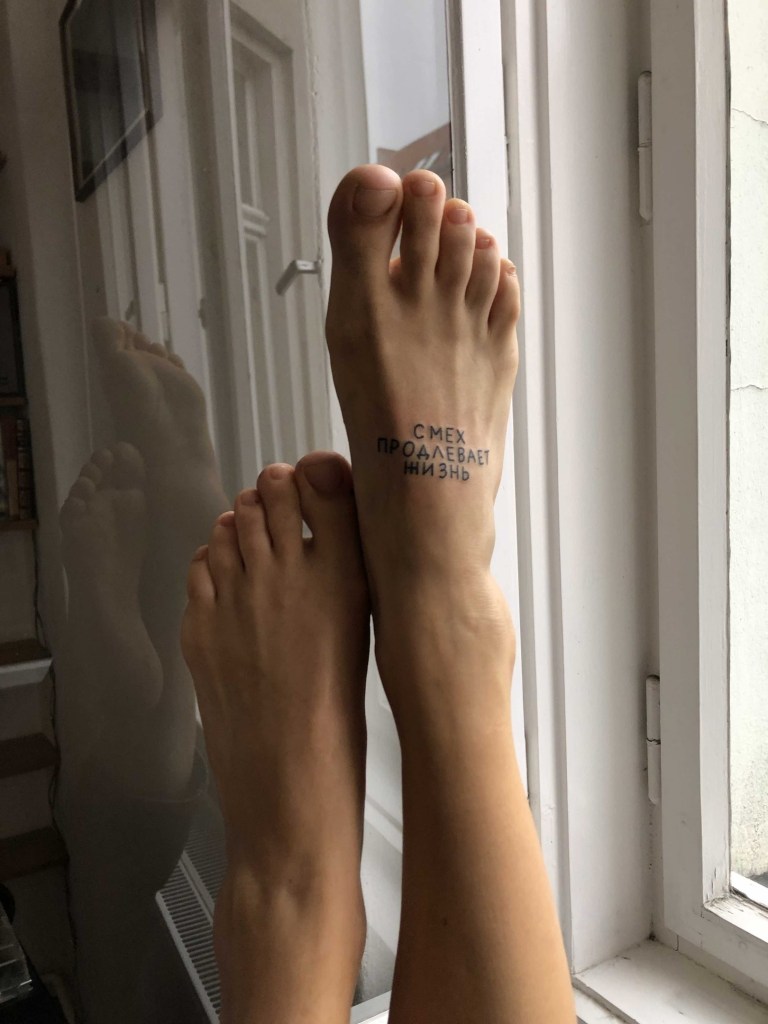
‘Why do you trust me to make your tattoo?’ ‘Actually, I don’t trust you one hundred per cent’ ‘Why then did you agree to take part in my project?’ ‘Why not? ’Then she grinned, placing her salmon tinted tongue onto those gorgeous white teeth.
«СМЕХ ПРОДЛЕВАЕТ ЖИЗНЬ» is a Russian saying, translates as “LAUGHING PROLONGS LIFE“.
‘If you could change something in the past, what would it be?’ ‘There is a lot… I mean, I’m happy with who I am now, but I would be less traumatized…’ Momentarily she lost her breath and began to cry. The tears were streaming down her cheeks tumbling from her chin onto the jeans. I took out my handkerchief and offered it to dry her eyes. She wiped her face and said, ‘I’m sorry, I’m not used to talking about myself so much.’
It was in Zagreb in June 2020. Suzana came to tell me her story and to trust me with her third tattoo.
‘Why did you decide to take part in my project?’ ‘I had a feeling, I don’t know, just a feeling that I want to give it a try. Suzana from five years ago wouldn’t have done such a thing.’ ‘What has changed in those past five years?’ ‘I no longer live in a small box. Five years ago I was surrounded by high walls that used to protect me from other people and to protect others from me. It was not necessarily a bad thing, but we need to know when to raise them and when to lower them. Sometimes we have to get vulnerable and allow others to enter our space, otherwise it will always stay unchanged. When I broke down my walls, I learned more, and I enjoyed my life more.’ Her voice had a cheerful intonation and confident eastern accent.
‘What is your passion?’ ‘I need to fight for the right things.’ ‘Tell me a few right things that you are fighting for.’ ‘For the weak, against injustice, helping others. I am known in my surroundings for helping people and animals. I can’t tolerate injustice, when I see it I feel pain and sometimes helplessness… I’m just trying to make a better world around me.’
‘Will you share with me one story; of a time when you helped someone?’ ‘It was Christmas and I decided to buy presents for two families. I bought some food and gifts for the children. The first was a single mother, with a daughter. I’m not in touch with them anymore, because the woman wanted only money, I didn’t feel the need from her to make a change, and she blamed everything and everyone around her. I can’t help such people. The second family was Agatha with an alcoholic husband and three children. Agatha greeted me with a big toothless smile, and I immediately melted. It was the most beautiful smile in the world. She was working 20 hours a day and was treated like a slave. She was a little ashamed that I was helping her, but was happy and thankful to have someone who thought kindly of them and wished them well. She was in need of care, and I gave it to her. I helped her to finish public school. After school she took cooking courses and is working now in a local canteen. In fact, she is the one who is the hero of this story. She is a brave woman who wished to change, and she did it, everything by herself. I was just a support to her.’ A pale blue-green web exploded around her pupils.
‘If you could change something in the past, what would it be?’ ‘There is a lot… I mean, I’m happy with who I am now, but I would be less traumatized…’ Momentarily she lost her breath and began to cry. The tears were streaming down her cheeks, tumbling from her chin onto the jeans. I took out my handkerchief and offered it to dry her eyes. She wiped her face and said, ‘I’m sorry, I’m not used to talking about myself so much.’
‘I understand, you don’t have to apologize!’ Her crying stopped, after which she returned my handkerchief. ‘I would change the relationship with my father.’ ‘What would you like to change?’ ‘I think I would learn more from him.’ ‘Is he alive?’ ‘No.’ ‘What happened?’ ‘He was a wonderful person before the war, but life had trampled over him and he couldn’t find the strength to fight anymore. Unfortunately, he snapped, and it was as bad for him as it was for us. My mother and I didn’t have a choice, and we ran away from him. Before the war he was a cheerful bear and everyone enjoyed his company, and that is what I am sorry for. I wish there had been no war so that he could have remained true to himself. He was an example to me of a relaxed and happy person. But he took all that away and gave me fear and distrust. That was when he caused me to start building my walls.’ She lowered her chin and hid her eyes. I kept silent for a while.
‘I noticed that beneath each of your photos in Instagram you display an elephant. What is your connection to this animal?’ ‘Once upon a time there was a little elephant, chained to the ground, he pushed and pulled the chain, but it was too big and heavy for him. Time passed and elephant became big and powerful, though he wasn’t aware of it, so he didn’t run away, rather that he believed he was not strong enough. The memory of the lack of strength deeply engraved onto his very soul and spirit. It is not the end of my story, I am curious enough to push and pull one more time.’
‘If you were not a model, what would you want to be?’ ‘I am going to rent some place on the island of Brač, have a garden and grow veggies.’ She lovely smiled at me with her cosmic eyes and generous lips, similar in shape to an apple leaf… and I melted.
“If you had a billion euros, how would you spend it?” He rubbed his broad forehead and said, “Actually, I have it,” then fell silent. I stared at him, unconvinced. Maybe he had not understood me. I met his eyes and asked again.
It was Paris, December 2020. Adrien was a stranger, arriving at my studio for his first tattoo, pulling two travel cases behind him. He took off his brown coat. “Like I told you on Instagram, my train leaves Gare de Lyon in four hours.” I watched him. “We’ll make it. Where are you going?” He hung his coat on the wooden rack. “Home. A village called Condillac.” Tall, dark hair, he had a kind, hexagonal face. His eyes looked tired, his stubble self-assured. He wore a striped shirt beneath a brown corduroy jacket—both unbuttoned—blue skinny jeans, and well-worn leather shoes.
“Where were you born?” “Paris.” He wandered into my studio, glancing around. I gestured toward the armchairs. “Have a seat. What do you do for a living?” He sat, crossing his legs. “I’m an antique dealer. I have my own shop in Saint-Ouen, where I restore and sell vintage lamps and furniture. I also make tables from reclaimed wood.”
“How did you get into that?” “As a kid, I spent every holiday in castles—Belgium, the south of France. Every room was filled with incredible beds, desks, lamps, paintings… Most of them had a soul. No one can imagine the fear I felt. These objects carried stories. The famous people who once owned them, the things written on them, the people who had slept in those beds…” He rolled up his sleeves, revealing athletically muscular forearms. “I was told that in one room, a clergyman had shared his bed with a queen. And that hole in the painting? A bullet mark—from when my great-grandmother, a princess, took up arms against the enemy. But these things weren’t ghostly or creepy. They had presence. Ancestors watching over me. I had to respect that.” He fixed his gaze on me. “I’m sorry, what was the question?”
I smiled. “How did you realize you wanted to be an antique dealer?” “Ah—yes. Well, whenever I traveled, I hunted for antiques. It became an obsession—to bring something back. To touch the memories of a place through its everyday objects. In India, Nepal, Bangladesh, China… I always thought my trips could pay for themselves if I found enough animist masks, carved wood, or bronze candleholders. But my backpack was always full too soon.”
“Do you remember how this obsession started?” “It was small objects at first—old books, wooden statues of saints like the ones in my mother’s living room, strange and beautiful candleholders, my father’s typewriter, pocket knives… skulls.” “Skulls?” “Yeah. My first was stolen from my biology classroom when I was fifteen. I was in boarding school, fascinated by biology. One night, just before the end of the year, I knew I was leaving, so I took it. A trophy, I guess.” “I assume you have a lot of trophies.” He smiled. “Another skull I found in the catacombs. After spending the whole day there, just before exiting, something caught my eye. My flashlight landed on a skull—abandoned, probably by someone else who had tried to take it home. Just like me. So I picked it up. I still feel close to it.” He pronounced “still” the French way—with a soft “l” at the end.
“What do you like most about your job?” “Woodwork. I need solitude for it. It takes time. Wood is unpredictable, the way it moves. It has depth—like paintings. And I love the finishing work. It gives me peace.” He massaged his right wrist. “I do everything myself. If my clients in Paris…” He gestured with open palms. “Is that why your forearms are so broad? From carrying tables? Or were you just born that way?” He hesitated. “I think both.”
“What’s the hardest part of your job?” “Feeling stuck. Running constantly—from clients to family, family to clients. The hustle, the noise.”
“What inspires you?” “Nature. When lightning strikes a field, it leaves a mark that looks like a tree branch. It does the same on people. It’s called a Lichtenberg figure.” A car honked outside.
“What do you think is humanity’s greatest purpose?” He exhaled. “I don’t think there is one. Everyone wants what others have. We’re never satisfied. I don’t mean myself, but I’m trapped in it too.”
“So, no great purpose?” “No. If anything, it’s just… society. The way we think. We create new things—useless, not useless. It’s easy for me to say. I’m lucky. I live in Paris, I have a roof, I eat whatever I want, my kids are healthy… And still.”
“What is love?” He smiled, exhaling loudly. “Love is sharing. Whatever you can. A smile, a cigarette, a life, money. If you share, you give love.”
“What does your ideal world look like?” He leaned back, looking up at the ceiling. “Ideal? A world where everyone rides bicycles. If you want to go to China, you go on foot. And…” He smiled suddenly. “A friend returning after four years and bringing you chocolate. And you haven’t seen chocolate in decades. And it’s the best Christmas you’ve ever had. That would be a beautiful world.” He hid his smile, lowering his head.
“What is the most extraordinary thing you have ever done?” He looked down at the black-gemmed gold ring on his left hand, rubbing it absentmindedly. “Children, really… They give me new meaning. They bring me so much joy and pain, but it’s worth it.”
“What is the hardest decision you have ever made?” “Mmm… I lost my mom when I was 27, maybe 28. She had a bad disease for four years and… she died. Six months later, my grandmother passed too. At that time, I was empty. I had no energy left for anything. I was ripped apart just from seeing her like that. It was too difficult for me. And it wasn’t really a decision—it just happened that way. I wasn’t running away, but I couldn’t find the courage to be there. And yeah, I have regrets.” He gazed out the window, his focus distant.
“Do you remember a moment, maybe from childhood, when you felt pure happiness?” “Yeah… but it wasn’t childhood. It was the south of France, on the Atlantic coast. I was 17, I think. I had a big circle of friends, and we were all crammed into a 30-square-meter apartment, maybe 15 of us, with an ocean view.” He stretched his arms toward me, as if measuring the space. “Beautiful waves, an empty beach… It was very early morning, maybe after a long party. And I felt—simultaneously—completely empty and absolutely full. Just pure joy, total simplicity. An instant of grace.”
“If you had a billion euros, how would you spend it?” He rubbed his broad forehead. “Actually, I have it.” Then he fell silent. I stared at him. Maybe he had not understood me. I met his eyes. “I mean a billion euros, not a million.” He lowered his chin toward his chest. “Maybe… not for the record. I don’t know.”
“It seems like we need a second interview. Now, tell me, where’d you get all that money?” “When I was 25, my mom was already sick. My sister and I started handling her paperwork, and soon we realized—we had a lot of money. That also meant a lot of responsibility. Managing it takes time. For people who really care about their money, it can be a full-time job. When my mom died three years later, legally, it became mine.”
“How does it feel to be rich?” He shook his head. “It’s one of my biggest problems. I never consider it mine. It’s an inheritance. And that concept terrifies me. If I had made the money myself, I wouldn’t have a problem spending it. But it came from my mother, from her mother, and her mother before her. I never wanted to be rich. It’s a burden—social, ethical, environmental, local… And finance doesn’t care about those things. So I have to detach myself from the idea of profit.” His face flinched, as if he had just sworn.
“Do you think you could lose all your money in a global economic crisis?” Two deep lines appeared between his eyebrows, his lips tensing downward. “A global crisis? I don’t know… sometimes I wish it would happen. If the concept of property collapsed or became obsolete, I’d be in the same position as everyone else. Society would have to evolve into something new—good or bad, I don’t know. But I don’t think any crisis would make me as desperate as today’s migrants.” “Do you mean refugees?” “Yes, refugees! Again, I’m the lucky bastard.”
“Tell me one last thing: Does the lucky bastard believe in a bright future?” He leaned back, tilting his head. Then he touched his lips. “No. This is just the beginning. And I think it will only get worse.” His left hand curled around his shirt, gripping the fabric over his heart.
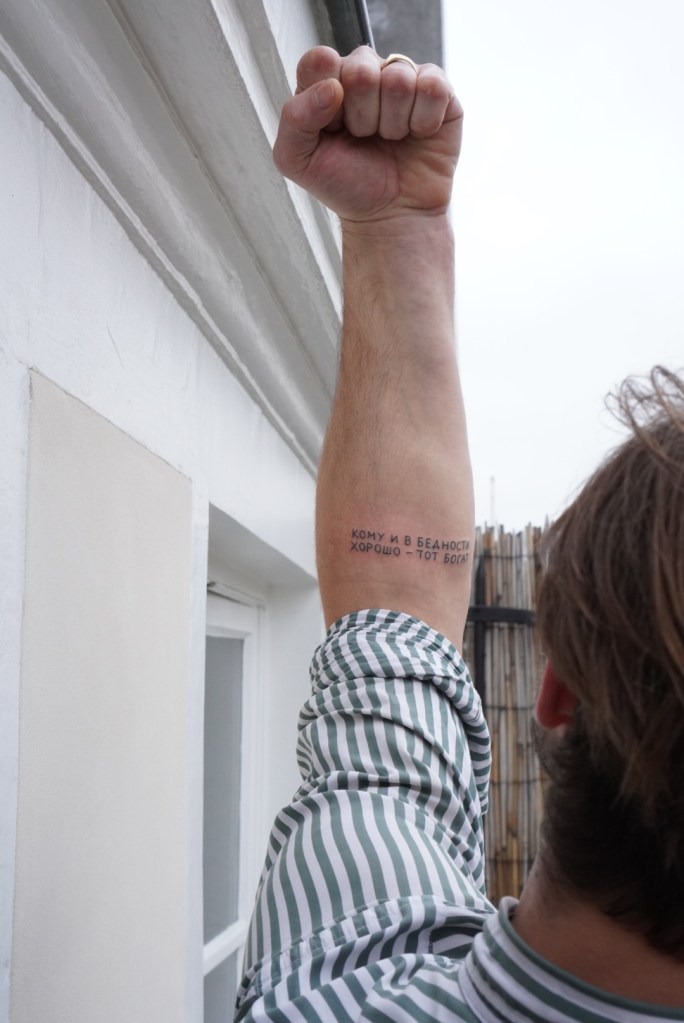
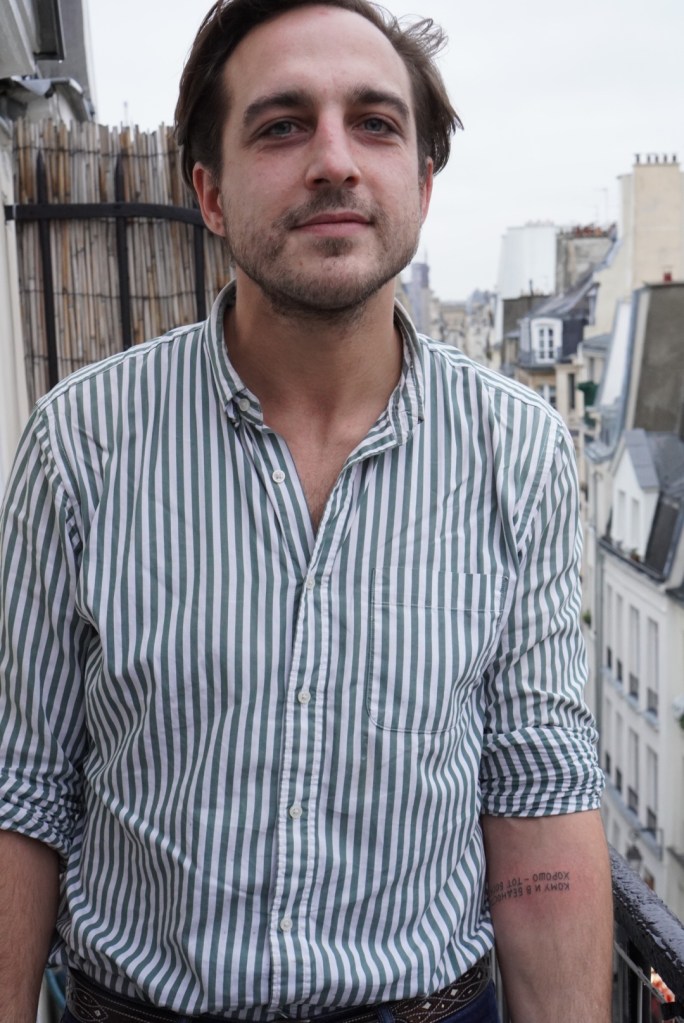
The tattoo is translated from Russian as, “He who is happy in poverty is truly rich.”
Although he might deny it, Maksim Bratsun, at thirty-six, is the most enlightened person I know. He is one of those guys who learned how to love not only himself but all that surrounds him. It seems like he awakened and now lives in the moment. Last year, when I interviewed Maksim, he was living in Vilnius, renting a fancy apartment, working as a web-designer, music-promoter, DJ and also as a designer of bed sheets that had been sewn in Belarus by his mother. He planned also to earn more money by manufacturing and selling reusable straws. Today Maksim lives on the island of Bali and collects donations via the Internet to feed the hungry, whilst recently teaching Hatha Yoga. Through our friendship I learned that any active file on Maksim has to be updated every two weeks. Therefore this story may seem obsolete, but I thought it might be fun to see what he was like then, and it is with this in mind that it is reproduced here.
***
The first time we met, Maksim was modest but sincere, easy to talk but not too chatty. It was in Vilnius, in August 2018, when he set up a meeting for a tattoo with me.
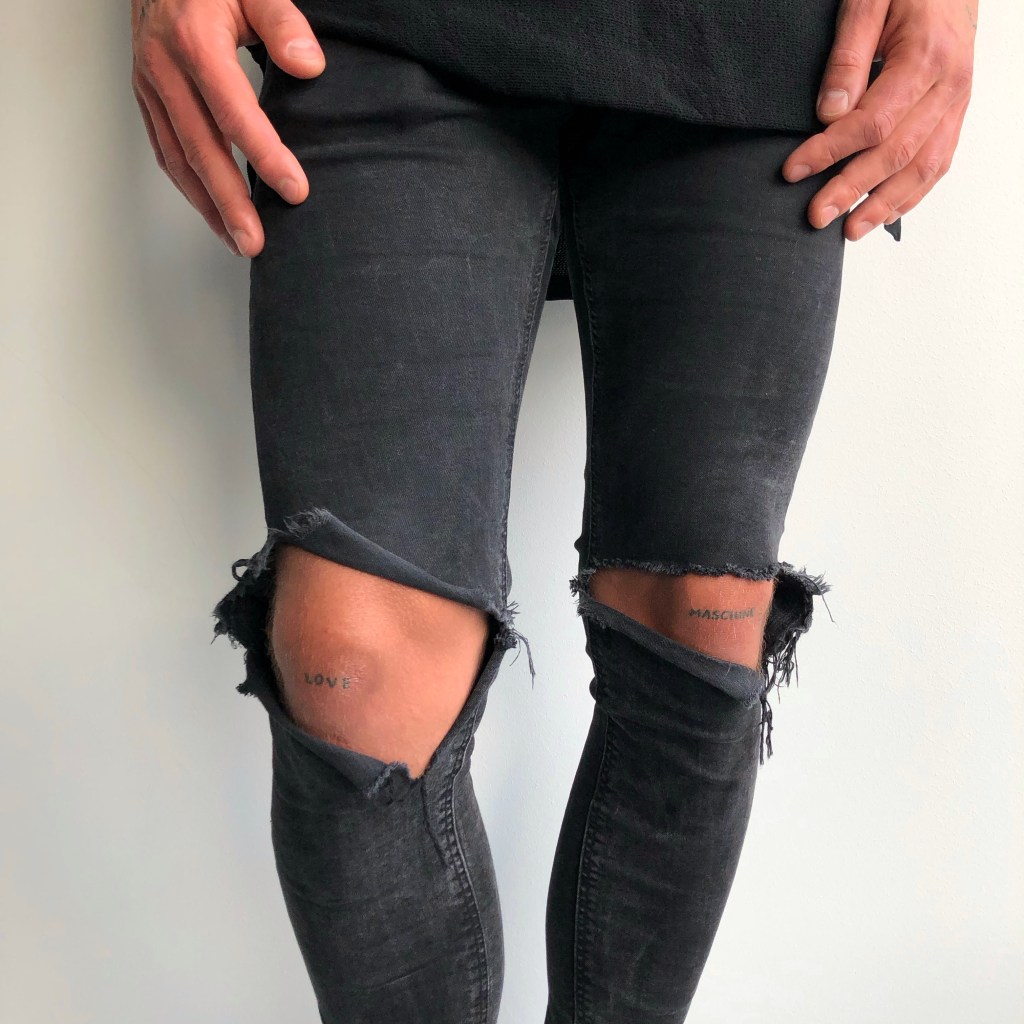
‘Why do you want to tattoo Love Maschine (stet)?’ I asked him, this tall thin stranger with the big nose, wearing black skintight jeans with torn knees. ‘It is a story about self-love,’ he said. ‘To get love, to make love, to experience love, to be love, first thing you have to do is fill yourself with love, like a tankful of gasoline.’ He paused with a long erm. “I found it while working on my bike, cutting away all the redundant things and keeping only the essentials. The more I loved myself the cooler my bike was.’ I thought I understand him.
The second time we met was also in Vilnius in 2019 on the 12th of March. Maksim and I were taking the oath of Lithuania. We both were Belarusian citizens before that day. Maksim looked very good, too tan for winter, with a kind smile, wearing the same torn jeans and having the same unusual, delicate, flashy and pernickety haircut. After the oath we arranged to meet at his place.
‘What is the rent for this great studio?’ I asked him, looking at the huge windows. ‘550 plus utility,’ he answered and added: ‘A real deal!’ I noticed that he spoke with a burr and wondered why haven’t I noticed it before.
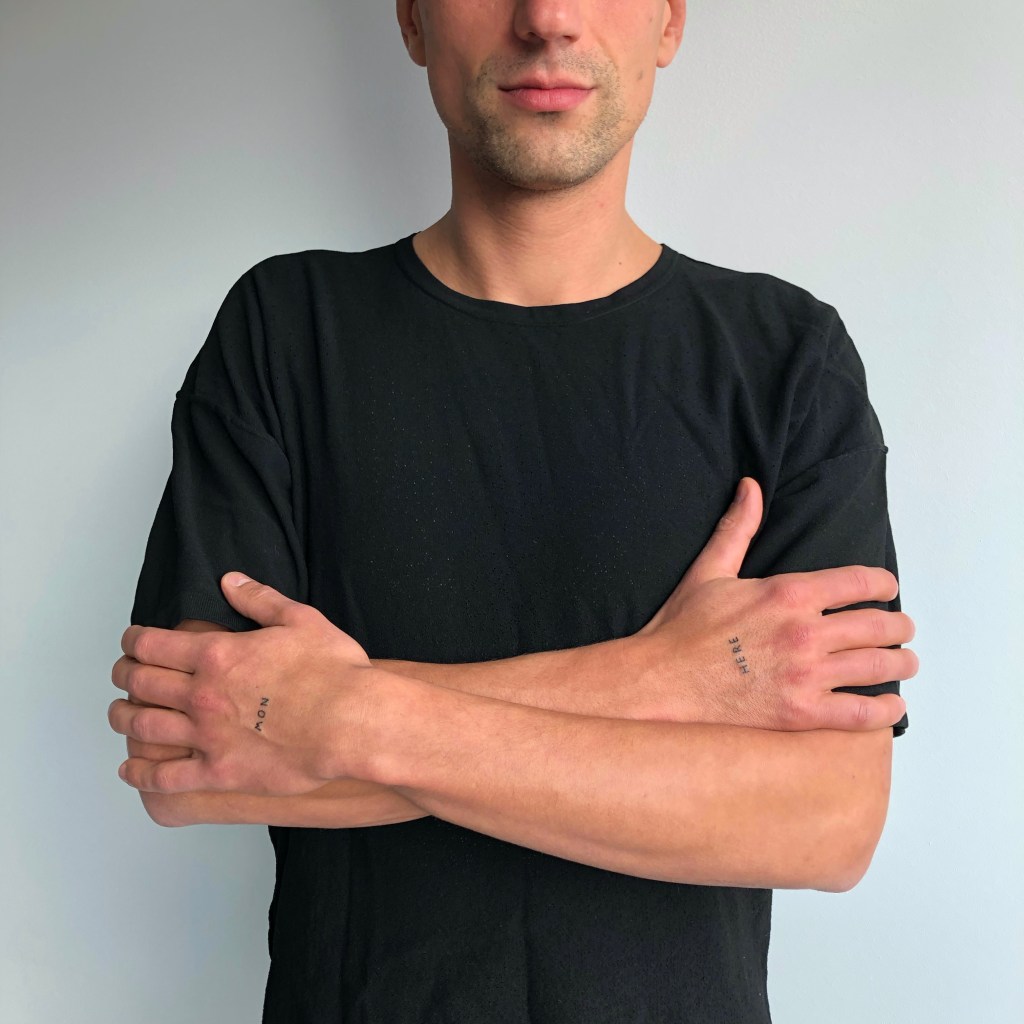
‘Beautiful place! What do you want me to tattoo,’ I asked him. ‘Ten minutes before you came in I felt the necessity to read a book called Be Here Now, written by Ram Dass,’ Maksim said with the excitement. ‘I’ve read a couple of pages and understood that I want to tattoo these words, here and now, the same words you have on your face but in English and somewhere on my arms.’ I looked at his long arms and proposed that my tattoo should be on the back of his hands. He hesitated but not for too long.
Later Maksim said to me, that after this tattoo he began the journey towards himself and only after reflection did he really understand the meaning of HERE and NOW. He will say that it is the only time when you can live completely. He calls this theawakening.
The third time we met was in September 2019. He came to my studio in Paris for another tattoo. He was attractively funny, shining and wearing a leopard jute. He had a new tattoo on his throat SWALLOW, the last letter leaked out like a bruise.
‘Couldn’t you wait for me?’ I asked staring at his tattoo. ‘I really needed it at that time! I went to the best tattoo parlor in Vilnius and asked for a handpoke, just one word. I had spent an hour with the tattoo master trying to copy your handwriting and then he said that he was unable to do it handpoke, so we did it by gun,’ he laughed.
‘I am glad you are not upset,’ I said. ‘What are you doing in Paris?’ ‘Here is the biggest exhibition of fabrics right now,’ he said,’ I wanted to touch the most advanced recycled materials.’ ‘Right, you wrote me on Facebook recently that you plan to make some men’s jammers.’ ‘Yes, but they will be eco friendly men’s leggins,’ he corrected me.
Then, with some pride, at length I told him how I had moved to live in the forest and how my life dramatically changed by that. I could go on for long if he had not interrupted me.
‘I have a flight from Beauvais in four hours and I want to get on this plane.’ ‘Why didn’t you tell me from the beginning?’ I got nervous. ‘You should be leaving right now!’ ‘Tattoos first!’ He said confidently.
‘Okay! What do you want to get?’ I thought he will be late but I didn’t dissuade him. ‘I want OPEN at the centre of the chest, the heart chakra, and I want SURRENDER on the belly, bellow the belly button, the sacral chakra.’ I didn’t know the meaning of the second word, but there was no time to ask.
***
Interview with Maksim. 20 October, 2019 Our fourth meeting. At his place in Vilnius.
‘What is happiness for you?’ I asked Maksim. ‘To be aware of who I am,’ he answered, pacing around the kitchen and brewing tea in some unusual glassware.
‘Who are you?’ I asked him. ‘I am a living spirit that’s inside of me’ He answered, deftly sitting down at the table.
‘What do you love most?’ ‘I love love, I love adventures, honesty and openness.’
‘Where were you born and raised?’ ‘I was born at the station Bezrechnaya, not far from Chita. But soon, along with my parents, we moved to Mongolia. We lived there for three years and then moved to Buryatia.’ Maksim rose from the table and approached his jacket. He took a package of tobacco, rolling papers and a lighter out of his pockets. ‘When I was six,’ Maksim continued to tell, ‘we moved to Belarus, to Zasimovichi town. We lived there for three years and then moved to Lida. In Lida we lived for six years and then moved to Fanipal. Altogether, though born at the station I am scattered around the world.’ He said, ending with the completed cigarette.
‘Let’s go outside,’ he said. I took my notebook and went out to the balcony after him. The sky was blue, Maksim’s shirt was white. I sat on one of two chairs and placed the notebook on my knees.
‘How many times you have changed school?’ ‘Eight times.’ ‘How do you think it affected you?’ ‘It certainly toughened me up, taught me to adapt to new conditions and teams.’
‘What do your parents do?’ ‘They are in the military.’ ‘What was your relationship with them?’ ‘My father was persuading the military way of parenting. He had been feuding with me, imposing his authority, in return, of course, I rebelled. I ran away from home, smoked cigarettes and listened to rock-and-roll. Mama was easier, generally she was more liberal in life.’ ‘How did he imposed his authority over you?’ ‘He suppressed my dissidence, my will to have a free thought. I questioned the foundations from an early age and it made him very angry. I used to ask the question “why” endlessly, thereby shattering his disciplinary authority, his hierarchy. It became a real hobby of one little nonconformist.’ ‘What kind of relationship do you have now?’ ‘Most of our hardships sorted out when I moved to Vilnius and began living on my own. Perhaps it was the first time in my life when we could talk as equals, without all his authoritarian rubbish,’ he said rolling a new cigarette.
‘How do you think, what is love?’ ‘Love is to be aware that you exist with someone for someone. Love is about sharing.’ ‘Sharing of everything, or are there some boundaries?’ ‘There are some boundaries.’ Maksim lit the cigarette.
‘What are your plans?’ ‘I’m going to India. I’m going towards myself. Going to spread love,’ he said pensively.
‘What was your biggest adventure in life?’ ‘My journey which I call Back to the roots. It is a tour I made visiting places of “military glory” from my parents’ past.’
‘Tell me more about this journey.’ ‘On the 1st of June I left Vilnius on my motorbike, planning to arrive accurately on the 14th of June to the location where I was born 30 years ago.’ He dragged on a joint, but it went out. He lit it again and continued. ‘8000 km behind, after I’d crossed two thirds of Russia I finally appeared at the station Bezrechnaya, my birthplace. There was no stone left unturned, all gone. A heath at the back of beyond, an emptiness and tumbleweeds. I remember I put my tent up and enjoyed the blood-red sunset, appreciating the loneliness and a drop of rum from the flask, which apparently had been leaking throughout the whole trip.’ Maksim finished his cigarette and we went back to the table.
‘After that you headed to Mongolia, right?’ ‘Yes! Mongolia is a place of an untold beauty, still untouched by civilization. You can ride through the country for hundreds and hundreds of kilometres and you won’t find any people, asphalt roads or a GSM signal. Everywhere you look, only flat unrippled prairie. It was so calm and pleasant there, that I instinctively returned back to my genuine roots – mother nature. I fine-tuned with wild animals and birds and harmonised with the rhythms of day and night.’
‘What is your most memorable moment from Mongolia?’ ‘The racing herd of antelopes. They graciously jumped over my path and I was racing along with them, at their speed, on my Japanese horse, the red Honda. Hundreds of agile wild antelopes. I was crying with happiness, out of love to life and to the universe. And then we parted, as unexpectedly as we had met.’
‘What has this journey taught you?’ ‘To be patient. A week after I had met the antelopes I tried to cross a shallow river on my bike. It appeared much deeper and faster than I expected. The ice-cold river knocked me down, with me tightly clutching my bike. We slowly drifted down with the flow. The river tried to swallow both of us. I managed to get my Honda out only after 40 minutes battling the course. I had frostbite on everything below my chest, but I was more concerned about my machine. The water got into the engine so I couldn’t move any further. Imagine how shocked I was when I found out that a new excellent bridge was just one kilometer away from where I had tried to ford. I was in such a rush that drowned my bike and almost got myself killed. This lesson of patience that so ingeniously was given to me by the universe I’ve learned for life.’
‘How many days did your journey last?’ ‘33 days, the happiest days of my life.’
I looked at my watch. It’s been three hours since I started the interview. I understood that it’s time to wrap up.
‘Is there anything that you hate? If so, what is it?’ ‘There is nothing I hate,’ answered Maksim.
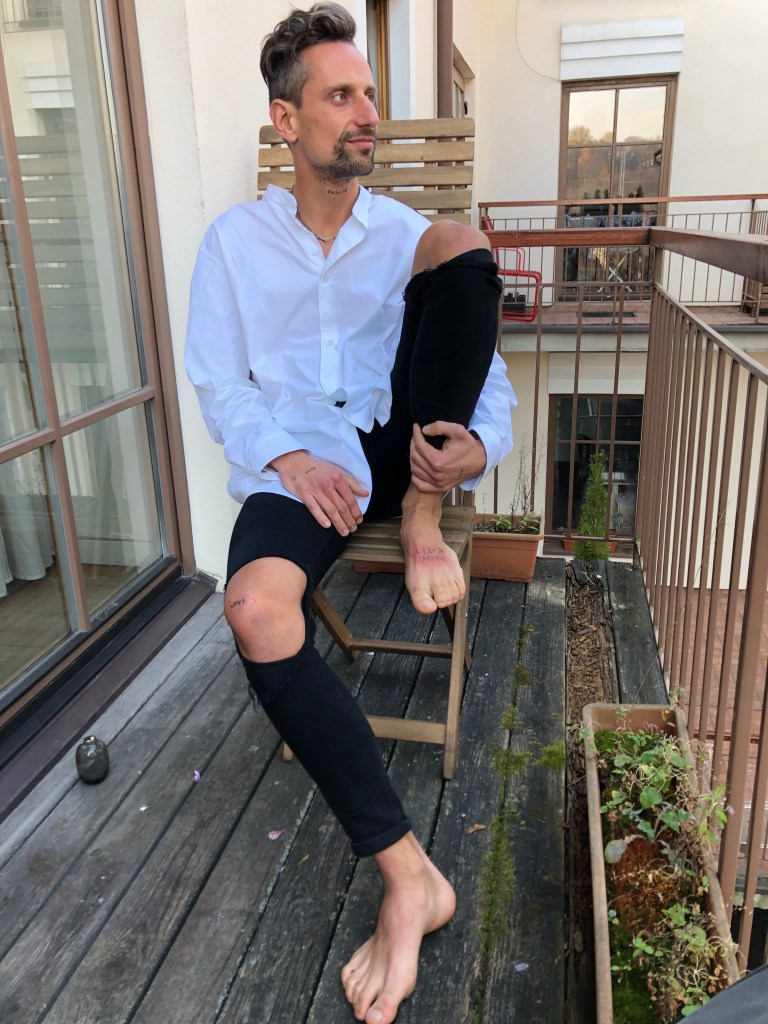
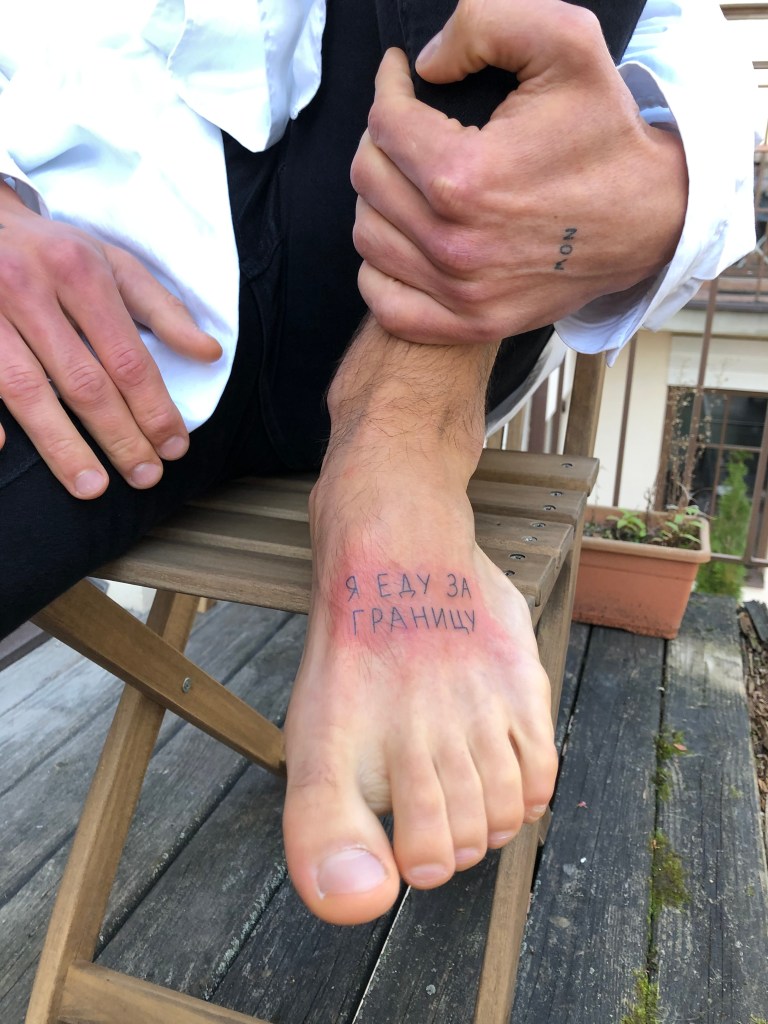
Following the idea of my project Your Story By Me I wondered what kind of words I may use to describe him best, including not only the stories of his travels but also his will to look over the fence of consciousness, his desire to overcome borders that people indulge on themselves. This is how a phrase “I AM GOING ABROAD” appeared in my mind.
I like the double meaning of these words, I thought, it will be a perfect tattoo for a person who is finding himself and is opened to whatever new life brings.
‘Get undressed!’ I commanded. Maksim for the first time appeared in front of me without his torn black jeans. I was scanning his body until I stopped at the top of his foot. As if he is going abroad by foot, I thought.
If you feel sympathetic for the character, feel free to support his initiative to feed the hungry, donate here: https://foodbank.co
She came to the village in a dark grey Kia hatchback. Her young Chinese car looked sporty: big rims, low-profile tires, tinted windows, and sharp lines running from front to back, visually lowering it even more. From the balcony of my old limestone house, I watched her approach. She sped over a sandy, stony stretch of road and then straight into the grass. There was no road there, but she must have seen my car under the shed and turned toward it. She parked between the vegetable garden and the concrete steps. The door opened, and slender, tan legs in perfectly clean New Balance sneakers stepped out.
“Hello! How was the drive up here?” I shouted. “I didn’t find your house right away, but I’m here. It’s so surprising — my grandfather lived nearby,” she pointed east. “Over there! Over that mountain!” she said, walking toward the balcony. “When I was a kid, I spent every summer with him, but I haven’t been there in 23 years!”
She wore a black T-shirt and black shorts. The temperature outside was +29°C. I wondered if she was wearing black because she knew I photograph people in black clothes, or if it was just a coincidence. I moved the interview table out of the sun.
“Nice to meet you. My name’s Arnest,” I said, offering my hand along with a glass of water. “Nice to meet you too. Mateja,” she replied, clinking her glass against mine.
What do you do? I have my own brand, Franchela. I started five years ago. At first, I made backpacks, but now I focus on big grocery bags.
She began talking about supermarkets, single-use bags, and ecological disaster, but I didn’t manage to write it down. I was distracted by my pigeon, Sasha, who had landed on the balcony railing and was drinking from my glass. I waved him off and returned to the interview.
Do you have a hobby? Yes, I danced jazz ballet and hip-hop for 17 years, she said, crossing her clean-shaven legs. What’s the difference between classical ballet and jazz ballet? Jazz ballet combines the precision and techniques of ballet with the fluidity of jazz — more relaxed, more free — but still technically very similar.
Sasha jumped from the patio umbrella and landed on Mateja’s knees. I hope he won’t shit on her, I thought.
What’s your philosophy? Live and let live! Mateja said, patting Sasha’s head with a smile.
What ways of communication do you understand or feel better than speaking? Vision. Eyes can tell everything.
If you could choose a superpower, what would it be? Invisibility.
What laws would you like to change? The law on self-employment. I have to pay 500 euros every month, no matter if I earn anything. If I go on holiday or get sick and can’t work, I still have to pay the 500. And I hate when they build new supermarkets where there are already fifteen others. They should invest in something better! I’d also change prison terms. I don’t agree that someone who steals a pack of cigarettes should get a longer sentence than someone who kills.
I understand and agree. In Belarus, there’s a provision — 382d — where you can be sentenced to 15 years in prison for having 0.001 mg of marijuana on you. For some invisible dust, you could go to jail longer than for murder. Mateja was clearly shocked. She didn’t even seem to believe it was possible.
What questions do you want answers to? Not for the record. Okay,I said, making notes. I won’t publish her answer, of course.
What’s your everyday ritual? I always wake up between 4:30 and 6:00. Mornings are calm. Everyone is still asleep, nobody posts anything on Instagram. I make myself coffee and read something on the computer. Nothing and no one can bother me in the morning.
Why did you decide to participate in the project? I’d been thinking about it for a long time, and I realized it’s exactly what I need. I like the idea of the project, and I like the way you live — with all your animals. I knew it would be a therapeutic meeting.
‘Why do you trust me to make your tattoo?’ I asked. ‘I appreciate the feeling of unknown,’ she answered.
Sophia, from Nurnberg, Germany, is 24 years old. She came to me as she is, a bit shy but showing her pleasant smile and impatient blue eyes. Though blessed with a pretty face, she did not play the role of ‘the pretty girl’. She looked like a person who was set on following an alternative lifestyle.
‘What is your passion?’ I asked her. ‘Music. I listen to Acid Techno every day,’ she said.
So here it is, her character is starting to shape up. Only crazy people can listen to Acid Techno every day.
‘How can you dance to it?’ I asked with a smile, struggling to imagine myself doing that. ‘There is no rules or special postures, it’s just moving free,’ she answered.
Totally free movement is not an easy task, I thought. Like so many others, I was raised in a society where dancing is considered normal only in special places during the night. If you dance during the day, especially on a street, you are either insane or a protester. I think we dance hidden away from the people who don’t dance, because dance is a freedom, and we are losing it since we abandoned tribal life and created government structures.
‘Is there something that you hate?’ I asked.
‘Classical dance!’ she threw at me.
When Sophia was in primary school, she was encouraged and persuaded to dance in the classic manner. She followed it for eight years but never liked it.
‘Why didn’t you like to dance classical?’ I asked.
‘I was always quiet and shy, especially when it came to my performing on stage. I am dreamy by nature and sometimes forgot about the order of poses and steps. I would have loved to dance just with the music,’ she said.
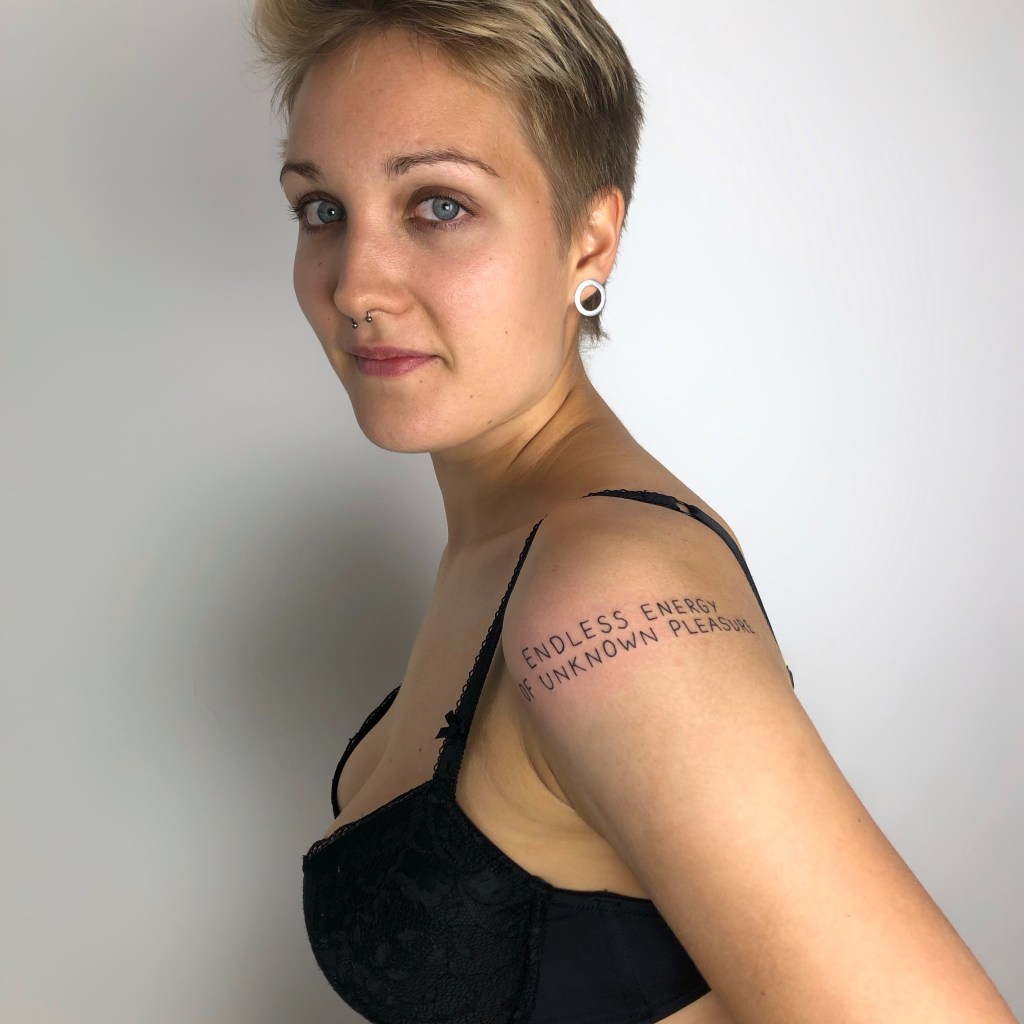
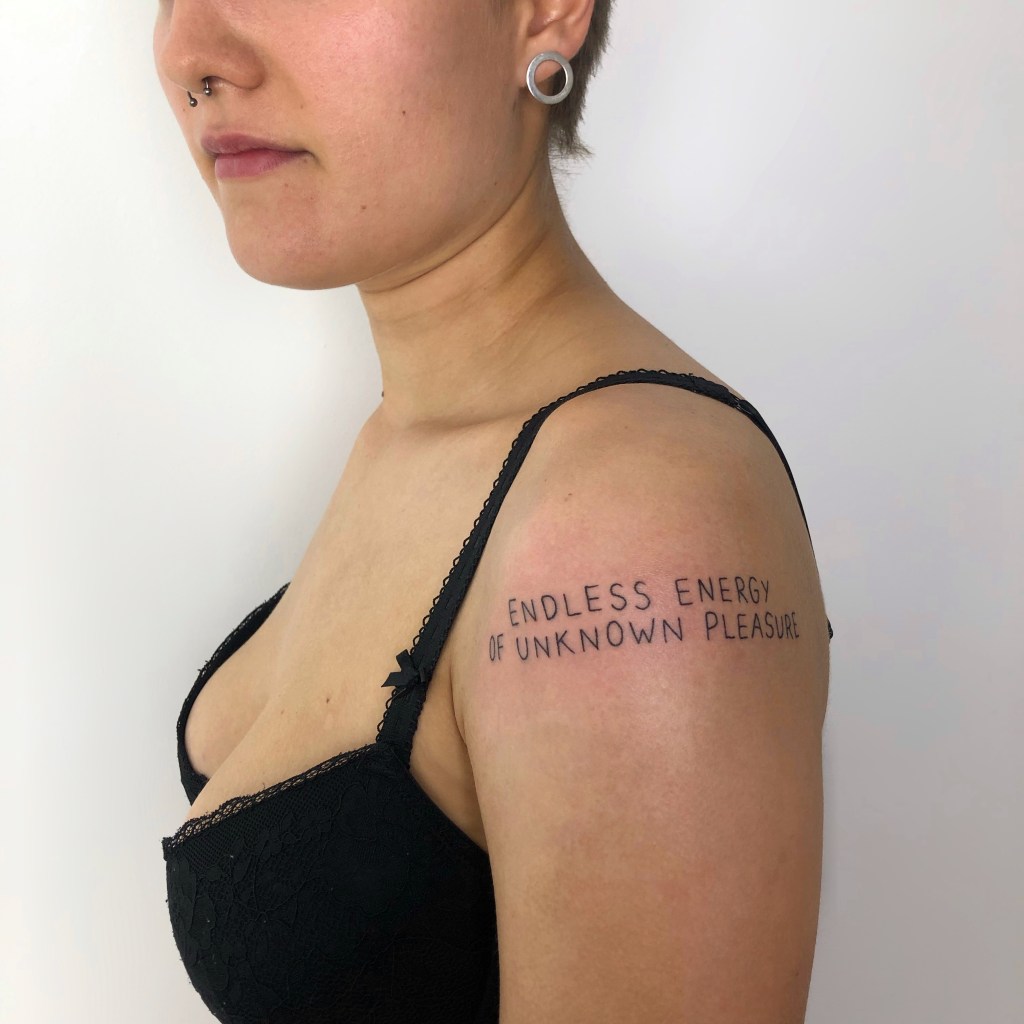
Recently Sophia had discovered the raving culture, where no holds are barred, where people are wild and free and where dreamy beatniks around. It is in this environment that Sophia now experiences the endless energy of such unknown pleasures.
‘When we were kids, why were you always obliged to work, but I wasn’t?’ I asked my cousin Dasha during the interview. ‘Your mother pitied you, but my didn’t.’ Said Dasha.
Dasha was born and raised in Molodechno, Belarus. She always was and will be older than me by three years. When we were kids we’ve spent a lot of time together. She is like a sister to me.
‘Who or what do you appreciate most in your life?’ I asked.
‘My family,’ she answered.
I do not want you to get confused and think that Dasha wasn’t pitied by her mother, mother loves her very much and still cooks lunch for her every day.
‘What is your favourite game?’ I asked.
“I don’t play,’ Dasha answered.
Some time ago she did play, I said to myself, remembering card games, how I was loosing and had to wash her socks and her feet.
‘What did you dream about tonight?’ ‘I saw how Sergey jumped out of the window and crashed. Yura and Marina were with me. I run towards Sergey, but it was obvious that he died.’
Dasha went all tears. I poured her wine and gave a tissue.
Sergey — Dasha’s husband, that she had recently left. Yura — a friend, husband of Marina. Marina — sister, best friend and companion.
‘What are your fears?’ I continued. ‘Not to accomplish,’ she answered. ‘What do you want to accomplish?’ ‘Career and family.’
Dasha for many years works as a consultant seller in MTS (belarusian mobile network provider) and for the last couple of years together with her sister Marina they decorate weddings.
‘What is your dream?’ I asked. ‘To have children,’ Dasha said with immense sadness in her voice, because her husband Sergey, that she had left recently, could not make that dream come true.
‘What is the drama of your life?’ ‘At the moment that I don’t have a man that would love and understand me.’
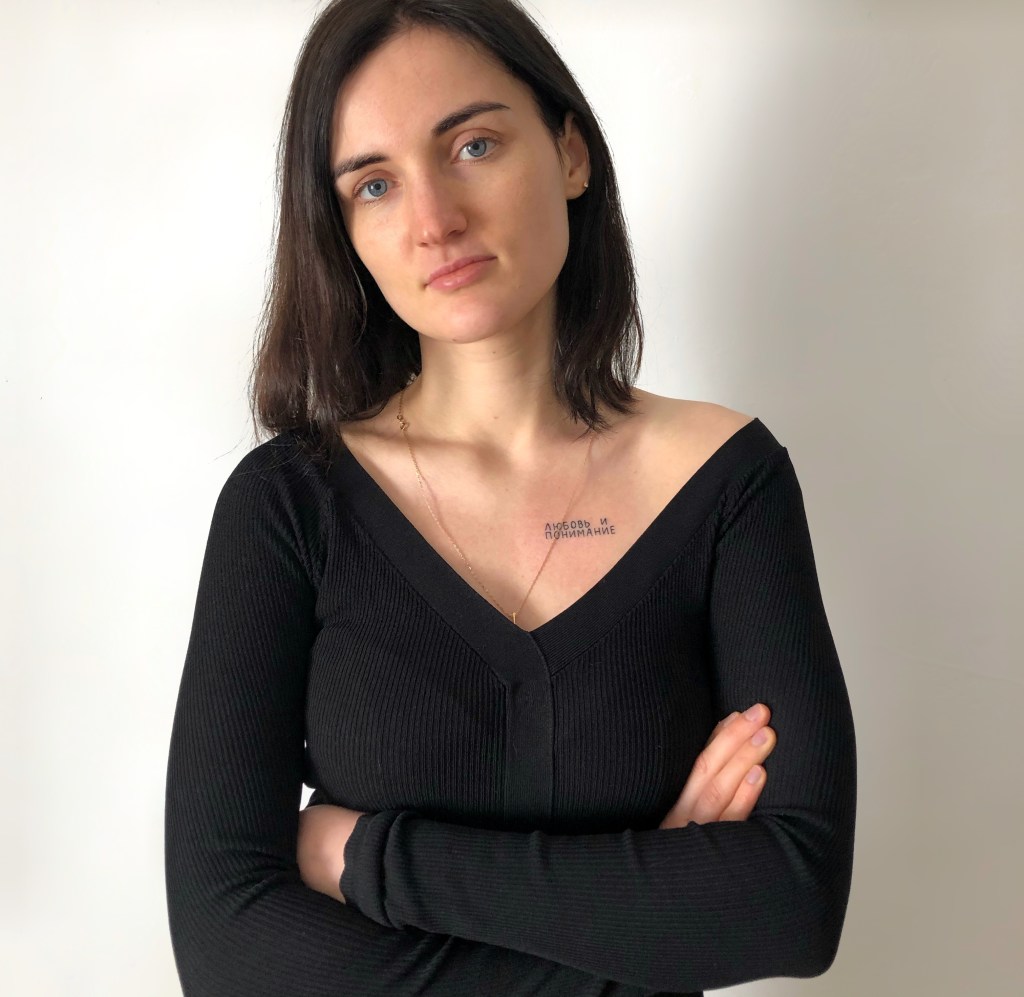
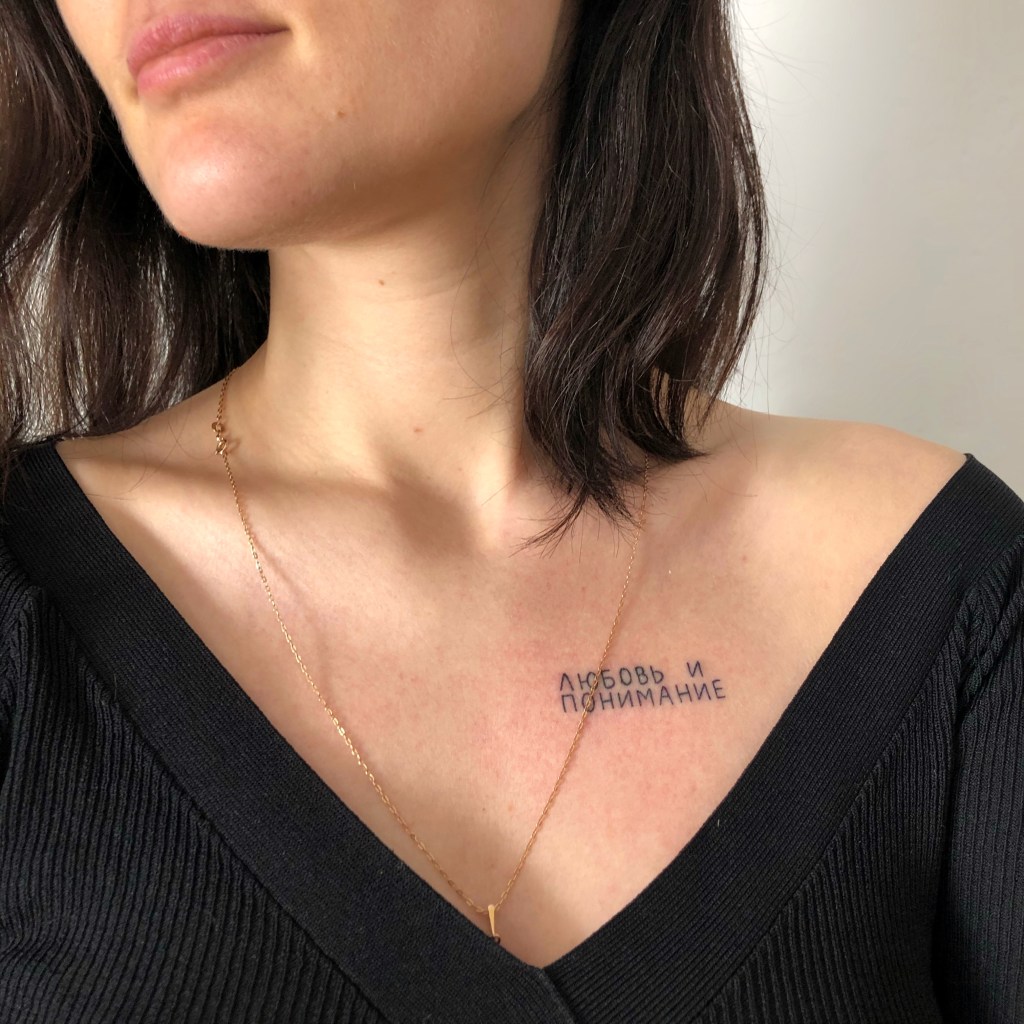
So easy, I thought, and have decided to give her not a man, but love and understanding.
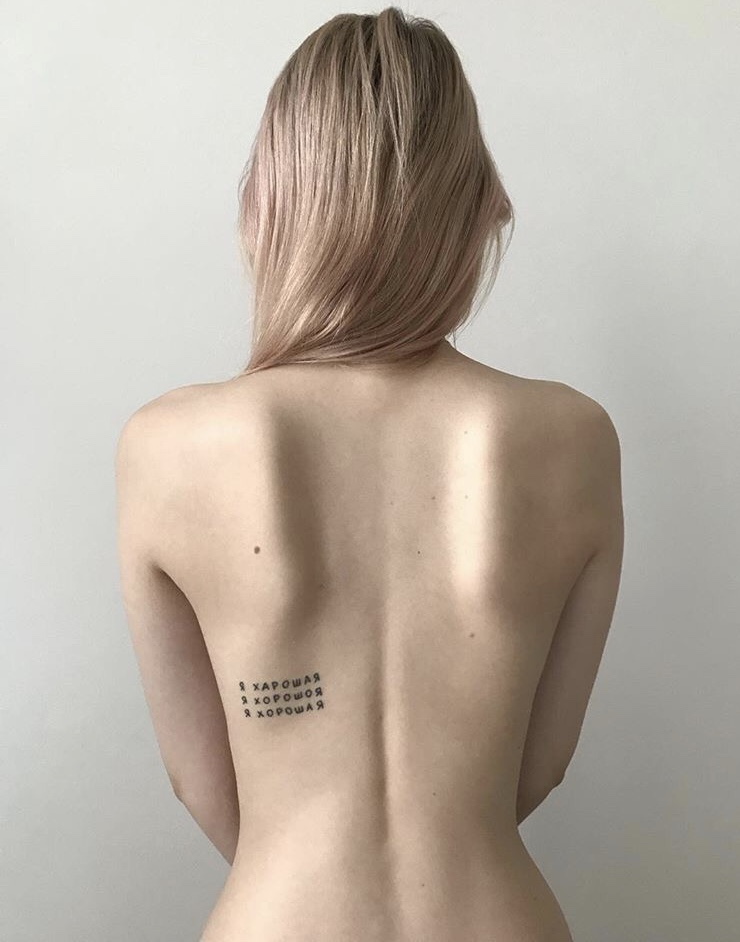
I’m a guud person, I’m a goud person, I’m a good person, Simona Kust tells herself when she hesitates, whether her words and actions are good.
Simona was the second person who participated in my project “Your Story By Me”. It was in Moscow, on the 31st of January 2019. She was 16, lived with her boyfriend at Barrikadnaya, was driven around the city by taxis, smoked “Chapman” sweet cigarettes and didn’t go to school.
I was 27 and was learning how to interview people.
‘You speak Russian, Swedish and English languages. Which one feels closer to you and why?’ I asked. ‘Russian’, Simona answered and squinted her almond shaped eyes of deep taupe colour. ‘It is a many-faceted language where you can express yourself in dozens of different ways. It’s not easy to get. Even more I love those beautiful and absorbing swear words.’ ‘Absorbing?’ I questioned. ‘Yes, you can’t simply get rid of them’. Simona said and licked her frost-flaked lips.
Simona was born in Stockholm, though her early childhood was spent in Moscow. Her mother is Russian and her father is Ukrainian. When Simona graduated from elementary school, her parents separated. Little Simona and her mother found themselves on the island with stilts, trade unions, red-green coalition; Volvo; and the famous lagom.
‘What about Sweden’s language? Do you like it, or not?’ I asked. ‘It is a beautiful language. It sounds like Elven songs,’ she said in an unusually soft and tender voice for a Russian. ‘And the Vikings, of course, are hotties.’ ‘I’ve heard that you will remain a stranger in Sweden even if you live there for a long time and master the language. How far is it from the truth, what do you think?’ ‘It’s hard for me to tell. It really depends.’ ‘Were you faced with this problem? Are you accepted now?’ ‘Yes and no. All of my schoolmates are multi-racial and it has never stood between us. But there are others with their own views. No matter what they say I feel it home in Sweden.’ Her lower lip had chapped, I saw a small drop of blood appear.
‘May I smoke?’, she asked. ‘Yes, but we must go to the balcony. Follow me!’
While walking to the balcony Simona told me that when she started modeling, traveling and communicating more in English, she noticed that expressing herself in Russian became a struggle. ‘I often make mistakes because words from three absolutely different languages mixed up in my brain.’
We stepped out on the balcony. It was dark and cold. Simona lit up the brown cigarette. Her pale white hands appeared to be child-like, with nails trimmed in a ragged uneven fashion.
‘When I was in Paris a couple of months ago, perhaps in September, I watched the spectacular Saint Laurent show.’ I said. ‘Models walked on the black mirrored water with the Eiffel Tower sparkling in the background. And you were one of them.’ ‘Yes! I still can’t believe that! I felt like Jesus Christ,’ she said and smiled. ‘I think that’s exactly what it was designed for,’ I smiled back. ‘I also looked at your Instagram. You are on the billboards of Saint Laurent and Paco Rabane all over the world.’ ‘If we are speaking of my achievements I am also very proud of covers in Numero, Document and Interview Germany magazines,’ said Simona and blushed, hiding her pink cheeks. ‘How did your life changed with this success?’ ‘Personally I can’t notice any difference. Life goes on as it was before: old friends, new friends, travels. Of course, I now have economical stability now but it didn’t change me as a person.’ ‘Economical stability,’ I repeated and wrote it down.
‘At what age were you when you earned your first pay cheque?’ ‘I started to work at 13. I was making papier-mache and looked after children in the workshop of a Swedish artist. Soon enough, at 14, I got into the modelling business.’ And all hell broke loose, I thought and smiled.
‘Now you live in Moscow. Do you like it here?’ ‘Moscow is dynamic. Here people compete and judge each other all the time. I don’t like it: all this masquerading reveals an unknown hostile environment; it offends me,’ she answered in a sincere manner. ‘And what about Stockholm?’ ‘Oh, Stockholm – it is the city for a people. In Stockholm I learned how to love myself.’
Her upper lip was a reflection of the lower, as neat, wide and lush.
‘What do you love most about yourself?’ ‘That I’m a good person,’ she said. ‘You hesitated, am I wrong?’ ‘No, I know I’m a good person, but I’ve heard a lot of bad about myself lately from the people who I barely know. It makes me hesitate and question whether my actions and words are correct, am I living in a right way?’ ‘As Dovlatov wrote, it would be good to ask yourself constantly: am I crap or not?’ I said, looking into my notes. ‘Never read that,’ Simona said and gathered her pale-amaranth hair in a ponytail, tightened with a simple black elastic band.
Small fragile snowflakes were dancing in the big sky.
‘I’m very much afraid of needles,’ Anya said. ‘Needles?’ I repeated, unpacking a needle. ‘Yes!’ She said and smiled. ‘So how do you pass a blood test?’ I was questioning how serious she is. ‘This is how: I faint every time.’ The way she had answered made me laugh. I looked at Sergey. It seemed she wasn’t joking. His eyes wished me luck.
On the 18th of December 2019 Anya and Sergey made the long and tedious hike to 20th arrondisment to my studio in Paris, knowing they were to be interviewed at 10:00 am. They had walked to my place because there was no other way for them to reach me.
Paris had been suffering a Tube strike for two consecutive weeks. Amongst the 14th subway lines only two were working, the 1st and 14th lines, these being operated by computer. The rest of the Tube lines and also tramways were out of service.
Far too many people were waiting at bus stations throughout the city, impatient to ride on overcrowded buses that were themselves trapped in the battle for free road space with unscrewed taxi drivers.
‘Now I’m going to ask you questions. Answer one at a time.’ I opened a notebook with prepared questions and straightened my back. ‘How old are you?’ I asked. ’34!’ Anya said. ‘I’m 34 too.’ Sergey responded. ‘What are you passionate about?’ ‘Music, friends, nature, my cat.’ Anya answered enthusiastically. Sergey fell to thinking. ‘Sergey, what about you?’ ‘I like music too. I like dance, my wife, manual work.’ He said seriously. I smiled at him and nodded in the recognition.
Two weeks before the interview Anya had written to me, advising that she would be in Paris with her husband and that they wanted to be a part of the project “Your Story By Me“.
They had flown in from San-Francisco to London two days before. From there they had taken train to Paris in order to meet me and make their first tattoos. They will leave Paris and fly to Minsk the following day to see Anya’s family. From Minsk to Moscow afterwards and from Moscow to Kurgan finally, to visit Sergey’s family.
The last 15 years they had spent in the USA, as they were unable to leave the country. Having recently received their American documents they travelled to Europe at the earliest opportunity.
During those 15 years away Sergey’s grandmother, grandfather and father had died. Only his mother remained alive.
‘What words do you find beautiful?’ I asked, following the interview with them and looking for any hitches. ‘A spring.’ Anya answered. ‘Anya.’ Sergey answered.
That’s so sweet, as if they just met, I said to myself.
‘How long have you been together?’ I asked. ’11 years.’ They replied. ‘A lot,’ I mumbled, and wrote down the answer.
‘Who or what do you appreciate most in your life?’ ‘Friends!’ Anya said. ‘I love my friends very much! Our doors are always open for them, in the literal sense of the word “open”. They have keys to our house so they may come often without asking for an invitation.’ Anya leaned across the table. ‘Imagine, a normal morning, you walk into the living room and you see Richard sleeping on the couch. Then you go to the kitchen and there is Bob, cooking a breakfast. I’m always sincerely pleased to see them!
‘I imagine.’ I looked up at the ceiling, imagining the wooden one-storey house, with stilts on it, in the tall beautiful forest. It was the house of Ken Kesey. A terrific place. Every person who so wished could come to this place and stay for as long as he or she would want and do whatever he or she wanted.
It was an iconic house. Acid parties were taking place there regularly, a lot of contemporaneous genii and stars were coming by. It was all about sharing.
What I find interesting is how Ken Kesey managed his writer’s fees. All the money he made by writing was placed in a glass jar in a prominent place in such a way that any person who wished could take some of it. Of course, such a generous act had been a magnet for different people, both good and bad.
I went back to Anya and Sergey. They were exchanging glances, wondering why I am looking at the ceiling for so long.
‘Sergey, who or what do you appreciate most in your life?’ I went back to the interview. ‘My wife.’ Sergey answered simply and aptly. I underlined the word “wife”.
‘I want to clarify,’ Anya said embarrassed, ‘I don’t want to seem as if I don’t love my husband enough, but Sergey is my friend first of all. So, when I said how I love my friends, I imply it to Sergey as well.’ ‘I know you meant well,’ I said and underlined the word “friends”.
‘Is there something that you hate? If so, what is it?’ I asked them. ‘Virginia! I lived in Virginia Beach.’ Anya started telling her story. ‘Never liked it there. If I could erase it from my memory, I’d do it right away.’ Sergey and I were listening carefully. ‘I also hate hypocrites. I got so tired of hypocrisy at work that I took an unpaid vacation.’ It was clear that Anya needed to get it off her chest. ‘Actually I work in the company of my dreams, but don’t mention it’s name please!’ ‘Okay!’ I nodded. ‘It became a dream when I studied graphic design. The company was founded in the late 70’s by two genii. They created spectacular open titles for the coolest films of that time, working on a very low budget and using ancient computers! I was very impressed with their distinguished works. They’ve made lots of cool stuff after as well.’
There was no need to extract information from Anya. She freely told me all sort of things, as if I was her сlose friend and we hadn’t see one another for long. Meanwhile Sergey remained silent.
‘And it just so happens,’ Anya continued, ‘that after attending college I didn’t engage with design and went to tech. Nevertheless 10 years later my dream came true, I was hired in the tech team by the company” ‘That cannot be mentioned.’ I reacted. ‘Right! Can you imagine? And after Q&A session one of the founders came up to me and said that he is happy to meet me. I was over excited and confused, because it was me who was very happy to meet him.’ Anya displayed splendid, unnaturally white even teeth.
I was staring at her diastema.
‘After a while I changed my line of work. My soul was striven to design. When I was done trying to contend with a male tech team, I worked my way to a producer job. A producer surrounded by design!’ ‘And hypocrites,’ I added. ‘Yes. I changed the line, but the company stayed the same.’ Anya squeezed eyebrows and hung her head.
‘Why did you decide on America?’ I finally asked. ‘The first time I came to Virginia was through the “J1 Work and Travel” scheme. It didn’t work out well. I was living in a shanty place with no beds for four months. We were six, apart from cockroaches, living in this hut.’ Her voice became quieter. ‘It was terrible. Once some guy, about 45, saw me taking a shower. Our doors were never closed, so this man decided to come in and jerk off at me. It was terrible!’ Anya repeated. ‘I was cleaning the streets, I was cleaning the motel rooms, and as you imagine there was a lot of turd.’ Anya became silent, her eyes were hidden behind long black eyelashes. ‘I was robbed twice during these four bloody months! And then I left America.’
‘What made you return there?’ ‘I met a guy in Belarus and we were to be married, but at the last moment I became frightened that I was marrying the wrong man. I felt the need to get far away, so I applied on the sly for a visa and then flew to Virginia. I’ve never been anywhere else before. Luckily, my first trip didn’t turn out as a complete failure, I’ve made some friends there, so I went for their support.’
‘When you arrived and met up again with your friends in Virginia, what did you start to do there?’ ‘Oh, this time everything was different and better!’ Her voice revived. ‘With the help of my friends I found a decent place to live not far from the beach, which is the most festive area of the city. There are the cafes, bars, shops and restaurants, full of all kinds of people cruising around, also the tattoo shops.’ On the last words Anya poked me with her eyes. ‘I was making tattoos.’ She said archly. It worked, she poked me and curiosity played on my face. ‘Nothing creative, to be honest, they were just temporary tattoos made with henna, tattoos that could be chosen from the scrapbook.’ ‘Explain to me how it works and where it was?’ ‘We had two spots: a shop where my boss worked, and an open kiosk on the corner of the streets. I worked in the kiosk. We were open from nine in the morning till midnight, seven days a week. It was cool! The music was playing all the time, lots of people around.’
‘Thank you Anya. It’s a great story! I have plenty to work on.’ I said, turning the page of my notebook. ‘Now I really want to hear the story of your mysterious husband.’ Sergey got a grip as if it was a job interview.
‘Sergey, what is your dream?’ ‘I want to build a house myself.’ He said without hesitation. ‘What is the last dream you remember?’ ‘I dreamt my father was alive; he came home drunk and I lectured him for being wrong. I see this dream again and again.’ ‘What was the cause of his death?’ ‘Cancer.’
One day I was told that our generation grew up without fathers, because all of them went on the booze. I wish it was a problem only of my generation but I’m afraid it is far from the truth.
‘Did you forgive him?’ Sergey thought a little and then he dropped a meaningful ‘No.’
Indeed, it is something difficult to forgive I thought, remembering my father. But it is a must to forgive, to let those bad dreams go.
‘Why did you come to America?’ ‘I also came to Virginia through the “J1”.’ Sergey said and fell silent. ‘When you came, what did you do?’ I tried to make him talk. ‘I was working on a terminal. I was parking trucks onto train carriages for transmission across the United States.’ ‘How old were you?’ ’19.’ I noticed how kind Sergey’s eyes were. ‘Why did you stay?’ ‘I’ve received a proposal to park trucks into containers for worldwide shipping. I accepted.’ He really is a man of few words, I thought.
‘Why did you choose to live in San Francisco?’ ‘Anya always wanted to live there. I was opposing for a while because I didn’t know what job I could have there. She kept insisting and we took off.’ He touched Anya’s hand. ‘I found a job at a construction site at first but it all got easier when a friend of mine told me about the Handyman application.’
‘Tell me more about it, how does the app work?’ ‘I call it “a husband on a call”.’ Anya was teasing. ‘Jack-of-all-trades.’ I winked. ‘It’s all quite simple.’ Sergey was explaining. ‘The client requests a job, I give an estimation, the client chooses what fits him best. Actually I have plenty of loyal clients now, so I don’t need the app anymore.’
‘What kind of requests do your clients usually make?’ ‘Often it is an installation, assembling or reparation of bathrooms and kitchens. I started with simple requests such as moving furniture and installing TV, but slowly I learnt how to build and repair stuff.’ ‘Does it mean you can actually build a house by yourself?’ ‘Yes I can.’ ‘Impressive.’ I underlined “house by myself”. ‘If I may ask, how much do you charge per hour?’ ’70-75 dollars’.
I looked out a window, there was a bittersweet Parisian sky. Suddenly I realized that I was tired. It is difficult enough to interview two people in one day, but knowing that I still have to develop the ideas for their tattoos and actually to do them made me nauseous.
I had to finish the interview right away so I asked the last question.
‘What troubles you?’ ‘The future.’ Sergey answered. ‘Do not worry, I will make a good tattoo for you!’ I was encouraging him and myself.
I looked out a window again. It was pitch dark. I stood up and moved to another room, the better to reflect on our conversation and to return with my ideas.
Friends, Anya, house, wife, spring, Anya, friends, house, was flying and melting, not melting anymore, something heartwarming, in the circle of friends meeting the spring, spring, everything will fade away, spring comes soon, friends, wait for it, house, will build a house by myself, with my own hands, I will build a house by myself and live with Anya there!
‘I’m very much afraid of needles,’ Anya said. ‘Needles?’ I repeated, unpacking a needle. ‘Yes!’ Anya said and smiled. ‘So how do you pass a blood test?’ I was questioning how serious she is. ‘This is how: I faint every time.’ The way she said it made me laugh. I looked at Sergey. It seemed she wasn’t joking. His eyes wished me luck.
‘Ann,’ I whispered to her softly. ‘ Your tattoo is not a blood test. I will tattoo by hand, it really isn’t painful. I promise you will not lose a single drop of blood!’ ‘I’m terrified by the needles, not the blood.’ Anya said shaking her head. ‘Do you want a tattoo or not?’ I asked in a tough manner. ‘Yes, I do.’ Anya said hesitating. ‘Then sit down now and put your arm on the holder!’ I ordered.
Anya placed herself in a chair and squeezed her arm between the knees. She will faint now, I thought.
‘Anya? Are you all right?’ ‘I need 10 minutes!’ I looked at Sergey. He was calm. Probably got used to that, I thought. ‘All right, I’ll wait.’
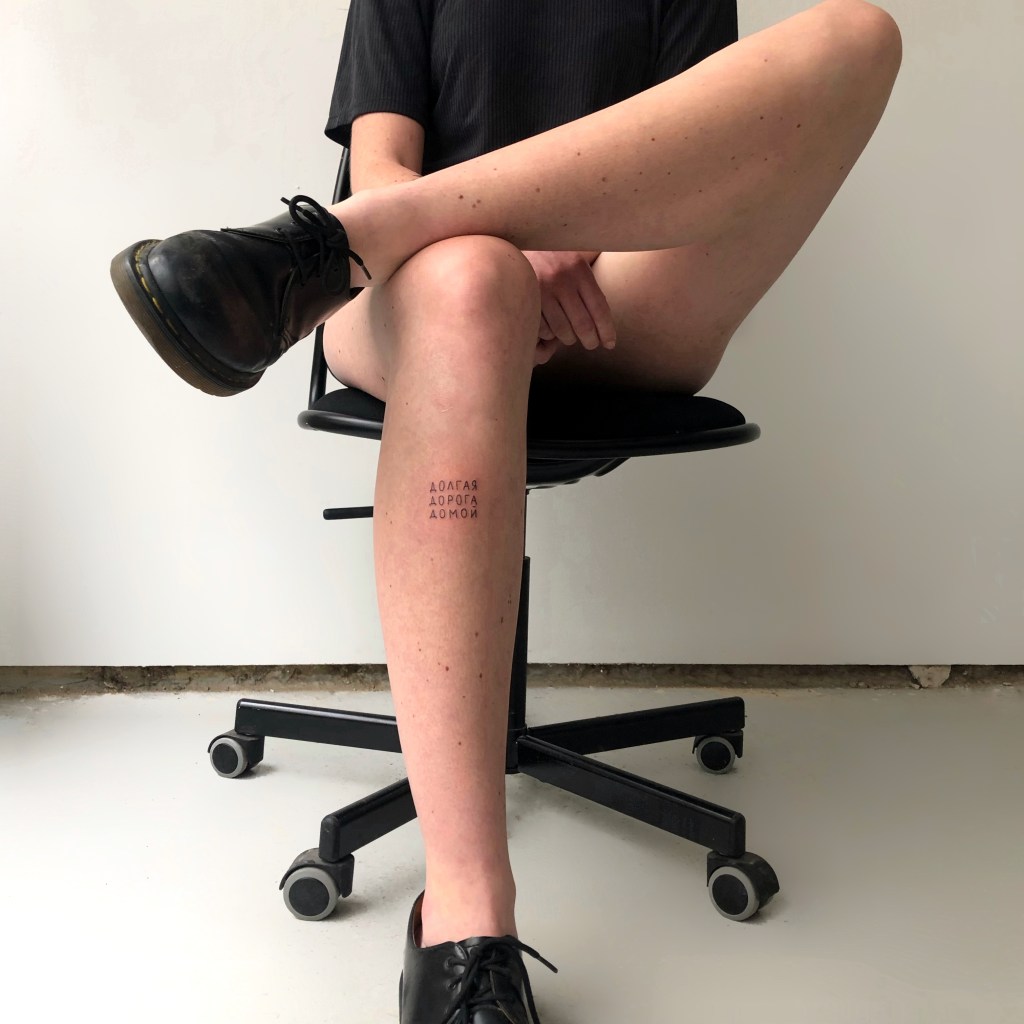
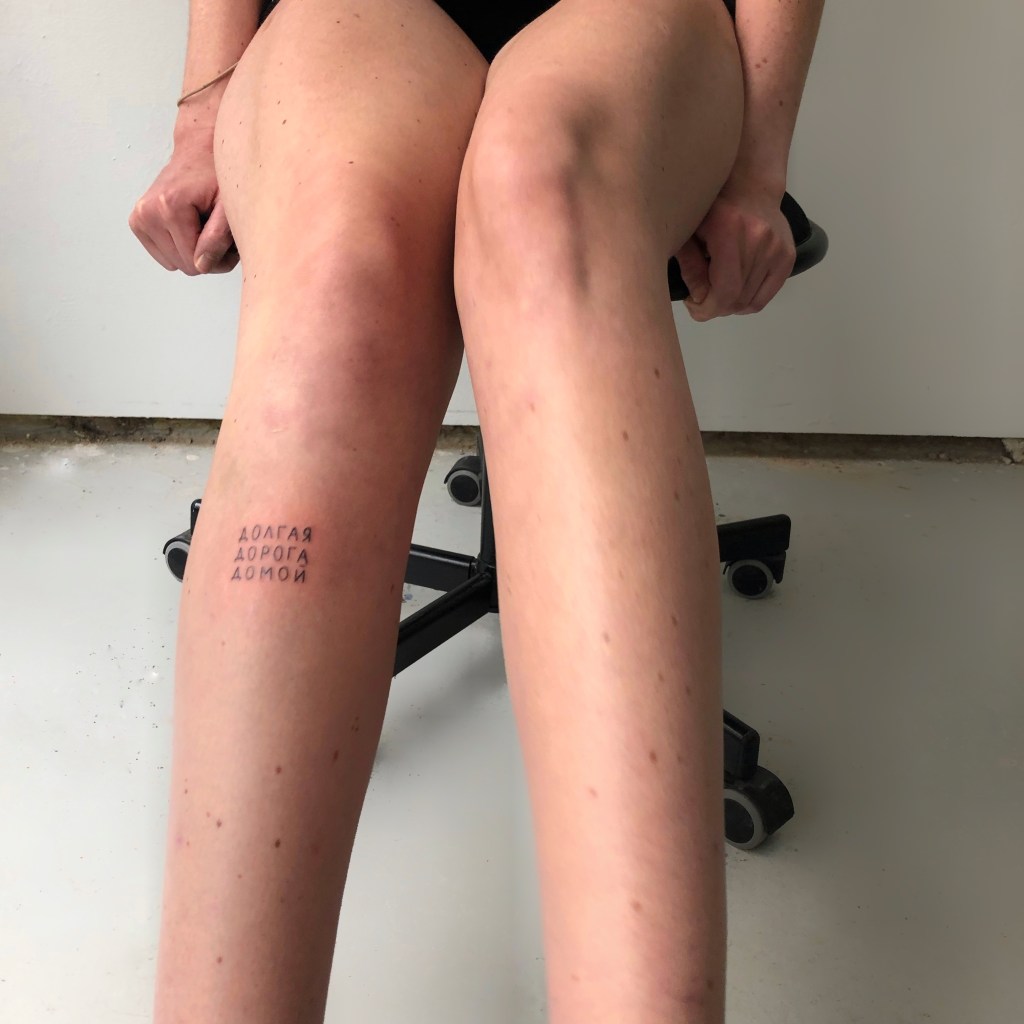
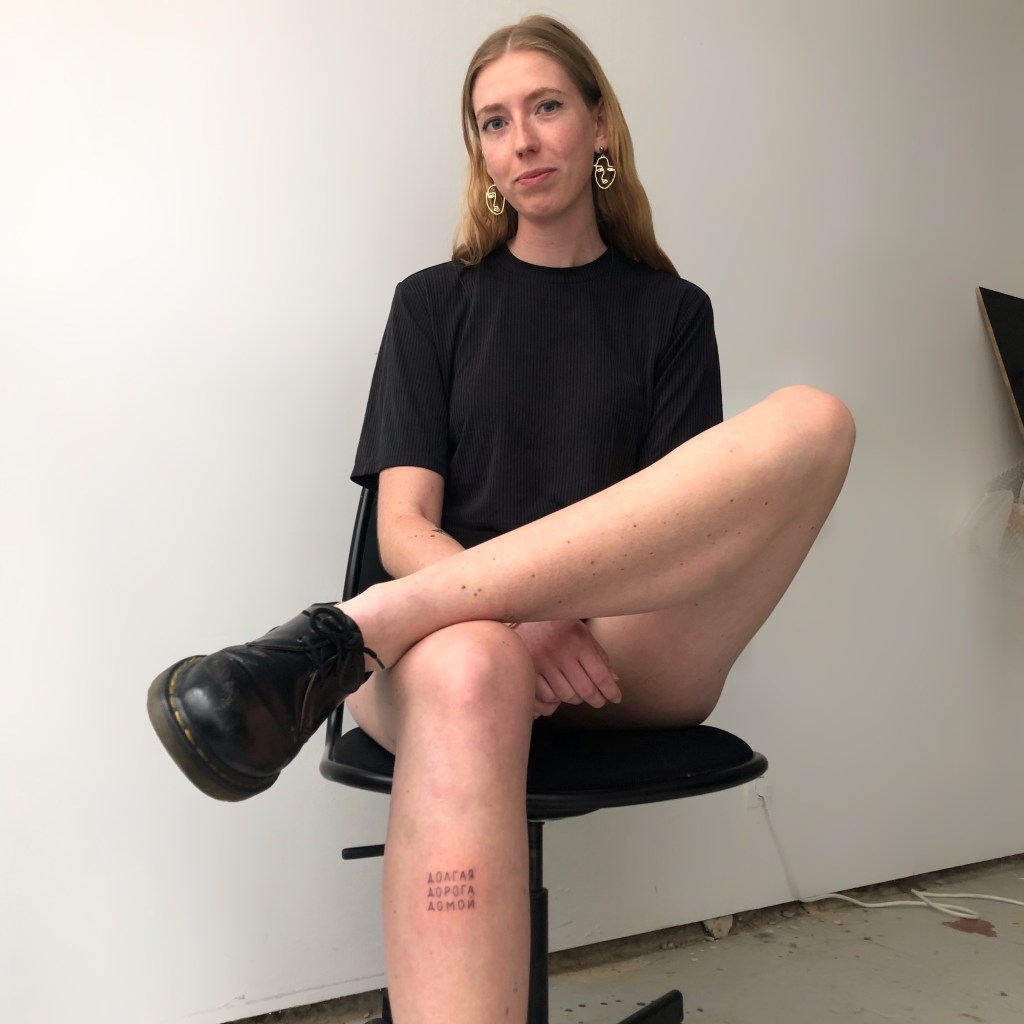
‘If you got a billion euro, how would you spend it?’ I asked Eila, staring at her nose covered with freckles. ‘I would like to educate girls in India.’ Said Eila not hesitated for a second. I was glad to hear it from a 22-year-old woman. The answer like that gives me hope that young people are capable to think globally, not individually. Unfortunately, it is not a common answer. ‘Tell me please, what do you do in Paris?’ I asked, looking into her grey eyes. ‘I’m studying languages and politic science.’ Answered her big mouth, smiling at me. ‘Where do you come from?’ I asked. ‘I came from Sweden 4 years ago.’ She said. ‘Why Paris?’ ‘It was spontaneous.’ Eila looked down and crossed her long slender legs. It was a sunny summer day when I met Eila. The temperature outside was above 30. She was wearing a short black dress. Dr.Martens black shoes were on her bare feet. We were sitting in a gallery space of my friend Juliette, enjoying the cool air of the ground floor and drinking still water. ‘What are the five things you love?’ I continued the interview. ‘I love to dance, I love my family, I love cinema, I love running and kindness.’ She responded carefully, precise and honest. ‘If there is something that you hate, what is it?’ ‘I hate being sad and I hate being away from my family.’ She sounded nordic cold and her eyes were open. ‘Where is your family now?’ ‘They live in a small village, not far from Malmö’. I know a bit about Malmö. I know it is a big city with a mild oceanic climate, located near the southwestern tip of Sweden and it is linked to Copenhagen by the Öresund Bridge. I also know that if you want to drive across the bridge by car, it will cost you between 50 and 200 euros per single trip. I know it because once I was considering to go and live there. ‘I bet it is a beautiful place.’ ‘Yes, it is.’ ‘Why don’t you go back home?’ Eila didn’t answer at once. Then she admitted, ‘I don’t know.’ ‘Do you know where will you go after the graduation?’ ‘I will go to do a master in Brazil.’ ‘Why Brazil?’
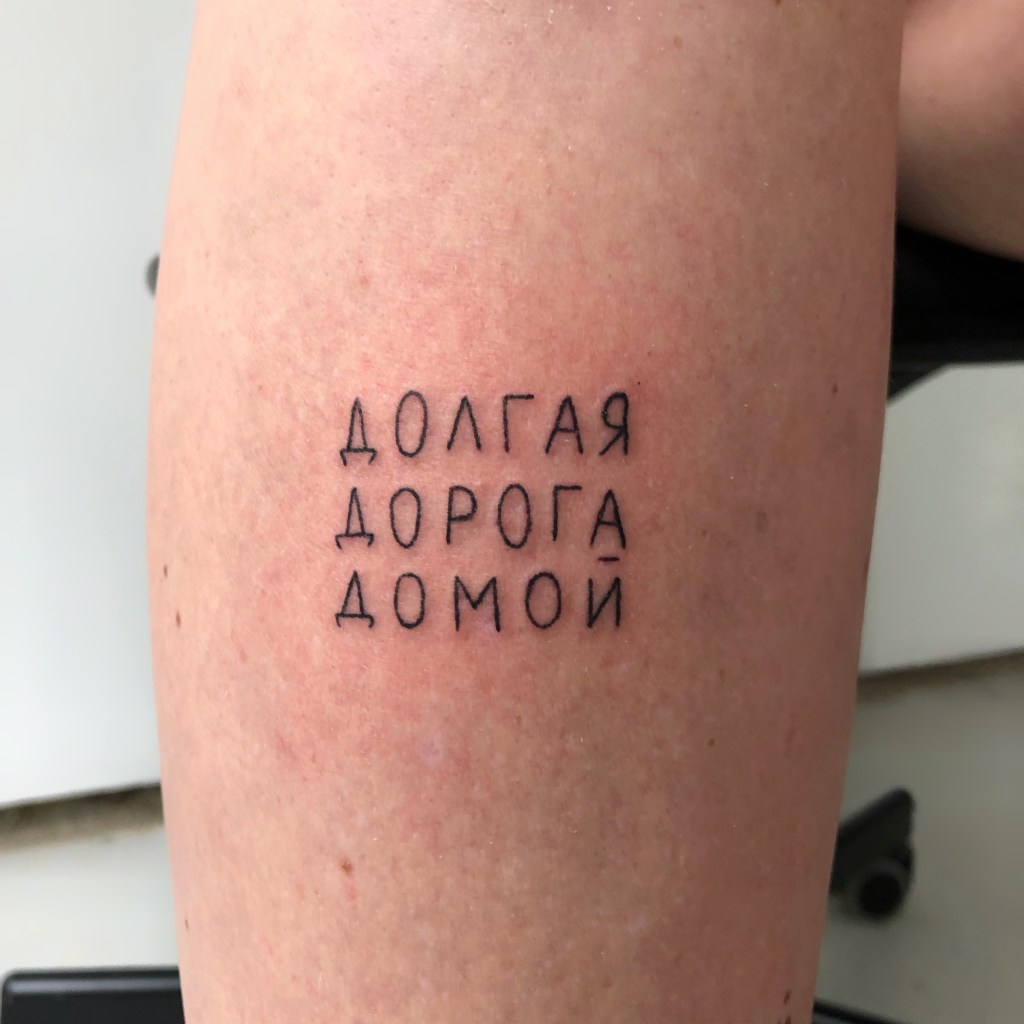
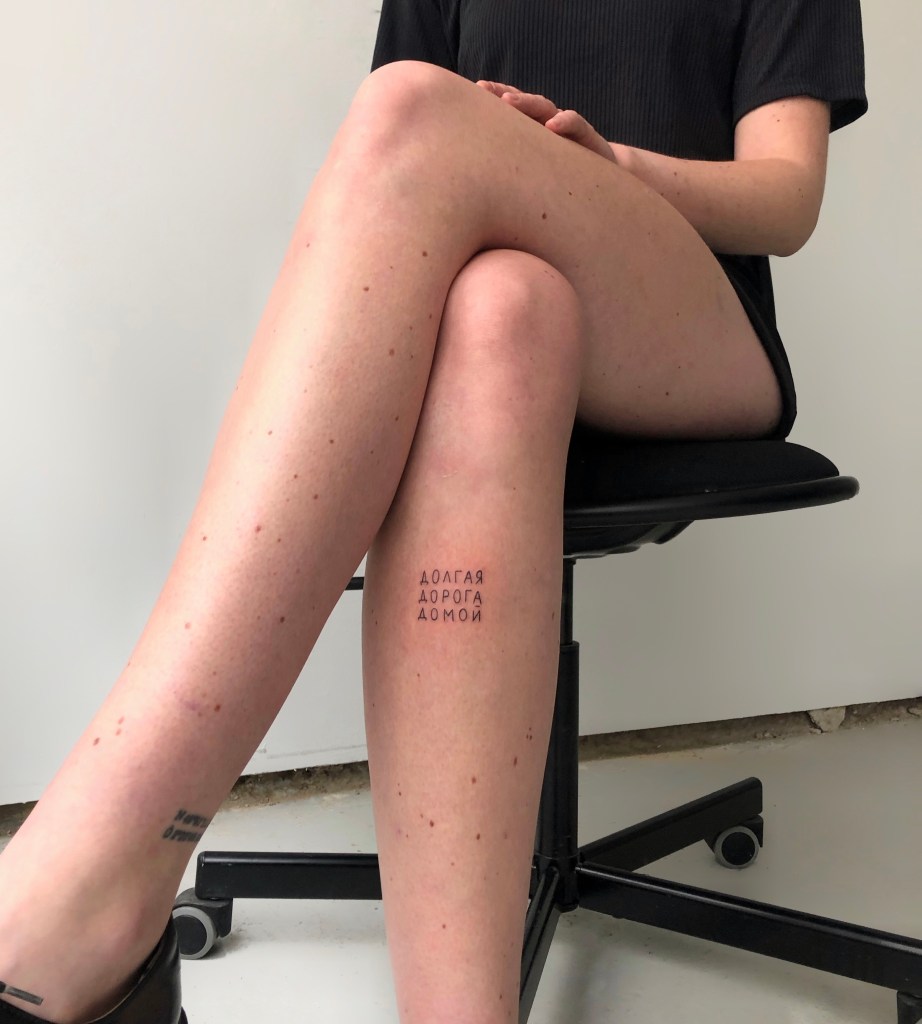
‘I always wanted to go to Latin America and my best friend is Brazilian. I always felt very comfortable and welcomed with her and her friends.’ ‘So Brazil.’ I said, looking at her legs. Then the song of Super Besse started to play in my head. Дорога в потемках взывает Моргающей лампой маня Ступая через камни жадным шагом иду я Младенческим разумом кротким Осознание приходит на два Выбираю не совсем четкий Путь туда где ждешь меня Долгая дорога домой О эта долгая дорога домой