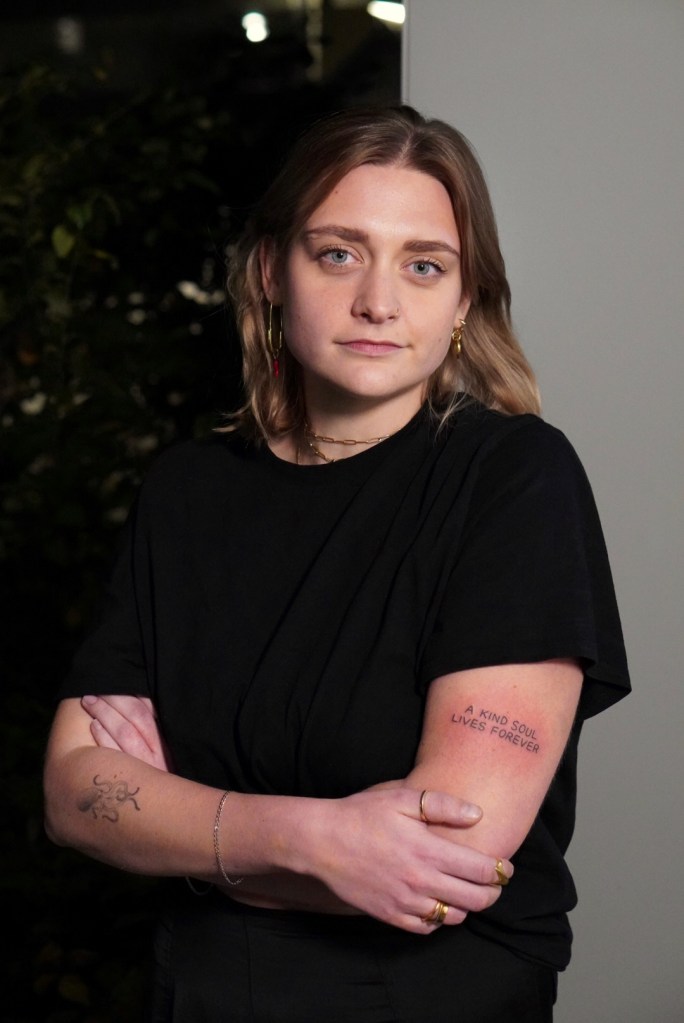
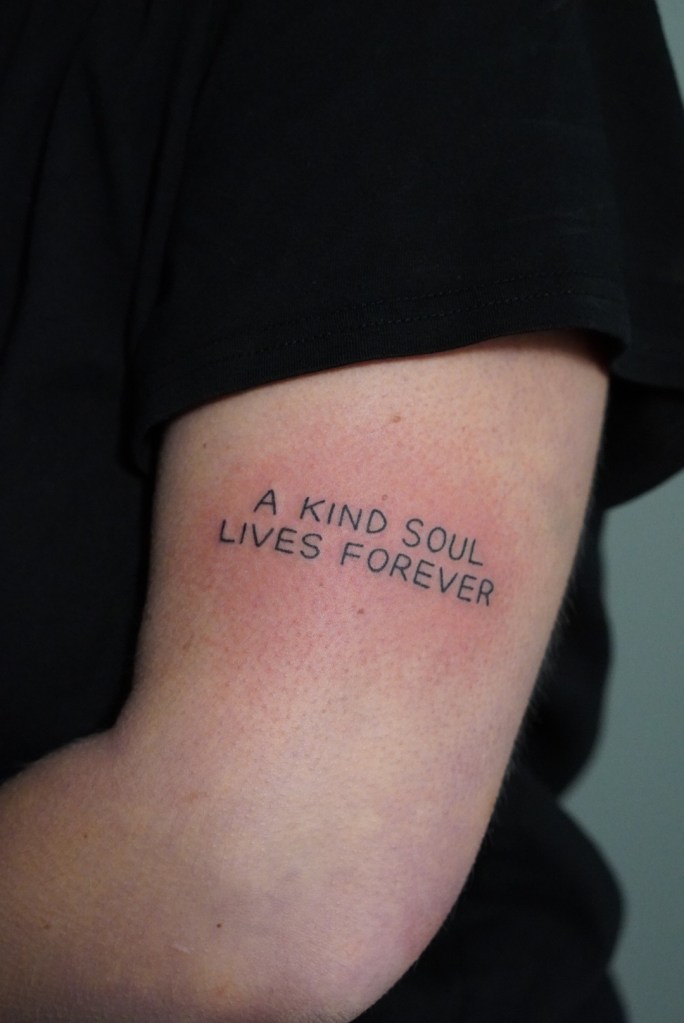
“What matters most in life to you?” I asked Jessica. “Kindness is very important to me. No matter who I meet, how they look, or how they speak, I’m always open. I don’t judge people, and because of that, I see the good in them.” Her voice was soft, confident, and calm.
“What do you believe in?” “I believe in the universe and that somehow we’re all connected, with a higher power guiding us. I don’t believe in coincidences—I never have. Everything happens for a reason, and every person we meet is part of that reason.”
“Does that mean you believe in destiny?” “Yeah, definitely.” “What does your destiny look like?” “I guess it’s about spreading happiness and kindness.” “And how do you do that?” “Just by being me,” she chuckled. “I make people happy by sharing my happiness with them.” “Where do you find it?” “It’s just here.”
“Do you have a dream?” “I used to be a big dreamer. I imagined having a family, many friends, and simple things like the coolest birthday party. But now, I don’t allow myself to dream like that anymore. I used to get disappointed a lot. Now, I just live day by day.”
“Is there something that keeps you awake at night?” “The big question for me is whether I’m enough. I often feel like I’m not, because I never win my battles. I’ve only had two romantic relationships, and after long fights on my side, I had to give up. My exes didn’t want me to fight for them. One of them later told me that she didn’t fight for me because she thought I deserved better than her. But even though she said that, I still feel like I wasn’t enough. I think she would’ve fought for me if I had been.”
“What is your greatest fear?” “Death. A sudden death. I don’t want life to end—I’d love to live forever.”
“What do you think happens when we die?” “I believe our souls continue to live in a new life after we die. Every person has a different-aged soul, so when I meet a child with an old soul, I know I’m seeing someone wise beyond their years.”
“How would you like to be remembered?” “As a kind person.”
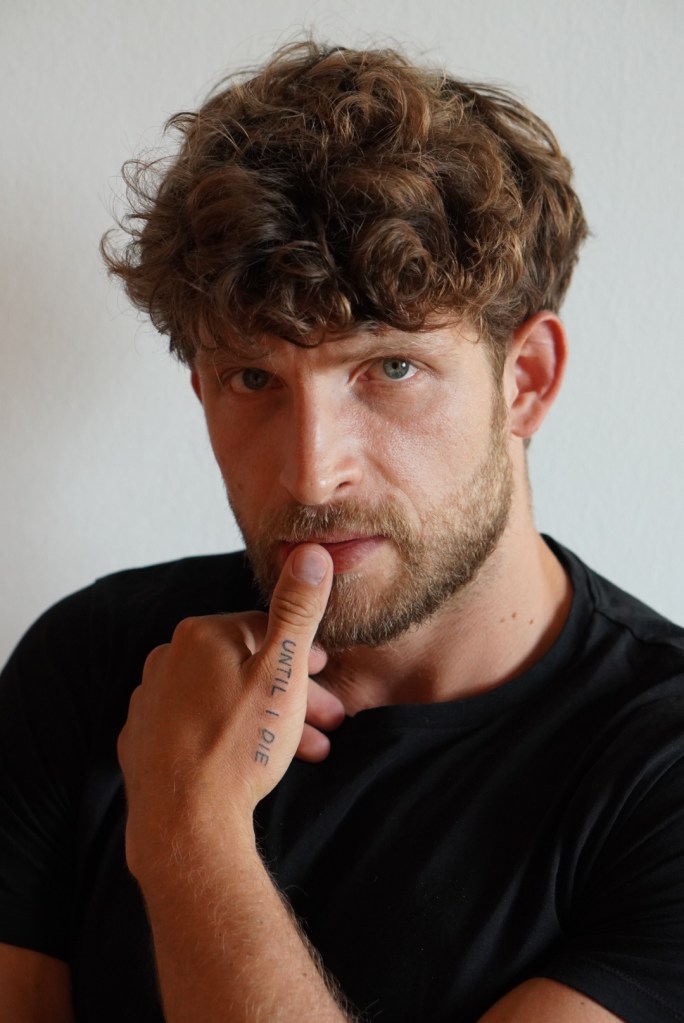
“We are constantly dying and being reborn in every moment. If we accept that change is natural, we can embrace it. But most people resist—they cling to things: houses, spouses, money, status, anything that feels secure. Yet, as the Buddhists say, suffering arises when we hold on to what we think we have, when in truth, we possess nothing.”
Konstantin spoke with the effortless fluency of someone reciting from memory. His voice was calm, almost mesmerizing, carrying an air of quiet confidence and peace.
“What is your greatest dream?” “To practice osteopathy until I die, in a place surrounded by nature—where work doesn’t feel like work. Because if we love what we do, why would we ever want to stop?”
On April 6, 2022, I was in Berlin when I received an email from a woman named Andrea. She wanted to take part in my art project—to share her perspective on the world. I replied, and we arranged to meet the next day at my place.
At exactly 11 a.m., Andrea rang the doorbell. As soon as I opened the door, she stepped inside with an energetic bounce. “Wow, it’s a nice place!” she said. Sun’s rays poured through the pyramid skylight, spilling across the white walls and illuminating two tanned leather armchairs set beside a circular glass coffee table. “Thank you,” I said, gesturing toward the chairs. “Please, have a seat.” She sat across from me, looking youthful and healthy.
“How do you feel?” I asked. “Good.” She smiled. Sensing her enthusiasm, I decided to begin. “What did you dream of last night?” “Photographs of a man. They were taken against the light, so I couldn’t really see his face. But I recognized his silhouette—someone I know well. He was in a tall building, on the highest floor, and through the windows, I could see the cityscape around him. The buildings outside moved, shifting in a strange, geometric rhythm.” As she spoke, her fingers danced in the air, as if playing an invisible piano at an Allegro tempo. Three of them bore identical rings, while another had a ring topped with a thin, curved silver plate—wide enough to scrape against the others, creating rhythmic metallic taps that echoed softly in the room.
“Where were these buildings?” “In Ecuador.” She pronounced the word with a distinct Spanish inflection. “Were you born there?” “Yeah.” She slipped off her black shoes and pulled up her pant legs.
“What are you doing in Berlin?” “I’m studying philosophy, communication, and management.” “Why those three subjects?” “Honestly, I didn’t choose them. It was a process of elimination. With this combination, I can keep my options open—maximize my chances in different fields.” She crossed her legs.
“And why Berlin?” “Same story—I didn’t really choose it. I was forced to learn German in school, so I applied to universities where I could use the language. One of them happened to be in Berlin.” She absently moved her fingers, the rings clicking together.
“Do you miss Ecuador?” She exhaled sharply. “It’s funny—I thought I would, all the time. But when the pandemic hit and I went back, I realized I didn’t miss it at all. It was just the illusion of longing for something I didn’t have. Now, when my studies get tough—when I cry over not understanding something and think about going back—I remind myself: the effort I put into getting good grades is my ticket out of Ecuador.” Her gestures were smooth but quick, like a silent dance accompanying her words.
“Why do you want to leave?” “For a lot of reasons. Maybe for everything.” She hesitated. “I love my home, I love my family. But that doesn’t mean it was the right place for me. It wasn’t a good place to grow up.” “What was wrong?” “A lot was wrong.” She exhaled, her voice quieter. “It started long before me—so much history was put on my shoulders, even though I had nothing to do with it. Yeah… family relationships are always complicated. But mine were especially difficult.” Her gaze dropped, her fingers finally still.
“What worries you?” “I worry about society’s consciousness. I think we are voluntarily losing our awareness.” Her fingers moved again, the rings clicking, but by now, I had stopped noticing the sound. “Hasn’t it always been this way?” “It seems inevitable, though I wish it weren’t. In some countries, the problem isn’t as prevalent as it is in the West.” “Yet Western countries are often the most desirable places to live…” “I mean, culturally, they’re not so different from Ecuador. It’s funny—last week, I traveled to Mexico, and I loved the museums there, especially the Anthropology Museum. I learned more about pre-Hispanic cultures, about the people who lived there before the Spanish conquest.” “The Indigenous people.” “Yeah, that’s what they’re called now. I grew up right there, so it wasn’t until I returned from Mexico that I started learning about European cultures too. We were conquered by the Spanish—each side had its own world, its own traditions—but I realized I didn’t feel like I belonged to either. I had never really thought about it before. Profound knowledge—religion, shamanism, Chinese philosophy—most people never get to explore it. They don’t belong to any of it, so they remain superficial. And I think that’s the problem, not just in Ecuador but here in Germany too. People have lost their culture, their spirituality. They call themselves atheists, but only because they don’t know how to be anything else.”
“What do you believe in?” “I believe in God. I’m Catholic.” There was a flicker of hesitation in her voice.
“Are you a happy person?” “I don’t think happiness is a permanent state. It comes and goes, like day and night, like victory and defeat. People don’t seem to understand that.”
“Aren’t you one of those people?” “Of course. But I don’t understand why no one talks about it. It’s as if they lack a panoramic view.”
“Describe your panoramic view.” “It’s simple. You can’t control day and night, just as you can’t control your emotions. They come and go on their own, no matter what you do. Sometimes I’m happy, sometimes I’m not. I can’t control it. And once I accepted that, I let go of a lot.”
“Is there still something you can’t let go of?” “Good question. I don’t know.” Her long black hair fell forward, draping over her chest.
“Why do you call yourself Catholic?” “This belief system was closest to me; it was what I had access to. And I’m still fascinated by it—it’s an incredible religion, a masterpiece of human history. But people constantly misinterpret it.” She raised her voice slightly. “They reduce it to something small and simplistic, stripping away its spiritual meaning, its depth, its significance in human history.”
“What is the essence of the Bible?” “Adam and Eve. And the cows.” She laughed. “You know, the pharaoh’s dream—the one about the fat cows and the skinny cows. It’s a story about abundance and scarcity, about how the lean times consume the good times. But Adam and Eve—that’s the real masterpiece, the core of it all.” She leaned forward, her hands animated. “It’s funny—the two main arguments I hear from atheists are so ridiculous. First, they say God can’t be logically proven, as if that matters. Believing in God gives you tools to navigate this complex life. That’s why the second argument is even worse—they say they don’t need those tools, that they can do fine without them. But no, they can’t! It’s so obvious. Just think of the last time you were heartbroken. The last time you struggled to do anything at all!”
“Some people turn to a fictional God for help, others to friends, or to themselves.” “Yeah, but let me tell you—reading a great book with profound writing can change your life, even if it’s fiction. The fact that a story is fictional doesn’t mean it isn’t true. The Bible is a masterpiece of characters, a book where you can find everyone.”
“When was the last time you were heartbroken?” “Last year. I’ve never been someone who holds onto romantic relationships—I don’t know why. I struggle with trusting people, with keeping them close. I don’t want them to get near enough to hurt me. And even when I know this about myself, I still do it, because in the moment, it feels good. That was me last year. I met a man, and I knew he would hurt me. But I let it happen anyway. You know how, when you’re in a relationship, you think you’re in love, but years later, looking back, you realize it wasn’t? It was nice, but it wasn’t love. I was so happy with him that I didn’t even recognize myself.”
“What exactly happened?” “I knew it wouldn’t last, and I wanted to end it first. But I didn’t, because I thought maybe that was just my ego talking. I hesitated. So he ended it. The confusing part was that it seemed so hard for him. He cried. And he’s not the type to cry. If you had seen him—you’d understand. He was an atheist, and he carried himself like he was above everything, like some untouchable god. He played that role well. And then suddenly, there he was, crying, telling me how hard it was to let me go, how he needed to focus on his studies, how he had to get his life together. Of course, I wasn’t going to stand in his way. I told him, That’s okay, go ahead and do you. But I’d heard that speech before—because I had given it before. The whole ‘I’m sorry, everything is great, but I need to focus on my studies routine’. I knew how it worked. And while he was saying it, I was thinking, Does he really mean it? Or is he like me—just saying it without meaning it at all? It turned out he didn’t mean it. A week later, he went back to his ex. That’s what really broke my heart.”
“What does love mean to you?” “I don’t think I’ve figured it out yet,” she said, a quiet sadness in her voice. Then she smiled. “There’s this dumb Spanish song… You know, in Spanish, amar means ‘to love,’ and amargura means something like deep sorrow, the kind of profound sadness that comes from being let down. And if you look at the word amargura, love is right there inside it—because love is the beginning of sorrow.”
“How did you cope with the heartbreak?” “I treated it like a dream. Like something that happened in another dimension. As if it didn’t really happen to me.”
“What is your dream? Something you want to happen more than anything.” “Oh, I have so many! Every time I do something, I have a new dream.” Her voice was suddenly bright again.
“What is the fondest one?” “To do something meaningful. Something far beyond myself.” “Like what?” “I’d love to write a great book—one that might change people’s lives. Or paint something meaningful. Or—” She paused. “I actually just bought a camera. I really love jazz, and I go to jazz clubs almost every night. One night, I saw a guy taking pictures of the musicians. And his photos were awful. It made me angry, because the musicians were incredible, and they deserved good photos. So I bought a camera. I’ve never used a camera in my life. I don’t know how to shoot or even how the settings work. But I will learn. And I will take proper pictures of jazz musicians. I guess one of those things is my dream.”
“What is your greatest fear?” “Loneliness.”
“How do you cope with it?” She shrugged. “I don’t know. I just keep on living.”
“What is the most important lesson life has taught you?” “Not to define everything. Not to try and fit things into little boxes. Some things just don’t fit.”
“What’s a trait you appreciate most about yourself?” “I don’t know… I’d say honesty, but that would be a lie. So I don’t know.”
“And a trait you dislike?” She sighed. “That I’m a liar.”
“Under what circumstances do you lie?” “When I was a kid, I saw these cartoons where characters struggled to lie—you could see it on their faces. It was difficult for them. But it was never difficult for me. Lying was like second nature. I lied all the time. Even when I didn’t need to. I told so many stories that, at some point, I started believing them. And after years of that, the line between truth and fiction blurred. To the point where I couldn’t recognize myself anymore. And then—I had an accident. I fell from a hammock and lost my memory. It happened on a volleyball trip—I used to be an athlete. I hit my head, and when I woke up, I was surrounded by strangers. I panicked, but I didn’t let it show. I just said, Yeah, I’m okay, thanks! But I had no idea where I was. I found my phone and called my brother. Hey, where am I? He told me: We’re at a tournament in Colombia. You’re fine. You’re with your teammates and your coach. I hung up—and immediately forgot everything he said. So I called him again. He told me again. I hung up. And forgot. I called him five times. Finally, he said, Next time, call an ambulance! Which—by the way—was my childhood dream.” She laughed suddenly. “I always wanted to ride in an ambulance. I didn’t want to die, but I really wanted to be inside one with the sirens on. So they took me in an ambulance. But no one took a picture. So when I got out—I forgot I had ever been inside. For everyone else, it happened. But for me, it didn’t.” She smiled. “Anyway, fast-forward—I couldn’t remember a lot for years. People would show me photos and videos of myself, and I’d just blank. It was like a blackout. I would cry over things I didn’t even remember happening. My doctor told me, You’ll create new memories. And besides, your mind is just blocking what it doesn’t want to remember. So I thought, Alright. If my mind doesn’t want to remember, I won’t force it. So yeah. I tend to forget things.” She laughed softly. “I actually forgot where I was going with this.” At that moment, the bells of the Church of Saint Petrus began to ring.
“What is your brightest, most unforgettable memory?” She was quiet for a long moment. Then: “I don’t know. I have no idea. It’s all blurred. I remember things… but they’re not bright. It’s the opposite.”
“What are your flaws?“ “I’m sure I have a few. Ah! I remembered where I was going with that story. Lying. I lied so much that the lies began to merge with my blurred memories, and that’s a dangerous mix. Now, all I have are these foggy memories and lies—and the lies shine brighter than the truth. Over time, I convinced myself that the lies were real.”
“When was the last time you lied, and what was it about?“ “Just yesterday. I told my mum I wasn’t going to get any more tattoos.”
“What’s your guilty pleasure?” She laughed. “I know, shit, it’s messed up, but… using people.” She licked her teeth, then bit her lip, as if amused by her own honesty. “I don’t mind casual sex, but my guilty pleasure is picking out a certain type of person to indulge in it with. I have no real interest in them—though I might like them in some way—I know I’ll never take them seriously. So, I use them for momentary pleasure.” She held my gaze, unflinching. The bells of the Church of Saint Petrus ceased their ringing.
Let’s start with how you make your living. I just do what I like and be myself on social media. That’s what pays my bills — which is ridiculous, honestly. I’m a Gastarbeiter kid from Gelsenkirchen, the poorest city in Germany, where art isn’t taken seriously. Work there is supposed to be physical. That’s why I got into art in the first place — I thought it was cool. I tuft carpets and run my Instagram to finance it. I feel like a blossoming flower. Her smile sparkled, flashing a single-tooth metal grill. When she spoke, her mouth and nose shifted slightly to the left.
Why is Gelsenkirchen the poorest city? Back then, there were eight coal mines. People from Turkey were brought in to work them. Later, the mines closed, and people without education — like my dad and grandparents — were left with nothing.
And your dad now? He went back to school, became a paper-technology engineer. He wanted me to do the same, but I didn’t want to fight my way into an all-white, all-male, all-elderly industry. Being a woman is already hard enough. She laughed.
Your mother? She’s a stay-at-home mum. Took care of us as kids. She chose that life. She hesitated. She loves with all her heart but expects triple in return. That’s not how love works, I think. When we love, we don’t expect anything back, do we?
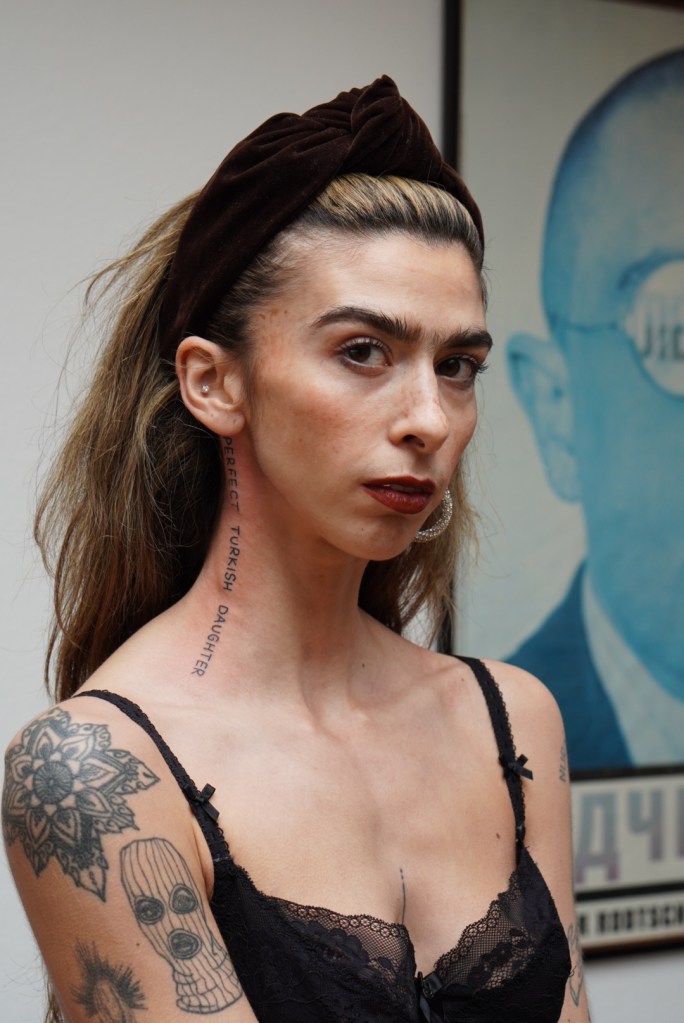
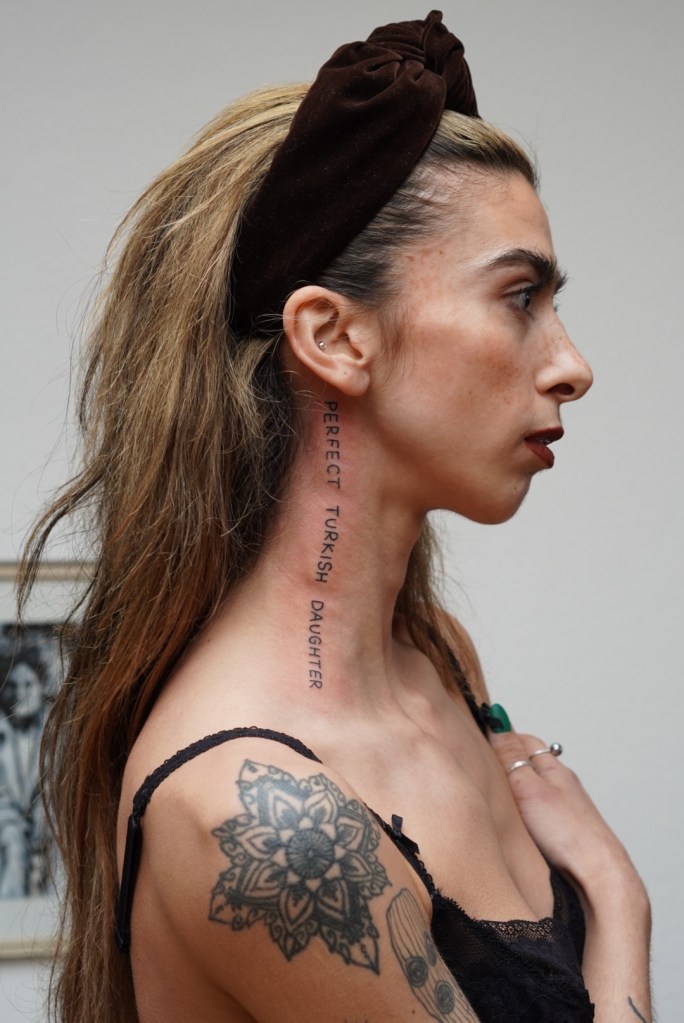
What does she expect from you? A perfect Turkish daughter.
And that means…? She can cook, dresses a certain way, shows all the right charms, never talks back, is always agreeable, never fights, does what her parents say, and ends up with the person they choose. I was none of those things. Never.
Do you see yourself as Turkish? Growing up, I hated the culture. I was the first and only Turkish kid at school; everyone else was German. I learned that saying, ‘I hate Turkish people,’ made me more accepted. I had to leave to figure myself out. For the last three years, I’ve been learning to appreciate my heritage without anyone telling me how. Now I can say I’m Turkish — even if people insist I don’t look or sound like one. But I am. Both my parents are Turkish. I speak the language. So who are you to take my identity away from me? I took it as rhetorical.
Do you also feel German? I’ve always called myself German. But the Germans say, ‘Mm, you look too exotic. Where are you really from?’ Once they hear ‘Turkish,’ that’s the end of the conversation.
Have you been to Turkey? Yes, a long time ago.
What differences do you notice? In Germany you might hear, ‘I lent you 50 cents last week — can you give it back?’ In Turkey, I could ask anyone for food, and they’d immediately make space for me and feed me, no questions asked. I like both: the warm Turkish temperament and the German respect for rules. If you make an appointment with a German, it happens — or they cancel four days ahead so you can plan. Turks… they just don’t show up, and they don’t care.
I told her I understood. I remembered watching a man in a small town in southern Germany bring a Lidl checkout to a standstill because a brioche was mislabelled on his receipt. The cashier refunded him 80 cents, printed a new receipt, then asked him for €1.10. He protested. Coins mystically moved back and forth. In the end, he’d gained no more than five cents.
Another difference, she went on, is women’s rights. Germany isn’t perfect, but it’s further along. In Turkey they cancelled the Istanbul Convention that protected women. It’s awful. And Germany points fingers — ‘Oh, you cancelled it, you’re backward, we’d never do that!’ — but here they won’t even call it femicide when a man kills a woman. It’s a ‘family drama.’ If you kill your girlfriend because she left you, you’re not a murderer — because she took away something that was yours: herself. It’s horrible. Horrible.
How do we improve the world? We’d have to change everything. Capitalism will never make us happy; it pushes us to want more, do more, so we’re never satisfied. For my grandma, happiness is just having us near. She doesn’t care about anything except family. For me, happiness is feeling safe, having everything I need in my flat — all these capitalist comforts. Maybe we could go back to her way… No. Even then, there was war.
II
What’s the most important lesson life has taught you? That it’s not over. Even when you think everything is about to end, it continues. So just stand up and work on! Never stay on the floor! Stand up and everything will come! She took a sip of water. For a moment, I wondered if she was out of her mind.
That’s what my best friend used to tell me, she added, before he killed himself at twenty-one, six years ago. He was the only friend I’d had since I was a baby. I always knew he wasn’t going to get old. She dabbed at her eyes, careful not to smudge her makeup.
How did you know? He was born a Turkish girl. When I was three, I went to my parents and asked, ‘Mum, Dad, Berna’s actually a boy, right?’ I knew it. My parents knew it. But his parents were far too strict to ever accept it. He was transgender, and had the worst case of borderline personality disorder I’ve ever seen. There wasn’t a place on his body without scars — scars on scars on scars. Living hurt him. Breathing hurt him. Just waking up and starting the day was painful. I knew he wouldn’t get old.
What was your friendship like? I was always the bright sun, he was the dark moon. We gave each other what the other was missing. But eventually I couldn’t help him anymore, and I knew it. I didn’t take it personally. His death had nothing to do with me. I could never have changed it.
What do you miss most about him? He was the only person I could tell my darkest thoughts and strangest moments to, and he never judged me. Even my therapist sometimes looks at me with judgment when I’m just talking about my feelings — it’s weird. Berna always listened and understood. But what I miss most are the gaming nights. I hate gaming, but I’d sit next to him, telling him where to look, while he played. We were a team, losing ourselves in battles against the computer world. Tears traced dark lines down her cheeks, melting her makeup.
I told her I had also lost a friend, a poet for whom living was an act of pain. While working at an advertising agency, he’d jumped from a window during the company Christmas party. Oh, shit, she said.
Let’s talk about your carpets. I started with an image of a couple having sex. Then I did a car, a ski mask, evil eyes, some of the creatures I’d drawn on paper. Now I’m working on a Spider-Man face because a guy I know opened a comic store and wanted a Spider-Man carpet for the wall.
III
What do you believe in? I believe in feminism. I believe art helps us calm down. Every time I do something that isn’t artistic, I feel like I’m spiraling down. When I go back to art, I calm down and become myself again.
What about feminism? When and how did you discover it? For me, feminism started when I got my period. I was ten. My mother transformed me into a hypersexualized woman against my will. Before that, I only had male friends. But once my period came, I wasn’t allowed to make friends with boys or wear short skirts. When my uncle visited, I wasn’t allowed to sit like this— she turned her knees to the side, showing the line of her thighs, —because he might look at me a certain way. I thought, Hey, I’m a kid! And he’s my uncle! But my mum told me all men wanted me sexually. I didn’t want to be a sexualized woman. I hated that idea.
How do you see yourself in the eyes of a stranger? I don’t fit Western beauty standards, and I know it. Some strangers react badly, especially online. For example, this part of my eyebrow— she pointed between her brows —makes them so aggressive they’ll say things like, ‘If I were your boyfriend, I’d give you a sleeping pill and pull out all your body hair.’ That’s so wrong. It’s horrendous.
What is beauty? Beauty has no shape and no colour. It’s a mindset — being completely happy with yourself, in how you carry yourself, in how you walk through life. Beautiful skin is nice, but that’s just appearance. Real beauty is deeper. These days, we can operate on everything, we can modify our appearance. But when I see people who’ve done so much to themselves and call it beauty, I often see emptiness. They’ve distanced themselves from who they are. How can we be happy inside if we’re unhappy with what we have outside?
Maybe modify an appearance surgically can be beautiful, and can lead to inner happiness too,I mumbled. I’ve had a buzzcut, tunnels, piercings everywhere — I’ve never been afraid to change my look. But when you change your nose, and later have children who inherit the nose you were born with, what then? Do you tell them why? Do you pay for them to change theirs? If I changed my appearance, how could I teach my children to love themselves, when their mum couldn’t love herself? Her voice quickened and rose.
I think it’s wrong to exclude people who’ve had work done from the idea of beauty just because their kids might not understand. She was blistering like a kettle about to boil. I see Turkish and Iranian mums who’ve changed their appearance, and their daughters — who look like they did as children — are unhappy with it. They feel ugly.
To push her to her high point, I kept heating her, It sounds like if you want kids, you have no freedom to change your appearance. You can change yourself — up to an extent. My sister had her nose done, but she doesn’t look completely different. There’s a line, and after it, you become someone else entirely. I have a friend covered in tattoos; I can’t see his skin anymore. I accept it, but I wouldn’t do it myself for the sake of my kids. I know someone who does body modification — scar work. I can’t look at her art without my head spinning. I saw an eighteen-year-old boy come in for Joker scars—she traced two deep, curved lines across her cheeks in the air, —and he didn’t even have a tattoo yet. I thought, fuck. When I was eighteen, I got tattoos I wouldn’t get now. He was too young for something that permanent. But people age differently. Some eighteen-year-olds have lived more than others will by the time they’re old and near death. Age is just a number. Experience is everything. She finally exhaled, calmer.
I glanced at my notes in silence. I’m really curious what conclusion you’ll draw about me, she laughed.
IV
How would you describe your relationship with your body? I was younger, I hated it. I even kept a diary about my body, writing about it as if it belonged to someone else. It was hard. Now, I thank my body for carrying me through all this — scarred, but still here.
How did you get your scars? I did them myself. Why? I had no power over my life. My parents decided what I ate, what I wore, who I could be friends with. When I came home, my phone was taken away, no TV, no computer. I was kept in a kind of golden cage. I started harming myself because I felt… nothing. No happiness, no sadness. Cutting myself reminded me I was alive — that I could bleed, breathe, exist. It proved I wasn’t just a shell or some machine.
How did you even know about cutting? I learned about it in a mental hospital. I saw other people doing it. Honestly, I’d never put my own kid in a place like that. I’d tried to kill myself before, but being in there actually made me worse. Before the hospital, I just wanted to die. After it, I knew about drugs, eating disorders, and all these destructive techniques. The places I stayed in weren’t good.
I’ve only been inside one mental hospital. The moment I entered, I wanted to leave. I remembered sitting in the small hall of the suicide ward, waiting for someone who’d asked me to tattoo him. Toxic-green couches. Two orange vinyl chairs. A white wall stained with grime. In the center — a pale rectangle where a TV used to hang, the black holes of old screw mounts staring like empty eyes. Below it, two small black speakers spat out a distorted rhythm: Upapapup, upapapup, upapapup! Maybe hip-hop. To the left, the reception windows were covered with taped notices. A patient shuffled past, eyes fixed on the grey concrete floor, his body heavy with medication. He asked me for a cigarette. I didn’t have one. It is a heavy place, she agreed. They locked me in with fifteen kids whose lives were completely destroyed. There was one girl — her brother had molested her from the day she was born, and when she told her parents, they didn’t believe her. I absorbed all that pain, and it wasn’t good for me. But without it, maybe I wouldn’t be as open, as understanding. Before the hospital, I was judgmental about self-harm. I didn’t get it.
You can understand without living through it. Maybe. But I’m the kind of person who has to fall flat on my face to learn. I still don’t know why. I’ve stopped fighting that part of myself. She swallowed hard. I handed her a tissue, but she shook her head, dug one out of her bag, and blew her nose.
V
What’s the one question you most want answered? Whether I’ll ever have a good relationship with my parents… or if I should just stop trying.
How old are you? Twenty-six. And them? Fifty-six and fifty-seven.
You still have time to try again. Yeah, but do I want to? Do I want to spend my energy on that when I could use it for something else? I have a little brother I’m waiting to take away from them. When he turns eighteen, I’ll bring him to Berlin. Right now he’s alone there, getting all the same abuse I did. I could go back and take the blows for him, but I can’t. I feel ashamed for leaving him, but it’s not my job to protect everyone. I need to protect myself too. I couldn’t survive there, so I left. I’m so sorry for him. I know how hard it is to live with those people.
Her tears came again, and her words tightened something in my chest. She reminded me of my own helplessness years ago, watching my father scream at my little brother over a broken toy helicopter. Like her, I couldn’t take him away from a destructive parent’s grasp.
VI
Now, let’s talk about your tattoo ideas. She nodded. First one — and the funniest — is PERFECT TURKISH DAUGHTER. She burst out laughing. Yes! I like it. I’m none of those things.
“What is your fondest dream?” I asked Chazz. “To dance naked in a nudist colony, with no sense of time—only love, no judgment. That would be true happiness.” He smiled, his full lips parting to reveal straight, gleaming teeth.
“Do you remember the first time you felt completely happy?” “It was the first musical I ever saw. My grandma picked me up in a massive limo, and we went to see The Lion King live. At the time, it was my favorite Disney movie—I watched it religiously. I must have been eight or nine. Stepping into the theater, the limo ride, the sheer spectacle of it all—I was in shock. That’s my first memory of happiness.” His voice, warm and soft, carried an unshaken joy. That radiant smile never left his face.
“What is your passion, and how did you discover it?” “When I was thirteen, I was dating a girl who was a dancer. I wanted to be closer to her, so I switched from acting lessons to dance. It was the first and last time I fell in love with a woman, but at the same time, I fell in love with dancing.” My eyes drawn to his hands—long fingers with glossy pink nails, each decorated with delicate black and white lines and tiny, multicolored crystals.
“What is the hardest decision you’ve ever had to make?” His gaze dropped. “Allowing myself to live after my father passed.”
“I’m sorry. What happened?” “He was hit by a car while riding his motorcycle. He wore a helmet, but the impact cracked both it and his skull, causing internal bleeding. The damage was severe. From what I remember, machines were the only thing keeping him alive. And that’s no way to live.” His eyes remained hidden behind the brim of his sun visor hat.
“How did you cope with the loss?” “The crash happened three days after my 19th birthday. If I’m being honest, I don’t remember much from 19 to 21. At first, I turned to alcohol and drugs—cocaine to keep up with the drinking, then Xanax to numb the anxiety, both from the loss itself and from the way I was dealing with it. I was still living in L.A., trying to push forward as a dancer. Two choreographers, Talia Favia and Marinda Davis, took me under their wings. They gave me work, brought me on jobs, and even opened doors for me to tour through California and New York. But no matter what I achieved, I was still drowning in trauma. The depression overshadowed my passion, and for a while, I considered quitting dance altogether. After my 21st birthday, I had a moment of clarity—I couldn’t keep destroying myself. I was wasting my youth. That’s when I decided to audition for a cruise ship dance company. It gave me structure, a way forward. It forced me to focus on my career, to actually live again. My dad was one of my biggest supporters, and by continuing to dance, I feel like I’m still making him proud.”
“How did your father support your passion for dance?” “At first, he didn’t. He grew up playing sports, and so did my brothers. I don’t think he ever imagined that dance could be a career—he only knew the world of professional athletics. I knew he was proud of me when I auditioned for ‘So You Think You Can Dance’ in Memphis. Originally, I was just tagging along with my brother, who was going to college there for football. But at the airport, my dad surprised me—he flew out with me, just for my audition. That moment will stay with me forever. It was the first time I truly felt he believed in my dream.”
To pursue his dream of dancing naked, Chazz left his hometown, leaving behind his mother and five brothers. So far, his career has taken him to Los Angeles, Miami, New York, Strasbourg, and now Paris, where he dances at the Cirque d’Hiver.
“In New York, I met an Australian dancer who was doing cruise ship contracts. I joined him when I was 21—it was fun. Then we came to Paris for a three-month trial at Disney, but I didn’t pass. Apparently, I was ‘too dark’ to play their characters. Meanwhile, my partner got the job and stayed. He was the one who later found me work at a cabaret in Strasbourg.”
“How was your time in Strasbourg?” “It was interesting. The theater was beautiful, and the show itself was challenging. But the location was the hardest part. The company housed us in apartments near the theater, surrounded by farmland. At first, it was peaceful. Then, after a few months, I felt isolated—cut off from city life. We were 30 minutes from the city, and without a car, I had no life outside of work. I hated relying on others just to buy cigarettes or groceries. But on the other hand, I had a lot of time to myself. I drank coffee, smoked, did yoga, and meditated on whether to break up with my boyfriend. That contract taught me how to enjoy my own space, to be truly alone without feeling lonely.”
“Now you’re in Paris at the Cirque d’Hiver. How did that happen?” “While working in Strasbourg, I spent a lot of time traveling to Paris because my boyfriend lived there. One day, I saw an audition notice on Instagram, and it just so happened to fall on my day off. I knew I wanted to live in Paris—I didn’t care what job got me there. The plan was to finish my cabaret contract, take three months off, then start at the circus. But then Covid-19 happened, and I ended up back in Florida.”
“How was it to be home? What do you love and hate about Tampa?” “Let’s start with what I dislike so we can end on a positive note. In my experience, Tampa is full of rich, aging, closed-minded people stuck in the past. Racism is openly displayed—it disgusts me. It’s also deeply homophobic and transphobic, which makes it a bad fit for someone like me. On top of that, there’s a lot of violence. It’s just a low-vibrational city. It doesn’t match my frequency. But what I do love is that my family is there. The beaches are beautiful. And I appreciate that veganism is growing—at least when I visit, I can eat well.”
“As you know, I work with words. Some words are more beautiful than others. Do you have a favorite?” “Rapture. It was the title of my first dance in Miami—the moment I realized I could dedicate my life to this. I have so much love to give, almost too much, and ‘rapture’ captures that feeling. It’s everything I want to express.” He moved his hands as he spoke—like a dance of their own.
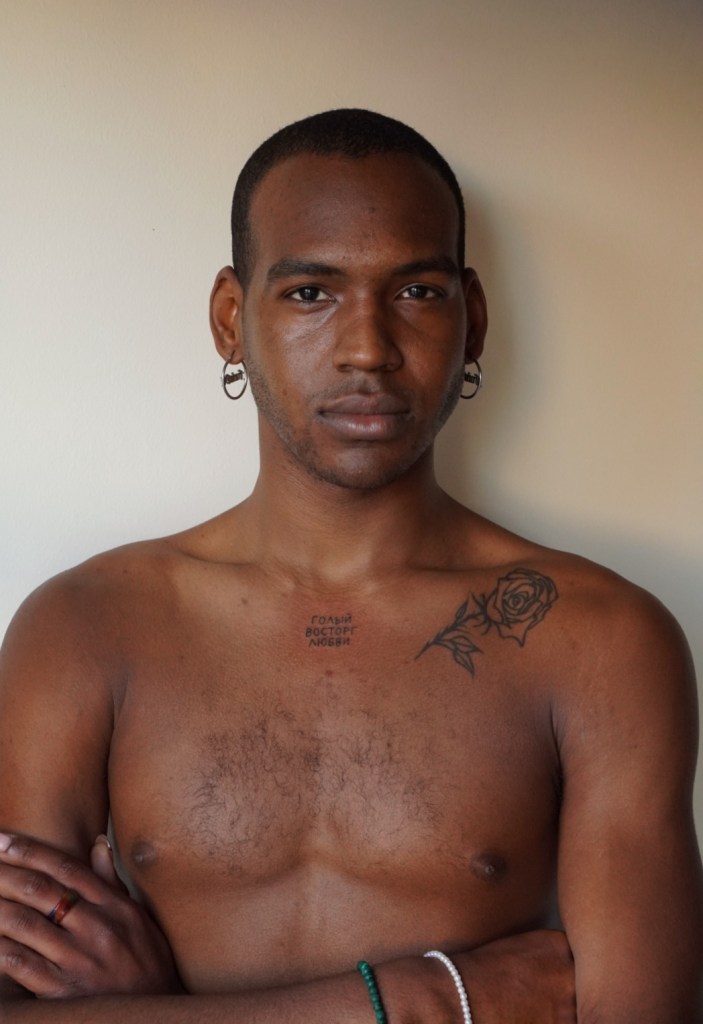
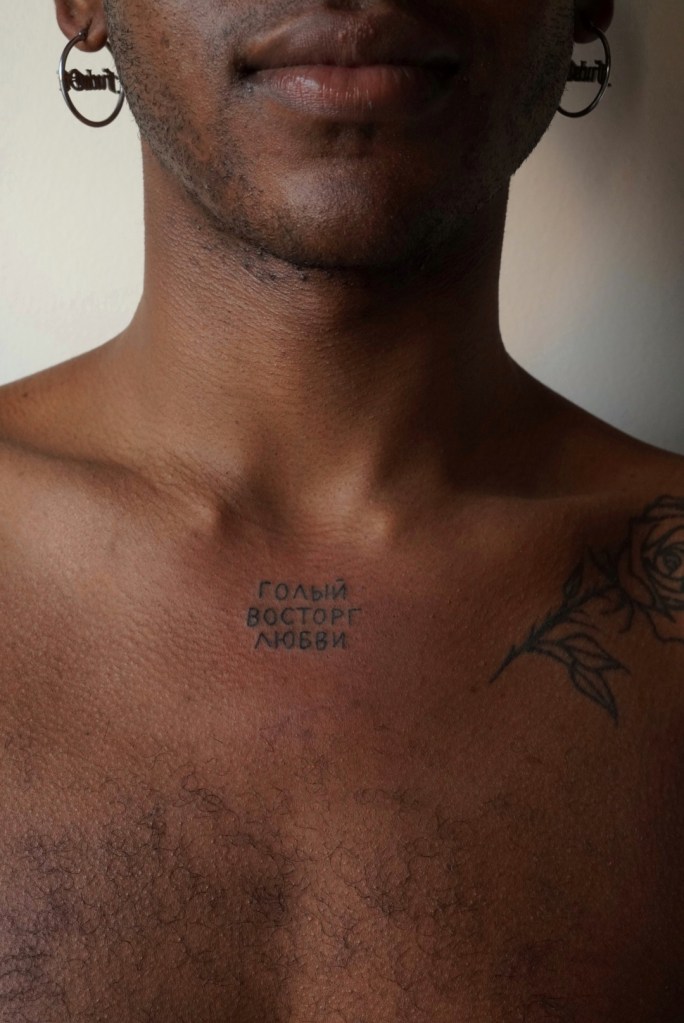
18.12.2020The tattoo translates from Russian as ‘Naked Rapture of Love’.
I met Sasha in Berlin, where she had come to spend time alone for the first time since becoming a mother. Back on the island of Majorca, her twenty-month-old son was with his father and grandparents. She had anticipated this brief taste of freedom, but now that she was here, I wondered how it felt.
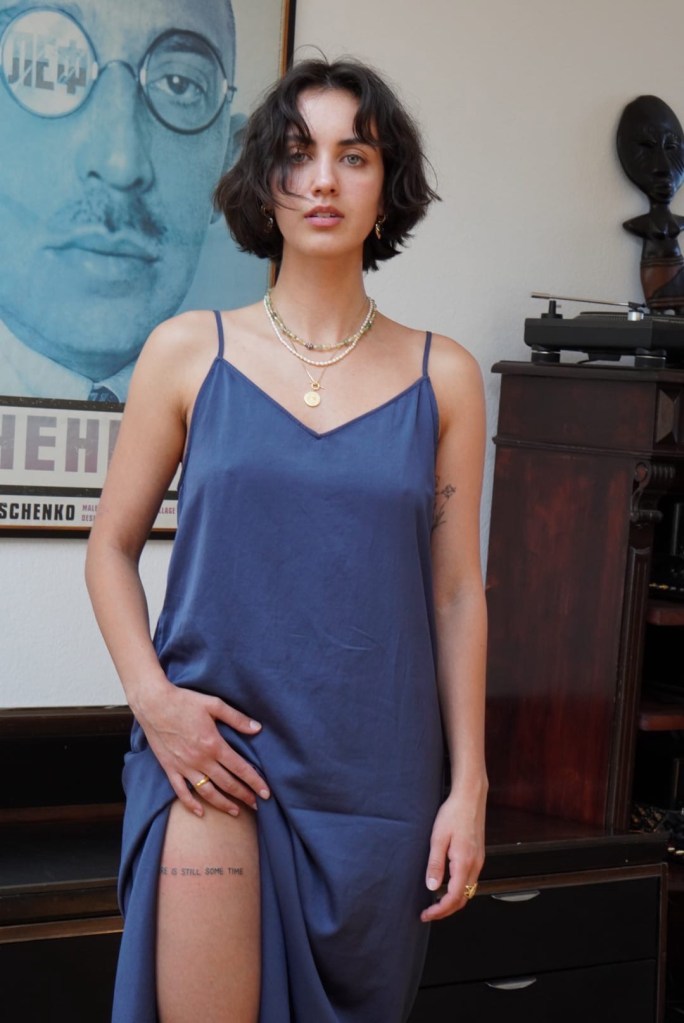
“You’re 23. What’s it like being a young mother?” “I love it. But of course, there are hard days. Motherhood is a test no matter your age—it changes everything.” She adjusted the black leather belt cinched around her blue silk slip dress.
“How has it changed your life?” “I think I’ve learned to see the world through a child’s eyes again. The things I thought I knew, I’ve been given a chance to rediscover. Like when I’m in a hurry, but my son spots a bug on the ground. We stop. We stand there for ten minutes, just watching it. With him, I don’t rush through life anymore. I pay closer attention.”
“Were you afraid to become a mother?” “At first, no. I thought, whatever happens, I’ll just do my best. But then doubts crept in—small ones, mostly. Like, will I be a bad mother if I take him outside at noon in the summer? He might get heatstroke. But if we stay in, he’ll be bored and cry because he wants to explore. Those are the moments that make me question myself. How do I make it work without causing harm?”
“And what’s been the hardest part for you?” “Being seen as a mother before being seen as myself. People no longer think of me as Sasha, the girl they used to know. They assume I have no time for fun, as if I’ve completely changed. And yes, I have changed—I do things differently now, I put my son before myself—but I’m still me.”
“You started dancing when you were ten. Was that your choice or your parents’?” “I was always doing sports. When we moved to Berlin, I had a choice—continue with sports in another city, away from my parents, or start ballet here. I didn’t dream about dancing, especially not ballet. But I chose dance because I thought it meant staying close to my family. They kept traveling for work anyway.”
“And what is it about ballet that draws you in?” “It helps me deal with my emotions. Words don’t always come easily to me. If you asked how I was, I probably wouldn’t go into detail. I’d just say I’m fine or I’m not. But when I dance, I don’t have to explain myself to anyone but me. If I’m angry, sad, or happy, I let it out through movement. When I’m alone, I put on music and let my body express what I can’t fully say in words. Watching dancers, I can instantly feel what they feel. Even when I see people walking down the street, I understand them better just by how they move.”
“Talking is movement, too. When we speak, our tongues move to express emotions.” Her thick black eyebrows lifted. “That’s true! But I don’t feel vulnerable dancing—it’s natural. With words, I have to be careful. If I choose the wrong ones, they might change the meaning of what I meant to say. I think I struggle with that—expressing myself clearly, maybe even honestly, in words. But if I dance, there’s no misunderstanding.” She took a sip of water, her stone-grey eyes resting on me.
“What’s your relationship with your parents like?” She laughed, a little awkwardly. “It’s tricky. We get along, but there are a few unspoken things between us—problems that probably won’t ever be resolved because we just see the world differently. My parents are artists, acrobats. They traveled a lot when I was little, and I went with them until I was nine. Then we moved to Berlin, but they kept working and traveling while I stayed behind. I spent most of my childhood alone, and in a way, that distance damaged our relationship. There were moments when I really needed them, and they weren’t there.”
“Was it hard leaving your son with them for the first time?” “Not really. They’re great with him, and I trust them completely. They know how to take care of a small child. But growing up, a child needs more than just physical care. You need someone who listens, who helps you navigate things, who explains the world to you. My parents don’t always listen—especially if it’s about something they don’t fully understand.”
“Can you read their emotions the way you do with others?” “Not in the same way. Over the years, I’ve noticed my dad is more of a listener, while my mom is more talkative. But my dad… he holds things in. I’ve never seen him cry or seem truly sad. If he gets angry, he shakes it off like it’s nothing. It’s like he prefers to sit quietly at the back and pretend everything’s fine. I don’t know if he’s suppressing things or if emotions just don’t matter to him in the same way. My mom, on the other hand, expresses her feelings more easily. But still, there are things from my childhood we’ve never talked about. And because of that, I don’t feel free to open up to her either.”
An ambulance roared down the street, its siren cutting through the silence between us.
“What’s the trait you appreciate most in yourself?” “I can make it on my own. My parents weren’t there for me, so I had to grow up alone. And I’m proud of who I’ve become.”
“And the trait you most struggle with?” “I forget that I have options. When I’m stressed, I get stuck in a black-and-white mindset. I convince myself there are only two choices, and I have to pick one. It’s like I’m playing chess—trapped on a rigid game board, following imaginary rules that I’ve set for myself.”
“Can you think of a time when you felt trapped like that?” “Yeah. I had to shoot a campaign for work, and I only had one day to get it right. I had this clear vision of how I wanted it to go, but it just wasn’t working. Everything was a mess, and I was spiraling. By the end of the day, my boyfriend looked at me and asked why I was stressing so much. He told me I could approach it differently, rethink the plan, and still get the result I wanted. He does that a lot—gives me a push, shows me a way out when I’m stuck. It’s like he opens these little doors in my mind that I didn’t realize were there.”
“What does love mean to you?” “I don’t think there’s a single right answer to that. Love is empowering and overwhelming, and sometimes it comes when you’re not ready. For me, it can be a warm, gentle feeling — like being safe at home. But love is also the ability to share your true, vulnerable self, without fear.”
“What words do you find beautiful?” “My son’s name: Aurelio Delá Waris. Aurelio means golden, Delá means angel, and Waris means desert flower.”
“What’s your philosophy on life?” “When I feel lost or afraid, I remind myself that, somehow, my life is already written. Even if I don’t understand things right now, I trust that it will all make sense later.”
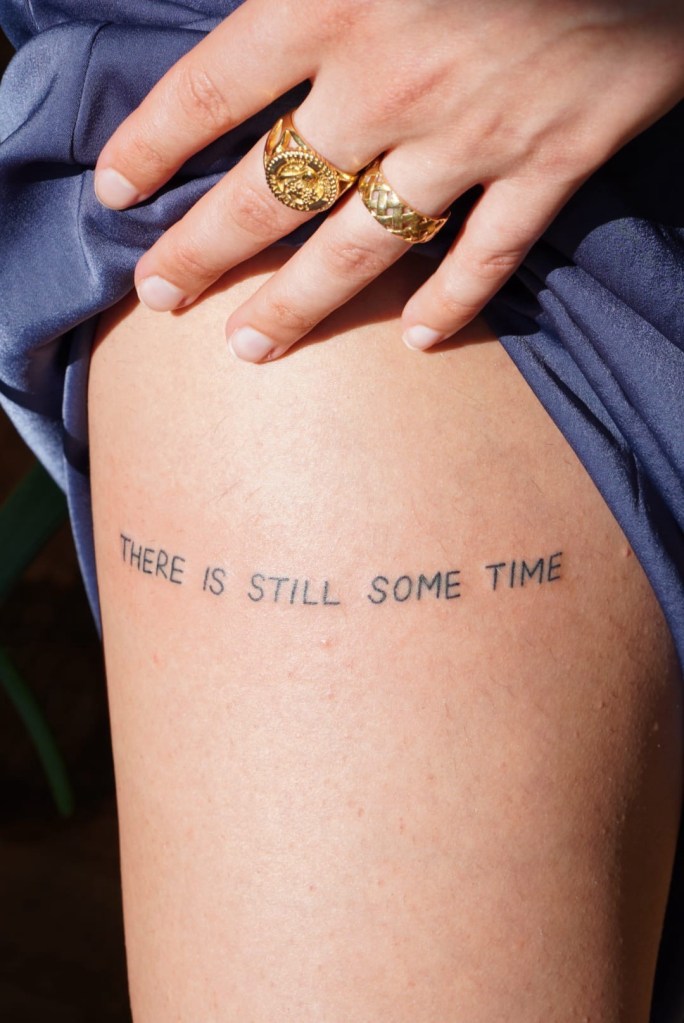
“What do you need to feel happy?” “Time. I see how little of it I actually have, so happiness for me is waking up and knowing there’s still time — time to live, to see someone I care about, to experience life. Just time itself.”
“And what if time doesn’t exist, and all you have is the present moment?” She smiled, caught off guard. “Your questions are really hard. I didn’t expect that.”
“What do you believe in?” “I believe everything is much bigger than we are. You know that feeling when you’re rushing through your day, overwhelmed by your problems? But then you step outside at night, look up at the stars, and suddenly feel small? And you realize those tiny stars are actually enormous, and there are thousands of them just hanging there — whole worlds we know nothing about. I think about that a lot.” She intertwined her fingers, the gold rings catching the light, and rested her hands on her knees.
“What’s the hardest decision you’ve ever made?”
She swallowed, her voice quieter. “Probably deciding whether to stay with my partner or leave. We had a deep love, but we also had different views and a lot of unresolved things between us. It’s hard to share your life with someone who sees your pain but doesn’t always know how to help or talk about it. We reached a point where we had to choose: either go deeper into the relationship or walk away. I wanted to run — to live my life without worrying about anyone else. But I chose to stay and keep trying. And I think we’re still figuring it out, day by day.”
Trigger warning – this interview discusses suicidal feelings.
Let’s talk about how you make your living. I’m an artistic director, she replied. I waited for her to continue. She tried to say more, but her lips seemed glued together.
Could you explain to me what you actually do? All that [speaks indistinctly]… like illustration, photos, logos. She was nervously bending her white fingers.
Is it an easy job? She was quiet. Her phone vibrated with messages. I undid my watch strap and placed the watch on the table to keep track of time, discreetly. She looked around, then turned off the sound on her phone and shyly said, with a French accent, I sink no.
What is so hard about it? Sometimes it’s hard and stressful to be creative, because it requires full involvement. She paused between words, as if checking each one in a French-English dictionary before saying it out loud.
What do you like or dislike about your job? She mumbled something, lips barely moving. I kept quiet, watching her restless fingers. She said nothing.
If you could choose any job, what would you take? Mm… pho-to-gra-pher, I sink. Mm.
Are you a happy person?I smiled. No, she smiled back. Why not? I don’t know. I think it’s always been like that.
Was there a moment in your life when you felt and realised what happiness really means? Yes. When I adopted my dog. Her voice sounded thick, as if her mouth were full of saliva and she did not know how to swallow it.
Do you feel embarrassed in front of me? I’m a very shy person, and as a child I wasn’t even able to say hi to someone. I see. Where did your shyness come from? What do you think? I always feared what people would sink of me. What do they usually think of you? I don’t know, but I’m always afraid they sink something bad. She spoke very slowly and fell into abnormal silence after every short answer. It was paralysing, almost irritating. I had never met anyone so lacking in confidence.
How are your relationships with your parents? [Making some odd sounds] We don’t really understand each other. It’s hard for me to express my emotions, and I sink it’s hard also for the people who live with me.
Is your shyness the reason for your lack of confidence? She was silent. I waited, impatient, until finally she said, I don’t feel that I’m adapted to this world. I sink I don’t understand it, and nobody really understands me, so I always feel…[speaks indistinctly].
Could you share a story of a time when you felt misunderstood? Silence. You said people don’t understand you. In what circumstances do you feel that? Maybe when you try to explain something? What is it that people don’t understand about you? People don’t understand my feelings, I sink. What feelings? No reply. If it’s a hard question, we can move on. She only looked at me.
What do you like most about yourself? I sink I’m a kind person. C’est tout. And what do you dislike about yourself? After half a minute of silence, I sink I want to be like everyone else, just to be able to speak normally, or… I don’t know.
Do I understand correctly that you dislike the way you speak? Yes. I just want to be normal. But people are different. There is no such thing as normal. She just stared at me.
Is there something in your life that you are missing? She kept staring. I stood up and walked around. No, she said quietly.
I sat at another table, four meters away. Maybe you miss your dog? She smiled. I miss having friends, or people who take care of me.
You didn’t answer my messages for ten days and I thought you wouldn’t come. Yesterday you wrote that you were in hospital, had just been discharged, and still wanted to come. What happened? Overdose of morphine. She rubbed her right hand with her left. How did it happen? I went to a party. I knew there would be drugs there, and that I could take it in the bathroom. She seemed on the verge of tears.
Was it the first time you tried to kill yourself? No. I sink about death since I’m little. The last months just accelerated my desire to die. Why morphine? Because I knew it’s easy to overdose. Weren’t you scared? No.
I’ve never tried morphine. What does it look like? Sachet. And what did you feel when you took it? I sat on the floor, and then I don’t remember anything. Just waking up in hospital. What were you thinking when you woke up? I felt very bad because I didn’t want to wake up. My throat felt dry. Do you still want to die? I sink so, yes.
I reached for a glass of water and drank. What is stopping you? Because I know it would hurt my family.
I returned to sit with her. You said you miss people who take care of you. Does that mean your family doesn’t? Yes. I don’t know my father at all. My mother is really complicated. When I was a child we were very close, but later I felt there was no air, no liberty. So I distanced myself. She couldn’t understand why, and our relationship was getting worse and worse, and we stopped talking to each other. She couldn’t accept that we are not as close as we were before.
How old are you? Twenty-eight.
What pushed you to attempt suicide? The last few months were very tough. I had no money and had to prostitute myself. I was raped many times. Were you raped by your clients? Not only. Once at night on the street, another time by a photographer, other times by clients. How did you end up in prostitution? My mom kicked me out and I had to support myself. When did that happen? Five months ago.
I didn’t know what to say.
Is there something that inspires you to live, create, love?
Is there something you hate in your life and want to change? Yes. I hate everything in my life.
What exactly do you hate?
Is it difficult to answer? I don’t ask myself these questions. I avoid sinking about my feelings.
Have you ever spoken to a psychiatrist? I tried many times when I was younger, but I would just sit there and say nothing. Did you speak to one in the hospital yesterday? I lied and told him it was an accident. I convinced him I was fine.
What does love mean to you? I don’t believe in love. What do you believe in? Nothing. What is nothing?
Do you love your dog? Yes. So what is love, then?
Do you have an idea of your perfect world? Where people are kinder and less judgemental. How can we achieve it? I don’t know.
When was the last time you cried? I cry every night in bed. Why? Because I feel sad and lonely. Is crying helping you cope? No. It makes it worse. I feel even more lonely.
What are you most afraid of? Life. What is life? A repetition of things that never change. Close your eyes. Things are changing all the time. Your thoughts, your feelings — everything moves. She remained silent.
Do you have any questions you want answers to? No.
I felt tired. I moved to another table and lay down on it, looking at the ceiling. A scooter roared outside; someone dumped garbage; then silence returned, punctuated by the ticking of my watch. It seems to me that you’re depressed, but I’m not a doctor. An old car diesel engine started and faded away.
Why do you want a tattoo from me? I want to know what words you will choose to describe me. Answer my questions then, I said silently, not knowing what words I might choose.
What words do you find beautiful? Something pure and ephemeral.
Is there something you believe would make your life happier? Someone to rescue me. But I don’t sink it’s possible.
There must be some happy moments. Let’s find one. I don’t remember any. Try to think what brings you joy. Petting my dog in nature. That’s something. At least one gentle thing.
What about sex? No. I have a lot of sex but never feel pleasure. Only void. Don’t you feel that void without sex too? Church bells rang midday. People are interested in me only for sex.
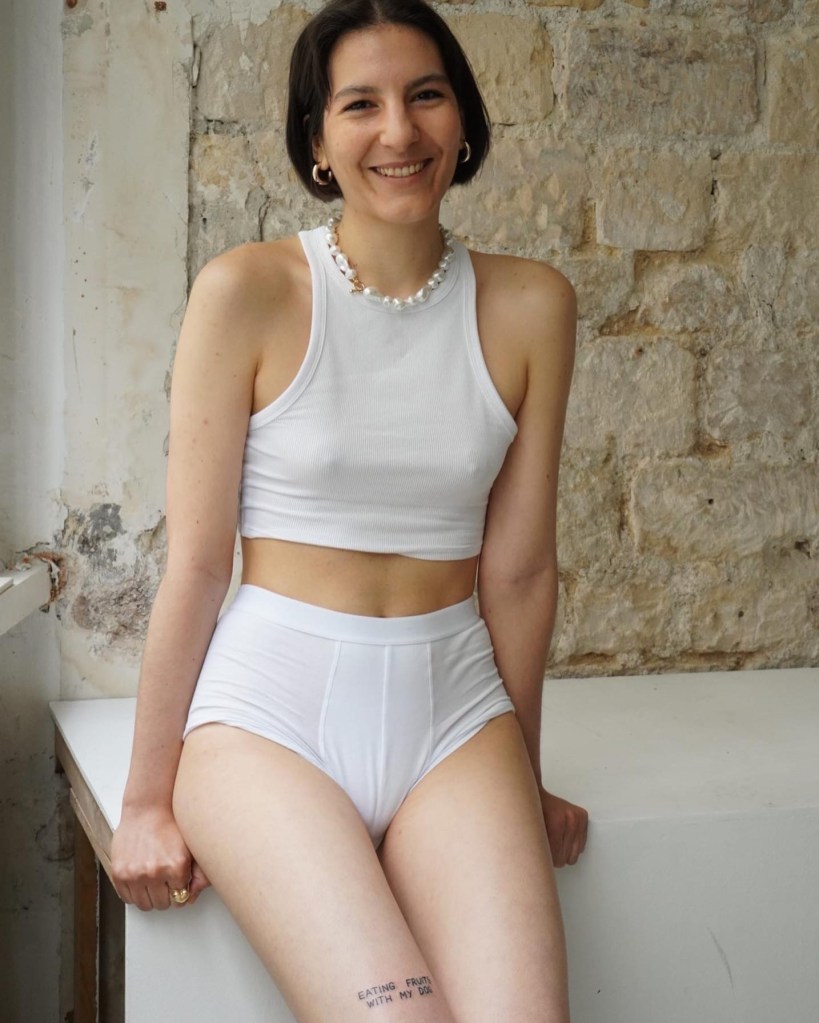
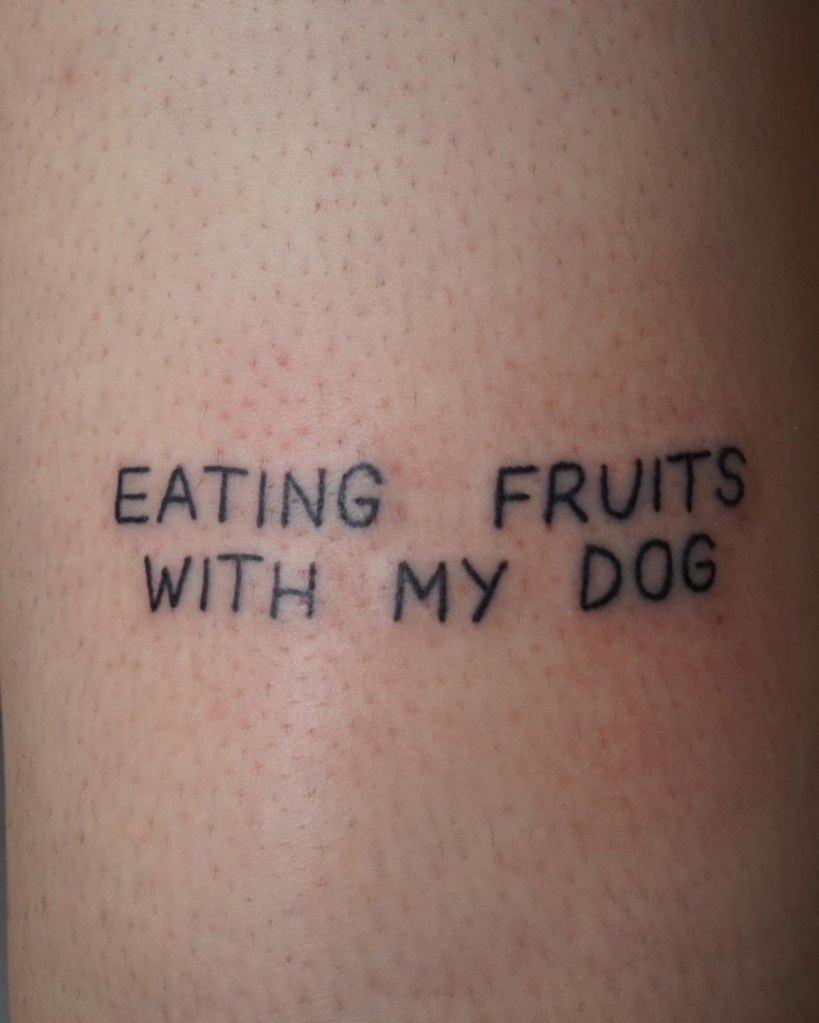
When was the last time you walked with your dog in nature? Last summer. In the South. Were you happy there? Yes. It was a house in the middle of nowhere. In the forest? No. In lavender fields. How long were you there? Ten days. Alone with your dog? Yes. What did you do? Sleeping, eating fruits and walking in the nature. Fruits? Yes.
‘Is there something that bothers you?’ I asked her. ‘I worry very often and I know that it is me creating conditions for suffering,’ she answered easily.
Her chin, mouth, cheeks and nose were concealed by a blue surgical mask. Her huge pale blue eyes, big forehead and long blond hair were visible. She was staring at me.
‘How do you cope with anxiety?’ ‘I drank away anxiety before, I could have one or two bottles of wine per evening and at the same time function well.’
‘How do you make it now?’ ‘I quit drinking in November 2018 but the problem remained unsolved, I am still addicted to many things, like my job or food, I am still learning how to accept the imperfection.’
‘Tell me about the imperfection.’ ‘For a long time I couldn’t accept my bisexuality and I worked on it with my therapist. I have been struggling with the feeling that I live not my life because I was trying to stick to the perfect successful role model: university, work, family, children. But the idea of having children scared the shit out of me and it was easy to drink away this fear. At some point I realized that I can’t fit all the frames and my doubts are coming because of society’s presentation of good and bad.’
I was writing down her answers in my notebook, not looking up. Her talking was fast and endless. It was the moment I realized that I need to record my next interviews with a special device.
‘I also struggle with control. I am a perfectionist and I aim to complete too many tasks. I understand that I might not get all the tasks done and it scares me. I used to think that I must control everything around me, my emotions, everything!’
‘Let’s talk about how you make your living.’ ‘All my life I work for myself. I have an offline clothing store with very big sizes in Peter (short for Saint Petersburg). I never weighed more than 80 kilos myself but I am well aware how difficult it is for these people to find clothes. In fact I have five projects: jewellery, my clothing store, Thai massage club in Sochi, master class Instagram Competence and I help Stepanec Aleksandra with the selling of dresses and costumes that she makes herself.’
‘Why it is difficult to find large size clothes?’ ‘The bigger the man — the bigger the disproportion is. It means more nuances and specificity, and to find the right size you need to try on three different sizes.’
‘Does it mean that the smaller the man — the smaller the disproportion is?’ I thought but didn’t ask.
‘Why you were in Peter opening this shop?’ ‘I was born in Barnaul and first and foremost the target for me was to escape from this town. This is why I went to Peter. I was going through my self-affirmation phase and it was important to me to live alone and prove to myself that I can do everything on my own. Peter gave me a lot of freedom, that helped me to avoid strange stereotyped life and to continue trying to find my real life.’
‘Did you find your real life or are you still looking?’ ‘I still find something interesting.’
‘Like what?’ ‘Recently I understood something very powerful in my field of work. I realized that I want to work with the artists, not to sell products. Two hours per week I consult artists about SMM for free. I plan to develop in this field, to open an educational program for artists about their autonomy online.’
‘How are you connected to the jewellery?’ ‘My mom has several salons of jeweler’s arts and I am working for her as a project manager and web developer.’
‘Do you like the jeweler’s arts that you sell?’ ‘It is soviet jewellery mostly and I was never a fan of it. Ninety percent is made out of pink gold and if there is a crystal then it is ruby. But then I understood in Russia that it is easy to slip into the idea that everything is shit, while there are really a lot of talented people and I want to help them to sell their arts.’
‘What is your relationship with your mom?’ ‘Well, when I came to mom and told her that I am an alcoholic, she didn’t believe me at first. She said that drunks are creeping on the streets and that I am not that kind of person. When I told her that I am bisexual, she said that I was “infected” in Berlin and deluded myself. It was devaluation of my problems and it was global, the whole society was against me, but mom’s failure fully to understand me was the hardest thing to accept.’
‘Why do you think she has reacted in this way?’ ‘I think she found it really difficult to understand me, she has made so many efforts and has come a long way… It was very difficult for both of us. I must say that she always tried to understand me and literally the following morning she thanked me for my honesty. I understand that she had her own vision of my life and it was very different from that which I had really become. Eventually, she was sticking up for me and even quit drinking for a while. She has significantly changed her attitude about it and I feel a great support from her.’
‘Now we are in Berlin, how did you end up here?’ ‘I live here for three years with my husband. He is German. We met in Odessa, lived in Peter, also in Prague before moving to Berlin.’
‘Tell me about your husband.’ ‘When I see him I feel love. We have been together for eight years and we have an open marriage. It means I date with women and I can be honest with him about it. It is very important to me to be honest with my loved one and not checking in my head what I can or cannot say to him without causing offense.’
‘And with whom is your husband dating?’ ‘He is dating with no one, he is lazy ass. But if he dates then it is only with women. In my case I am more active and I can date with trans and non-binary persons. If that make sense I don’t date with cisgender males. I don’t find it interesting and it makes my husband jealous. Sometimes we date with people together as a couple. During the lockdowns it was relevant to have less contacts. But this approach has a nuance: it is not an easy thing to find mutual interest for three.’
‘What do you like the most about these open relationships?’ ‘I like to meet people, to open up to them and also to open myself. I really love to fall in love and idealize these people. I feel insanely inspired by the transition from meeting strangers to having sex with them. I like to build new relationships. Learning about the others is learning about myself. I am very different with each person and I am really captivated by the research process. It seems to me that I have the resources for relationships with more than one man. I am deeply living the moment that I fall in love and I very much appreciate the ability to experience it again and again.’
‘What does sex mean to you?’ ‘Sex is an indicator that shows my mental and physical condition. If desire to have sex with my husband or with someone else wanes it means that something is wrong with me, that I am most likely tired and missing something.’
‘And what is love to you?’ ‘Love is willingness to accept the shortcomings of the other.’
‘What is your philosophy?’ ‘The most important things in life are not things.’
‘And lastly, where and why would you like to live?’ ‘In Portugal, near the sea, because the ebb and flow doesn’t care about the pandemic.’
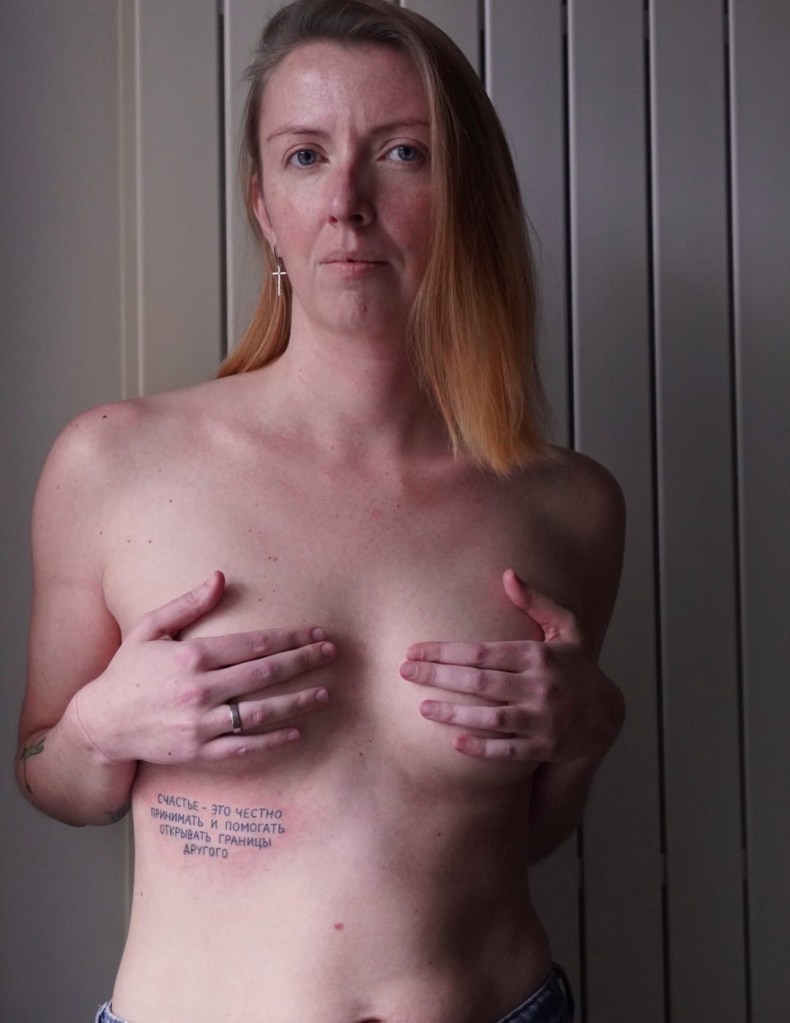
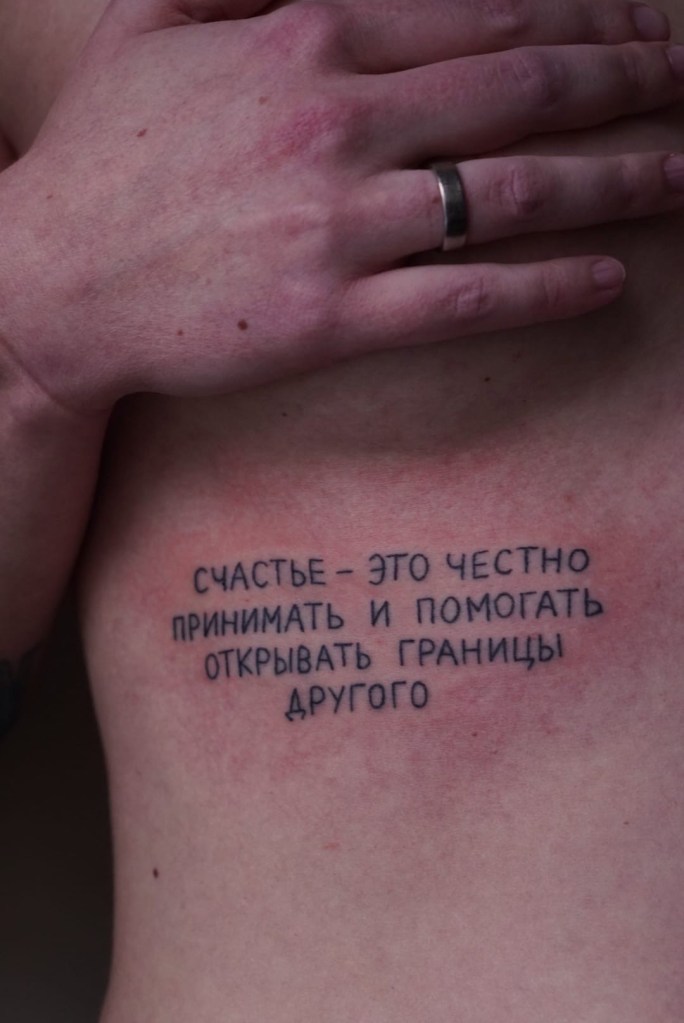
March, 2021 BerlinHappiness is honestly to accept and help to open the boundaries of the other.
‘Do you remember the moment when you felt and realized that this is happiness?’ I asked Fiona Zanetti, a 26-year-old star known for her DJ skills and long vivid nails, a fashion icon living by her philosophy of aesthetics and drawing inspiration from dance music. ‘Oh my God I feel it all the time,’ she said smiling.
‘When was the last time you had this feeling?’ ‘It was two days ago when Tom and I came back from our beautiful trip to Mexico. Oh my God I was almost crying that I’m so lucky to live in this apartment in Paris and that I can afford it by myself. I felt like this is my place, this is a person I love, my independence, my comfort, my furniture. I was so happy, so full that I’m creating the life I wanted,’ she stroked her head. ‘And the more I say thank you, the more I get in return. You know sometimes you must not forget to say thank you for the things you prayed about and have today, because we are always looking for the next thing to happen. We want to have more and more and we forget to stop and say ‘Wow, thank you, my congratulations, you fought for this, you wanted this, you worked hard and now you have it! So take a moment to be grateful for what you have achieved!’
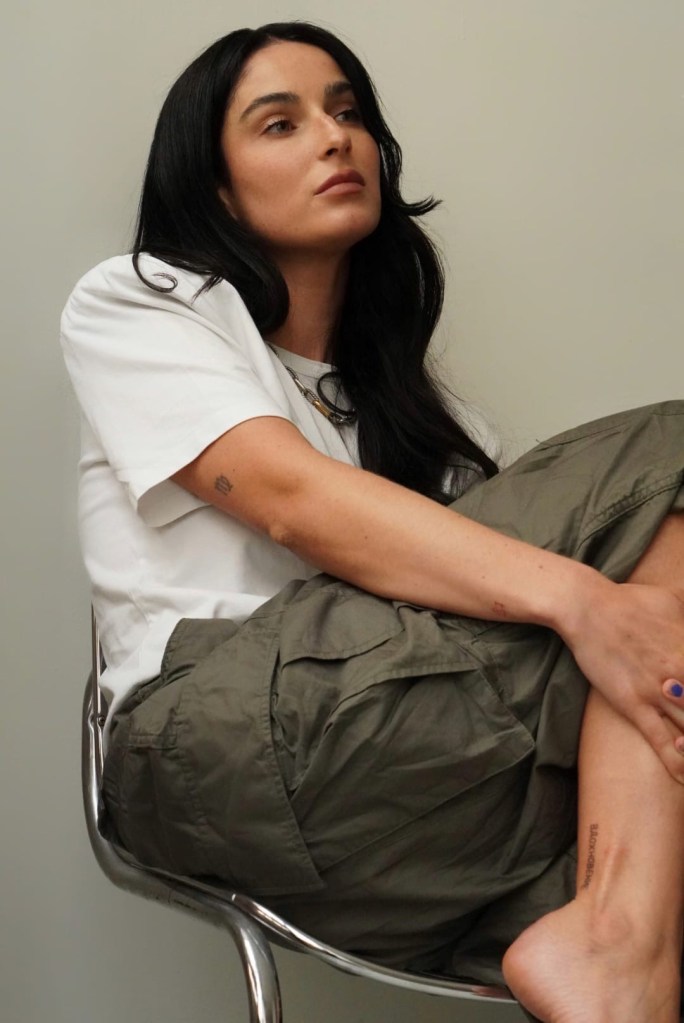
She was tan and beautiful and seemed very happy. Her smokey eyes were wide open. She had long black hair and I thought she looked like a mermaid from Disney World, or maybe like one of the Sea Goddesses of ancient legend.
The first time I saw Fiona in the autumn of 2020, she wanted me to make some tattoos on her arms.
‘Do you mind if I ask you what does it mean?’ I wasn’t able to read it properly out loud: QUAE NATURA OCCULTAVIT. ‘It means what nature has been hiding. This is a common saying in Latin language to define occult arts, like alchemy or astrology,’ she explained to me. ‘Those disciplines of occult arts are very important in my life and I want to remember that most of the truths in life are not the ones you can see right away. You have to dig, to feel, to learn, to listen, because nature decided to hide it.’
I wasn’t familiar with the occult arts so it took me some time to digest her words. In my life I had only one interesting conversation about astrology and I had no knowledge about the alchemy or the occult arts at all.
She also wanted me to tattoo ‘6796’ and ‘Ф’.
‘May I know what those numbers mean to you?’ ‘Just important numbers to my family.’
‘I see, of course. What about the Russian letter ‘F’?’ ‘It is the golden ratio sign, a mathematical concept that people have known since the time of the ancient Greeks. It is an irrational number like Pi and E, meaning that its terms go on forever after the decimal point without repeating. I love the fact that with something as precise as mathematics there can be some irrational things. I see the beauty of life in this contradiction. This is a formula that you can find in all the beauties of the world, from nature to Leonardo da Vinci paintings. Irrationality is the formula of the beauty.’
She made me eager to probe more deeply. Unfortunately, she came with her boyfriend and we had only one hour.
The second time we met in April this year. I caught her for four hours, this time without her boyfriend.
‘How do you imagine an ideal world?’ I asked. ‘I would love to live in a more equal world and let people love who they want to love.’ She replied, shaking her head ‘no’.
‘What does love mean to you?’ ‘It’s everything,’ she smiled. ‘It is in every little thing, it’s in our relationships, in food, it’s life itself. Everything I do has a little part of love because love is energy which connects everything together. To have this conversation with you and to share the energy with one another, therein part of appreciation, part of love, it comes from a good place. That’s why I think that if you do things with a kind heart, with love, of course bad things may happen to you, but you will never fail, it will always be right.’
She scooped her long hair behind her back and combed her head using her fingers.
‘Who or what do you appreciate most in your life?’ ‘My boyfriend Tom, my friends, my family. Nothing makes sense without them.’
‘What would you do if they died?’ ‘I hate even to think about this. Death for me is one of the scariest things. It’s maybe super selfish but I hope I will die before them because I don’t want to handle the loss. I have never been faced by the death of any loved ones. I cannot accept it and it’s really hard for me to imagine this. I think I will have a very hard, how do you say, day?’ she laughed, ’how do you say when you mourn someone? Morning, mourning?’ ‘I understand what you mean.’ I was laughing too.
‘Where do you see yourself in ten years, still in the entertainment business?’ ‘I will be 36, I hope I will be able to build a place that represent my values, it will be filled with my friends, my family, I hope I will have kids. Community is something very strong in my culture, because I’m Italian you know, and this lockdown was very hard for me,’ she expressed her anger with her face and hands. ‘I realized how much I need noise and people and conversation and big tables with a lot of you know like,’ she put her hands out and imitated juggling. ‘I hope my life will be full of big tables and conversations and I hope to see the things we have built together with my soulmate Tom.’
‘How do you think, are you addicted to him?’ ‘I think I found,’ she thought for three seconds and said, ‘Yes, I think I’m addicted to him. Yes, absolutely!’ she laughed, ‘No but I believe I found a balance in him. I’m very comfortable being myself and I think before meeting him I was very comfortable being single, but I really found my binome you know, like I found my right hand.’
‘Can you imagine what will happen to you if he leaves you?’ ‘I mean what, I will go on my life, I won’t die but,’ she was smiling ambiguously. ’For me it’s impossible. Something can happen, of course, but he and I, even if we are not conventional or something, people are saying that we are like brother and sister, even if he is black and I’m white, you know we share this magic thing,’ she was waving her right hand like a tornado, ‘it’s impossible. We were meant to be with each other and we will always have a part in each other’s lives because what happened between us is too intense to disappear. It’s impossible. Can you imagine I was calling and saying we broke up!’ She was laughing.
‘I can imagine it because I had the same feeling about my binome. I thought that breaking up is always a possibility, but I couldn’t believe her when she said that we should break up.’ ‘Nooo.’ ‘Like you, I was firmly bound with my partner and was deeply attached to the idea of a lifetime together. I couldn’t believe that she would leave me this year. But she did. It is still hard for me to believe in or to understand it. As you said, it is too intense to disappear.’ ‘Of course, I understand, I’m very romantic but I don’t have blinkers on my eyes. I think even if you have the same energy, at some point someone may need something else. It means you are not balanced and you don’t want the same things anymore. Sometimes you can’t find it in a person even if you love her more than everything.’ She was silent for a moment and I interrupted her thinking.
‘What is the drama of your life?’ ‘My what?’ ‘Your drama.’ I repeated with my Russian accent. ‘What do you mean?’ ‘Are you carrying any drama through out your life? Maybe something you usually hide and try to rid of, something you don’t want to experience again.’ ‘I think it is my family. I had a happy childhood and my parents created an amazing life for me and my sister but on my father’s side were a lot of hidden things and lies. I think the relationships with my dad created in me a disgust toward men. He cheated my mum and destroyed our family. My image of men dramatically changed and I left my house when I was 16. Of course, meeting new men with beautiful souls helped me to find a balance but I still have a resentment.’ She was screwing her chest with her five fingers.
‘If you could change something in the past, what would it be?’ ‘I would be kinder to my sister. I just recently realized that she was less confident than me as a kid and I was maybe a bit cruel or mean towards her. I think I traumatized her just by being a selfish kid, being me, and it made life a bit harder for her.’
‘Where and how did your sex experience begin?’ ‘I was 15 years old. It was a very good experience. It was first time for both of us. We were in love, it was summer and super hot, he had a motorcycle and it was really a good experience. Honestly, I’m very lucky in my sexual relationships and that’s why it is weird that I have a resentment towards men because I got so lucky with all the men I had in my life. I feel power in my sexuality and I have never been disrespected by men. Everyone around me, my sister, my mum, my friends, they’ve all had bad experiences, but I haven’t, so I’m like ‘oh my God when is it gonna happen to me?’’
‘How do you think what is a bad sex?’ ‘My grandmother always saying that sex is like pizza, even if it is bad – it is still good,’ she was laughing, ‘No, but more seriously, I think that bad sex is unwanted sex. Sometimes it is chemical, physical, the bodies don’t fit together, the Ph doesn’t work, the size doesn’t work, I don’t know.’
‘What are the questions that you want to find answers to?’ ‘I would like to know… Oh my God, it is so hard because I don’t know if I really want to know. Sometimes it’s nice not to know the answers.’ She crossed her fingers and turned her head up and left. ‘I would love to understand some ideas that we run like humans, like fairness, injustice, peace, hunger. How it is even possible to achieve? It is not in our nature you know, but I would love to, while at the same time I don’t want to know. You know we have these beliefs, but what if it is impossible, no matter what you do? I will die one day and the world is not gonna extinct.’
‘What then, do you think is your purpose?’ ‘I think my purpose is to inspire some people and make them free to chase their dreams. You know I’m a very optimistic dreamer and I think I help people to find some motivation and I help them to alleviate their fears. For a long time when I came in a room with people, before I leave the room I want to make a positive impact,’ she leaned over me, ‘So I hope before I leave the room I will make someone happier, more inspired or motivated. Sometimes you can do it with a stranger but actually its people close to you who need it.’
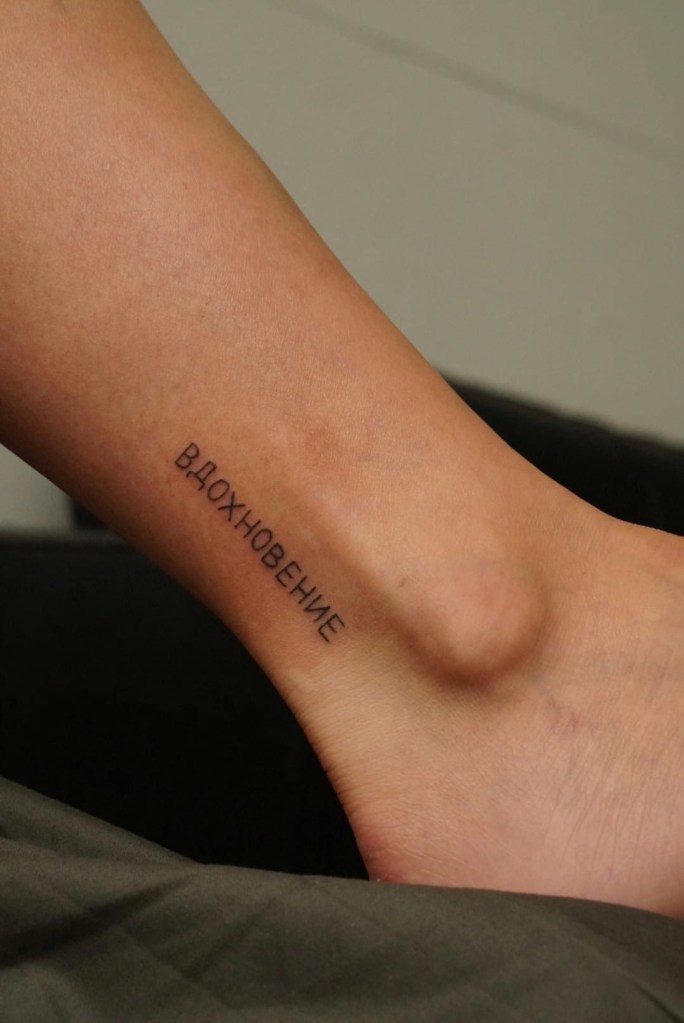
‘In what language do you want to have a tattoo?’ ‘In Russian.’
I felt inspired by her purpose and realized that the word ‘Inspiration’ in Russian has a beautiful meaning inside of it.
‘In Russian the word inspiration translates as ‘a moment of inhalation’. I think this word suits you admirably.’
‘I’m a student and I’m studying biology’, she said calmly. ‘Why biology?’ I asked. ‘My teacher at school gave me her interest for biology,’ she said completely lacking in passion and emotion.
‘Do you like it?’ ‘Yes.’
Kira was my last client in Vienna before returning home. I was tired and nervous at the thought that I would have to face one more boring student story.
‘Tell me more about biology, what is it that inspires you?’ ‘It gives me a perspective. When I go outside I see trees and think of photosynthesis, I see humans and think of bones, muscle contractions and nervous systems,” she looked around. ‘I see dogs and think of their evolution from wolves, I see flowers on the side walk and think of pollination and how they depend on insects,’ she turned her head to the left and studied the titles of the books on the shelf.
‘What is your passion?’ ‘Books and the science of biology.’
She seems to be a smart student I thought, calming down myself.
‘Who or what inspires you?’ ‘Other people’s accomplishments.’
‘What is your first memory?’ ‘I was laying on the floor, and I was coughing, and my parents didn’t know what to do,’ she slightly smiled, or maybe I just imagined it.
‘What do you need to feel happy?’ ‘A book and a friend.’
‘Is there something that you hate?’ ‘Impatience.’
‘What do you like most about yourself?’ ‘That I’m a calm person and I can calm down people when they are angry.’
‘And what is it you don’t like about yourself?’ ‘That I’m not sensitive enough.’ Her eyes were dark grey.
I was silent, thinking of my woman friend who can sing and jump for joy, who takes care about everything with all of her heart and becomes mad so fast, like pushing a button. Is this sensitivity I thought.
‘How do you define sensitivity?’ ‘Hm, I try to say that I’d generally like to show more consideration to the feelings and emotions of others. I don’t want to hurt anybody mentally or with the things I say or do. Sometimes I have the feeling that people become uncomfortable with me talking about certain things. I don’t want them to feel like that. I think sensitivity is when you don’t hurt anybody’s feelings.’
‘Tell me about those certain uncomfortable things about which you speak?’ ‘I can’t say there is a certain topic, it is something entirely different in every case. Sometimes, without meaning to, I touch upon their traumas just in a casual conversation. For example, it can be something about eating disorders or their childhood. In these situations I feel like they become nervous or don’t know what to say, so I never probe further.’
‘Where do you see yourself in ten years?’ ‘Working in a laboratory and taking care of my parents, they will be 70.’
‘What words do you find beautiful?’ ‘Happy, books, nature.’
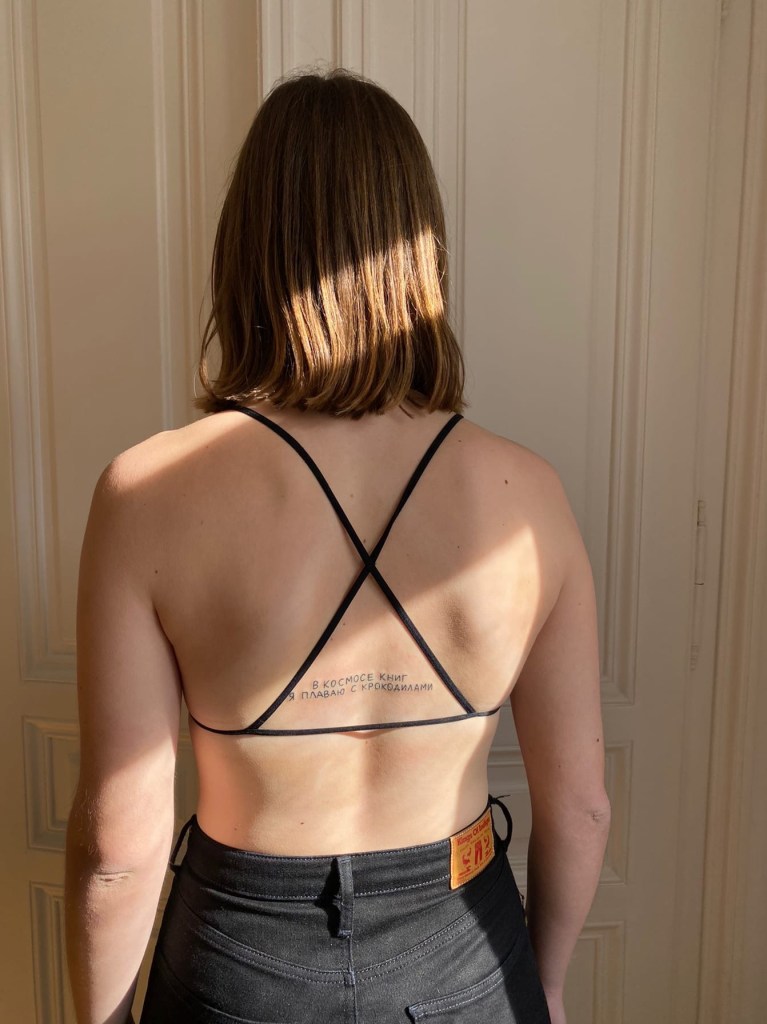
‘What is the most extraordinary thing you have done?’ ‘Swimming with crocodiles.’
I was astonished. ‘How did this happen and why?’ ‘It was a jungle tour on my second or third day in Equador. We were boating down river towards some little island and we saw many crocodiles observing us from a safe distance. When we came to the island our tour guide shared some snacks and said, ‘If we dare, we can swim with these crocodiles.’ My friend and I were very excited to do so and we did it, just the two of us! I mean we tried to swim closer to one of the crocodiles, but at some point he or she swam away.’
‘What did you do in Ecuador?’ ‘I volunteered for seven moths, looking after native children.’
‘What did you learn?’ ‘When I first meet children they seemed intimidated by me. They didn’t know how to greet us or how to act. And I decided to do something that would spark their interest and see what happens. I played the Ukulele and it didn’t take long before one girl bravely asked me, ‘What are you doing?’ I let her come to me and soon enough she began exploring me with her childish curiosity.’
I looked at her, she looked like a beautiful alien who stepped off the pages of a Cosmos novel in which she goes swimming with crocodiles, working in a laboratory and taking care about her aged alien parents.