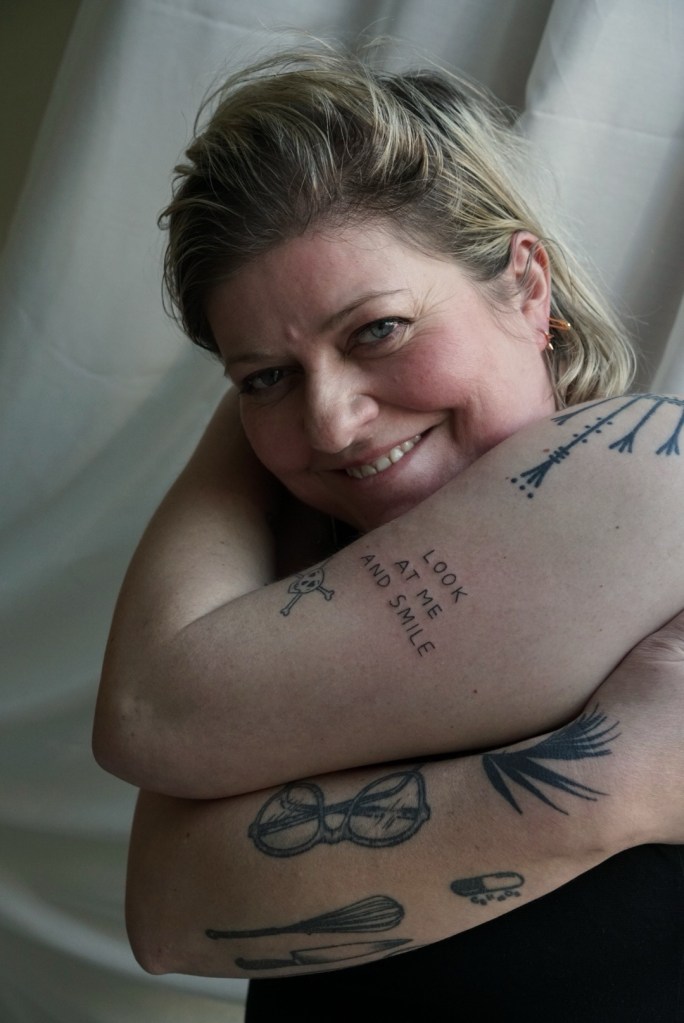
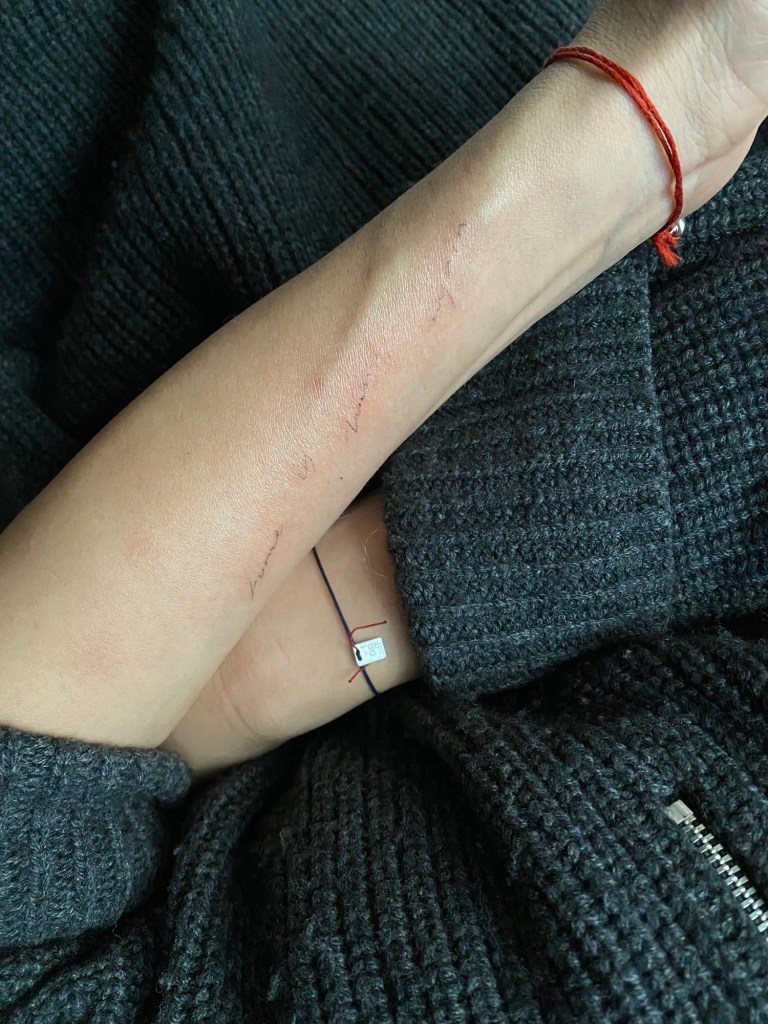
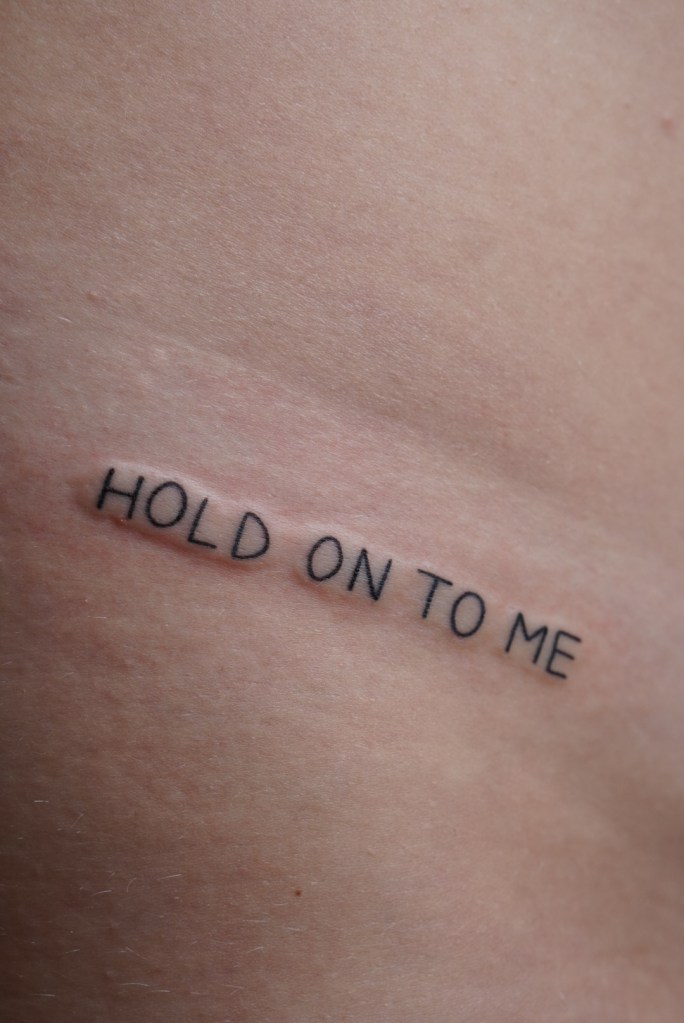
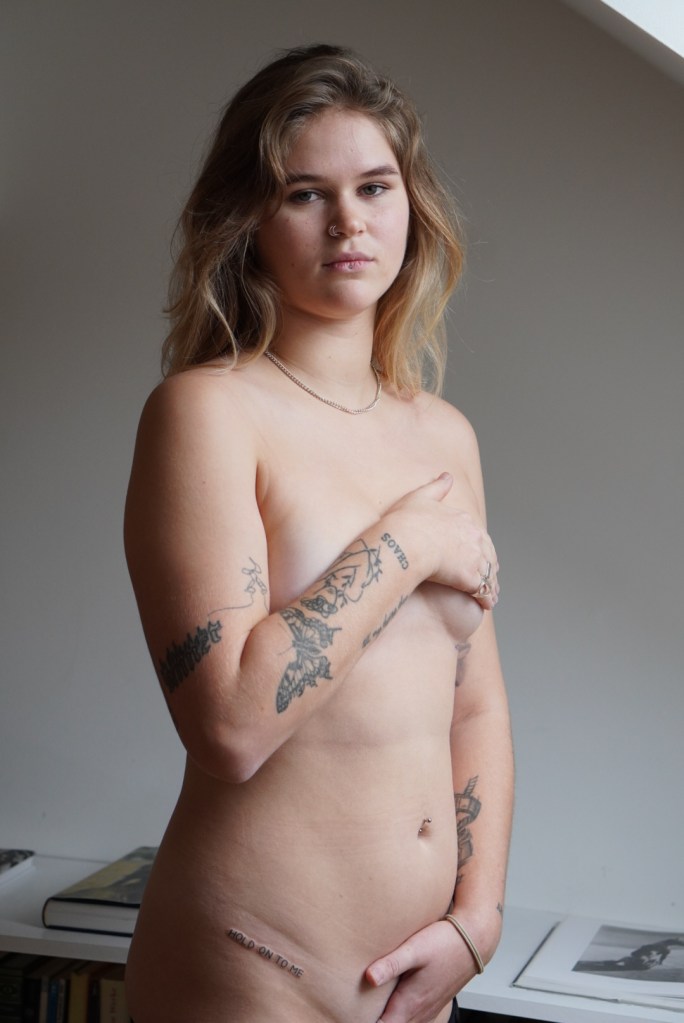
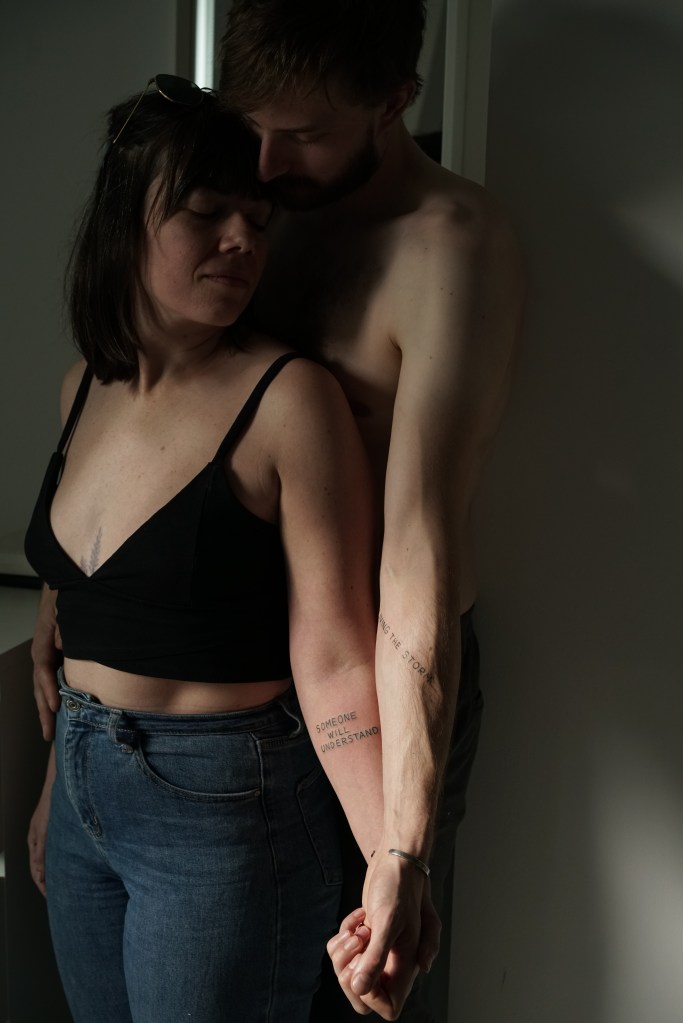
Ioanna

I asked Ioanna, “You mentioned you’re going on a retreat. What’s your intention?”
“I’ve been practicing with Bella for a year now, and I really like her methods,” she replied. “I’m not sure I have a specific intention. Right now, I’m going through a huge shift in terms of energy and space. Honestly, I think it’s more about the fact that I really wanted to go last year but couldn’t. This year, it just felt like, ‘Oh, fuck it, I’ll go, it’ll be fine.’ No expectations. I’m just going to get there and see what happens. It’ll be my first holiday alone, without friends, family, or my partner.”

“When you said ‘fuck it’—fuck what exactly?”
“Like I’m not going to overthink it anymore.”
“Is it fuck the doubts then?”
“It wasn’t necessarily doubt. I never questioned going there. It was more about those moments when you want to do something, but then you overthink it, creating all these parameters around you: Will it be too expensive? Can I afford it? I’ll be on my own. I’d have to take five days off work. Should I spend all of them there?
So ‘fuck it’ means don’t overthink it. You love Bella’s practice, it’s in Ibizza, sunny, near the sea. What else is there to consider?”

“What brought you to London?”
“My partner studied here. He’s also from Crete, and we both knew we didn’t want to stay there. Initially, we thought London would just be a two-year experiment, a place for our master’s degrees. Now, ten years later, we’ve just bought a place here. It feels like I belong, with all its diversity—different cultures, the scene. It’s liberating to be away from home.”
“Liberty from what?”
“From a very small community and a big family. It’s a place where everyone knows everyone’s business. Everyone’s always gossiping—who’s doing well, who’s not. It’s just constant. It’s so freeing to be in a place where you’re an unknown among strangers. Here, you get to find yourself more easily, you can find yourself based on what you love, you experiment with yourself rather than keep an eye on what your auntie might say, or how you represent your family. I never lived as an adult in Greece—I left when I was 18 to study in Bucharest, which helped me detach from that small-town mentality.”

“What made you leave in the first place?”
“I wanted more than just nice weather and a beach. I wanted to explore life. You might ask, why not Athens? But Greece is still Greece, and I wanted anonymity.”
“Do you still want that?”
“Yes, I do. There was a moment in 2019… I was working non-stop—four years, holidays, weekends—no breaks. I was trying to change jobs and thought, ‘If this doesn’t work out, if I’m still working this hard and not enjoying London, maybe I should go home and be closer to my friends and family.’ That was a turning point for me. And then, thank God, the pandemic hit. I know it sounds controversial, but it was the most healing period for me. Everything slowed down, and I had time to rest and reflect: Where am I putting my energy? Am I disconnected from myself? Am I becoming a robot in this big city?”

“When you say ‘disconnected yourself,’ what do you mean by ‘yourself,’ and where is it?”
“I mean my energy. I had so many experiences by then, but did I take the time to process them? Did I realize how they shaped me? Have I grown? Developed? Is my lifestyle working for me? It’s sad that it took a pandemic for me to ask those questions.
The first trip home was only in summer 2021. I was able to work from home for almost four months, and it was the best summer I’ve ever had. It confirmed for me that I made the right choice—thank God I didn’t leave London in 2019. I’d be extremely unhappy if I had. But maybe I shouldn’t judge. When I go back to Greece for a couple of weeks, everything feels romantic, fun, and nostalgic. But when I live there, I start noticing the struggles. It’s not that anything is wrong with their lives, but I realize I don’t want that kind of stagnation. And you can argue, what’s so fun about London?”
I nodded.
“The difference is the options I have here. I can plan my week based on what interests me. I get to meet people I have nothing in common with, hear different opinions, mix up—it is very eye opening to understand different cultures. That’s not something you get in Greece.”

“Describe your energy in a couple of words.”
“Right now?”
“Yes.”
“I’m a little sad. There was a big protest in Greece about something really heavy that happened two years ago, but I don’t want to talk about it. If I detach myself from that, I think I’m just trying to find my balance. I moved to a new area after eight years of living in the same place.”

“What does this balance look like?”

“When I feel like my home is home again. That’s where everything starts.
By the way, I don’t want a tattoo with words, and not on my left arm. I wouldn’t want people to immediately access my thoughts. I’d feel awkward with words on my skin. I want it to be something personal.”
“Let’s find the words first and then…”
She cut in, “And build around it?”
“Yes.”
“Sorry if I come across—”
“No problem.”

“What does safety mean to you?”
“My home.”
“And what makes it yours?”
“It has my taste—my décor, my things. There are corners of solace and quiet, and the colors. Until recently, I thought it was all about the physical space. But now, I think home is wherever you are, and my new place will feel like home because I’m making it that way. I’m still figuring out this new reality, and the spirituality behind it.”

“What makes home safe?”
“It’s a place where I can recharge my energy and find my balance.”

“What drains your energy?”
“Worrying about whether I’ll have enough money to make changes in my flat the way I want. Or worrying about my current workplace, which is going through some financial instability. My salary has been delayed recently—even if it was just a few hours, it’s the first time it’s happened to me here in the UK. In Greece, that’s something you’re used to, but here it creates insecurity. It’s an energetic drain, like, ‘Damn, I have a mortgage. Am I going to have to deal with this insecurity every month?’”

“What are your interests?”
“I meditate, do yoga, aromatherapy, and I love reading poetry. Lately, I’ve become obsessed with dishes. I’ve had the same set since I moved to the UK, but now that I’ve moved into a new place, I feel like, ‘No dish should look the same anymore—no matching sets.'”

“Why do you meditate?”
“Because I was shit before. I never did yoga, never meditated. I was going through a burnout at work in 2019, and my partner was about to end our relationship. I didn’t even realize we had reached that point because I was so caught up in my stressed-out mind. I didn’t see that my partner, who’d been with me for so many years, had reached his limit. He couldn’t keep supporting someone who was half-depressed because things weren’t going her way. It was all in my head. And I was like, ‘Fuck! I should’ve known by now. I’ve been in therapy for six years, worked through my issues, managed my work addiction… I should know better.’
So, I don’t think I meditate because I want to meditate. I meditate because I found a way to quiet the noise in my mind. And now, I’m at a place where I just think, ‘You know what? Fuck it. It’s fine—good or bad, does it really matter? It’s just life.’”

“How did you get into it?”
“It started randomly. One weekend, I was at King’s Cross, and the studio I’m part of was hosting workshops every weekend. I’d been working there for eight years and had never paid attention to those workshops. But that day, they had an aromatherapy workshop. I thought, ‘I’m a little bored; let me try this.’ That’s when I met Jemma. She approached the workshop with a meditative mindset—everything we did, every pose, was part of the experience. It was yin in aromatherapy. She would guide us with her voice, helping us stay in the moment, connect with our bodies and breathing. She’d ask, ‘Where does it hurt? Where doesn’t it?’
So it was the scent that helped me drop into meditative mode. It was the blend of camomile, lavender, and orange. Since then, I’ve kept meditating because I like that stillness. I used to be very reactive, but thanks to meditation, I’ve reconnected with myself.”

“How do you meditate?”
“When I’m selecting my herbs, for example, I’ll go to Greenfields. I approach it in a meditative way—I’ll have music in my ears and focus on each herb, smelling it, really paying attention to what it is. Another method is when I make tea at home. But the most frequent way is in the evening, when I massage my feet, my calves, my hands, and my neck with oils. I sink into the action of it—just really being present in that moment. Does that make sense?”

“Yes, but when you said ‘I‘ve reconnected with myself,’ what exactly do you mean by that?”
“That’s a very good question. Do I even know how to answer it? It just feels… safe. Familiar. Accepted. Like the moment, the movement itself—it’s okay. There’s no judgment, no pressure to please anyone. When I’m massaging myself, I accept whatever mental space I’m in, even if I feel imbalanced. I just tell myself, ‘It’s okay.’”

“What’s the difference between mental and physical spaces?”
“I’m not sure there is a clear difference. Or maybe we don’t pay enough attention to how interconnected they are. Like, this,” she said, pointing to the pink marks slightly raised on her left lower arm. “This is a reaction to my stress. If I’d been kinder to myself, I wouldn’t have these pimples. So, I don’t really know if there’s a separation. It’s more about making sure my mental space doesn’t affect my physical one.”

“What was the cause of your stress?”
“It was the fact that I felt so grown-up getting a flat—so freaking grown-up,” she sighed. “I’ve been with my partner for about 15 years, and everyone’s always asking, ‘When are you going to get married?’ But we won’t. There’s no reason for it. I don’t believe in the church, so I’m navigating adulthood differently from my friends and family. And buying a flat… it felt huge. There were moments when I thought, ‘There was nothing wrong with my old life. Why am I doing this? Why am I putting myself through a mortgage and stress? If something goes wrong, I’ll have to fix it. I’ll have to make sure my finances are okay.’ So all that emotional stress came from the commitment I made with my partner. It made everything real—very adult. I’m 35 next week, and I just felt, ‘Shit! Stop!’
I think it was a mix of that and the insecurities at work. A lot of decisions had to be made between September and January. We moved into the new flat on New Year’s Eve, and my stress levels were over the roof. I’m surprised I didn’t have a heart attack or a stroke.”

“Do you feel safer now?”
“I still have my unsettled moments… in the house. It’s just about getting used to the space, the building, and all the new noises. My partner keeps saying, ‘You’re worrying for nothing. We’re fine. Don’t put that pressure on yourself.’ But it’s getting better now. Hell, I’m the emotional support for a friend of mine who’s going through the exact same thing! So, I think it’s progress if I’m able to be that for someone else.
It took me two months to stop labeling what I was feeling, like ‘I’m okay,’ or ‘I’m not okay.’ I’ve had so many people ask me, like my parents, and I’d just say, ‘Yeah, I’m fine, I’m fine,’ because I don’t want to worry them. It feels like I’m giving them a fake answer, though. If I were being honest, I’d say, ‘I don’t know! It’s better than it was in January, yeah. Am I feeling safer? Well… it’s my space, it locks,’” she laughed. “‘It’s okay, I got a few new plates and an ugly lemon-looking bowl.’”

“When you do aromatherapy, meditation, yoga, and read poems, is it an escape from overthinking?”
“It’s the only thing that’s been consistent through all the changes I’ve been going through. I think I’m just holding onto those activities because they’re my safe space while I try to navigate something new in my life. They keep me grounded, balanced, and protected. When everything around me feels crazy, I can always turn to them. So, I don’t think of it as an escape, but as the space I go to recalibrate, to make sure I’m spiritually nourished. It doesn’t pull me away from things—it’s my point zero, where I can find myself through the noise, so I can navigate change and uncertainty. My worries are still there, but they feel more neutral when I’m in that place. If I had to paint you a picture,” she said, pointing to the chandelier above us, “it would be like this ball, where everything around is all the things happening in your life. And in the middle, where the lightbulb is, is the space where you go back to. It’s like being Professor X, seeing everything from a neutral space, and you start to navigate how to strengthen your emotional self, so that when you step back out, you can tackle your problems.”

“Does the point zero have boundaries? And why is it separate from everything happening around it?”
“Because I need the distance.”
“Does it have a shape?”
“Actually, yes. It feels like a circle with a line.”
“Isn’t it just a thought, like any other thought?”
“Yes, but I couldn’t just think of my safe space as my bedroom. I had to create my own.”
“Can we call it a mind trick?”
“It’s definitely a mind trick. Have you ever meditated before? Have you explored the meditation where your brain creates the safe space?”
“Well, the way you describe it…”
“Weird? You can call it weird if you like—I’m fine with that.”
“No, it’s just that for me, the space you’re talking about doesn’t have a shape. It’s neither safe nor unsafe. The moment you try to shape it or label it, it becomes just a thought about it, but not the space itself.”
“I like your perspective on that. I’ve had two visions of it when it comes to the thoughts themselves. One was when I created the veil with my hands, holding the light inside. That yellow-orange glow formed an oval space where I could ground myself, where I could connect to my roots. And then a year ago, when I tried to find that same space again, my mind went to a beach in Wales. It was just me and a stag—my protector—who appeared to me and sat with me, while we looked out at the sea. Those were the two spaces I’ve explored so far, the mental spaces where I can go to neutralize everything, find balance, calm myself, and return to who I am—or who I want to become—so I can step out of my ‘lightbulb.’”

“Who would you like to become?”
“A grounded person.”
“Are you familiar with the concept of nonduality?”

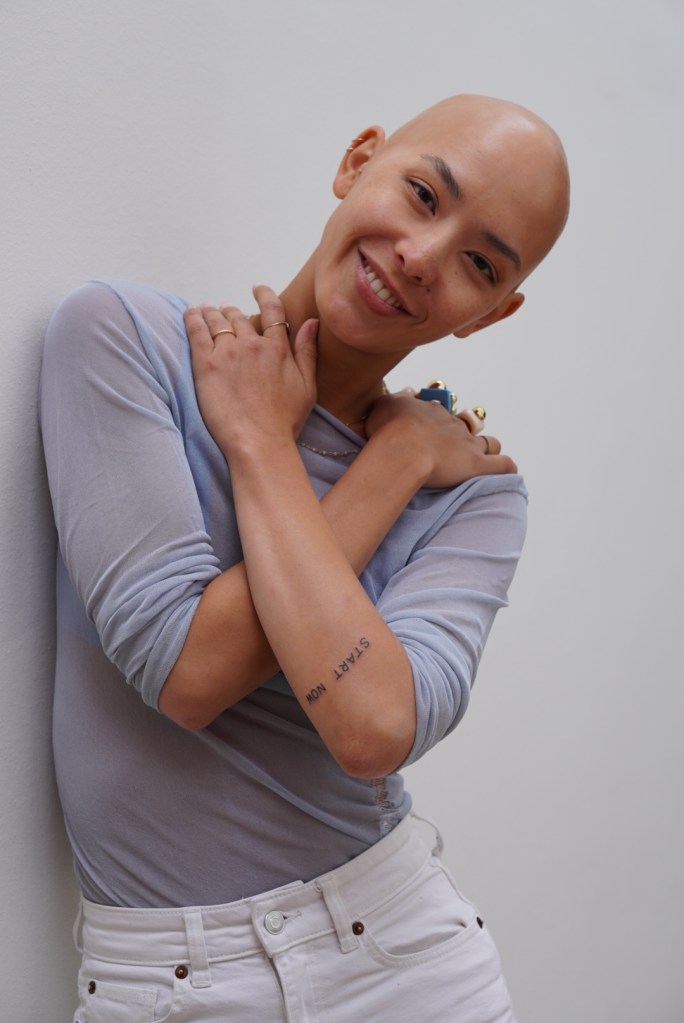
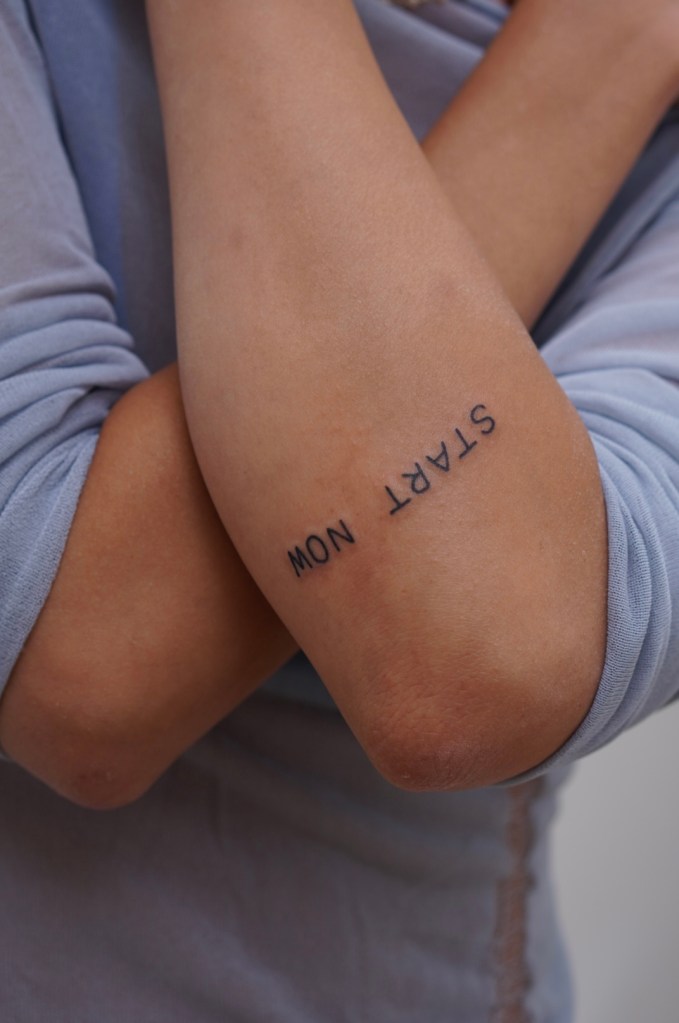
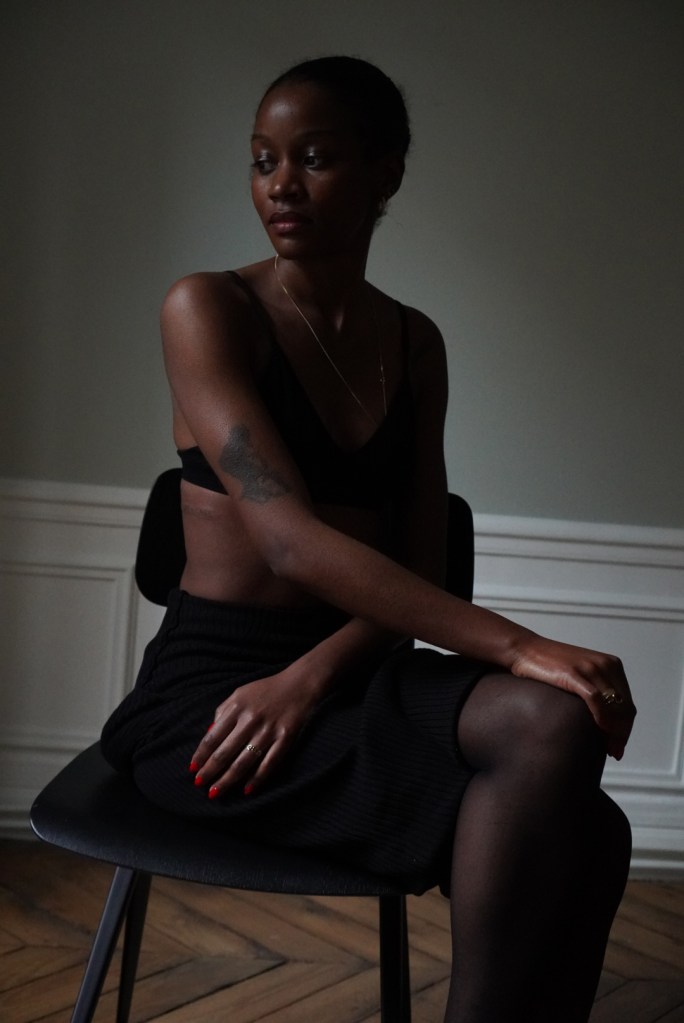
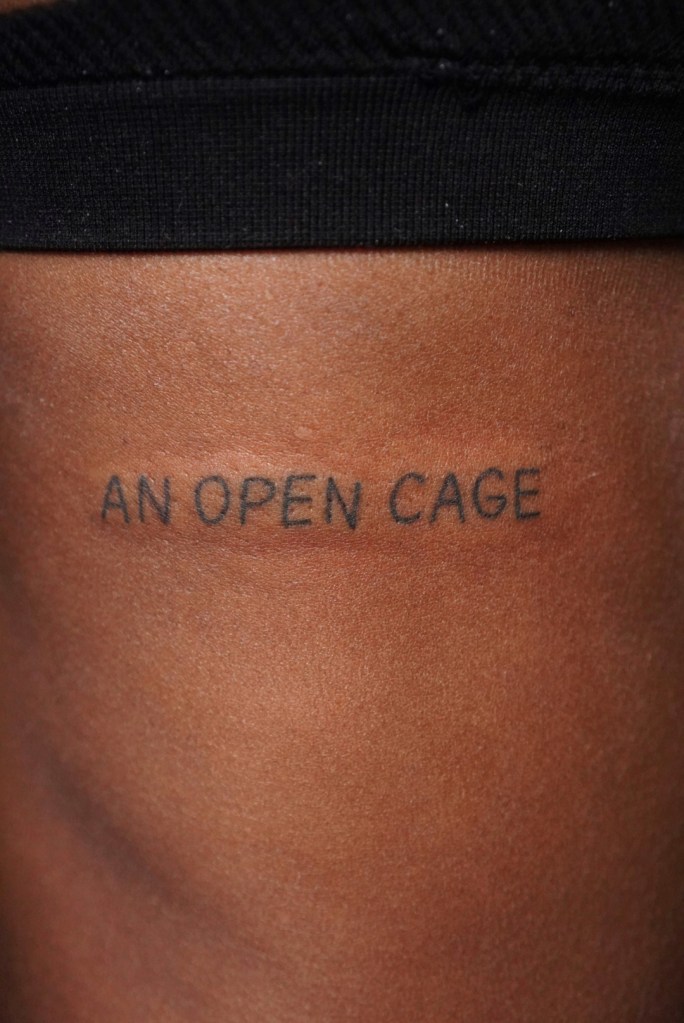
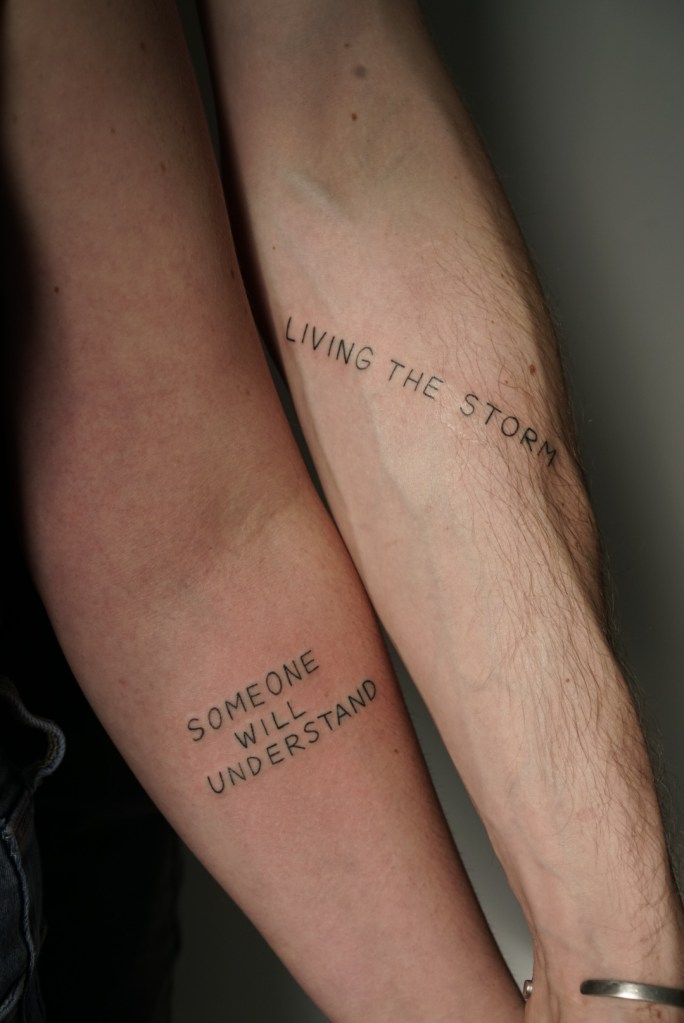
The tattoo on her left arm reads, ‘Home is home again.’

Justine

What matters most in life to you?”
“My family. They are everything to me.”

“What’s the story of your family?”
“My family is huge. I grew up with my mum and older sister because my dad left when I was pretty young. I was born and raised here in Vienna, but when I was about ten, we moved to Lower Austria. It was a big change. It’s just a half-hour drive from here, but… yeah, very different. I had to change schools, and it was terrible.”

You said you grew up with your mum and older sister—it doesn’t sound huge.”
“I also have two brothers from a different dad. My sister already has three kids, I have three grandpas, three grandmas, three aunts.”

What does it mean to be a family?”
She sighed. “Family means unconditional love. And pain. I have a lot of bad experiences with my family. Even with my mum—I love her to death, but she also traumatized me.”

And what’s your definition of love?”
“Love means being accepted for who you are, without judgment.”

Describe yourself in a few words.”
“Impulsive. Very sensitive and loving.”

“How do you express love?”
“I’m bad with words, so I like to give, to touch.”

What makes love different from other feelings?”
“It comes from two, it’s warm and good. When I love somebody, at first, I’m anxious because I want to do everything right. After some time, I’m not anxious anymore. Actually, I don’t know how to answer this question.”

“How does your anxiety express itself?”
“I forget words and want to leave.”
In what situations do you feel like that?”
“When somebody isn’t open with me. When they’re distant.”

“Do you have a dream?”
“To become a criminal psychologist.”
“Where did that come from?”
“Probably from my dad. He’s a police officer, and he taught me about that kind of thing when I was young young. When he left, the interest stayed, and I started watching documentaries about it.”

“What’s your greatest fear?”
“Losing the people I love. And heights.”
“Imagine you’ve lost them. What would you do?”
“I’ve been through that. My best friend died two years ago from an overdose. And I still can’t let it go. In my mind, she’s still alive. I kind of keep it far away, and if I let it get too close, I’m afraid I’ll fall apart.”

What’s the most important lesson life has taught you?”
“That I don’t have to change myself for anybody, that I’m good the way I am.”
What does it mean to be good?”
“Just being who I am. I had to change so much about myself in the past because of my dad. I was never good enough for him. And now that I’m older, I know I was good enough back then. But he was my dad, you know? I was a kid, so I thought I had to change this and that to be good for him. But now, I know—I’m just good enough the way I am.”

“What are your flaws?”
“I can be a really mean person. I don’t want to be, but when I argue with someone, I go into defense mode.”

What do you appreciate most about yourself?”
“That I’m honest.”

And who or what do you appreciate the most?”
“My girlfriend.”
“Why?”
“She’s such a pure person. She accepts me with all my flaws. She grounds me. I’ve never had anyone like that in my life.”

Can you share an example of you being impulsive?”
“Of course. For example, I’ll be at home watching TV, and my girlfriend comes in and— I don’t know—she forgets to turn off the light. And I get really mad about it, like, ‘Why are you doing that? Why can’t you just turn off the light? We have to pay for it!’ I get really mean. I can’t let it go. I keep confronting her about such a tiny thing!”

How did your mother traumatize you?”
“She’s the kind of person who can’t really show emotions. Every time I was sad or upset about something, she never hugged me or said, ‘It’s okay.’ She would just say, ‘Why are you crying? Stop crying!’ It was painful. I needed someone to just hold me, but I never had that.”

When was the last time you cried?”
“Yesterday.”
What happened?”
“I was just overwhelmed by everything. I’m not doing what I want, I’m not studying what I want, and everything happening in the world right now makes me sad.”

Who or what inspires you?”
“My mum. Even though she doesn’t have a lot of money, she raised four kids on her own. She has a house and always gave us everything selflessly.”
What’s her job?”
“She’s a social worker, taking care of elderly people.”
Why do you think she’s alone?”
“She’s been with her boyfriend for five years. He’s a good man, but he has a lot of bank loans himself and can’t help her financially. He lives in the house with her and the kids.”
The kids—your two brothers?”
“Yeah, they’re seven and fifteen. And my sister also lives there right now. She just got out of an abusive relationship with her—now ex—husband. So I’m the only one who’s not there.”

“What is it that your mom inspires in you?”
“To do what I want to do. She never put any expectations on me. I wasn’t good in school, and I had to redo a class because of math, and the only thing she said was, ‘You know, you’ll make it!'”

Is there a question you’d like to find the answer to?”
“Why my dad left. Why he never wanted to see us.”
“Have you ever tried asking him?”
“No. When I was sixteen, I texted him, ‘I just miss you. Maybe we can go for a walk?’ And he texted me back a few days later, ‘I’m going to change. I’m going to do it.’ But he never did. That was answer enough for me.”

“What is hope to you?”
“It sounds cheesy, but my girlfriend. She came into my life when I had nothing, when I was about to end my life. And then she came, and I thought, wow—life can be so good.”

Marie Gerlach

What do you do for a living?”
“At the moment, I’m jobless. I’m not sure if I’m actually searching for a job or just enjoying the moment. I think I needed a break to figure out what’s next—whether I want to stay in Berlin or not. Before this, I lived in Lebanon for three and a half years. I just came back recently.”

Are you passionate about something?”
“At the moment, I’m not.” She grinned. “That’s the problem—I don’t know. I used to be passionate about traveling, but now it just feels like a routine.” She spoke slowly, calmly, at ease.

“What inspires you?”
“New ideas. Conversations with people outside my bubble—even if I disagree with them. I love my friends, but with them, I’m in my comfort zone. I usually get inspired when I step out of it. Like today, for example—meeting a stranger, not knowing exactly what will happen. It reminds me of being thrown into cold water. But I like it.”

What do you appreciate most about yourself?”
“My flexibility. I can adapt to new situations, even when I don’t like them. But at the same time, it feels like a weakness—like my ‘profile’ isn’t strong enough. I can adjust to so many things without much effort, as if I don’t fully throw myself into anything.
I also like that I’m a listener. That’s why this interview format feels strange—usually, I’m the one asking questions. But it’s nice to switch roles.
And lastly…I think I really care about the people I love.”

What is love to you?”
“Reliability. Loyalty. Independence—giving loved ones the space to grow. Love, to me, is about freedom and growth. Supporting people, helping them.”

Why can’t you decide whether to stay in Berlin?”
“I feel like I need to take the next step. Do I want to build a home here, find a job? Or move somewhere else—maybe back to the Middle East, or to Vienna? I have no clue.
On the one hand, I love the privilege of having time to think, not being forced to work. This is the first time in my life that I’ve had two months of doing nothing.”

“What is ‘doing nothing’ to you?”
“Well, I’m forcing myself to read at least one book a week instead of spending time on my phone. It terrifies me how much time I waste on it, how lonely it makes me.
I’m seeing a lot of friends.
And I have a dog. That’s actually what makes me really happy—being outside with my dog. I’m one of those people in their 30s with no kids, just a dog. And I love it this way. Without my dog, I wouldn’t spend two hours in the park.”

“Do you consider any place your first home?”
“Maybe where my parents live, a place near Berlin—I grew up there. But I’d never move back.” She laughed. “There’s nothing there, no inspiration. It’s just the grey East of Germany—whoa!—it’s pretty ugly. But I kind of like it. When people make jokes about it, I’m like, ‘I can joke about it, but not you.’
But honestly, no. I’d never move back. There’s no hope there. It would feel like taking a hundred steps backward. No. No, no, no.
And I don’t want to stay in Berlin either. It’s not cozy, not welcoming. Too big for me. Too cold.”

What exactly are you trying to escape? Why is this place near Berlin hopeless—is it a suburb?”
“No, it’s a proper city, about two hours from here. But…I don’t know how to answer that. People there just seem so frustrated, so sad, so stuck. Nothing changes.
It’s funny you’re asking me this. It makes me realize how much being from East Germany means to me. Which is ridiculous—I was born in ‘89, when the Wall fell. But I still identify as Eastern, even though it’s the last place I’d want to be.”

“What did you do in Lebanon?”
“I worked as a project manager for a big German organization. I collaborated with local urbanist groups, helping them organize cultural events, funding them—trying to bring Lebanese and Syrian communities together, or at least ease tensions. Many Lebanese don’t like Syrians because of the occupation.”

“Why did you quit?”
“The situation in Lebanon really worsened after the blast. The economy collapsed. And after three and a half years, I was just…done. No energy left. I still love the country, and I’ll go back now and then, but I couldn’t stay.
And I’m not talking about things like power cuts—I don’t care about that. It’s the weight of being surrounded by people who’ve lost hope. People who can’t make a living anymore, or who lost everything in the bank. At some point, it became too heavy.
I really thought coming back to Berlin would make things easier, give me a fresh start. But when I arrived, I realized—oh, okay, it’s not that easy to adapt here either.”

What did you learn from your time in Lebanon?”
“I learned to be more relaxed. To complain less.
It sounds unbelievably cheesy, but I learned how to enjoy the moment. How to stop comparing. How to let go.
I don’t know if there’s something wrong with Germans—if we just don’t know how to do that—or if it was just me who didn’t know before. Like, here in Germany, I’m impatient. But there? I don’t complain. I’m just happy.
And what I really liked there was that life wasn’t just about work. Of course, I had a job and liked it, but life wasn’t only about that. People would just sit by the sea, have coffee. Such a joy.
Here, everything is about work. About how much money you make. I don’t want to define myself by those things anymore.”

“What are the essential things you need to feel happy?”
“To be surrounded by warm people who love me, who understand me. That’s what I miss most right now.
I feel like my friends don’t always understand me anymore. And the way they complain about things—I have nothing to say about it. Do they even hear themselves?
So I don’t understand them. They don’t understand me.
Don’t get me wrong—I love them, and they know me well. But there’s a gap.”

Do you have a dream?”
“Some of them are too cheesy to share. But…a tiny bungalow somewhere in Greece. Spending time there with people I love.”

What was your dream ten years ago?”
“I wanted a job abroad, a boyfriend, kids.” She smiled. “I don’t fully remember—I’d have to check my diary—but I’m pretty sure it was something like that.”

When was the last time you felt utterly happy?”
“On the way here. I was riding a bike, listening to music, passing cars with grumpy people inside. And I thought, ‘I’m going to have an interesting meeting. I’m nervous. I’m happy.’”

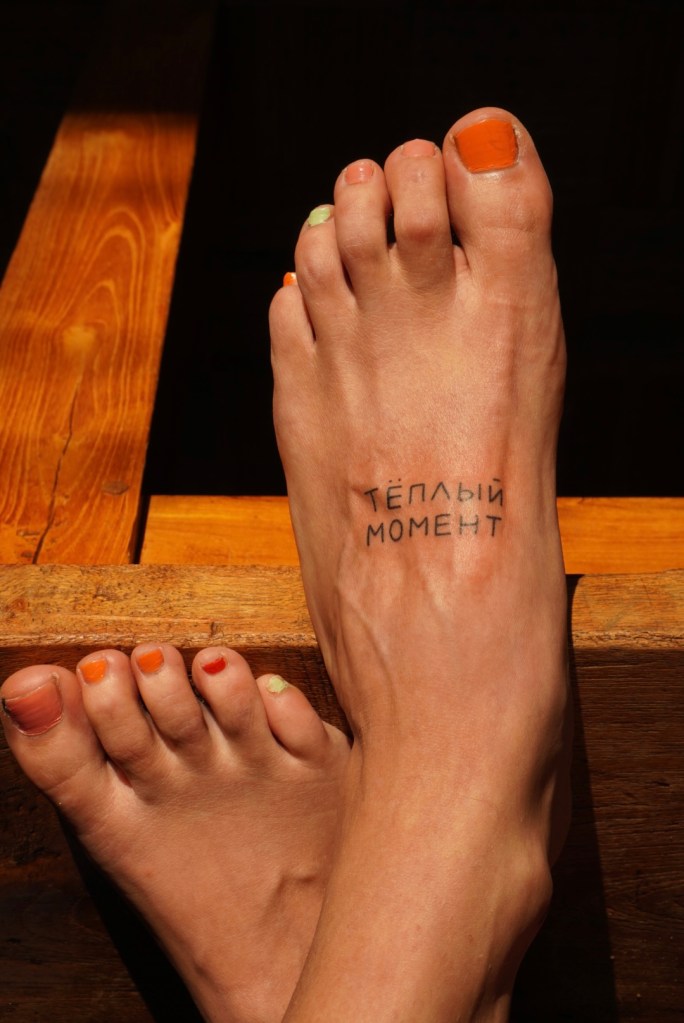
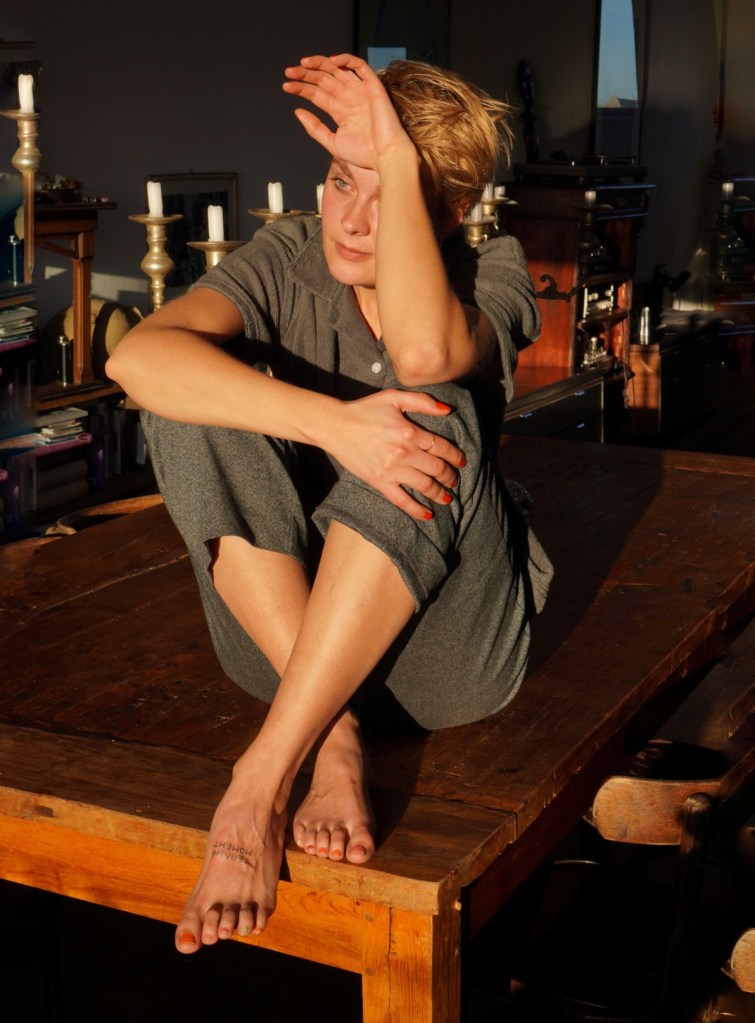
The tattoo translates from Russian to “The Warm Moment.”

Alice Hurel

“This morning feels… unpredictable. It comes and goes in phases—some are worse than others.”
“Was today one of the worse ones?”
“Yeah. It lasted an hour before I stepped outside. The fresh air helped. Changes in temperature help too—hot to cold. My father used to have that.”

What is your relationship with your father like?”
“Oh… complicated. He’s Japanese. I have early memories of him—before I was five or six. But after my mom—she’s French, and I grew up in Tokyo—decided to take me out of the Japanese school system and put me in an international school, he stepped out of the picture. He was a typical Japanese worker, always busy. Then, after 17 years in Tokyo, my mom decided to leave. She tried to find him a job in Europe so he could stay close to us, but he refused. Divorce is a shameful thing in Japan. He wouldn’t follow us.
At first, he visited a few times, but it was always tense with my mom. Eventually, he just stopped. We moved to Switzerland, and he made no effort to visit. When I was hospitalized with depression, I told him I was in the hospital and wanted to see him. He just said, ‘I’m sorry, I’m not going to Switzerland.’ But at the same time, I felt guilty, like we’d abandoned him in Japan. I tried to keep in touch—emails, calls—but he rarely responded.”

Is he still there?”
“No. He passed away four years ago. That was another tough thing to go through. He had cancer for two years, but he never told us. The news came from my grandmother. That was just how he was—silent, secretive—until things became dramatic. Maybe it was his way of punishing my mom for leaving.
He was the first close person I lost. Since then, I feel like I’m trying to keep him alive. I still talk to him in my mind. Sometimes I buy his favorite food and leave it out, like he’s still around.”

How did your mom end up in Japan?”
“She moved from France after a heartbreak. She didn’t know how to handle it, so she went as far away as possible.”

“And life in Switzerland?”
“I stayed in school until I was 18, then went to university in Milan. But I quit after five months—it wasn’t what I expected. That’s actually when I met Iman (our mutual friend). After Milan, I moved to London. Spent seven years there, with a year in New York for an internship.”

“What was the internship?”
“Marc Jacobs. I studied fashion design.”

“Why fashion?”
“My father, I think. He worked in fashion—marketing and merchandising. The first job I ever wanted was to be a florist, when I was in kindergarten. But after that, it was always fashion. I used to look through his look-books… My mom was into fashion too.”

What does it mean to be fashionable?”
“My father wore these glaring printed shirts. My mom was always in Issey Miyake—loud, colorful, flamboyant, like her personality. Compared to my friends’ parents, they had so much character. It wasn’t about attention; it was about expressing what they loved—colors, textures, prints. That’s probably why I have this habit of touching everything.”

If you had to describe yourself in a few words?”
“Sensitive. Emotional. Kind and giving.”

What’s the difference between sensitive and emotional?”
“Sensitive means I feel everything physically. When I was 15, I lost my hair, and no one could tell me why. Sometimes I get extreme joint pain, but there’s no clear cause. Emotional is… feeling everything intensely—highs, lows, everything.”

Can you talk about your depression?”
“I was 14 or 15, and it wasn’t something I could share with anyone—I felt like I was too much. When I hit those phases, when I was going through hell, I would withdraw from my friends and isolate myself. And that was the worst part—being alone with my thoughts. It would spiral. There were times when everything seemed fine, and then suddenly, I’d crash, feeling unbearably low. Eventually, I started taking medication. Over time, I’ve learned that these lows always pass. When I feel myself spiraling now, I try to hold on, to be firm, and to push myself to do something—anything—that might shift my state, even just a little.”
Like what?”
“Lately, I repot plants. Or buy a new one. Or make something, like a bracelet I’ll never wear. Just a small action, no real purpose.”

“Knowing all that, are you still capable of falling into depression?”
“Yeah. It feels like an illness inside me, something I can’t fully control. I often don’t even understand why it comes. And it’s strange—people I meet, even I myself sometimes, don’t believe I suffer from depression because it doesn’t match the person I am when I’m not in it. I’m open, present, available to others. But it’s always there, beneath the surface.”

“What is usually the source of your happiness?”
“Simplicity. The time I felt the freest was after London when I decided to go backpacking. I had gone off my meds easily, and for the first time in a while, I felt good. I wasn’t sure anymore what I wanted to do in life or where I wanted to live, but I knew London wasn’t the right place for a depressed person. So I traveled—to find myself, to find home, to learn how to be okay on my own, to solve things without relying on anyone else. The plan was nine months, but Covid cut it down to five. Still, during that time, I realized I didn’t need medication. Even though the trip was difficult—constantly adjusting to new places, new people—I felt so much better. I was happy.”

“Is there something missing in your life now?”
“Probably my career. A job.”
“Do you mean success?”
“No. I mean, I used to want success, but now I just want something that makes me happy and allows me to make a living. I want to be independent. I’ve had jobs, but I haven’t found the job that feels like it’s mine. After university, I was so burned out that I wanted nothing to do with fashion anymore, so I worked in restaurants, did events—not my thing at all, but it paid the bills. Then I traveled, then Covid happened, and I ended up in Paris, looking for literally any kind of job. Now I work at made.com—interior furnishings—which I like. I love my team, that’s what makes going to work worth it, and I enjoy the interactions with customers.
But in my free time, I’m focused on launching my brand—sustainable, upcycled clothing—because that feels right. I love sewing. I sew for my little sister, for my boyfriend. It makes sense to me. But I’m 28, and all my childhood friends are in business, climbing corporate ladders, getting promotions. Meanwhile, I don’t feel stable. I think that’s what’s missing.
So this year, I told myself—now or never. I’ve had this idea for years, but fear kept holding me back. But then I thought, ‘Four years will pass in a blink. And when they do, what will I have done? Will it be something I love?’ So I decided to start. Now.”

Lucy Bohr

How did you become an influencer?” I asked.
“No idea. It just happened. I built a community, and then I started making money from it. It was never my intention, but I like it now,” she replied.

What do you like most about it?”
“The networking. I’ve met so many amazing people through Instagram. It sounds weird or pathetic, but I get inspired by humans.”

And what’s the hardest part?”
“Always having to be available.”
“And if you’re not?”
“Less reach. A few days ago, I broke my phone—I put a shelf on it by accident—and I was offline for fifty or sixty hours. My managers freaked out. And I realized how dependent I am on my phone. It’s too much sometimes.”
“Maybe a digital detox is in order.”
“Yeah. I’m planning a two-week holiday next month.”

Do you have a hobby?”
“Photography.”
“What do you photograph?”
“People.”
“What do you like about them?”
“I never really thought about it. But… hands, I think.”

“What do you like most about yourself?”
“That’s a tough one. Maybe that I’m kind. Sometimes too kind.”
“How can you be too kind?”
“When I put others’ desires before my own. I end up forgetting about myself.”

“What is kindness?”
“Having a good heart. Being genuine. Caring for others. Listening.”

“What do you appreciate most in your life?”
“My dog. My life. I think I’m really privileged in so many ways.”
“What are your privileges?”
“Being European. Being a white woman who fits the beauty standard. I didn’t choose those things or work for them, but they give me power in different situations.”

“What is beauty to you?”
“In terms of appearance, when someone has a unique, imperfect feature.”

“Is there something you dislike about yourself?”
“Recently, I’ve noticed that I’m restless—always looking for more. I had a great flat, but I decided I needed a bigger one, so I moved. Now I want a better bike. It never ends. It’s annoying.”
“I read somewhere that before capitalism, people didn’t have that problem.”
“Yeah, but it feels so present now. Like online dating—Tinder, for example—you’re always swiping, looking for something better.”

“What do you think you’re actually looking for?”
“Deep connections.”
“How many?”
She laughed. “There’s no number. Not too many.”
“How would you describe a deep connection?”
She laughed. “You’re crazy. How can you describe that?”
“Maybe with words.”
“It’s something inside me, you know?”
“Yeah. Can you compare it to something?”
“Feeling whole. Like you can rely on someone.”
“Where do you feel it?”
“In my heart.”

“What do you need to be happy?”
“My dog. He’s a big part of my life. And I already have everything—home, friends, family, love, money.”

“What do you believe in?”
“I don’t believe in God. I believe in the universe.”
“What’s the difference?”
“God is made up. The universe exists. Energy exists. I also believe in love. Have you asked yourself these questions?”
“I have, but my answers always change. It seems to me that ‘energy’ and ‘universe’ are modern words for God.”
“There are still so many people who believe in God. Where I grew up, it was very Christian. I went to an all-girls school taught by nuns. We had to pray every morning, go to church once a week. It felt like a burden.”

“What’s the hardest decision you’ve ever made?”
“Breaking up with my boyfriend.”
“Why did you break up?”
“He didn’t accept me as I am. He didn’t accept my dog.”

“What does love mean to you?”
“Connection. Belonging. But I don’t think it’s healthy to say, ‘I can’t live without this person.’ That’s why I wouldn’t call my partner my ‘other half.’ That feels toxic. You can dedicate part of your life to someone, but you should remain whole without them. Does that make sense?” She laughed. “Can I smoke a cigarette?”
“Yes.”

“How do you imagine an ideal world?”
She rolled her tobacco. “A vegan world, first of all. A world without inequality. It’s crazy that some people don’t have their basic needs met, and yet we have billionaires.”

“What did you dream of ten years ago?”
“To move away from home and live in a big city. And I did.” She held out her hand. “Can you pass me the ashtray?”

We were sitting on the open terrace of the penthouse I had rented for a few weeks, birds perched on the antennas. I handed her the ashtray.
“Oof, so hot.” She dropped it onto the table.

“If your life had a defining drama, what would it be?”
“My dad died when I was thirteen. I’ve now lived half my life with him and half without. The tricky part is, I don’t have many memories of him. My brain sometimes makes them up—like, I’ll see a photo and build a story around it. The first thing I forgot was his voice, and that’s really sad. Honestly, I don’t have a clue who he was. My mom doesn’t want to talk about him. And when I notice ways in which I’m different from her, I wonder if those parts of me come from him—someone I don’t know but would like to understand. It would be easier if I knew who he was.”
“What happened to him?”
“He was in South Africa. I was born there. He died eating a steak—it got stuck in his throat. It was a small town, and no one knew first aid.”

“If you could change the past, what would you change?”
“I’d save my father.”

“Is there a question you’d like to find the answer to?”
“What are my behavioral patterns? Why do I act the way I do?”
“Like what?”
“My longing for deep connection. I want it so badly, but as soon as I get close to commitment, I leave—even when I really want to stay. Maybe I’m not ready. So I ask myself, why? Is it fear?”
“What kind of fear?”
“Maybe fear of being vulnerable.”

She jumped out of her seat suddenly, laughing. “Oof! I’m allergic to wasps.”
“I don’t think they sting unless they feel threatened.”
“But they get aggressive easily, no?”
“Not this time of year. But in September, when they’re starving.” I paused. “What’s your dream?”
“To have enough money to buy organic food. To live in a small house in the forest—like you. Or maybe by the sea, in Portugal. I’d run a little sanctuary for rescued farm animals.”

“What’s your first memory?”
“South Africa. We had a house with a beautiful garden and a pool, but it was surrounded by high walls with barbed wire on top. One day, I fell into the pool—I was two or three. I almost drowned. My dad saved me. Since then, I’ve had this little problem—fear of deep water.”
“That doesn’t sound so little.”
She laughed. “Yeah, last year in Portugal, I tried to walk into the sea and I had a panic attack.”

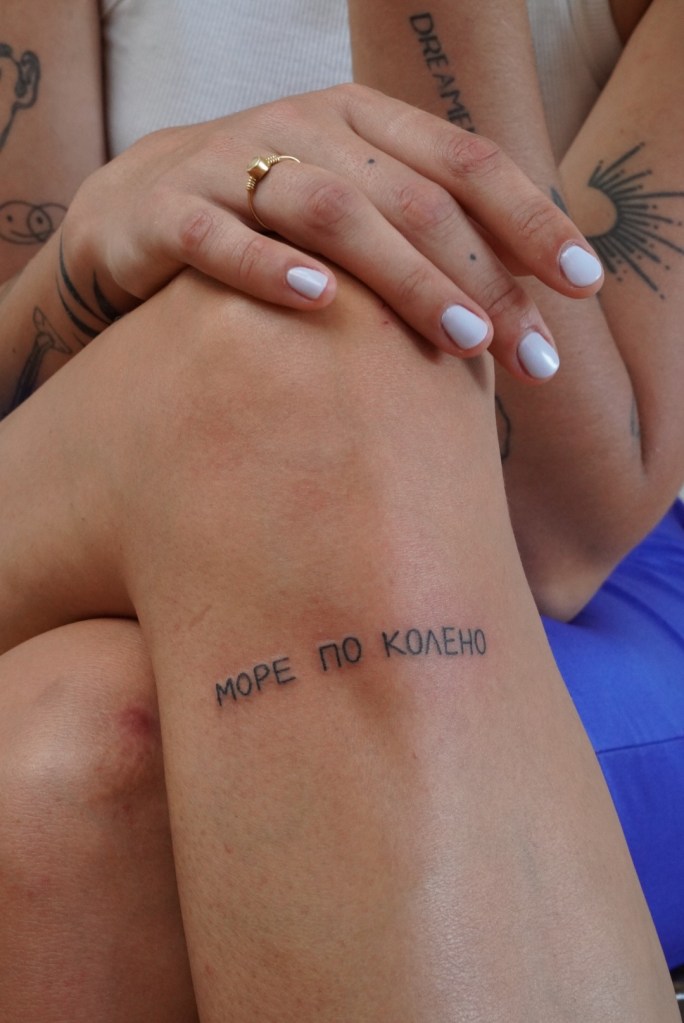
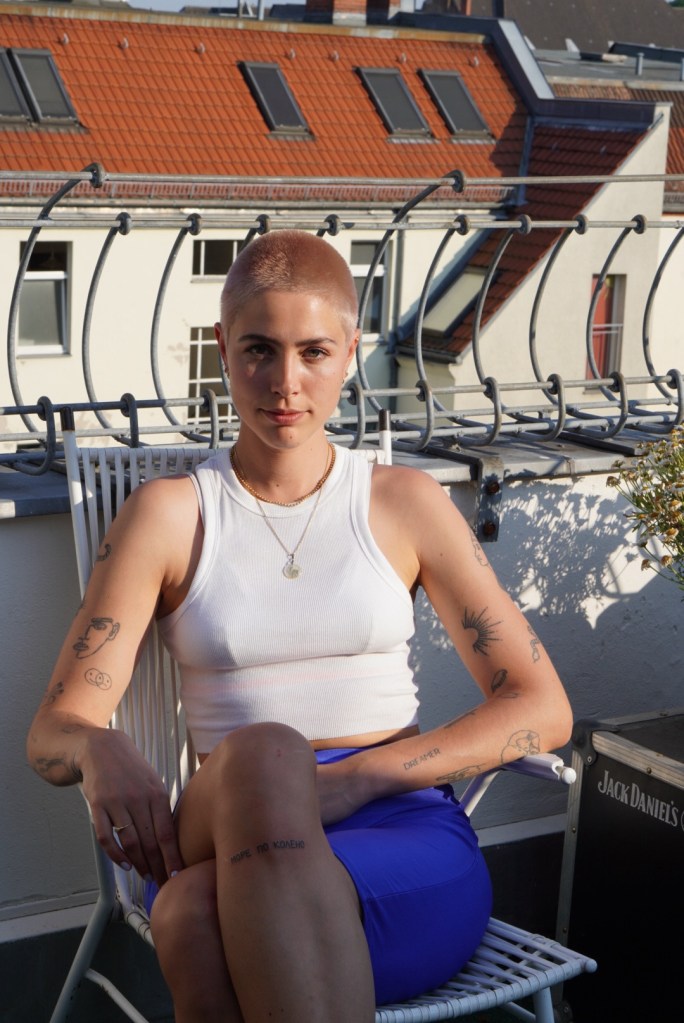
The tattoo translates from Russian as “The sea is knee-deep,” a phrase used to describe someone who is brave, fearless, daring, and skilled.

Julia

“Do you live in Paris?” I asked.
“No, I live in Abidjan, Ivory Coast,” she replied.
“Were you born there?”
“Yeah, born and raised.”

“What brought you here?”
“Holidays with my family.”
“Who’s your family?”
“My dad, my brother, his girlfriend, and my sister. My mom didn’t join us.”

“Do you enjoy living in Abidjan?”
“I love it. It’s home. I spent a few years in France because of the civil war—schools were closed, so I did high school here—but I went back.”
“What do you love about it?”
“It’s familiar. I don’t feel at home in France. The lifestyle is different, and it’s too cold.”

“What does it mean to feel at home?”
“The sun. Paris is grey, people don’t smile, don’t enjoy life.”
“And how do you define home?”
“Where my heart is. Because of the war, we were like a fragment of the country, and I wanted to go back. Also, work—our family business has been running for three generations, and I’m part of it.”

“What does love mean to you?”
“It’s complicated.”
“In what way?”
“I don’t know how to describe it. I feel lost when it comes to love. I thought I had found it before, but it wasn’t real.”

“What did it feel like when you thought it was love?”
“Joy. Happiness.”
“What’s the difference between love and joy?”
“Love takes effort. You have to be devoted, make sacrifices. Joy can come from anything.”

“Why does love take effort?”
“Maybe not effort—commitment. A willingness to compromise.”

“When was the last time you were heartbroken?”
“Right now, actually. Recently.”
“What happened?”
“I was with someone in Abidjan, but when Covid hit, his job struggled, so he moved back to France. I chose not to follow him. We kept a long-distance relationship, seeing each other a few times a year, but it wasn’t real love. Before him, I was in a complicated seven-year relationship with a married man. I didn’t know he was married at first. He was older, intelligent—we had deep conversations, and I loved him. Then this new guy came along, and it was light, fun, easy. But when things got tough, he wasn’t the kind of person who could handle it.”

“So why do you feel heartbroken?”
“I don’t know. I know he wasn’t right for me. But breaking up was hard—I felt abandoned.”
“Even though you didn’t love him?”
“Yeah. I guess I liked knowing he was there. I’m independent, I like being alone, but it was comforting to have him as an option.”
“What for?”
“Maybe I’m afraid of being alone.”
“Is that your greatest fear?”
“No. Losing my family is.”
“Isn’t that the same fear?”
“Maybe.”
“What scares you about it?”
“Being unloved. I know I don’t love myself enough, so I look for it in others.”

“And still, it seems to come back to the fear of being alone. Why is it so important for you to have others?”
“I love sharing. Talking.”
“There are eight billion people on this planet—it’s hard to be truly alone.”
“It’s not the same. My family—there’s a deep connection.”
“Can’t you build that connection with others?”
“I guess, but there’s this expectation—you should have a partner, children…”

“Why is sharing with others so important to you?”
“Because shared moments are what matter most.”
“Why?”
“I don’t know.”
“I think no one can take away your ability to share. Just reach out, and there will always be someone. But let’s go deeper—what else is behind this fear?”
“I worry I’m not close to people. I might spend my life alone. I can’t even travel by myself—I need familiar faces, I need to know what’s ahead.”
“But we never really know what’s ahead.”
“I try to control it.”

“Why aren’t you close to people?”
“It’s paradoxical, but I push away the ones who want to be close to me.”

“Let’s imagine your family is gone. What’s next?”
“It would be hard. But life would go on.”

“Is there something missing in your life now?”
“Love.”
“You said love is joy and devotion. What is the joy of love?”
“I don’t know. I stopped asking those questions years ago.”
“Why?”
“I put myself second. Just kept walking down the road.”
Why?”
“When I was little… I was bigger. My mom—she’s anorexic—was obsessed with food. I saw her purge after eating. She controlled everything I ate. When I was six, she took me to a doctor who weighed me. There was a chart with numbers and ages—I was just above the line. She didn’t know how to handle it, so she stopped feeding me. But instead of losing weight, I started hiding food. I thought she’d hate me if she found out.
Even now, after losing forty kilos, it’s still with me. For ten years, I avoided social life because I didn’t want to eat or drink in front of people. But then I’d go out one night, and all the weight would come back.
My dad’s mother—she hates my mom. When I was young, she offered her money to take me. I didn’t want to go, but my parents didn’t fight for me, so every holiday, I stayed with her. She fed me constantly.”
Tears ran down her face, her voice trembling.

“Why did you think your mother would hate you?”
“I know she meant well. But the way she did it… ‘You need to lose weight, you need to lose weight, you need to lose weight.’ And she was always so thin.”
“So you felt like your mother didn’t love you, and you started searching for that love elsewhere?”
“Yes. And I still do.”
“What if I told you it’s impossible to fill that missing part, but you can start sharing love instead?”
“When I love, I give everything. But I don’t get love back.”

“Is it hard for you to love yourself?”
“Yes.”
“Why?”
“Because of my body. I know I’m more than just my body, but I struggle with self-confidence because of it. For example, only in the last ten years have I started looking at myself in the mirror. Before that, I didn’t respect myself—I was only hurting myself. Eating, smoking weed, doing… I don’t know. I know that wearing a skirt and everything won’t harm me, but… My way of seeing myself has changed. I’ve become harder on myself.
In my memories, I was happier. But it’s difficult to go back and really feel how I was inside. It’s like I shut it all away. I remember smiling more, having more fun. No… it’s like now I try to control everything, to stop myself from gaining weight back. But it’s so hard.
Some people, if you tell them this, they just say, ‘Stop eating and do sports.’ But it’s not that simple. Food is part of life—it’s everywhere, every day. You can’t just stop eating. I tried.
When I reached 120 kilos, I cut out alcohol, carbs—everything. I only ate chicken and vegetables, drank water, exercised every day. But if I missed even one day, I felt awful, like I was gaining weight back instantly. It was working, but it was making me miserable. It was too much control, and that only made me unhappier. Every time I had a glass of wine or a piece of chocolate, I felt guilty.
The other day, I read a book where the author said that very thin people can eat anything they want and never gain weight because they’re always busy, always stressed, always running around. But some people, even if they eat very little, still gain weight—like a bear before winter, storing fat for protection.
It made me wonder if I was eating to protect myself.”
She fell silent.
“From what?”
“I don’t know. I was abused when I was a child. He was two years older than me. Maybe that has something to do with it too—like if I wore sexy clothes, if I looked like a girl… So I wore boys’ clothes instead.”
“I’m very sorry for you.”

“What if, instead of protecting yourself, you tried to give everything away—all the love, all the money, all the fears? Let it all go. Feel the lightness of having nothing. No more judgments, no past.”
“Yeah, you know, my grandmother—when she started working, then my dad went to work—it was just a little shop. When I was young, they weren’t rich. But over time, the country developed, and we made a lot of money. I don’t mind it—it gave me an education. But people tend to think money brings happiness. It doesn’t. I’d rather spend time with my family, doing things together, instead of working like that just to have money.
So, yes, I like money. I work a lot. It’s important, but it’s not the most important thing. And sometimes, when I stop eating, I start over-consuming instead—I’ll buy things. It took me a long time to realize that. It made me happy, but only for a moment.
And like you said, to feel lightness… Even with material things, sometimes I just want to throw everything away because I have too much. But I never take the time to do it.”

“Have you forgiven your mother?”
“Since a few months ago. It’s not that I forgot, but I realized she tried her best.”

Megan

“I feel trapped in the cycle of society—working, earning, achieving—without ever stopping to look at myself. I just live a life that might not even be mine. But when I finally sit down and try to face my true self, I feel lost.”

“What exactly makes you feel lost?” I asked.
“I don’t know who I am,” she replied.
“But when you try to face yourself, what do you see?”
“Emptiness. It’s blurred, hard to explain. I just know I’m not the person I pretend to be.”

“Who is the person you’re pretending to be?”
“Someone successful, with a good job, following the path I was expected to take. On the surface, I’m doing well. But I’m not happy.”

“And what is happiness to you?”
“Being free. Being kind. Feeling connected to the world and the people in it.”

“What does freedom mean?”
“Being whoever you want to be.”
“And do you know who you want to be?”
“Someone completely different from who I am now. I’m spiritual. I have this inner voice, and when I interact with people, I try to connect with them on that level. Even with plants, I feel a connection. If I lived the life I truly wanted, I’d be closer to the people around me, not just in presence, but on a deeper, unspoken level.”

“Could you describe that kind of connection?”
“It’s when words aren’t necessary. When you don’t even need to be physically near someone to share the same feeling. I have it with my brother—if I’m sad, he just knows.”

“What makes you sad?”
A pause. Then, softly: “If I talk about it, I think I’ll cry.”
“You don’t have to—”
She cut in. “It’s my life in general.” Silence followed.
“If I may… I hear two things. You don’t know who you are. And you long for deeper connections with people. Is there anything else you feel is missing?”
“Happiness.”

“For you, happiness means being free and kind. Is it hard to be kind?”
“It is. Maybe I’m kind compared to others, but I believe life is about giving. We’re all here together. When you grow, you should help others grow too. And I’m not there yet. I can’t say I’ve truly helped anyone.”
“What’s stopping you?”
“Money.”
“A lack of it?”
“No. Too much of it.”
“Too much?”
“Money feels like a disease. When you dedicate everything—your time, your energy, your thoughts—to making it, you forget yourself. I think that’s how I got here. I built a comfortable life and lost who I was. And the strangest part? I didn’t come from privilege. I worked hard, moved to another country, built all this from nothing. So the idea of walking away from it terrifies me.
Once you have something you never had before, even if it isn’t good for you, letting go feels impossible. Money might be a disease, but I’ve grown comfortable with it. And yet… I’m not happy.”

“How does money make you unhappy?”
“Because it keeps me far from my family and friends. I live in a different country, and sometimes it feels like I gave up everything just for this.”

“If you could change something in your past, what would it be?”
“I’d listen to myself more. Chase my dreams—though I don’t even know what they are now. I’d be more experimental with life, less worried about comfort.”
“Aside from your attachment to comfort, what’s stopping you from doing that now?”
“Maybe I don’t have the courage. I know I need to change my life, but I feel trapped.”
“Why?”
“Because I’m limiting myself.”
“How?”
“By thinking negatively about risks.”
“What kind of risks?”
“Stopping everything. Starting over from scratch. But at the end of the day… it wouldn’t kill me. I just don’t know how to put it into words.” She paused.

“Don’t you think moving to another country and building a successful life was already a risk? An experiment?”
“Yes, it was. So if I’ve done it before, I should have that strength inside me, right? But for some reason, I can’t do it now. I can’t take the leap, change my life, become something new.”

“Do you feel pressured to make that change?”
“Yes. I want things to happen fast. But I know change doesn’t happen overnight. It might take my whole life to find myself… but I’m not ready to take that first step.”

“Ten years ago, what did you dream of?”
“Traveling. Meeting people. Living adventurously.”
“And what happened to that dream?”
“I pushed it to the back of my mind. But now that I’m unhappy, it’s resurfacing, reminding me how far I’ve drifted from it.”

“What’s your ideal future, ten years from now?”
“A version of me who gives back to others, who has grown into someone meaningful.”
“I have a feeling you’ll get there. Just give yourself a little more patience.”
“Yeah… patience is a good thing to have.”

“When was the last time you felt truly happy?”
“When I lived in Paris, closer to my family. I didn’t feel lonely.”

“How do you cope with loneliness now?”
“I keep myself busy. I started sewing—it felt really good. But… sorry, I’m all over the place. I do things to distract myself, to make it seem like I’m not lonely, not unhappy, like I have this cool life.
But what I really need is to stop. To look inward, to figure out who I am and where I want to be. And yet… I never do that when I’m alone.”

“Do you think living far from your family is what triggered this deep introspection?”
“Yeah… that makes sense. You’re right. I wouldn’t have this perspective on myself if I had people around me—which is ironic, because I was happy when I was with them. But at the same time, maybe I would’ve never truly known myself if I had stayed. And yet, I still complain about my loneliness.”

“What if your true self is emptiness—something that doesn’t exist?”
“That would be hard to accept.”
“Why?”
“Because if my true self is emptiness, and I’m all alone in it, I think I’d go crazy.”
“In what way?”
“In the sense that I already struggle to understand myself. And if I have to face that version of me, the one that’s undefined, it would feel like dealing with different versions of ‘Megan.’ But I’d rather have one solid, clear identity.”

“I was thinking the other day—maybe a big part of our unhappiness comes from chasing stable happiness, rather than just letting ourselves flow with our emotions. What if true happiness is never meant to come easily? It’s like the story of Hercules at the crossroads: do you take the tempting path of Vice, offering immediate pleasure, or the tough, arduous, but honorable path of Virtue? The story seems to suggest that happiness isn’t found by seeking the easy road.”
“True.”
“It might sound cliché, but once you choose a path, the key is to fully live in the moment.”
“I agree and disagree. Living in the moment makes sense when you’re in a good state—when you have positive energy, life gives back. But if you’re in a bad place and just ‘go with the flow,’ without trying to change, it’s hard to pull anything good from life.”
“From my experience, the more I fight a bad state—trying to escape it—the more I suffer. Because in that moment, I want something different from what I have. What helps me is allowing myself to just be in it. And eventually, it passes. Nothing is permanent. But if I resist it the second it arrives, it feels like there’s no way out.”
“That sounds like my life in London. I say I’m unhappy, I say money doesn’t fulfill me, but at the same time, I refuse to accept my situation. Maybe if I just accepted it, like you said, new things would come my way. But I shouldn’t expect them—that’s probably why I feel stuck.”

“Another thing I’ve learned—deep connection to ourselves starts with fully opening up to every emotion, without judgment.”
“So in a way, my current mindset isn’t good or bad. It’s what made me realize money isn’t my priority. Maybe I don’t need to force myself to feel alive—to chase something. Instead, I should just pay attention to what naturally lifts my mood.”
“I’d say, keep your doors open, and don’t judge the visitors.”
“You’re right.”

“What’s the most important lesson life has taught you?”
“Don’t wait for anyone to acknowledge what you do. I used to do that, and it only made me feel more lost. Now, every decision I make comes from me, even if people think I’m crazy. I trust my instinct.”
“And where is your instinct leading you now?”
“To stop chasing. To sit down and figure out what I really need. I had several job offers recently—well-paid ones—but I turned them all down. They just didn’t feel right. The money was tempting, and everyone told me to take the opportunity, but I knew it wasn’t mine to take.”
“That doesn’t sound like someone who’s lost.”

“Who or what inspires you?”
“People who live outside of society’s expectations. That takes courage. Belief in yourself. They stay true to who they are and don’t care what others think.”

“Are you passionate about anything?”
“Not in a tangible way. But I’m passionate about life—simple things. Sharing a meal with people I love, stepping outside for fresh air, sitting in nature.”
“Don’t you need more than that?”
“You need money for shelter and food. But beyond that? No. If I want to travel, I have my legs. You can be homeless and happier than someone with a nine-to-five job. A meaningful life doesn’t require money—it requires perspective.”
“I see what you mean. But from my view, money doesn’t have to be good or bad—it’s just a piece of the puzzle. The more pieces we have, the easier it is to handle life when one piece is missing. If you have money but no love, it sucks. If you have love but no money, that also sucks.”
“So it’s about finding the right balance?”
“Or maybe about having all the pieces. Think about it—losing money, friends, love, family, faith, all at once? That’s unbearable. But losing just one of them? That’s survivable. Money is just one of those support systems.”
“Maybe I’ve maximized money over everything else, and that’s why it feels like a disease. But if I lost it tomorrow, I’d probably miss it. I’d remember all the things it allowed me to do.” She paused. “I still think some things are more important than others.”
“The danger in ranking them is that attachment follows. If family is your highest priority, their loss becomes unbearable. If love comes above all else, its absence can break you. Attachment breeds suffering. That’s not my insight—it’s Buddha’s.”
“Hm. Maybe I’m not unhappy because I have money. Maybe I’m unhappy because I miss love and friendship. And all I need to do is bring those things back into my life.”
“I’d say that’s a good start. Use your money—book a hiking trip with your friends or family. Rebuild what’s missing.”

“If we take money out of the equation. Take love, for example. I might find the love of my life, but that doesn’t mean they’ll feel the same. It’s not just about what I want—it takes two. Out of billions of people, finding the right one feels like an impossible challenge.”
“An experiment, then—the kind you were searching for.”
She fell silent.

“What is love to you?”
“The perfect lover would be someone who brings out the best in me, someone inspiring. As long as we have that, the relationship will keep growing, shaping me into who I want to become. I admire people who build themselves outside of expectations—those who take unusual paths, believe in something different. They have something truly their own.”
“But what if I told you that to attract such a person, you first have to become that person yourself? The way you describe it, it sounds like you’re looking for someone to complete you, rather than someone to share
She cut in. “Something in common?”
“Not quite. More like something of your own. Or just the moment itself.”
“So you’re saying I haven’t found love because I haven’t yet become the person I want to be? And until I do, I’ll keep searching for the things I lack in someone else?”
“Yes. And that might be why so many relationships fall apart.”
“That makes sense… but the way things work now, love feels like a transaction. A marketplace where people calculate their time and measure what they can gain. The purity is missing. No one ever told me that just being near someone should be enough to grow together. Instead, I hear: Chase your dreams. Be the best. Achieve more. Get more. But never: just be.”

“What is your greatest fear?”
“Failure.”
“And what does failure mean to you?”
“Five years ago, it meant being poor. Now… it’s not being able to escape my cage.”
“What kind of cage?”
“The one built from a mindset—where everything revolves around money and success.” She hesitated. “Sorry, you asked about my greatest fear, and now I feel like I’ve lost myself.” Her voice was sweet and fleeting. Then, almost in a whisper, she added: “My biggest fear is being trapped.”
“In your golden cage.”

Vaiora Ekaterina Stroganoff

We met in a small hotel room at the Mercure Paris Notre-Dame Saint-Germain-des-Prés. The walls were white, interrupted by exposed old wooden beams. The room had only one chair, which I offered to Vaiora. I sat opposite her on the edge of the double bed, the white linen taut and freshly laundered.

“How do you manage professional sports while indulging in alcohol and cigarettes?” I asked.
“I balance,” she replied, her voice low and hoarse. “However much I drink, I make sure to work out just as much.”
“Is there some formula you use to calculate this?”
“No, just by feel.”
“It seems excessive—both the indulgence and the compensation. Isn’t it hard on your body?”
“Yes.”
“What motivates you to live this way?”
“Self-knowledge, mainly. And self-loathing.”

“And why self-knowledge through self-destruction?”
“Because I don’t know any other way. I’ve never tried self-love.”
“Since you’ve thought about it, what stops you from trying?”
“Inconvenience. Not knowing the outcome. Self-rejection, mostly. It programs you for failure, hopelessness.”
“So, you don’t believe self-love could work for you?”
“No. It feels… unattainable.”

And what is love, to you?”
“I don’t know. Love, happiness, unhappiness—they’re all abstractions.”
“Yes, but abstractions we seem to understand on some level. Even without a precise definition, we know the feeling we’re discussing.”
“We exaggerate. For me, the words just below happiness and unhappiness—joy, sorrow, sadness—make more sense. I can understand joy or sadness, but happiness? I don’t think I’ve ever experienced it. The closest I’ve come is a heightened sense of joy.”

“What’s the difference between joy and happiness?”
“Joy is physical, immediate. Happiness is deeper. I wouldn’t call an orgasm happiness, nor the relief of seeing someone you love after a long time. Those are joy, not absolute happiness.”

“Does absolute happiness exist?”
“I like to think so, but for me, it’s abstract, elusive. Absolute unhappiness, though—that, I understand.”

And what is absolute unhappiness?”
“Death within life—the apotheosis of pain, not physical but mental. It’s easier to describe when, outwardly, everything seems fine. You’re at your peak, life is relatively good—your family, your work, your friends—but you don’t exist. You’re absent, unable to define yourself, know yourself, or accept yourself in any way.”
“That’s the apotheosis of pain?”
“For me, yes.”

“And what does it mean to ‘know yourself’?”
“To accept yourself. To understand you’re alive—not just through actions or interactions but as a concept. And I don’t know how to do that. For me, it takes exhaustion to feel alive.”

“And to feel dead?”
“Through contrast. Pain reminds you you’re alive. But without external stimuli—no pain, no joy—how do you know you’re alive without being tied to the world? That’s what I wonder.”
“What is the tie?”
“Daily rituals—waking up, playing with my cat, breakfast with my mother, meeting you. Physical needs. Without the world—houses, cars, people, nature—how could we feel alive?”

And to feel dead?”
“That’s emptiness. Absolute unhappiness. When you’re hollow, existing but absent within the living world.”
“When did you last feel that?”
“2018.”
“What happened?”
“Betrayal. Illness.”
“That doesn’t sound like emptiness—more like being overwhelmed.”
“My life situation brought me to a point where, despite all the perturbations, and everything that happened, none of it interested me or affected me in any meaningful way. It could impact my physical state—manifesting as pain—or provoke emotional reactions, but inside, there was nothing. Just emptiness, and no way out of it.”

“And how did you get out of it?”
“Everyone I knew metaphorically slammed my head against the wall. And I had no choice but to get up. I felt ashamed—unbearably so. Even when I was standing, I felt nailed to the baseboard.”
“How long were you like that?”
“Eight months.”
“Did the days feel different?”
“Events varied—treatment, feigned joy, moving, friends, comrades. But the emptiness remained.”

“And what was the betrayal?”

“The person I loved abandoned me during my illness. He didn’t tell me directly—he just blocked me, refusing to look me in the eyes. It wasn’t just the breakup that hurt; it was the lack of basic human empathy. On the day of my first chemotherapy, he blocked me completely. Occasionally, he’d unblock me just to send something cruel, then block me again before I could respond. That, to me, was the ultimate betrayal.

“Why do you think he did that?”

“I could dissect his motives endlessly, analyze his patterns, but it no longer matters. It happened for a reason, and, strangely, it taught me something. Perhaps it served him in some way too.”

“What did it teach you?”
“I learned my minimum—how far I could fall.”
“The bottom?”
“I would say I sank below the bottom, into the abyss. I drove myself mad—stooping to cruelty, manipulation, anger, endless despair, and constant aggression toward others. I manipulated people in the most terrible ways.”

“How is this connected to the abyss?”
“It’s tied to the feeling of sinking into a filth you can’t escape, a dirt that clings no matter what you do. I reached a point where I felt a total jerk. At first, I even admired it—this descent into depravity, this scum. But eventually, I stopped caring. Whether I was shithead, befoul with excrements, I sincerely didn’t give a fuck.”

“Sincerely didn’t give a fuck about yourself?”
“About everything, absolutely everything. And I kept going, repeating the same destructive actions. Sometimes there were fewer, sometimes more, but the state of mind—the emptiness—remained the same.”

“And now?”
“Now, everything has flipped. Life matters to me. I’m curious, even hopeful.” She paused. “You know, the disease that was destroying me became secondary after his betrayal. I wasn’t desperate to die, but the priorities shifted. Surviving cancer was easier than surviving him.
And I’ve noticed something about people who go through cancer: their perspective on support changes. It’s often the hardest for the people standing by, for those who walks this path with you.”

“Why is it the hardest, why isn’t it just as hard?”
“Because they feel utterly helpless. There’s no formula for how to support someone going through this. It’s ironic—when people told me, ‘You can do it!’ I’d sulk, thinking, ‘Go in my shoes, like really? I can do it, to be sure!’ When they pitied me, I’d snap, ‘I’m not dead yet!’ And when they ignored my illness, I felt invisible. It’s a complex and very interesting thing.”

“Especially when your self-knowledge comes from self-torture.”
“Exactly. This wasn’t my first brush with a fatal illness. I’ve dealt with health problems for as long as I can remember. It’s given me a strange peace about death. I genuinely know it’s inevitable. But, just to be clear, I don’t want to die.”

“Then what do you want?”
“If happiness exists, I sincerely want my mom and dad to feel it. That’s my light blue dream.” (In Russian, the phrase “light blue dream”—‘голубая мечта’ (golybaya mechta), refers to an idyllic, often unattainable aspiration or fantasy.)

“And the final one: are you in any way related to the famed Stroganov barons and counts?”

”Yes.”

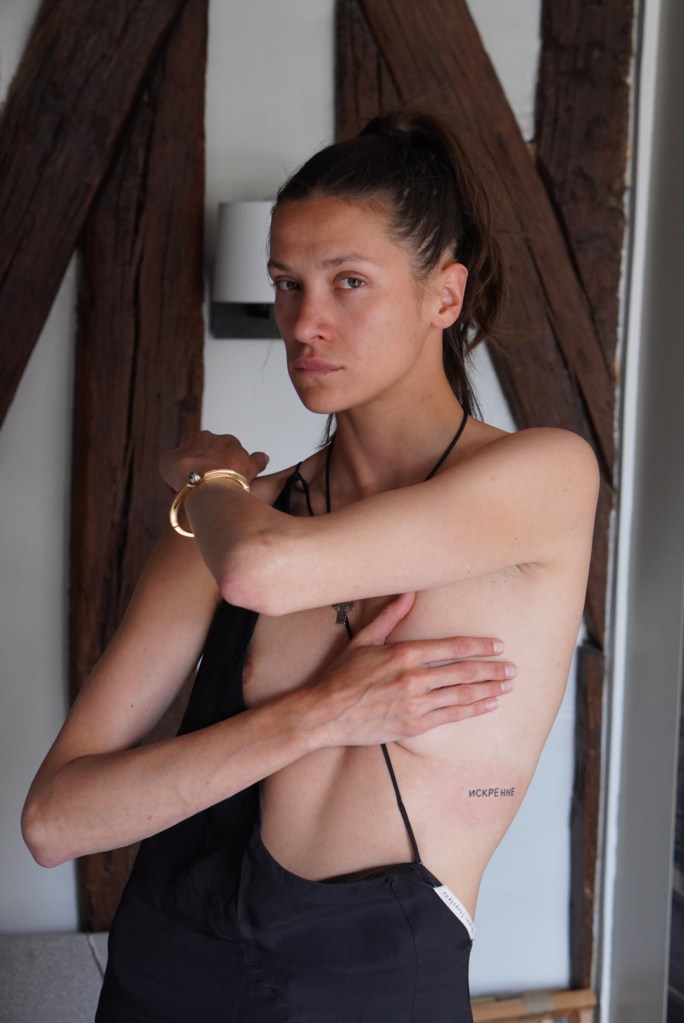
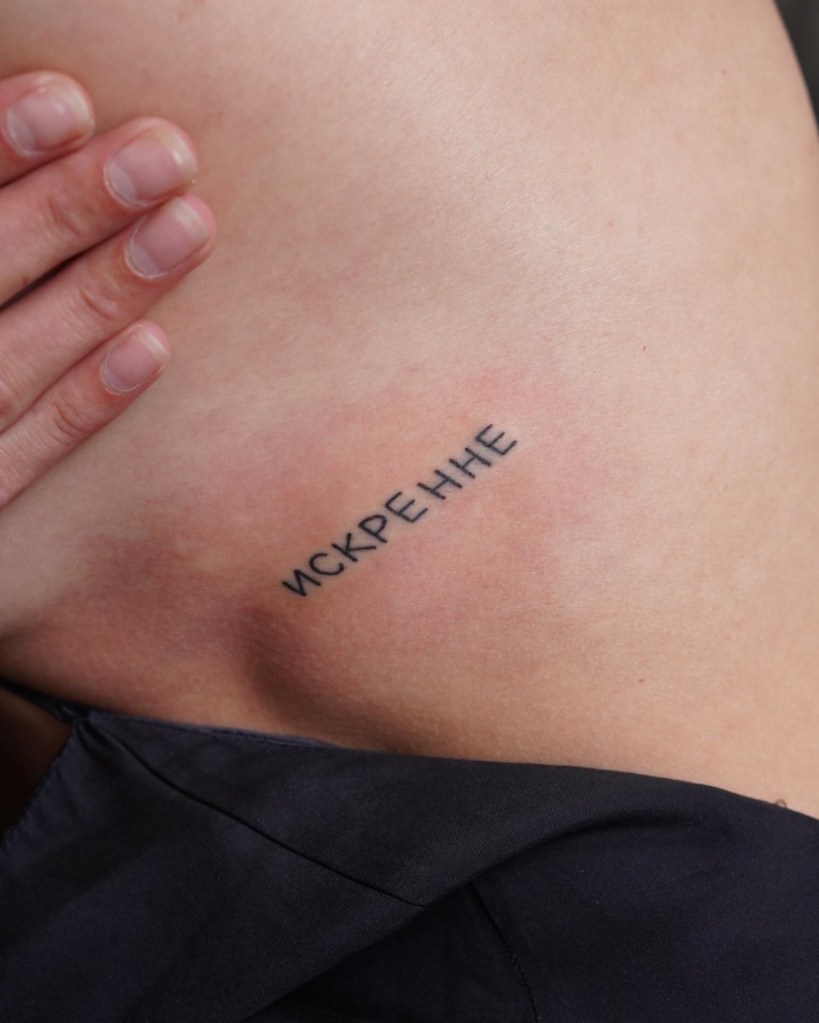
The tattoo reads “Iskrenne,” which means “Sincerely” in Russian. Derived from “iskrno,” the term conveys a sense of being candid, straight from the heart, from soul, with roots in “iskr”—signifying “near,” “close,” or “within.”

Chris and Carlota

What is your greatest fear?” I asked Chris.
Being judged.
The beep of a truck, stacked on Rue du Faubourg Poissonnière, cut through the open window of the chambre de bonne.
“And not being good enough,” he continued. “I suppose those two are linked. I understand how odd they are—I judge myself, then worry about what others think, even though it shouldn’t matter. It’s been with me for a long time, but I’ve started to deconstruct it.”
“For example, what do you feel you’re not good enough for?”
“Success. It’s tied to my father. It’s not that everything always traces back to childhood, but I’d say I’ve never felt good enough in his eyes.”
“What do you consider success?”
“That’s a good question.” He giggled. “A sense of accomplishment, more than anything.”
“And what is it you’d like to accomplish?”
“Being happy and true to myself.”

Do you feel more pressure to be successful or happy?”
“I always felt pressure to be successful. But now I see success differently—it’s not monetary or material, but spiritual. To me, that kind of success means being happy.”
“When was the last time you felt happy?”
“Every day, when I wake up.”
And yet, you still seek another kind of success? Is it constant happiness you want to achieve?”
“Yes,” he said hesitatingly. “I suppose I’m holding on to old fears, even though I feel different now.”

“So, you believe happiness can be constant?”
“Mm-hmm.”
“And what is happiness?”
He took a deep breath. “A lot of it, for me, comes from love and acceptance—of myself and others. Yes, self-love and love for others. And a lack of judgment. Plus, a certain freedom.”
“What kind of freedom?”
“We can’t always have every kind—financial, psychological—but for me, psychological freedom is most important.”
“Could you elaborate?”
“I’m a baker, and it’s meditative for me. When I’m working, I lose myself in joy. That ability to fully enjoy the moment is special to me.”
“And what if the moment is unpleasant?”
“When I was younger, it was hard to accept moments like that. But now, I choose to be present in them. I know not every moment will be easy, but it’s still mine.”

“If Carlota told you tomorrow that she only had a week left to live, would you still be able to enjoy the moment?”
“I would enjoy the last moments I had with her.”
“And if you broke your leg, would you be able to enjoy the pain?”
“Pain is psychological. And I find it fascinating, even appealing in a way. I think I’ve suffered a lot—psychologically, at least—and I used to reject that suffering, feeling like it was inflicted on me by my environment. But now, as an adult, I choose my environment, my life. I’m in control. So, for me, freedom lies in accepting that bad things will happen.”

“What exactly do you control? Your mindset?”
“Mm-hmm.”
“And how do you control it?”
“It’s about listening to my inner voice. I also practice meditation and spirituality. It helps me feel connected, like everything happens for a reason—good or bad. The more you reject it, the harder it is.”

“What’s the most important lesson life has taught you?”
“That love is the answer. It’s the most powerful force we know, yet it’s unexplainable. We don’t understand how love comes or goes, but we know when we feel it. I believe a lack of love—for ourselves and others—is the root of all problems.”

“Do you have a dream?”
“I have many. Recently, I’ve dreamed of living a comfortable life in Brazil, with a garden, in a place without stress or conflict—where Carlota and I can enjoy life’s simple pleasures.”
“And if Carlota were no longer in your life, would you still follow that dream alone?”
He pondered before answering. “I’d like to say yes.”
“I ask because, if your dream depends on another person, it could create pressure for them. Your happiness might hinge on their presence.”
“That’s why communication is so important. We don’t force anything on each other. We work together to make each other happy.”

“When was the last time you helped Carlota with something?”
“What comes to mind is when she got a haircut she wasn’t sure about. She said she needed my support to accept how she looked in the mirror, and I believe I helped her do that.”

“What are the things you feel insecure about?”
“Not being perfect. Making mistakes. Failing. It’s not about specific insecurities like disliking my body; it’s more the negative energy I’m trying to let go of. It’s cliché, but I feel like a caterpillar trying to turn into a butterfly, stuck in its cocoon. I feel it in my gut—something is holding me back, like an anxiety that spirals into negative thought cycles.”
“For example?”
“We’re trying to buy a house. Once we do, we’ll be left with the scraps of our savings and have to rebuild everything. It’s stressful.”

“What is it about the house that makes you anxious?”
“I bought it with my ex, and over the past five years, I built it. We separated two years ago. Now, Carlota and I are trying to buy it together. It’s taking so long—getting a loan, making everything work. It’s a great source of stress. The house has always represented security to me. But there’s a voice in the back of my head saying it won’t work, that things will go wrong.”
Despite the anxiety, why do you cling to the idea?”
“Because it’s the perfect space for us. We’re like hermits—we love staying home. It also has a workshop, and we have so many plans for it. It would be a shame to lose it.”
“However, that house was initially a project shared with your ex.”
“We bought it together, but I built it. So it’s a deeply personal project that remains unfinished—it never became a home. With my ex, I never envisioned it as a true home. But with Carlota, I see it clearly, our future there.”
“That sounds risky to me—maybe because of my own experiences. Envisioning your future like that can create expectations that might lead to disappointment.”
“I agree, but you also have to manifest what you want.”
“Yet earlier, you said you want to be happy. Now you’re manifesting the house and your future with Carlota, but that isn’t the same thing.”
“Isn’t it?”
“No. Having a house with Carlota doesn’t necessarily mean you’ll find happiness.”
“Then what would make me happy?”
“Something you can’t lose.”

“I think the biggest issue is that if I lost the house now, I’d feel like I have nothing—financially or otherwise. I’ve poured my blood and sweat into it, so it holds a lot of value for me. It’s not that I couldn’t be happy without it, just a year ago, I didn’t even care about the house. Then I found the reason why I need it, why I couldn’t give up on it.”

“What would make this house a home?”
“We want to decorate it in a way that reflects us—our colors, our design, our furniture. It has a workshop, so we could build our future around it. Carlotta wants to try tufting rugs. Having a house also provides us the freedom to travel.”

Is there something that makes you uneasy about it?”
“We have so many different dreams. I see all these possible paths, and I hope that no matter which one we take, we’ll stay true to each other and take care of one another. I know, whichever path we choose, it won’t be easy, but as long as we’re true to ourselves, it’ll all work out in the end.”
“Or not.”
“Or not,” he laughed. “But I’m still optimistic.”
“Yet saying ‘whichever path we choose, it won’t be easy’ doesn’t sound very optimistic.”
“But after the struggle, there’s hope! You know the saying—there’s a calm before the storm, but there’s also calm after the storm. The storm always comes, no matter how grounded you are.”

Okay, I have an idea for your tattoo, but before we discuss it, I’d like to interview Carlota.”
Carlota sat down in front of me, her posture delicate, her expression hesitant. She was clearly shy.
“What makes you shy?”
“I’m hypersensitive, but I don’t know how to express my feelings.”
“How would you like to express them?”
“Any way I could. It would feel like a release of everything I’m holding in. But even so, I’m proud of my emotions.”
“Why are you proud of them?”
“It’s who I am.”
“But why does that make you proud?”
“I don’t know. I think emotions are something to be proud of, but actually, I’m not. I hate it when I cry.”
“Why do you hate it?”
“Because it feels like I’m not strong. And I hate how puffy my eyes get. Then I blame myself for crying. I’ve never felt accepted when I had breakdowns. My ex, for example, always criticized me for crying or for being ‘crazy’ instead of trying to understand me.”
“What do you mean by ‘crazy’?”
“I found out that I’m bipolar. Sometimes, a small thing can make me so nervous that I feel physically tense. When I’m nervous, I do this.” She showed me her hands, the skin around her nails irritated and raw. “And then I cry uncontrollably. Nothing can make me stop.”
“For how long?”
“It depends.” She smiled briefly. “Sometimes hours, sometimes minutes. I hold it in until it passes.”
What exactly do you hold in?”
“My sensitivity. Because people aren’t ready to see it—they don’t really want to see it.”
“Who are these people?”
“I think everyone. But mostly my ex. And my family. I don’t want them to worry, especially since we’re so far apart. If they knew I was having a breakdown, they’d stress about it.”
“Why don’t you want them to stress?”
“Because they wouldn’t understand, and it would only make them sick. My father’s health is poor, and I’d feel guilty if I made it worse.”
“So you pretend you’re fine?”
“Mm-hmm.”
“Don’t they sense it?”
“Yes. My mother’s like a little witch—she always knows.”

When was your last breakdown?”
“A few months ago, just before summer. Work was tough, and I was stressed. It always comes from stress—work, or someone treating me badly.”

What comforts you?”
“I’ve been learning from Chris that everything will be okay.”
“What do you mean by ‘everything’?”
“Financial stability, the house. That’s a huge part of our stress.”
“And if you didn’t have it?”
“I’d probably have a breakdown.” She smiled faintly.

What’s your greatest fear?”
“Being alone.”
“What scares you about that?”
“It’s funny because I’m a solitary person, but when I say ‘being alone,’ I mean losing my parents or not having a partner. I don’t think I could handle it.”
“What do you mean by ‘not handling it’?”
“I’d rather die. So I hope I’ll never be alone, that I’ll find my soulmate.”
“What’s so unbearable about being alone?”
“Life doesn’t make sense if you can’t share it. Imagine I had no family, no friends, no Chris. Even if I traveled and saw the world, it wouldn’t mean anything without someone to share it with.”
“But there are so many moments in life when we’re alone, when we don’t share.”
“And those moments feel lonely.”
“Do you feel lonely when you brush your teeth?”
She paused. “That’s a good question. Actually, no. But sometimes, I feel lonely even when Chris is near.”
“How does that happen?”
It’s when I punish myself.”
“Punish yourself for what?”
Tears welled in her eyes. “For thinking I’m done.”
“Do you mean thinking about suicide?”
In a calm, detached voice, she said, “It happens, yes.”
“What stops you?”
“I remind myself that I’m strong and that I can get through it. I do my best.”

What do you enjoy most in life?”
“Sharing. Lately, I’ve been overwhelmed—not just by work, but by meeting Chris. He’s shown me so much about myself. Remember when I said I didn’t know how to express my feelings?”
I nodded.
“He accepted me as I am, and it was… wow. Someone can understand me.”

The roar of a scooter accelerating up the street filled the room.

Aurora

Aurora rushed into my Berlin flat, cradling her newborn in her arms, with a nanny following closely behind, laden with bags of baby supplies. She was the epitome of youthful energy, a mother in her twenties, radiating vitality.
The living room was centered around a glass coffee table surrounded by a comfortable sofa and two large armchairs. The nanny settled on the sofa while Aurora sank into one of the armchairs.

“What’s your baby’s name?” I asked.
“Tallulah,” she replied, shaking a bright red rattle in front of the baby. “I have two girls—Feelija and Tallulah.”
“Those are beautiful names. May I ask what you do for a living?”
“I do a lot of modeling and influencing, but my real passion is music—my instrument is my voice.”
“Is it easy to balance modeling and influencing with motherhood?”
“It works well with being a mom because it gives me time for my kids while still earning money. That’s the most important thing for me—giving all my heart to them. I’d never take a job that isn’t compatible with their needs. But if you want to be creative in this field and not just a typical blogger, it’s not that easy.”

“What do you appreciate most about yourself?”
“That I’m arty and have a free mind.”

“Are you a happy person?”
“Yeah,” she laughed. “I’m always happy! Even when I’m tired or the world feels upside down, I stay positive.”

“What’s the most important lesson life has taught you?”
She sighed. “That love is everything. Even letting go…” She sighed. “I’m in a tough place right now with the daddy of my kids. We’re best friends, and I love him deeply, but we’re going through what I’d call a breakup. What I’m learning is that letting someone go doesn’t mean losing them. My kids have also taught me so much—probably more than I’ve taught them.”
“Could you share an example?”
“When I’m utterly exhausted, when I feel like I can’t go on, I just look at them,” her voice softening. “They remind me they need me, and that keeps me going. When I was younger, I’d let myself collapse if things got too hard—just lie down and let everything go. But now, when I look at my kids, I know I don’t have that option. I have to be there for them, always.”
“That sounds tough.”
“It is,” she admitted with a small, weary smile. “Very tough. But it’s also the most beautiful thing in life. My older girl has shown me the wild side of living.” She sighed. “She’s easygoing and uplifting, but also incredibly sensitive. She’s taught me to slow down and act differently than I normally would. I’m used to being active, always on the move, surrounded by people. With her, I’ve learned to pause, to stay home, to meet her where she is. It’s not natural for me, but somehow, I’ve grown to love it.”

“What is love?”
“Love is a deep connection where you let go of your ego for someone else.”

“Is there something you feel is missing in your life?”
“I’m happy with my kids and where I am.” She was rocking Tallulah, who grunted and hummed in her arms. “But my passion for music isn’t fulfilled. Also, I have a best friend, but I miss someone who’s made out of the same stone as I am.”
“Do you feel your partner is from a different stone?”
“In a way, yes. We understand each other, and we share the same sense of humor, but there’s a depth he won’t explore with me. I think he’s afraid to go there.”
“Why do you think so?”
She hesitated, her gaze drifting to the baby in her arms as Tallulah blew a tiny bubble of drool. “I can’t really say why—it’s more of a feeling. When I talk to him, I sense this wall, like he’s disengaged from the deeper parts of my mind. It’s not that he doesn’t care, but his curiosity stops at the surface. Conversations beyond fun or humor feel… unreachable.”

“Do you still find yourself interested in his mind?”
“Of course. I’m always trying to reach through, to get behind the wall he’s built.”
“Why do you think he built that wall?”
“I think he’s scared. Scared to show what’s really going on inside him.” Tallulah interrupted the moment with hiccups, as if adding her own commentary to the conversation.

What are the essentials of a relationship for you?”
Aurora passed Tallulah to the nanny, taking a moment to gather her thoughts. “To feel love. To feel appreciated.” Tallulah whined, her little nose running. “Oh, bébé,” Aurora cooed, gently drying her daughter’s nose before glancing back at me with a polite, “Sorry.” Tallulah, pleased with her mother’s attention, giggled, and Aurora couldn’t help but smile back. “Yeah,” she continued. “To feel loved and appreciated. Not through gifts, but by being truly seen—seen for who I am. I want someone to be genuinely interested in what’s going on in my head.”

“Do you have a dream?”
“Maybe to give myself enough self-worth that I don’t need validation from others. I don’t want to depend on anyone—it pulls me away from myself.”
Tallulah’s hiccups continued. Aurora reached for her, taking her from the nanny. She lifted her shirt and guided the baby to her breast. A serene silence fell over the room as Tallulah latched on, the hiccups fading into contentment. If I were Rembrandt, I thought, this would be a scene worth painting.

“How do you know when to feed her?”
“She starts putting her hand in her mouth. And my breasts give me signals too,’ she explained with a laugh.

“How often do you have sex?”
“Not often. It’s just who I am. I don’t need sex unless there’s a really deep emotional connection. Without that, it feels… dirty. So, it’s been a long time.”

“What’s your greatest fear?”
“To be forgotten.”
“Do you mean after your death?”
“No, while I’m still alive.” She sighed, cradling Tallulah closer. “Take the daddy of my girls, for example. My fear is that if I let him go, he’ll forget about me.”

“And how would you like to be remembered?”
“As feelings. I’d love to leave a feeling inside others. When they think of me, I don’t want them to see something; I want them to feel something.”
“What kind of something?”
She laughed. “Something good!”

“What’s the hardest decision you’ve ever made?”
“To stop caring about what others wanted me to do. I was in ballet school with Sasha (our mutual friend) — that’s where we met. I was very good at dancing, and everyone kept telling me, ‘Oh, you’re so good, it’s perfect for you!’ But it was never what I really wanted. I kept doing it for a long time, just to please others.” She paused. “Quitting was the hardest decision I’ve ever made.”
Aurora stopped breastfeeding, and Tallulah let out a brief cry of complaint, her tiny voice filled with protest.

“Describe yourself in a couple of words.”
“Loving, caring, wild, and authentic.”
“What’s wild about you?”
She laughed, her eyes sparkling with mischief. “What exactly do you want to know about it?”
“What comes to your mind?”
“I go where others don’t go.
“For example?”
She stood up, rocking Tallulah. “While others went to high school, then university, I got pregnant and started earning my own money. I was 21.”

“What made you decide to get pregnant?”
“I wasn’t afraid of it. My partner wanted to wait, saying, ‘Let’s wait till we’re older, wiser.’ But for me, it was like, ‘No, I want to do it now. Why wait? It’s life!’ And life also comes with pain, you know? When I gave birth, I didn’t take painkillers. I never judge people who do, but for me, I couldn’t imagine going through it without feeling everything.”
Tallulah sneezed, the sound drawing laughter from both Aurora and the nanny. “Bless you!” the nanny said.

“You said earlier that you’re going through a breakup. What do you mean by ‘going’?”
“It’s been over three years now. It’s a mix of letting go and taking him back, being scared to lose him. Only now am I starting to understand that letting go doesn’t mean losing him. We’re not lovers anymore, but we’re growing into something else—friends, teammates, a family.”

“Will you still be a team if you have a new lover?”
“Well, there are always two people in this constellation—it’s not just my choice. For me, another man wouldn’t change the team we have, but it’s also up to him. I know it’ll be hard for him because he’s very jealous and possessive.”

“Do you know the flower forget-me-not?”