“I feel trapped in the cycle of society—working, earning, achieving—without ever stopping to look at myself. I just live a life that might not even be mine. But when I finally sit down and try to face my true self, I feel lost.”
“What exactly makes you feel lost?” I asked.
“I don’t know who I am,” she replied.
“But when you try to face yourself, what do you see?”
“Emptiness. It’s blurred, hard to explain. I just know I’m not the person I pretend to be.”
“Who is the person you’re pretending to be?”
“Someone successful, with a good job, following the path I was expected to take. On the surface, I’m doing well. But I’m not happy.”
“And what is happiness to you?”
“Being free. Being kind. Feeling connected to the world and the people in it.”
“What does freedom mean?”
“Being whoever you want to be.”
“And do you know who you want to be?”
“Someone completely different from who I am now. I’m spiritual. I have this inner voice, and when I interact with people, I try to connect with them on that level. Even with plants, I feel a connection. If I lived the life I truly wanted, I’d be closer to the people around me, not just in presence, but on a deeper, unspoken level.”
“Could you describe that kind of connection?”
“It’s when words aren’t necessary. When you don’t even need to be physically near someone to share the same feeling. I have it with my brother—if I’m sad, he just knows.”
“What makes you sad?”
A pause. Then, softly: “If I talk about it, I think I’ll cry.”
“You don’t have to—”
She cut in. “It’s my life in general.” Silence followed.
“If I may… I hear two things. You don’t know who you are. And you long for deeper connections with people. Is there anything else you feel is missing?”
“Happiness.”
“For you, happiness means being free and kind. Is it hard to be kind?”
“It is. Maybe I’m kind compared to others, but I believe life is about giving. We’re all here together. When you grow, you should help others grow too. And I’m not there yet. I can’t say I’ve truly helped anyone.”
“What’s stopping you?”
“Money.”
“A lack of it?”
“No. Too much of it.”
“Too much?”
“Money feels like a disease. When you dedicate everything—your time, your energy, your thoughts—to making it, you forget yourself. I think that’s how I got here. I built a comfortable life and lost who I was. And the strangest part? I didn’t come from privilege. I worked hard, moved to another country, built all this from nothing. So the idea of walking away from it terrifies me.
Once you have something you never had before, even if it isn’t good for you, letting go feels impossible. Money might be a disease, but I’ve grown comfortable with it. And yet… I’m not happy.”
“How does money make you unhappy?”
“Because it keeps me far from my family and friends. I live in a different country, and sometimes it feels like I gave up everything just for this.”
“If you could change something in your past, what would it be?”
“I’d listen to myself more. Chase my dreams—though I don’t even know what they are now. I’d be more experimental with life, less worried about comfort.”
“Aside from your attachment to comfort, what’s stopping you from doing that now?”
“Maybe I don’t have the courage. I know I need to change my life, but I feel trapped.”
“Why?”
“Because I’m limiting myself.”
“How?”
“By thinking negatively about risks.”
“What kind of risks?”
“Stopping everything. Starting over from scratch. But at the end of the day… it wouldn’t kill me. I just don’t know how to put it into words.” She paused.
“Don’t you think moving to another country and building a successful life was already a risk? An experiment?”
“Yes, it was. So if I’ve done it before, I should have that strength inside me, right? But for some reason, I can’t do it now. I can’t take the leap, change my life, become something new.”
“Do you feel pressured to make that change?”
“Yes. I want things to happen fast. But I know change doesn’t happen overnight. It might take my whole life to find myself… but I’m not ready to take that first step.”
“Ten years ago, what did you dream of?”
“Traveling. Meeting people. Living adventurously.”
“And what happened to that dream?”
“I pushed it to the back of my mind. But now that I’m unhappy, it’s resurfacing, reminding me how far I’ve drifted from it.”
“What’s your ideal future, ten years from now?”
“A version of me who gives back to others, who has grown into someone meaningful.”
“I have a feeling you’ll get there. Just give yourself a little more patience.”
“Yeah… patience is a good thing to have.”
“When was the last time you felt truly happy?”
“When I lived in Paris, closer to my family. I didn’t feel lonely.”
“How do you cope with loneliness now?”
“I keep myself busy. I started sewing—it felt really good. But… sorry, I’m all over the place. I do things to distract myself, to make it seem like I’m not lonely, not unhappy, like I have this cool life.
But what I really need is to stop. To look inward, to figure out who I am and where I want to be. And yet… I never do that when I’m alone.”
“Do you think living far from your family is what triggered this deep introspection?”
“Yeah… that makes sense. You’re right. I wouldn’t have this perspective on myself if I had people around me—which is ironic, because I was happy when I was with them. But at the same time, maybe I would’ve never truly known myself if I had stayed. And yet, I still complain about my loneliness.”
“What if your true self is emptiness—something that doesn’t exist?”
“That would be hard to accept.”
“Why?”
“Because if my true self is emptiness, and I’m all alone in it, I think I’d go crazy.”
“In what way?”
“In the sense that I already struggle to understand myself. And if I have to face that version of me, the one that’s undefined, it would feel like dealing with different versions of ‘Megan.’ But I’d rather have one solid, clear identity.”
“I was thinking the other day—maybe a big part of our unhappiness comes from chasing stable happiness, rather than just letting ourselves flow with our emotions. What if true happiness is never meant to come easily? It’s like the story of Hercules at the crossroads: do you take the tempting path of Vice, offering immediate pleasure, or the tough, arduous, but honorable path of Virtue? The story seems to suggest that happiness isn’t found by seeking the easy road.”
“True.”
“It might sound cliché, but once you choose a path, the key is to fully live in the moment.”
“I agree and disagree. Living in the moment makes sense when you’re in a good state—when you have positive energy, life gives back. But if you’re in a bad place and just ‘go with the flow,’ without trying to change, it’s hard to pull anything good from life.”
“From my experience, the more I fight a bad state—trying to escape it—the more I suffer. Because in that moment, I want something different from what I have. What helps me is allowing myself to just be in it. And eventually, it passes. Nothing is permanent. But if I resist it the second it arrives, it feels like there’s no way out.”
“That sounds like my life in London. I say I’m unhappy, I say money doesn’t fulfill me, but at the same time, I refuse to accept my situation. Maybe if I just accepted it, like you said, new things would come my way. But I shouldn’t expect them—that’s probably why I feel stuck.”
“Another thing I’ve learned—deep connection to ourselves starts with fully opening up to every emotion, without judgment.”
“So in a way, my current mindset isn’t good or bad. It’s what made me realize money isn’t my priority. Maybe I don’t need to force myself to feel alive—to chase something. Instead, I should just pay attention to what naturally lifts my mood.”
“I’d say, keep your doors open, and don’t judge the visitors.”
“You’re right.”
“What’s the most important lesson life has taught you?”
“Don’t wait for anyone to acknowledge what you do. I used to do that, and it only made me feel more lost. Now, every decision I make comes from me, even if people think I’m crazy. I trust my instinct.”
“And where is your instinct leading you now?”
“To stop chasing. To sit down and figure out what I really need. I had several job offers recently—well-paid ones—but I turned them all down. They just didn’t feel right. The money was tempting, and everyone told me to take the opportunity, but I knew it wasn’t mine to take.”
“That doesn’t sound like someone who’s lost.”
“Who or what inspires you?”
“People who live outside of society’s expectations. That takes courage. Belief in yourself. They stay true to who they are and don’t care what others think.”
“Are you passionate about anything?”
“Not in a tangible way. But I’m passionate about life—simple things. Sharing a meal with people I love, stepping outside for fresh air, sitting in nature.”
“Don’t you need more than that?”
“You need money for shelter and food. But beyond that? No. If I want to travel, I have my legs. You can be homeless and happier than someone with a nine-to-five job. A meaningful life doesn’t require money—it requires perspective.”
“I see what you mean. But from my view, money doesn’t have to be good or bad—it’s just a piece of the puzzle. The more pieces we have, the easier it is to handle life when one piece is missing. If you have money but no love, it sucks. If you have love but no money, that also sucks.”
“So it’s about finding the right balance?”
“Or maybe about having all the pieces. Think about it—losing money, friends, love, family, faith, all at once? That’s unbearable. But losing just one of them? That’s survivable. Money is just one of those support systems.”
“Maybe I’ve maximized money over everything else, and that’s why it feels like a disease. But if I lost it tomorrow, I’d probably miss it. I’d remember all the things it allowed me to do.” She paused. “I still think some things are more important than others.”
“The danger in ranking them is that attachment follows. If family is your highest priority, their loss becomes unbearable. If love comes above all else, its absence can break you. Attachment breeds suffering. That’s not my insight—it’s Buddha’s.”
“Hm. Maybe I’m not unhappy because I have money. Maybe I’m unhappy because I miss love and friendship. And all I need to do is bring those things back into my life.”
“I’d say that’s a good start. Use your money—book a hiking trip with your friends or family. Rebuild what’s missing.”
“If we take money out of the equation. Take love, for example. I might find the love of my life, but that doesn’t mean they’ll feel the same. It’s not just about what I want—it takes two. Out of billions of people, finding the right one feels like an impossible challenge.”
“An experiment, then—the kind you were searching for.”
She fell silent.
“What is love to you?”
“The perfect lover would be someone who brings out the best in me, someone inspiring. As long as we have that, the relationship will keep growing, shaping me into who I want to become. I admire people who build themselves outside of expectations—those who take unusual paths, believe in something different. They have something truly their own.”
“But what if I told you that to attract such a person, you first have to become that person yourself? The way you describe it, it sounds like you’re looking for someone to complete you, rather than someone to share—“
She cut in. “Something in common?”
“Not quite. More like something of your own. Or just the moment itself.”
“So you’re saying I haven’t found love because I haven’t yet become the person I want to be? And until I do, I’ll keep searching for the things I lack in someone else?”
“Yes. And that might be why so many relationships fall apart.”
“That makes sense… but the way things work now, love feels like a transaction. A marketplace where people calculate their time and measure what they can gain. The purity is missing. No one ever told me that just being near someone should be enough to grow together. Instead, I hear: Chase your dreams. Be the best. Achieve more. Get more. But never: just be.”
“What is your greatest fear?”
“Failure.”
“And what does failure mean to you?”
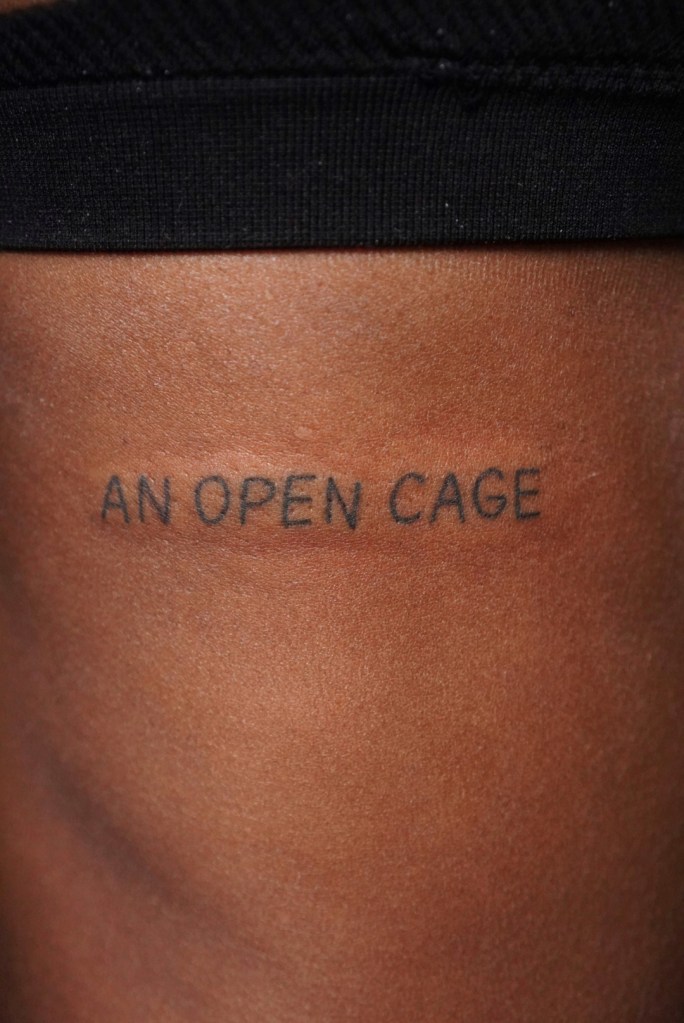
“Five years ago, it meant being poor. Now… it’s not being able to escape my cage.”
“What kind of cage?”
“The one built from a mindset—where everything revolves around money and success.” She hesitated. “Sorry, you asked about my greatest fear, and now I feel like I’ve lost myself.” Her voice was sweet and fleeting. Then, almost in a whisper, she added: “My biggest fear is being trapped.”
“In your golden cage.”
Discover more from Your Story, By Me
Subscribe to get the latest posts sent to your email.
