“What moment from the past do you remember as the most beautiful?” I asked her.
“There are so many. My life is made up of beautiful moments. I think it’s my specialty—being a profoundly happy person. Even in times of difficulty, devastation, or pain, I can find beauty. When the puzzle pieces fall into place over time, even the hardest moments reveal their meaning and their beauty. In fact, I often find more beauty in those moments than in ones that others might immediately see as joyful.” Alina pulled the bubble gum from her mouth, rolled it into a ball, and set it on the black desk between us.
“Can you give an example of a time that was especially difficult, but later became beautiful to you?”
“I had a complicated relationship with my father. We only found peace and unity after his death. While he was alive, I didn’t keep in touch with him. When I heard of his passing, it shook me to my core. The pain, the shock, the regret of not reaching out—it was overwhelming. For ten days, I couldn’t get off the sofa where I’d collapsed when I heard the news. But then, the most extraordinary thing happened: I felt a deep sense of connection with him, almost like meeting him for the first time. I began to turn my attention in his direction, even though I had long closed my eyes to the past—a form of escapism, when you have both parents but choose not to see one. When I finally decided to face him and truly get to know him, I traveled to Petersburg, where he is buried. I crossed the city on foot, walking from the Gulf of Finland to the cemetery. The weather was incredible: the sun was shining, with dramatic cumulus clouds building, hints of thunderstorms, and the rising heat shimmering off the asphalt. Along the way I found some soap bubbles. I was smiling, realizing I was going to meet my dad.
And when I came to the cemetery, I saw my grandmother, my father’s mother, for the first time. It turned out that my grandfather was also buried there. I sat there for hours, talking to them about all the things we never had the chance to share in life. That day holds so much beauty for me. It was a moment of reconciliation, a sense of wholeness I didn’t think was possible.”
She referred to the city specifically as Petersburg—not by its familiar nickname, Piter, as I would have called it. It added a layer of formality, even reverence, to her story, much like the city itself: poised, dramatic, and timeless. Her voice was calmly alive, “her eyes made of the bluest ice,” as Vasiliev from the Piter band “Spleen” once sang.
“Why didn’t you stay in touch with him while he was alive?”
“He had a difficult personality. But, you know, I later realized it wasn’t really my relationship with him that was the problem—it was my parents’ relationship. That shaped everything. My mother’s impressions of him deeply influenced me. Like many children, I took her side, clung to it stubbornly. When my father reached out to me, we had a conflict, and I held my ground.
Looking back, I see how unfair it was, but at the time, it felt like the right thing. When I visited Petersburg once or twice a year, I often thought about contacting him. But there was always a reason not to—excuses that felt justified in the moment.
And yet, when the day came, I realized it all unfolded the way it needed to. Now, I see my relationship with my dad as beautiful. It may have taken time, but it’s whole.”
“Tell me in more detail—what kind of relationship is this with a dead person?”
“It’s a real relationship. I believe the connection between us isn’t just blood or memory—it’s something deeper, something I can revive. Let me give you an example. You know Sadhguru, the famous teacher? He has millions of followers, and at the Isha Center, there are nine million volunteers working all over the world. Do you think these volunteers, many of whom have never met him in person, have a relationship with Sadhguru?”
“They may feel related to him, but it’s not an interrelation.”
“I see it differently. I believe it’s possible to have an interrelation with someone even after losing contact with them.”
“Only in your imagination.”
“Yes, if you expect feedback. But it doesn’t have to rely on that. Interrelations can exist in the form of a monologue. It can evolve, change color, deepen over time. Think about an epistolary exchange—you can write letters to someone for years without receiving a single reply, yet the relationship remains.”
“You said you found unity and peace with your father after his death. What does that mean? Have you accepted who he was and let go of any resentment?”
“Many realizations came to me gradually. It was like an engine was set in motion, allowing me to focus on the painful moments of my life and truly understand my relationship with my father. I explored this in different ways—classical psychology, even through the game ‘Leela’. But the most profound insights came about five years ago. I realized that my father was who he was, and that only the present moment exists. I’m not talking about those philosophical clichés you find in books nowadays. I mean truly living in the present, because the now is all we have. Nothing else exists. The world is made of inputs that only exist in this moment. Even if God himself intervened in our conversation, he wouldn’t do so now, but in the next moment. Do you understand?”
My face must have betrayed my lack of comprehension, because she continued. “Let me give you an example. What moment are we in right now?”
“Now.”
“And now?”
“Also now.”
“And can this moment be repeated at any other time in your life?”
“No.”
“That’s exactly it. This happens to everyone and in everything. Realizing that my father is gone helped me grasp this deeply: everything that has happened is already over, and all I have is this moment, right now.
When we focus on what influenced us from the outside, we shift responsibility away from ourselves. Instead, we should turn inward. So when I say I found unity with my father, what I mean is that I first found unity with myself. Understanding my relationship with my dad was really about understanding myself.
When something happens, I ask myself one question: ‘What am I feeling?’ Because we’re all part of a single whole. Everything that happens to you personally is happening to the world at the same moment.”
“But what happens to me is different from what happens to you.”
“Of course. We perceive the world through our own experiences, so our realities differ. But we share the same present moment. If a volcano is erupting somewhere right now, it erupts the same for you as it does for me.
You know, I’ve recently fallen in love with the word responsibility. I rediscovered it during a trip to India. You can see responsibility as something heavy, a burden placed on your shoulders—by someone else or even yourself. Or, you can see it as the ability to respond. That shift in perspective changes everything.
Take the volcano. You can say, ‘A volcano is erupting out there, and it has nothing to do with me,’ or you can say, ‘I am responsible for the volcano erupting.’ You might wonder—how can you possibly be responsible for a volcano? But it’s not about guilt or obligation; it’s about your ability to respond to what’s happening. Consciously or unconsciously, we’re always responding—or not responding.
For instance, if someone falls on the road, you might say, ‘I’m not responsible for that.’ But the question isn’t about blame or duty—it’s about how you choose to respond. Do you help them? Do you walk past? Responsibility means recognizing that you are connected to everything and that your actions—or inactions—matter. We are responsible for everything, even a volcanic eruption.”
“That reminds me of a song by Auktyon (another great Piter band): ‘I am in charge of everything, and everything is because of me.’”
“Those are very wise words.”
“What adjectives would you use to describe yourself?”
“Must I use only adjectives?” She laughed, a deep, ringing sound that resonated with a maturity I remembered from my mother’s office. It was the kind of laughter I often overheard when her friends gathered to discuss things beyond my understanding. Pure coincidence or not, Alina’s answer was, “Ringing.” Then, as if changing the subject, she turned her head toward the bookshelf. At its center stood a large red book with gold lettering: Yoga. “Yoga,” she said. “Do you practice?”
“Yes,” I replied.
“What kind of yoga do you practice?”
“Ashtanga Vinyasa.”
“What does it mean to be a profoundly happy person?”
“A combination of luck, circumstances, clarity of mind, and the ability to see the world’s predisposition toward you.”
“Explain that last part.”
“You know, people who blame fate for their unhappiness rarely stop to ask themselves: Who really made me unhappy? Fate? To me, happiness is rooted in the understanding that everything in life exists to help you discover your purpose. That doesn’t mean everything is predetermined, but I believe all events in life, no matter how random or challenging they seem, lead to some meaningful result.”
“What do you mean by result?”
“I believe every soul has a task, and the entire universe works to guide us toward fulfilling it.”
“Can someone fail at their task?”
“Of course. That’s why we have thousands of lives. I believe in reincarnation.”
“And what is the task of your soul?”
“I’m in search.”
“In search of the task?”
“Not the task itself. I already know I have a desire to help people and an ability to inspire and guide them. I feel that through this, I am fulfilling the purpose that was set before me. Or at least, I hope I am.”
“Aren’t you afraid that you might send someone in the wrong direction?”
“There is no such thing as ‘wrong.’ If someone ends up in front of me, it means they needed to. What kind of portrait of me do you have so far?”
“I can only say that it’s still taking shape.”
“It’s interesting, that the words ‘Future’ and ‘Past’ are crossed out on your face, but ‘Here and Now’ isn’t. People are drawn to each other for a reason.”
“I don’t know if it’s for a reason or not, but I’ve noticed that after meeting someone once, there’s often a high chance of seeing them again—sometimes years later.”
“Or maybe we meet tomorrow?!”
I wasn’t sure if it was a question. While I was deciding how to respond, she asked, “Why did you decide to write to me?”
“I was curious about what you’d share with me. Instagram suggested your page. I clicked, looked through your stories, found them intriguing, and wrote to you.”
“Do you believe in coincidences?”
“Yes.”
“Okay, fair enough. Why not.”
“So you don’t?”
“I don’t. Every meeting, no matter how random it seems, can significantly influence your life. You might just not realize it in the moment.”
“Are you an open person?”
“Yes. Otherwise, I wouldn’t be sitting here in the apartment of a stranger who found me on Instagram.”
“What would you like from life?”
“There is a direction in psychology called ‘systemic constellations,’ previously known as ‘family constellations.’ It’s a relatively new method developed by Hellinger. The idea is that we are all part of systems—our family system, society, culture, state, and even the universe. Each of us influences others in the system and plays a role, which creates a kind of ‘constellation.’
Hellinger’s method allows people to see, in real 3D, what is happening within their family system. This typically takes place in group therapy, with around 20 participants and a therapist guiding the session. When there’s an imbalance in the system—say, when a child unconsciously steps into the role of a parent—it creates dysfunction.
I’ve attended these sessions frequently. And answering your question, at my most recent one, I articulated my request: I wanted wealth and independence. Through the process, I realized I had completely internalized the behavior patterns of my family. When my father once went bankrupt, I unconsciously aligned with my mother. In doing so, I adopted a dynamic where one person is the victim, another the aggressor, and myself the savior. This isn’t about who is good or bad. In family conflicts, a child unconsciously chooses whom to ‘save’—to whom they’ll devote their energy or even their life. This choice is driven by survival instincts: who seems to need me more, or who offers me a better chance of safety. As children, we don’t recognize our own limits or strength; we simply act on what feels necessary.
These patterns form very early in life and often shape our behavior for years, even decades. That’s why it’s so important to ask yourself: Where does the goal that drives me come from? When you understand its origins, you gain the ability to choose how to approach it.
For me, the realization gave me an option: to live through my experiences with softness instead of punishing myself with harsh, rigid goals that strike at my most vulnerable places. Understanding my patterns means I no longer have to chase success or independence in ways that recreate old pain. Instead, I can move forward softly.”
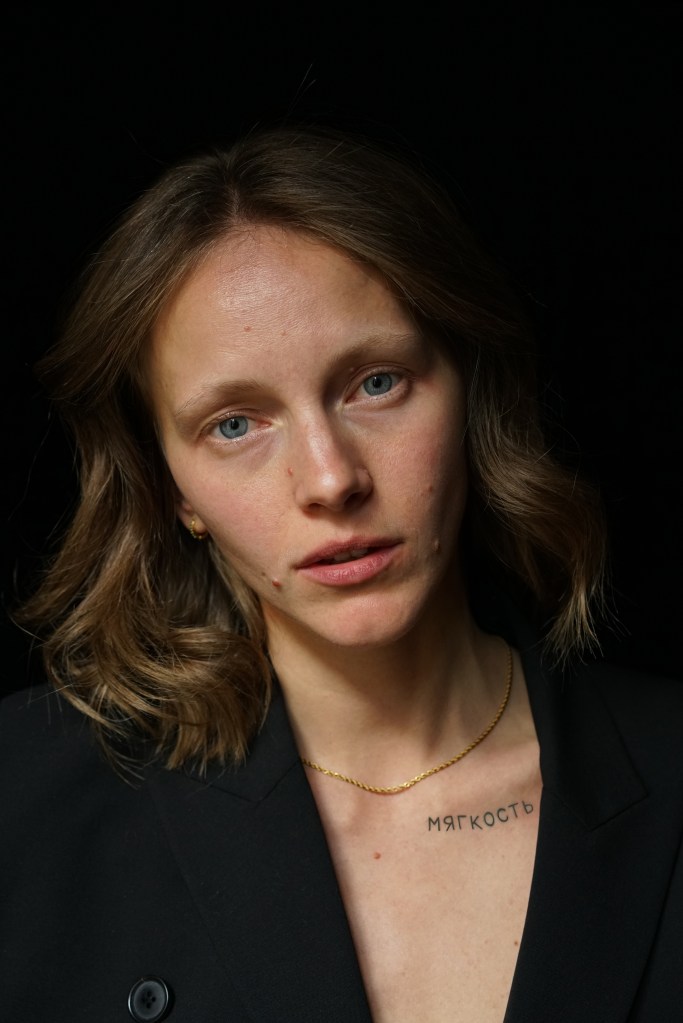
The tattoo, translated from Russian, reads: Softness
Discover more from Your Story, By Me
Subscribe to get the latest posts sent to your email.
