“Do you consider yourself a free person?” I asked.
“No,” she said. “I grew up constantly trying to be the best version of myself—to make my parents proud, to have friends, to catch the attention of boys I liked. It was always about improving myself. But eventually, it became exhausting, trying to live up to this ideal version of me that I imagined. For instance, I have a vision of a perfect me, but I don’t look like that.”
“Describe this perfect image,” I prompted.
“It would be a thinner me, taller, with a different nose. Someone always polite and joyful, working hard, successful, stylish, with a rich social life, liked by everyone, and having a lover.”
“And how do you see yourself now?”
“I usually describe myself in terms of what I lack. But I guess I can be funny sometimes—it helps me feel more confident with people. Mostly, though, I’m sad. I’m a very loyal friend, but I’m also difficult—too dramatic, always tired, often depressed.”
“How do you feel right now?”
“Honest. I always want to be honest, but my exhaustion comes from holding everything in. I don’t want to say things that might hurt or disappoint others. For example, with my parents—I have no reason to feel sad. They’re happy together, I’m healthy, I have a roof over my head, and a job.”
“If you don’t want to feel sad, how do you want to feel?”
“I want to feel happy.”
“What does happiness mean to you?”
“Being at peace. Waking up in the morning feeling light, like good things are coming, and being excited about them.”
“But what if the good things come with bad things? Life is never just one or the other, right?”
“The problem is I feel more of the bad than the good. This ideal version of myself, not living up to it, makes me feel like a failure. It makes it hard to enjoy the little good things in life.”
“Have you ever been in a place or moment where you wanted to be?”
“Yes, but I don’t know how to appreciate those moments. I always think I should be doing better.”
“You said happiness is about being at peace, which isn’t about being better or worse than someone, but welcoming whatever comes—whether it’s sadness or joy. Like Buddhists say, nothing truly belongs to us; emotions come and go like clouds in the sky.”
“I struggle with letting go. Especially with the fact that people come and go. I don’t know how to cope with the feeling of being left behind. I keep thinking I need to get them back. I don’t feel whole without the people I love.”
“What does love mean to you?”
“It’s something I crave. I think I have too much love to give, and that scares people because I ask for a lot of love in return.”
“What exactly do you give to others?”
“Attention, time, affection, support—just being there for them.”
“And if they say, ‘We love you, but we need space right now’?”
“I understand that. I sometimes need to be alone too. But I have so many feelings, I don’t know how to keep them to myself.”
“Do you think someone with fewer feelings might want to take some of yours?”
She laughed. “Maybe. I just don’t know what to do when people want to be alone.”
“Maybe you’re seeking help, not love.”
“But I am getting help—I see my therapist twice a week,” she laughed again.
“I only said that because love, in my opinion, isn’t about expecting something in return.”
“Yeah.”
“So when people leave, it’s something they need. Loving them means wishing them well.”
“I do wish them well, but it makes me incredibly sad when what’s best for them is being without me. It hurts—so much. I don’t want to force them to stay, so I say, ‘Of course, do whatever you need.’ But I don’t say what I really feel. I’m afraid they’ll feel trapped if I do.”
“It’s not really our responsibility how others feel. For instance, you could say something to me now, and it might not hurt me. But the same words, on a different day, might sting because of my mood. It’s up to me how I react—or don’t react.”
“I’m an empath,” she said, tears welling up. “I just don’t want to hurt people. I try so hard, but I’m human. I make mistakes, and that’s hard to accept.”
“What if there’s no choice but to accept it?”
“I know! That’s the thing,” she smiled through her tears. “I know that!”
“It’s like there’s a wall and a door in front of you. You know there’s a door, but you keep staring at the wall.”
She laughed. “Part of me gets it, but the other part is irrational. That part overwhelms me with guilt.”
“Here’s something that helps me: instead of resisting overwhelming feelings, try to notice them. Name them—‘Okay, guilt is here.’ Then, open yourself to the feeling and investigate it. How does it feel in your body? When you stop resisting, other feelings can flow in. It’s about practicing a laid-back curiosity toward what you feel.”
“I’d like to try, but I don’t know how.”
“I wish I could give you my experience, but you have to see it for yourself.”
“I don’t know where to start.”
“Start by paying attention to sensations—what you see, hear, smell. It creates a little distance between you and your thoughts.”
“My therapist gave me the same exercise for anxiety. But when I’m anxious, it takes over. I can’t eat, can’t sleep. The exercise works for five minutes, then the anxiety comes back.”
“Even a second of relief is worth it. Those little breaks add up.”
“I try, but the last year and a half, I’ve been falling apart. Crying, sleeping, living in a mess. I had no energy to tidy up.”
“What happened a year and a half ago?”
‘It was a teeny tiny thing, but it was too much. I used to have a lot of piercings, but a year and a half ago I got an infection. I went to see a doctor, and he gave me a cream with antibiotics, but it didn’t work. It was a small infection. I went to see another doctor, and he gave me antibiotic pills, but it didn’t work. I was taking more and more antibiotics, but my body didn’t respond to the treatment. The other doctor said, if antibiotics don’t work, you have to do some tests. This is when my anxiety appeared. My piercings were the things that I liked about myself, making me more comfortable in my body, so this health issue felt really personal. It wasn’t getting any better, so I went to the hospital again, and I was asked to take all my piercings off. So, I had to take them all off, but only after eight months infection has cleared. I know, people find it silly that it was so hard for me, but for me it was more than just jewels, it was my body image. I started crying at work, telling people I’m unwell, I’m sad. It felt like I became a burden for my loved ones.’
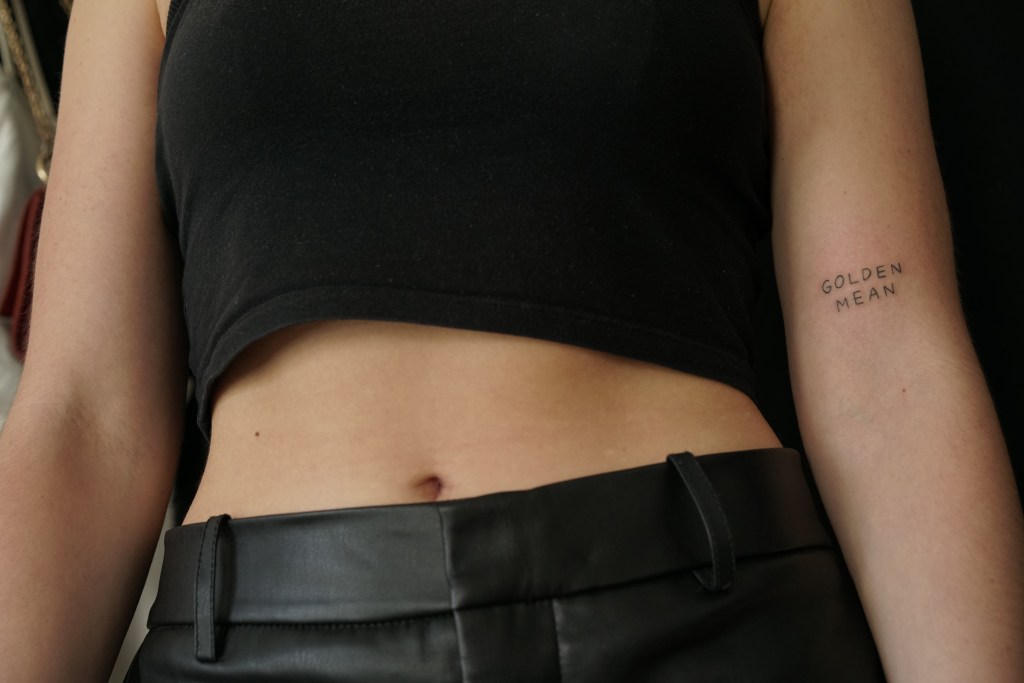
She wore a bracelet, three rings, two necklaces and six earrings: all in gold.
Discover more from Your Story, By Me
Subscribe to get the latest posts sent to your email.
