“How would you describe your character so an actor could play you?”
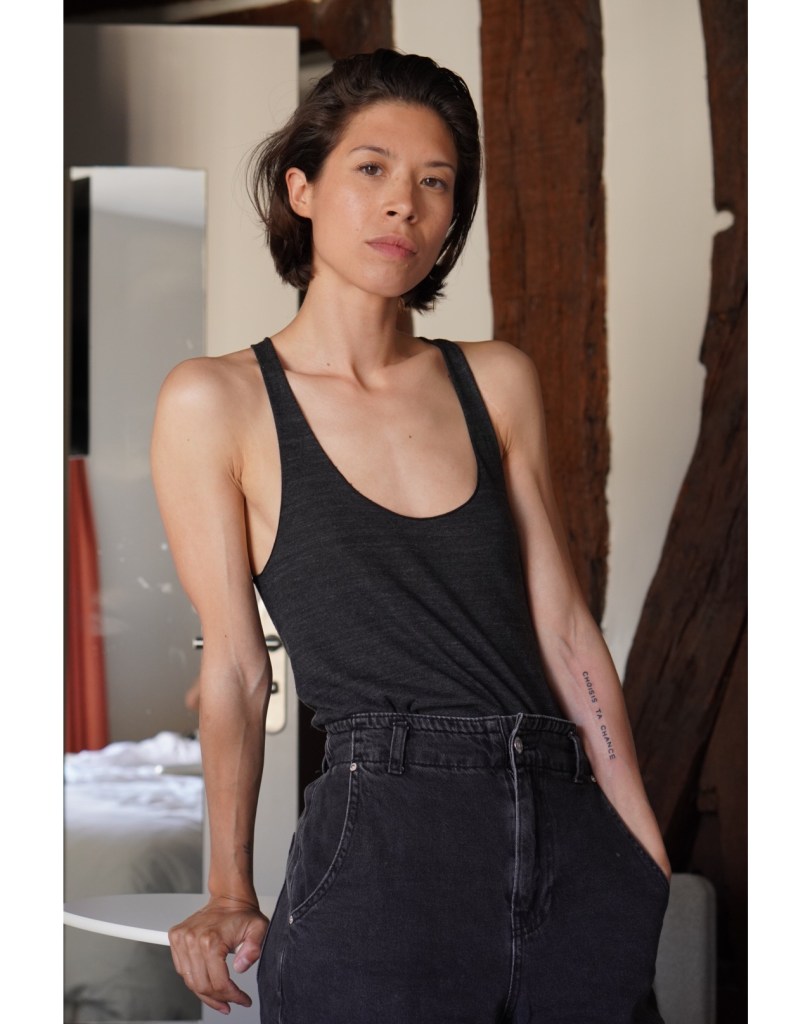
“Her name is Claire. She’s 37, and she’s French, British, and Vietnamese. She’s ambitious, sensitive, and dynamic—a very generous person who loves bringing people together. She’s also deeply loving. If I had to highlight her flaws, I’d say she’s quite self-demanding.”
“I don’t see how age or nationality defines a character.”
“It doesn’t define them entirely. But, for instance, when I get a breakdown for a character I’m auditioning for, it usually starts with age, ethnicity, their profession, and a few personality traits. I think when creating a character, you start with ‘Where do they come from?’ and ‘How old are they?’ It’s the foundation—the beginning of everything. After that, there are layers to build on. Don’t you think?”
I shook my head, indicating no.
She grinned. “No, you don’t agree. I’d like to know what you think truly defines a character.”
“For me, it starts with their state of mind—what emotions dominate them. Then I think about their lifestyle: where they live, who they live with, their routine, how they approach life. What their views on politics, religion.”
“I see what you mean,” she nodded. “Those are the layers I was talking about—what comes after the basics.”
“I’d skip the information you’d find on an ID card entirely. To me, it says nothing.”
“Really? For me, it does matter. But I understand what you’re saying—things like their lifestyle, who they live with. That’s where I dig deeper: What do they love to eat? What brings them joy? Do they have passions or mental health struggles? Those details flesh out a character.”
“What’s your greatest achievement?”
“I have a problem with the word ‘achievement.’ It feels so definitive, and life isn’t like that. Things are always…”
“In progress,” I finished.
“Exactly! Always in the making. I don’t think I’ve achieved anything. I’ve contributed to building things. Like, I have two beautiful children, but they’re not my ‘achievement.’ They’re becoming themselves, independent of me. Maybe I’ve achieved…” She paused, sighed, then laughed softly.
“What came to mind?”
“I was thinking about balance—finding it between…”
“Your family and career?”
“Sort of, but I’m still not fully satisfied. Sometimes I feel like I’ve put my career aside since my second child was born—she’s not even two yet, so I probably need more time to get back on track. But when I think about balance, I feel proud of creating a family. That’s something, isn’t it? Still, I’m constantly frustrated. There’s so much I want to do—so many desires and ambitions—but most remain unrealized. Maybe it’s okay not to accomplish everything. I’m trying to be kinder to myself, to let go of ticking boxes. I know people who’ve ticked all the boxes, and they’re not happy. So, is it even worth it? I’m not sure.”
“How do you define happiness?”
She pointed at a vase of pink peonies on the table. “Those flowers.”
“Why?”
“Because flowers are perfect. They’re gorgeous and graceful, and they have nothing to accomplish but to simply exist. That’s happiness.”
“What does love mean to you?”
“When people ask about my religion, I always say love. That’s my belief because it’s the only thing worth living for. Love, to me, is the glue that binds people together.”
At that moment, my recorder stopped without me noticing, and some of the conversation was lost.
“When was the last time you felt stuck?”
“Yesterday. I’m doing an actor training program online called ‘Reset.’ It’s a process to recalibrate your tools as an actor. There’s this exercise called the ‘two-dollar exercise.’ You have to go out and ask ten strangers for two dollars—or euros—but with the intention of not actually getting the money. And I haven’t been able to do it yet. The thought of doing it is more terrifying than the act itself, and that’s the point. It’s about freeing yourself from caring what others think. And it’s really difficult, so I haven’t done it yet. Every day I say I’m going to try, but then, I just don’t do it.”
I let her words settle before speaking again. “It seems like we’re all constantly trying—to be a good partner, a good friend, a good parent, successful in our careers, even good at cooking. But could it be enough to simply be a mother without striving to be a good mother, for example?”
“That’s a great question. Who validates us, anyway? When it comes to being a mother, I do believe it should be enough just to be one. The idea of a ‘good mother’ is deeply problematic for me. That’s something my organization, Parents et Féministes, tries to address. We want to remind people that every mother is doing her best, and that should be enough.
But it’s harder for me to feel the same way about my acting career. What makes a ‘good actress’? Is it being constantly employed? Is it being successful? Or famous? There’s this entire spectrum of what it means to be an actress. And so often, when I meet someone—say, in a taxi or at a party—and I tell them I’m an actress, the first thing they ask is, ‘Oh, really? Do I know you? Are you famous?’
And when I say no, their disappointment is palpable. It’s like their validation of me as a ‘real’ actress hinges on my fame, and that disappointment feels like a rejection of who I am. It used to hurt even more than it does now. I’d smile and laugh it off, saying, ‘No, I’m not famous.’ But recently, I’ve started to push back. I’ll say, ‘Actually, this is uncomfortable for me. You may not have seen my work, but I am an actress—I work, and I make a living from it.’ I try to joke about it sometimes, but it still stings.
And sometimes, in those moments, I wonder why I keep doing it—this job that’s so tied to external validation. It can feel messy and painful, but at the same time, I can’t imagine doing anything else.”
“Is it the job itself that’s painful, or the situations it puts you in?”
“Oh, the job is wonderful. The problem is that, as an actress, you don’t actually spend much time acting.”
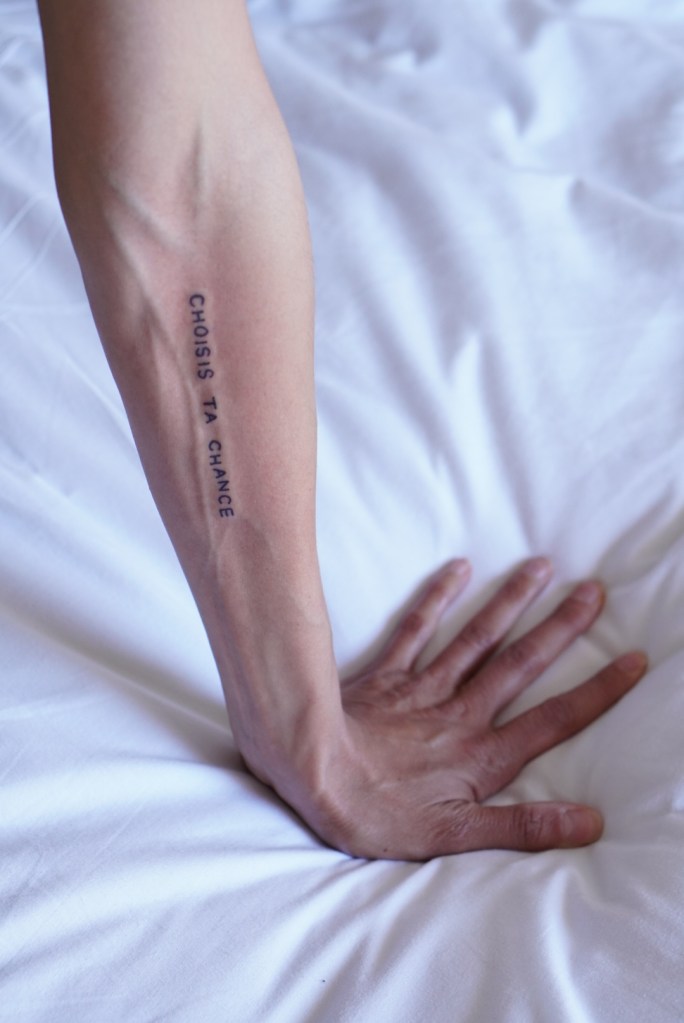
After a pause, I said, “I’m thinking about the words ‘choice’ and ‘flower.’ Do you think flowers have a choice?”
“No, they don’t. They’re simply beautiful because that’s what they’re meant to be.”
Discover more from Your Story, By Me
Subscribe to get the latest posts sent to your email.
