“For the past two years, I’ve run my own business as a home organizer,” she began, her words quick, with the faint lilt of a Midlands accent. “I do interior design and help people declutter their homes—basically, I create calm, peaceful spaces.”
She had come all the way from Long Eaton, a quiet town in Nottinghamshire, just to meet me.
“What made you decide to become a home organizer?” I asked.
“I moved around a lot, and never had a proper home base where I could store my numerous belongings. So, I had to create a home for myself wherever I was—learning to feel comfortable no matter the circumstances. Before that, I was a probation officer, working with people transitioning out of prison. It was intense—one-on-one coaching, heavy stories, a lot of stress.” She let out a soft laugh, warm but laced with something unspoken. “I wanted to essentially combine my passion for interior design and coaching. So now I coach people about their houses.”
“What kind of people do you work with?”
“It’s a real mix. On one end, there are the severe cases—homes so cluttered I have to physically climb over things just to get inside. On the other, it’s people who are simply overwhelmed—busy working mums or professionals in high-powered jobs who don’t have the time to focus on their spaces. One client told me he couldn’t sleep well in his own home. I adjusted the layout of his bedroom, helped the energy flow more naturally, and he started sleeping better. Honestly, I can work with anyone, but my clients all share one thing in common: they’re uncomfortable in their homes, and I help them change that.”
Her aquamarine eyes glimmered as she spoke, and her round face radiated a kind, unassuming warmth.
“Is it an easy job?”
“Yes and no. The ‘yes’ side is that I love what I do. I wake up excited, eager to meet new people, tackle new challenges, and keep learning about my work. It’s fulfilling in so many ways. But the ‘no’ comes from the emotional side. I hear so many sad stories. Clients often break down crying, which is fine, but I have to be careful not to absorb all that energy. That’s kind of a reason why I came to visit you in Paris—to escape the heaviness of it for a while.” She paused. “I work alone, so there’s no one to talk to, no colleague to help carry the weight. It’s something I’m still learning—how to leave all of that behind at the end of the day.”
“How do you cope with it all?”
“I meditate a lot. And I focus on sensory things—touching, feeling. I’ve designed my house to be a sanctuary for me. I have over 150 plants; it’s like a jungle. Caring for them brings me peace—it’s grounding, almost meditative in itself.”
“What is home to you?”
“I know it sounds cheesy to say that ‘home is within,’ but it’s true. I’ve come to understand that home is something I’ve built in my mind. Wherever I go, I feel at home because I’ve created that sense of safety and comfort inside myself.”
“What does it look like in your mind?”
“Quiet. Peaceful. Safe.”
“And how do you handle loneliness?”
“I’ve always thought of myself as a lone wolf, and for a long time, I was cool about it. But during the pandemic, when I had no real-world contact, I struggled. That’s when I realized how much I needed connection. Since then, physical touch is very high on my list.”
“You know, I live in the forest when I’m not working,” I said, and she nodded. “Being out there gave me the chance to face myself in total solitude. On one hand, it made me stronger. But there were times I was afraid I might lose my mind if I stayed in that isolation too long. There was no one to tell me if I was going too far, no one to stop me. It was freeing but unsettling.”
“Yeah, I understand you. I went 70 days without seeing anyone—just Facetime on the internet. One day, I woke up and realized something: there was no one around to tell me if I was acting weird. Then my dog sneezed in another room, and I said, ‘Bless you!’ out loud. Not that saying it to a dog is so strange, but I’d never done it before. For a moment, I genuinely thought the sneeze had come from a person. That was when I started to wonder if I was really okay. That’s when I felt the absence of touch, of human presence. I was so desperate for it that I hung a rope on the back of my door and would wrap it around myself, like an embrace. I didn’t think I was crazy, but I knew it was something I’d never done before—a reaction to loneliness. But honestly, it’s made me stronger, and I don’t look back on it negatively.”
“What do you think makes you a solo person?”
She sighed deeply. “I think it’s my struggle with connections. I have a fearful avoidant attachment style—basically, I long to be loved, but I’m also afraid of it. Afraid of letting people get too close. So, I end up pushing them away and isolating myself. It’s something I’m aware of and work on, and it’s not as bad as it used to be. But it’s been a journey, and not an easy one.
It started with child neglect and abuse. I felt so isolated, unseen, invalidated. My feelings didn’t matter to my parents, so I learned to keep them inside. I wasn’t taught healthy ways to cope, and it led to an eating disorder—anorexia and bulimia—that I struggled with for years. I did so much damage to my body because I didn’t know how to express anger, even when it was justified. I’m a pacifist, kind-hearted and honest, so I internalized everything. I only recovered three years ago. You wouldn’t recognize me back then—I was painfully slim and extermely unhappy.”
“What’s the most important lesson life has taught you?”
“If you’d asked me three years ago, I would have said, ‘Don’t trust anybody.’ But now, I’d say, ‘Trust everyone—until they give you a reason not to.’ Because life gets pretty lonely if you don’t trust anyone.”
“What are the things that hurt you the most?”
“I had a negative experience with love growing up. My father was in the military, and he ran our household like a strict squad rather than a family. My mother, a flight attendant, was often absent, so she couldn’t always protect me or be there when I needed her. Both of my parents came from broken homes, and neither of them had a father figure in their lives. They were young when I was born and not prepared for the responsibilities of parenthood. As a result, they made many mistakes along the way.
My father, especially, learned to control and manipulate those around him. It’s a terrifying thing to experience from a father, because I never knew if his affection was genuine or if he had an ulterior motive for spending time with me. His pain and anger eventually turned into abuse. Growing up in that environment was suffocating—I lived in constant fear, my stomach in knots, terrified to even cross the threshold of the front door.
When my mother was away and my father was absent, I was left to the care of others. I often felt invisible, unheard, or when I was noticed, it was only for my mistakes. At six years old, when I was being looked after by others, I was sexually abused. This went on for years—until I reached the age of eleven—because my parents became people that I couldn’t ask for help. It made me realize that… I don’t really… I don’t know, I felt like a punching bag, constantly battered by the world.
I didn’t know what it was like to be loved, to be seen, to be heard, or to live without abuse. Kindness became frightening because it was so unfamiliar. When I had partners who were kind to me, I felt confused and conflicted, which led to problems in the relationship. And most of the partners I chose ended up being unfaithful, which only reinforced the belief that I wasn’t enough for anyone.
Over time, I began to notice a pattern. Even though I thought each person I was with was different, the same issues kept arising. I believe life gives you the same lesson over and over until you learn it. It might come in different forms—through different people or situations—but the lesson behind it remains the same, and it won’t stop repeating until you learn what it’s trying to teach you.”
“What is your lesson?”
“The lesson is that I am important, I am valuable, simply because I am a kind-hearted and honest person. I can bring something meaningful to any partnership, friendship, or connection. And I’ve learned that it’s not about sacrificing my boundaries or values just to make someone else feel comfortable.”
“What is your relationship with your parents now?”
“I blocked my dad’s number three years ago, and just recently, after Christmas, I blocked my mum’s too. They can’t contact me. I need to understand why I feel the need to bring them back into my life. I went from having no boundaries at all to suddenly setting them at one hundred percent. It was an all-or-nothing approach. I couldn’t keep people in my life when I didn’t feel comfortable expressing that something wasn’t working for me. So, I shut the door, took time to reflect on my boundaries, and now I’m slowly considering letting certain people back in. But my parents have been the hardest, and I’m still not sure if I want to allow them back in. I’m still figuring that out.”
“What does love mean to you?”
She paused, took a deep breath, and laughed softly. “I don’t know. That’s a tough question!” She thought for a moment. “Off the top of my head, I’d say I don’t really know what love is, because I never had it.”
“What are the essentials you need for happiness?”
“I like things to be calm. Being around water makes me feel calm and safe.”
“Are you sure you’d definitely be unhappy without water and calmness?” I interrupted. “I want you to think about the most essential things.”
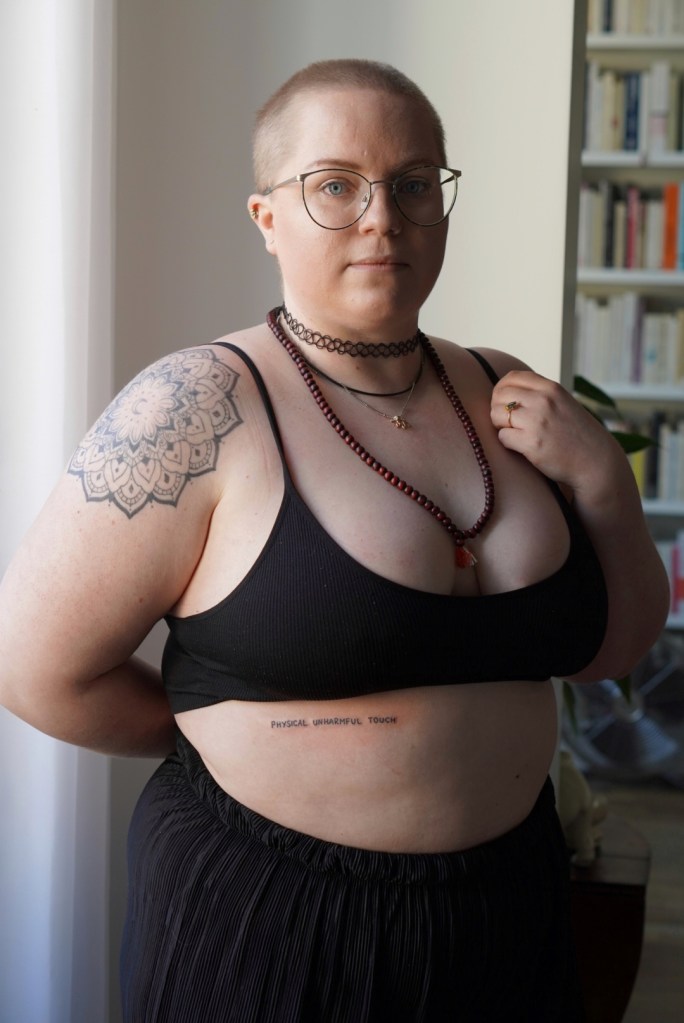
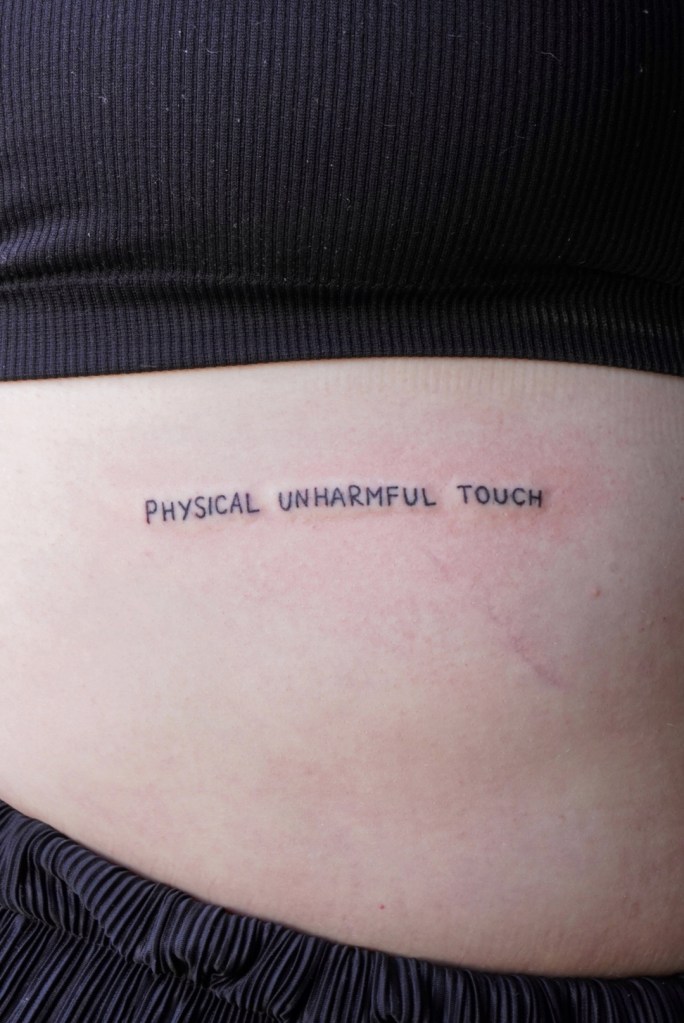
She pondered. “I’d say physical touch.”
“May I ask why that’s so important to you?”
“Because the physical touch I’ve experienced in my life has always been abusive. When someone laid their hands on me, it was either to hit me or to hurt me in other ways. So, the kind of touch I long for—the kind that isn’t harmful—is something I long for.”
Discover more from Your Story, By Me
Subscribe to get the latest posts sent to your email.
