On April 6, 2022, I was in Berlin when I received an email from a woman named Andrea. She wanted to take part in my art project—to share her perspective on the world. I replied, and we arranged to meet the next day at my place.
At exactly 11 a.m., Andrea rang the doorbell. As soon as I opened the door, she stepped inside with an energetic bounce.
“Wow, it’s a nice place!” she said.
Sun’s rays poured through the pyramid skylight, spilling across the white walls and illuminating two tanned leather armchairs set beside a circular glass coffee table.
“Thank you,” I said, gesturing toward the chairs. “Please, have a seat.”
She sat across from me, looking youthful and healthy.
“How do you feel?” I asked.
“Good.” She smiled.
Sensing her enthusiasm, I decided to begin. “What did you dream of last night?”
“Photographs of a man. They were taken against the light, so I couldn’t really see his face. But I recognized his silhouette—someone I know well. He was in a tall building, on the highest floor, and through the windows, I could see the cityscape around him. The buildings outside moved, shifting in a strange, geometric rhythm.”
As she spoke, her fingers danced in the air, as if playing an invisible piano at an Allegro tempo. Three of them bore identical rings, while another had a ring topped with a thin, curved silver plate—wide enough to scrape against the others, creating rhythmic metallic taps that echoed softly in the room.
“Where were these buildings?”
“In Ecuador.” She pronounced the word with a distinct Spanish inflection.
“Were you born there?”
“Yeah.” She slipped off her black shoes and pulled up her pant legs.
“What are you doing in Berlin?”
“I’m studying philosophy, communication, and management.”
“Why those three subjects?”
“Honestly, I didn’t choose them. It was a process of elimination. With this combination, I can keep my options open—maximize my chances in different fields.” She crossed her legs.
“And why Berlin?”
“Same story—I didn’t really choose it. I was forced to learn German in school, so I applied to universities where I could use the language. One of them happened to be in Berlin.” She absently moved her fingers, the rings clicking together.
“Do you miss Ecuador?”
She exhaled sharply. “It’s funny—I thought I would, all the time. But when the pandemic hit and I went back, I realized I didn’t miss it at all. It was just the illusion of longing for something I didn’t have. Now, when my studies get tough—when I cry over not understanding something and think about going back—I remind myself: the effort I put into getting good grades is my ticket out of Ecuador.”
Her gestures were smooth but quick, like a silent dance accompanying her words.
“Why do you want to leave?”
“For a lot of reasons. Maybe for everything.” She hesitated. “I love my home, I love my family. But that doesn’t mean it was the right place for me. It wasn’t a good place to grow up.”
“What was wrong?”
“A lot was wrong.” She exhaled, her voice quieter. “It started long before me—so much history was put on my shoulders, even though I had nothing to do with it. Yeah… family relationships are always complicated. But mine were especially difficult.”
Her gaze dropped, her fingers finally still.
“What worries you?”
“I worry about society’s consciousness. I think we are voluntarily losing our awareness.” Her fingers moved again, the rings clicking, but by now, I had stopped noticing the sound.
“Hasn’t it always been this way?”
“It seems inevitable, though I wish it weren’t. In some countries, the problem isn’t as prevalent as it is in the West.”
“Yet Western countries are often the most desirable places to live…”
“I mean, culturally, they’re not so different from Ecuador. It’s funny—last week, I traveled to Mexico, and I loved the museums there, especially the Anthropology Museum. I learned more about pre-Hispanic cultures, about the people who lived there before the Spanish conquest.”
“The Indigenous people.”
“Yeah, that’s what they’re called now. I grew up right there, so it wasn’t until I returned from Mexico that I started learning about European cultures too. We were conquered by the Spanish—each side had its own world, its own traditions—but I realized I didn’t feel like I belonged to either. I had never really thought about it before.
Profound knowledge—religion, shamanism, Chinese philosophy—most people never get to explore it. They don’t belong to any of it, so they remain superficial. And I think that’s the problem, not just in Ecuador but here in Germany too. People have lost their culture, their spirituality. They call themselves atheists, but only because they don’t know how to be anything else.”
“What do you believe in?”
“I believe in God. I’m Catholic.” There was a flicker of hesitation in her voice.
“Are you a happy person?”
“I don’t think happiness is a permanent state. It comes and goes, like day and night, like victory and defeat. People don’t seem to understand that.”
“Aren’t you one of those people?”
“Of course. But I don’t understand why no one talks about it. It’s as if they lack a panoramic view.”
“Describe your panoramic view.”
“It’s simple. You can’t control day and night, just as you can’t control your emotions. They come and go on their own, no matter what you do. Sometimes I’m happy, sometimes I’m not. I can’t control it. And once I accepted that, I let go of a lot.”
“Is there still something you can’t let go of?”
“Good question. I don’t know.” Her long black hair fell forward, draping over her chest.
“Why do you call yourself Catholic?”
“This belief system was closest to me; it was what I had access to. And I’m still fascinated by it—it’s an incredible religion, a masterpiece of human history. But people constantly misinterpret it.” She raised her voice slightly. “They reduce it to something small and simplistic, stripping away its spiritual meaning, its depth, its significance in human history.”
“What is the essence of the Bible?”
“Adam and Eve. And the cows.” She laughed. “You know, the pharaoh’s dream—the one about the fat cows and the skinny cows. It’s a story about abundance and scarcity, about how the lean times consume the good times. But Adam and Eve—that’s the real masterpiece, the core of it all.”
She leaned forward, her hands animated. “It’s funny—the two main arguments I hear from atheists are so ridiculous. First, they say God can’t be logically proven, as if that matters. Believing in God gives you tools to navigate this complex life. That’s why the second argument is even worse—they say they don’t need those tools, that they can do fine without them. But no, they can’t! It’s so obvious. Just think of the last time you were heartbroken. The last time you struggled to do anything at all!”
“Some people turn to a fictional God for help, others to friends, or to themselves.”
“Yeah, but let me tell you—reading a great book with profound writing can change your life, even if it’s fiction. The fact that a story is fictional doesn’t mean it isn’t true. The Bible is a masterpiece of characters, a book where you can find everyone.”
“When was the last time you were heartbroken?”
“Last year. I’ve never been someone who holds onto romantic relationships—I don’t know why. I struggle with trusting people, with keeping them close. I don’t want them to get near enough to hurt me. And even when I know this about myself, I still do it, because in the moment, it feels good.
That was me last year. I met a man, and I knew he would hurt me. But I let it happen anyway. You know how, when you’re in a relationship, you think you’re in love, but years later, looking back, you realize it wasn’t? It was nice, but it wasn’t love. I was so happy with him that I didn’t even recognize myself.”
“What exactly happened?”
“I knew it wouldn’t last, and I wanted to end it first. But I didn’t, because I thought maybe that was just my ego talking. I hesitated. So he ended it.
The confusing part was that it seemed so hard for him. He cried. And he’s not the type to cry. If you had seen him—you’d understand. He was an atheist, and he carried himself like he was above everything, like some untouchable god. He played that role well. And then suddenly, there he was, crying, telling me how hard it was to let me go, how he needed to focus on his studies, how he had to get his life together.
Of course, I wasn’t going to stand in his way. I told him, That’s okay, go ahead and do you.
But I’d heard that speech before—because I had given it before. The whole ‘I’m sorry, everything is great, but I need to focus on my studies routine’. I knew how it worked. And while he was saying it, I was thinking, Does he really mean it? Or is he like me—just saying it without meaning it at all?
It turned out he didn’t mean it. A week later, he went back to his ex. That’s what really broke my heart.”
“What does love mean to you?”
“I don’t think I’ve figured it out yet,” she said, a quiet sadness in her voice.
Then she smiled. “There’s this dumb Spanish song… You know, in Spanish, amar means ‘to love,’ and amargura means something like deep sorrow, the kind of profound sadness that comes from being let down. And if you look at the word amargura, love is right there inside it—because love is the beginning of sorrow.”
“How did you cope with the heartbreak?”
“I treated it like a dream. Like something that happened in another dimension. As if it didn’t really happen to me.”
“What is your dream? Something you want to happen more than anything.”
“Oh, I have so many! Every time I do something, I have a new dream.” Her voice was suddenly bright again.
“What is the fondest one?”
“To do something meaningful. Something far beyond myself.”
“Like what?”
“I’d love to write a great book—one that might change people’s lives. Or paint something meaningful. Or—” She paused. “I actually just bought a camera. I really love jazz, and I go to jazz clubs almost every night. One night, I saw a guy taking pictures of the musicians. And his photos were awful. It made me angry, because the musicians were incredible, and they deserved good photos.
So I bought a camera.
I’ve never used a camera in my life. I don’t know how to shoot or even how the settings work. But I will learn. And I will take proper pictures of jazz musicians.
I guess one of those things is my dream.”
“What is your greatest fear?”
“Loneliness.”
“How do you cope with it?”
She shrugged. “I don’t know. I just keep on living.”
“What is the most important lesson life has taught you?”
“Not to define everything. Not to try and fit things into little boxes. Some things just don’t fit.”
“What’s a trait you appreciate most about yourself?”
“I don’t know… I’d say honesty, but that would be a lie. So I don’t know.”
“And a trait you dislike?”
She sighed. “That I’m a liar.”
“Under what circumstances do you lie?”
“When I was a kid, I saw these cartoons where characters struggled to lie—you could see it on their faces. It was difficult for them. But it was never difficult for me. Lying was like second nature.
I lied all the time. Even when I didn’t need to. I told so many stories that, at some point, I started believing them. And after years of that, the line between truth and fiction blurred. To the point where I couldn’t recognize myself anymore. And then—I had an accident. I fell from a hammock and lost my memory.
It happened on a volleyball trip—I used to be an athlete. I hit my head, and when I woke up, I was surrounded by strangers. I panicked, but I didn’t let it show. I just said, Yeah, I’m okay, thanks!
But I had no idea where I was. I found my phone and called my brother. Hey, where am I?
He told me: We’re at a tournament in Colombia. You’re fine. You’re with your teammates and your coach.
I hung up—and immediately forgot everything he said. So I called him again.
He told me again. I hung up. And forgot.
I called him five times.
Finally, he said, Next time, call an ambulance!
Which—by the way—was my childhood dream.” She laughed suddenly. “I always wanted to ride in an ambulance. I didn’t want to die, but I really wanted to be inside one with the sirens on.
So they took me in an ambulance. But no one took a picture. So when I got out—I forgot I had ever been inside. For everyone else, it happened. But for me, it didn’t.” She smiled. “Anyway, fast-forward—I couldn’t remember a lot for years. People would show me photos and videos of myself, and I’d just blank. It was like a blackout. I would cry over things I didn’t even remember happening.
My doctor told me, You’ll create new memories. And besides, your mind is just blocking what it doesn’t want to remember.
So I thought, Alright. If my mind doesn’t want to remember, I won’t force it.
So yeah. I tend to forget things.” She laughed softly. “I actually forgot where I was going with this.” At that moment, the bells of the Church of Saint Petrus began to ring.
“What is your brightest, most unforgettable memory?”
She was quiet for a long moment. Then: “I don’t know. I have no idea. It’s all blurred. I remember things… but they’re not bright. It’s the opposite.”
“What are your flaws?“
“I’m sure I have a few. Ah! I remembered where I was going with that story. Lying. I lied so much that the lies began to merge with my blurred memories, and that’s a dangerous mix. Now, all I have are these foggy memories and lies—and the lies shine brighter than the truth. Over time, I convinced myself that the lies were real.”
“When was the last time you lied, and what was it about?“
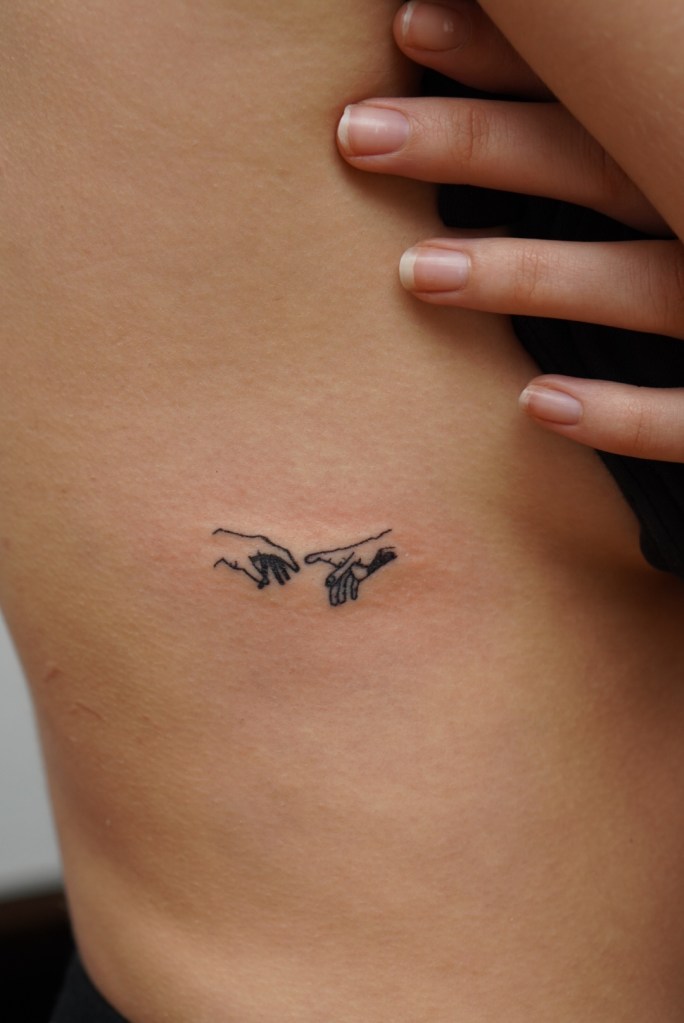
“Just yesterday. I told my mum I wasn’t going to get any more tattoos.”
“What’s your guilty pleasure?”
She laughed. “I know, shit, it’s messed up, but… using people.” She licked her teeth, then bit her lip, as if amused by her own honesty. “I don’t mind casual sex, but my guilty pleasure is picking out a certain type of person to indulge in it with. I have no real interest in them—though I might like them in some way—I know I’ll never take them seriously. So, I use them for momentary pleasure.” She held my gaze, unflinching. The bells of the Church of Saint Petrus ceased their ringing.
Discover more from Your Story, By Me
Subscribe to get the latest posts sent to your email.
