I
Let’s start with how you make your living.
I just do what I like and be myself on social media. That’s what pays my bills — which is ridiculous, honestly. I’m a Gastarbeiter kid from Gelsenkirchen, the poorest city in Germany, where art isn’t taken seriously. Work there is supposed to be physical. That’s why I got into art in the first place — I thought it was cool. I tuft carpets and run my Instagram to finance it. I feel like a blossoming flower.
Her smile sparkled, flashing a single-tooth metal grill. When she spoke, her mouth and nose shifted slightly to the left.
Why is Gelsenkirchen the poorest city?
Back then, there were eight coal mines. People from Turkey were brought in to work them. Later, the mines closed, and people without education — like my dad and grandparents — were left with nothing.
And your dad now?
He went back to school, became a paper-technology engineer. He wanted me to do the same, but I didn’t want to fight my way into an all-white, all-male, all-elderly industry. Being a woman is already hard enough. She laughed.
Your mother?
She’s a stay-at-home mum. Took care of us as kids. She chose that life. She hesitated. She loves with all her heart but expects triple in return. That’s not how love works, I think. When we love, we don’t expect anything back, do we?
What does she expect from you?
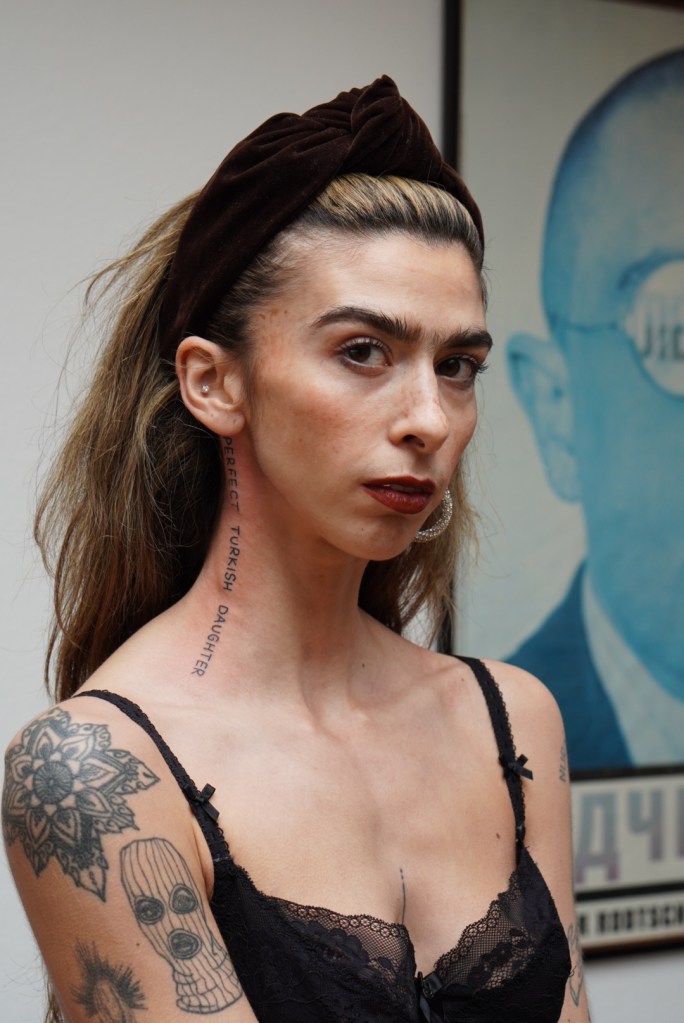
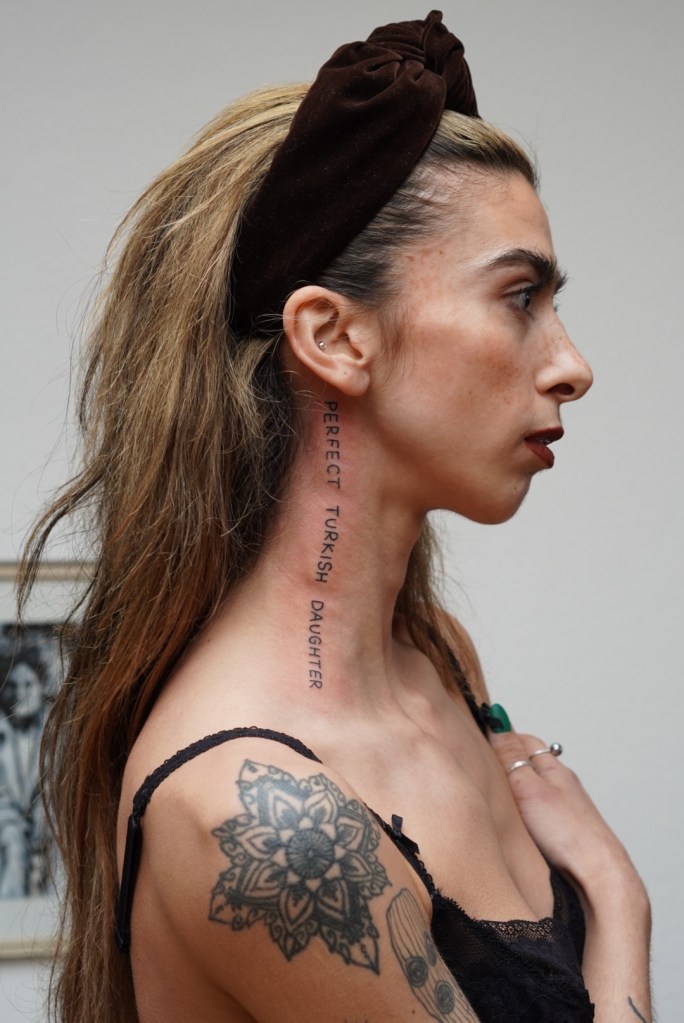
A perfect Turkish daughter.
And that means…?
She can cook, dresses a certain way, shows all the right charms, never talks back, is always agreeable, never fights, does what her parents say, and ends up with the person they choose. I was none of those things. Never.
Do you see yourself as Turkish?
Growing up, I hated the culture. I was the first and only Turkish kid at school; everyone else was German. I learned that saying, ‘I hate Turkish people,’ made me more accepted.
I had to leave to figure myself out. For the last three years, I’ve been learning to appreciate my heritage without anyone telling me how. Now I can say I’m Turkish — even if people insist I don’t look or sound like one. But I am. Both my parents are Turkish. I speak the language. So who are you to take my identity away from me?
I took it as rhetorical.
Do you also feel German?
I’ve always called myself German. But the Germans say, ‘Mm, you look too exotic. Where are you really from?’ Once they hear ‘Turkish,’ that’s the end of the conversation.
Have you been to Turkey?
Yes, a long time ago.
What differences do you notice?
In Germany you might hear, ‘I lent you 50 cents last week — can you give it back?’ In Turkey, I could ask anyone for food, and they’d immediately make space for me and feed me, no questions asked.
I like both: the warm Turkish temperament and the German respect for rules. If you make an appointment with a German, it happens — or they cancel four days ahead so you can plan. Turks… they just don’t show up, and they don’t care.
I told her I understood. I remembered watching a man in a small town in southern Germany bring a Lidl checkout to a standstill because a brioche was mislabelled on his receipt. The cashier refunded him 80 cents, printed a new receipt, then asked him for €1.10. He protested. Coins mystically moved back and forth. In the end, he’d gained no more than five cents.
Another difference, she went on, is women’s rights. Germany isn’t perfect, but it’s further along. In Turkey they cancelled the Istanbul Convention that protected women. It’s awful.
And Germany points fingers — ‘Oh, you cancelled it, you’re backward, we’d never do that!’ — but here they won’t even call it femicide when a man kills a woman. It’s a ‘family drama.’ If you kill your girlfriend because she left you, you’re not a murderer — because she took away something that was yours: herself. It’s horrible. Horrible.
How do we improve the world?
We’d have to change everything. Capitalism will never make us happy; it pushes us to want more, do more, so we’re never satisfied.
For my grandma, happiness is just having us near. She doesn’t care about anything except family. For me, happiness is feeling safe, having everything I need in my flat — all these capitalist comforts. Maybe we could go back to her way… No. Even then, there was war.
II
What’s the most important lesson life has taught you?
That it’s not over. Even when you think everything is about to end, it continues. So just stand up and work on! Never stay on the floor! Stand up and everything will come!
She took a sip of water. For a moment, I wondered if she was out of her mind.
That’s what my best friend used to tell me, she added, before he killed himself at twenty-one, six years ago. He was the only friend I’d had since I was a baby. I always knew he wasn’t going to get old. She dabbed at her eyes, careful not to smudge her makeup.
How did you know?
He was born a Turkish girl. When I was three, I went to my parents and asked, ‘Mum, Dad, Berna’s actually a boy, right?’ I knew it. My parents knew it. But his parents were far too strict to ever accept it.
He was transgender, and had the worst case of borderline personality disorder I’ve ever seen. There wasn’t a place on his body without scars — scars on scars on scars. Living hurt him. Breathing hurt him. Just waking up and starting the day was painful. I knew he wouldn’t get old.
What was your friendship like?
I was always the bright sun, he was the dark moon. We gave each other what the other was missing. But eventually I couldn’t help him anymore, and I knew it. I didn’t take it personally. His death had nothing to do with me. I could never have changed it.
What do you miss most about him?
He was the only person I could tell my darkest thoughts and strangest moments to, and he never judged me. Even my therapist sometimes looks at me with judgment when I’m just talking about my feelings — it’s weird.
Berna always listened and understood. But what I miss most are the gaming nights. I hate gaming, but I’d sit next to him, telling him where to look, while he played. We were a team, losing ourselves in battles against the computer world. Tears traced dark lines down her cheeks, melting her makeup.
I told her I had also lost a friend, a poet for whom living was an act of pain. While working at an advertising agency, he’d jumped from a window during the company Christmas party.
Oh, shit, she said.
Let’s talk about your carpets.
I started with an image of a couple having sex. Then I did a car, a ski mask, evil eyes, some of the creatures I’d drawn on paper. Now I’m working on a Spider-Man face because a guy I know opened a comic store and wanted a Spider-Man carpet for the wall.
III
What do you believe in?
I believe in feminism. I believe art helps us calm down. Every time I do something that isn’t artistic, I feel like I’m spiraling down. When I go back to art, I calm down and become myself again.
What about feminism? When and how did you discover it?
For me, feminism started when I got my period. I was ten. My mother transformed me into a hypersexualized woman against my will. Before that, I only had male friends. But once my period came, I wasn’t allowed to make friends with boys or wear short skirts.
When my uncle visited, I wasn’t allowed to sit like this— she turned her knees to the side, showing the line of her thighs, —because he might look at me a certain way. I thought, Hey, I’m a kid! And he’s my uncle! But my mum told me all men wanted me sexually. I didn’t want to be a sexualized woman. I hated that idea.
How do you see yourself in the eyes of a stranger?
I don’t fit Western beauty standards, and I know it. Some strangers react badly, especially online. For example, this part of my eyebrow— she pointed between her brows —makes them so aggressive they’ll say things like, ‘If I were your boyfriend, I’d give you a sleeping pill and pull out all your body hair.’ That’s so wrong. It’s horrendous.
What is beauty?
Beauty has no shape and no colour. It’s a mindset — being completely happy with yourself, in how you carry yourself, in how you walk through life.
Beautiful skin is nice, but that’s just appearance. Real beauty is deeper. These days, we can operate on everything, we can modify our appearance. But when I see people who’ve done so much to themselves and call it beauty, I often see emptiness. They’ve distanced themselves from who they are. How can we be happy inside if we’re unhappy with what we have outside?
Maybe modify an appearance surgically can be beautiful, and can lead to inner happiness too, I mumbled.
I’ve had a buzzcut, tunnels, piercings everywhere — I’ve never been afraid to change my look. But when you change your nose, and later have children who inherit the nose you were born with, what then? Do you tell them why? Do you pay for them to change theirs?
If I changed my appearance, how could I teach my children to love themselves, when their mum couldn’t love herself? Her voice quickened and rose.
I think it’s wrong to exclude people who’ve had work done from the idea of beauty just because their kids might not understand.
She was blistering like a kettle about to boil. I see Turkish and Iranian mums who’ve changed their appearance, and their daughters — who look like they did as children — are unhappy with it. They feel ugly.
To push her to her high point, I kept heating her, It sounds like if you want kids, you have no freedom to change your appearance.
You can change yourself — up to an extent. My sister had her nose done, but she doesn’t look completely different. There’s a line, and after it, you become someone else entirely.
I have a friend covered in tattoos; I can’t see his skin anymore. I accept it, but I wouldn’t do it myself for the sake of my kids. I know someone who does body modification — scar work. I can’t look at her art without my head spinning. I saw an eighteen-year-old boy come in for Joker scars—she traced two deep, curved lines across her cheeks in the air, —and he didn’t even have a tattoo yet. I thought, fuck. When I was eighteen, I got tattoos I wouldn’t get now. He was too young for something that permanent.
But people age differently. Some eighteen-year-olds have lived more than others will by the time they’re old and near death. Age is just a number. Experience is everything. She finally exhaled, calmer.
I glanced at my notes in silence.
I’m really curious what conclusion you’ll draw about me, she laughed.
IV
How would you describe your relationship with your body?
I was younger, I hated it. I even kept a diary about my body, writing about it as if it belonged to someone else. It was hard.
Now, I thank my body for carrying me through all this — scarred, but still here.
How did you get your scars?
I did them myself.
Why?
I had no power over my life. My parents decided what I ate, what I wore, who I could be friends with. When I came home, my phone was taken away, no TV, no computer. I was kept in a kind of golden cage. I started harming myself because I felt… nothing. No happiness, no sadness. Cutting myself reminded me I was alive — that I could bleed, breathe, exist. It proved I wasn’t just a shell or some machine.
How did you even know about cutting?
I learned about it in a mental hospital. I saw other people doing it. Honestly, I’d never put my own kid in a place like that.
I’d tried to kill myself before, but being in there actually made me worse. Before the hospital, I just wanted to die. After it, I knew about drugs, eating disorders, and all these destructive techniques. The places I stayed in weren’t good.
I’ve only been inside one mental hospital. The moment I entered, I wanted to leave.
I remembered sitting in the small hall of the suicide ward, waiting for someone who’d asked me to tattoo him.
Toxic-green couches. Two orange vinyl chairs. A white wall stained with grime. In the center — a pale rectangle where a TV used to hang, the black holes of old screw mounts staring like empty eyes. Below it, two small black speakers spat out a distorted rhythm: Upapapup, upapapup, upapapup! Maybe hip-hop.
To the left, the reception windows were covered with taped notices. A patient shuffled past, eyes fixed on the grey concrete floor, his body heavy with medication. He asked me for a cigarette. I didn’t have one.
It is a heavy place, she agreed. They locked me in with fifteen kids whose lives were completely destroyed. There was one girl — her brother had molested her from the day she was born, and when she told her parents, they didn’t believe her. I absorbed all that pain, and it wasn’t good for me. But without it, maybe I wouldn’t be as open, as understanding. Before the hospital, I was judgmental about self-harm. I didn’t get it.
You can understand without living through it.
Maybe. But I’m the kind of person who has to fall flat on my face to learn. I still don’t know why. I’ve stopped fighting that part of myself. She swallowed hard. I handed her a tissue, but she shook her head, dug one out of her bag, and blew her nose.
V
What’s the one question you most want answered?
Whether I’ll ever have a good relationship with my parents… or if I should just stop trying.
How old are you?
Twenty-six.
And them?
Fifty-six and fifty-seven.
You still have time to try again.
Yeah, but do I want to? Do I want to spend my energy on that when I could use it for something else?
I have a little brother I’m waiting to take away from them. When he turns eighteen, I’ll bring him to Berlin. Right now he’s alone there, getting all the same abuse I did. I could go back and take the blows for him, but I can’t. I feel ashamed for leaving him, but it’s not my job to protect everyone. I need to protect myself too. I couldn’t survive there, so I left. I’m so sorry for him. I know how hard it is to live with those people.
Her tears came again, and her words tightened something in my chest. She reminded me of my own helplessness years ago, watching my father scream at my little brother over a broken toy helicopter. Like her, I couldn’t take him away from a destructive parent’s grasp.
VI
Now, let’s talk about your tattoo ideas.
She nodded.
First one — and the funniest — is PERFECT TURKISH DAUGHTER.
She burst out laughing. Yes! I like it. I’m none of those things.
Discover more from Your Story, By Me
Subscribe to get the latest posts sent to your email.
