I met Sasha in Berlin, where she had come to spend time alone for the first time since becoming a mother. Back on the island of Majorca, her twenty-month-old son was with his father and grandparents. She had anticipated this brief taste of freedom, but now that she was here, I wondered how it felt.
“You’re 23. What’s it like being a young mother?”
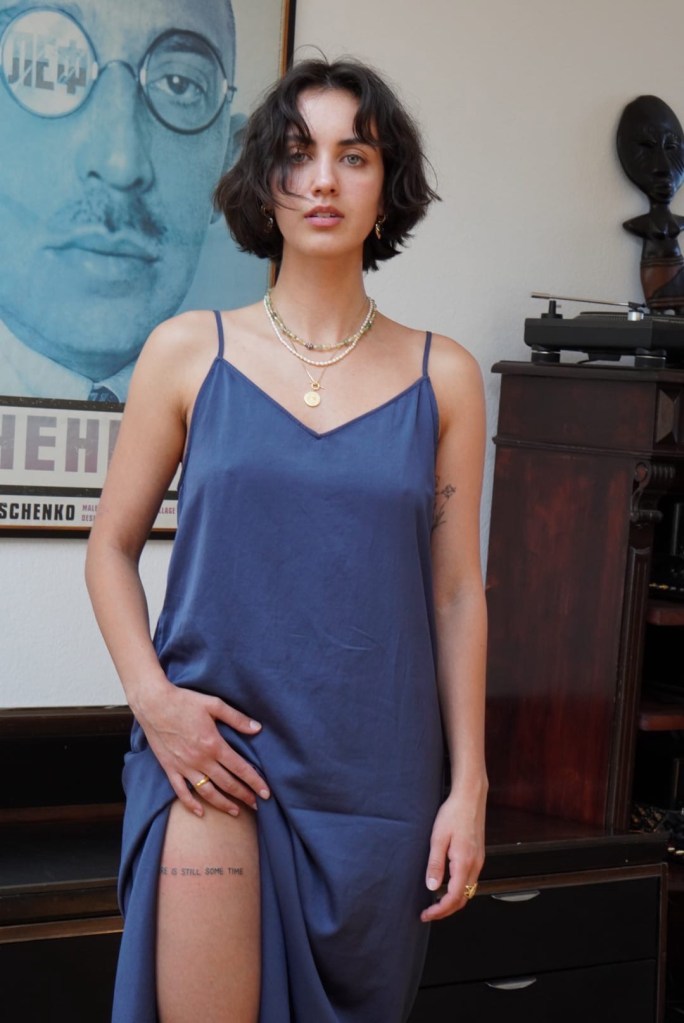
“I love it. But of course, there are hard days. Motherhood is a test no matter your age—it changes everything.” She adjusted the black leather belt cinched around her blue silk slip dress.
“How has it changed your life?”
“I think I’ve learned to see the world through a child’s eyes again. The things I thought I knew, I’ve been given a chance to rediscover. Like when I’m in a hurry, but my son spots a bug on the ground. We stop. We stand there for ten minutes, just watching it. With him, I don’t rush through life anymore. I pay closer attention.”
“Were you afraid to become a mother?”
“At first, no. I thought, whatever happens, I’ll just do my best. But then doubts crept in—small ones, mostly. Like, will I be a bad mother if I take him outside at noon in the summer? He might get heatstroke. But if we stay in, he’ll be bored and cry because he wants to explore. Those are the moments that make me question myself. How do I make it work without causing harm?”
“And what’s been the hardest part for you?”
“Being seen as a mother before being seen as myself. People no longer think of me as Sasha, the girl they used to know. They assume I have no time for fun, as if I’ve completely changed. And yes, I have changed—I do things differently now, I put my son before myself—but I’m still me.”
“You started dancing when you were ten. Was that your choice or your parents’?”
“I was always doing sports. When we moved to Berlin, I had a choice—continue with sports in another city, away from my parents, or start ballet here. I didn’t dream about dancing, especially not ballet. But I chose dance because I thought it meant staying close to my family. They kept traveling for work anyway.”
“And what is it about ballet that draws you in?”
“It helps me deal with my emotions. Words don’t always come easily to me. If you asked how I was, I probably wouldn’t go into detail. I’d just say I’m fine or I’m not. But when I dance, I don’t have to explain myself to anyone but me. If I’m angry, sad, or happy, I let it out through movement. When I’m alone, I put on music and let my body express what I can’t fully say in words. Watching dancers, I can instantly feel what they feel. Even when I see people walking down the street, I understand them better just by how they move.”
“Talking is movement, too. When we speak, our tongues move to express emotions.”
Her thick black eyebrows lifted. “That’s true! But I don’t feel vulnerable dancing—it’s natural. With words, I have to be careful. If I choose the wrong ones, they might change the meaning of what I meant to say. I think I struggle with that—expressing myself clearly, maybe even honestly, in words. But if I dance, there’s no misunderstanding.” She took a sip of water, her stone-grey eyes resting on me.
“What’s your relationship with your parents like?”
She laughed, a little awkwardly. “It’s tricky. We get along, but there are a few unspoken things between us—problems that probably won’t ever be resolved because we just see the world differently.
My parents are artists, acrobats. They traveled a lot when I was little, and I went with them until I was nine. Then we moved to Berlin, but they kept working and traveling while I stayed behind. I spent most of my childhood alone, and in a way, that distance damaged our relationship. There were moments when I really needed them, and they weren’t there.”
“Was it hard leaving your son with them for the first time?”
“Not really. They’re great with him, and I trust them completely. They know how to take care of a small child. But growing up, a child needs more than just physical care. You need someone who listens, who helps you navigate things, who explains the world to you. My parents don’t always listen—especially if it’s about something they don’t fully understand.”
“Can you read their emotions the way you do with others?”
“Not in the same way. Over the years, I’ve noticed my dad is more of a listener, while my mom is more talkative. But my dad… he holds things in. I’ve never seen him cry or seem truly sad. If he gets angry, he shakes it off like it’s nothing. It’s like he prefers to sit quietly at the back and pretend everything’s fine. I don’t know if he’s suppressing things or if emotions just don’t matter to him in the same way.
My mom, on the other hand, expresses her feelings more easily. But still, there are things from my childhood we’ve never talked about. And because of that, I don’t feel free to open up to her either.”
An ambulance roared down the street, its siren cutting through the silence between us.
“What’s the trait you appreciate most in yourself?”
“I can make it on my own. My parents weren’t there for me, so I had to grow up alone. And I’m proud of who I’ve become.”
“And the trait you most struggle with?”
“I forget that I have options. When I’m stressed, I get stuck in a black-and-white mindset. I convince myself there are only two choices, and I have to pick one. It’s like I’m playing chess—trapped on a rigid game board, following imaginary rules that I’ve set for myself.”
“Can you think of a time when you felt trapped like that?”
“Yeah. I had to shoot a campaign for work, and I only had one day to get it right. I had this clear vision of how I wanted it to go, but it just wasn’t working. Everything was a mess, and I was spiraling.
By the end of the day, my boyfriend looked at me and asked why I was stressing so much. He told me I could approach it differently, rethink the plan, and still get the result I wanted.
He does that a lot—gives me a push, shows me a way out when I’m stuck. It’s like he opens these little doors in my mind that I didn’t realize were there.”
“What does love mean to you?”
“I don’t think there’s a single right answer to that. Love is empowering and overwhelming, and sometimes it comes when you’re not ready. For me, it can be a warm, gentle feeling — like being safe at home. But love is also the ability to share your true, vulnerable self, without fear.”
“What words do you find beautiful?”
“My son’s name: Aurelio Delá Waris. Aurelio means golden, Delá means angel, and Waris means desert flower.”
“What’s your philosophy on life?”
“When I feel lost or afraid, I remind myself that, somehow, my life is already written. Even if I don’t understand things right now, I trust that it will all make sense later.”
“What do you need to feel happy?”
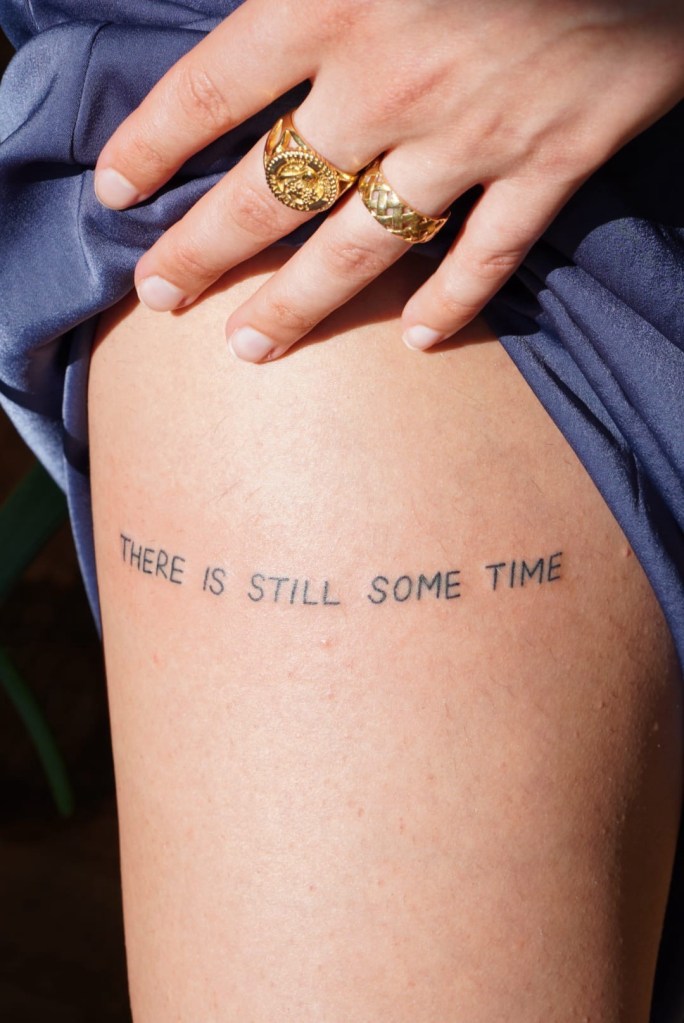
“Time. I see how little of it I actually have, so happiness for me is waking up and knowing there’s still time — time to live, to see someone I care about, to experience life. Just time itself.”
“And what if time doesn’t exist, and all you have is the present moment?”
She smiled, caught off guard. “Your questions are really hard. I didn’t expect that.”
“What do you believe in?”
“I believe everything is much bigger than we are. You know that feeling when you’re rushing through your day, overwhelmed by your problems? But then you step outside at night, look up at the stars, and suddenly feel small? And you realize those tiny stars are actually enormous, and there are thousands of them just hanging there — whole worlds we know nothing about. I think about that a lot.” She intertwined her fingers, the gold rings catching the light, and rested her hands on her knees.
“What’s the hardest decision you’ve ever made?”
She swallowed, her voice quieter. “Probably deciding whether to stay with my partner or leave. We had a deep love, but we also had different views and a lot of unresolved things between us. It’s hard to share your life with someone who sees your pain but doesn’t always know how to help or talk about it. We reached a point where we had to choose: either go deeper into the relationship or walk away.
I wanted to run — to live my life without worrying about anyone else. But I chose to stay and keep trying. And I think we’re still figuring it out, day by day.”
Discover more from Your Story, By Me
Subscribe to get the latest posts sent to your email.
