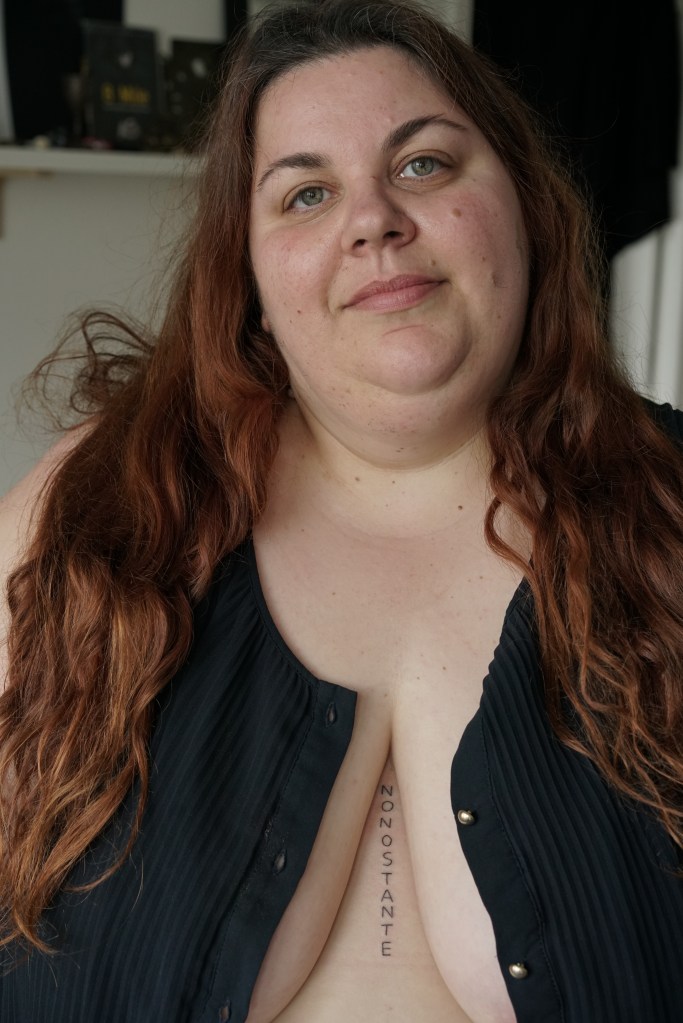
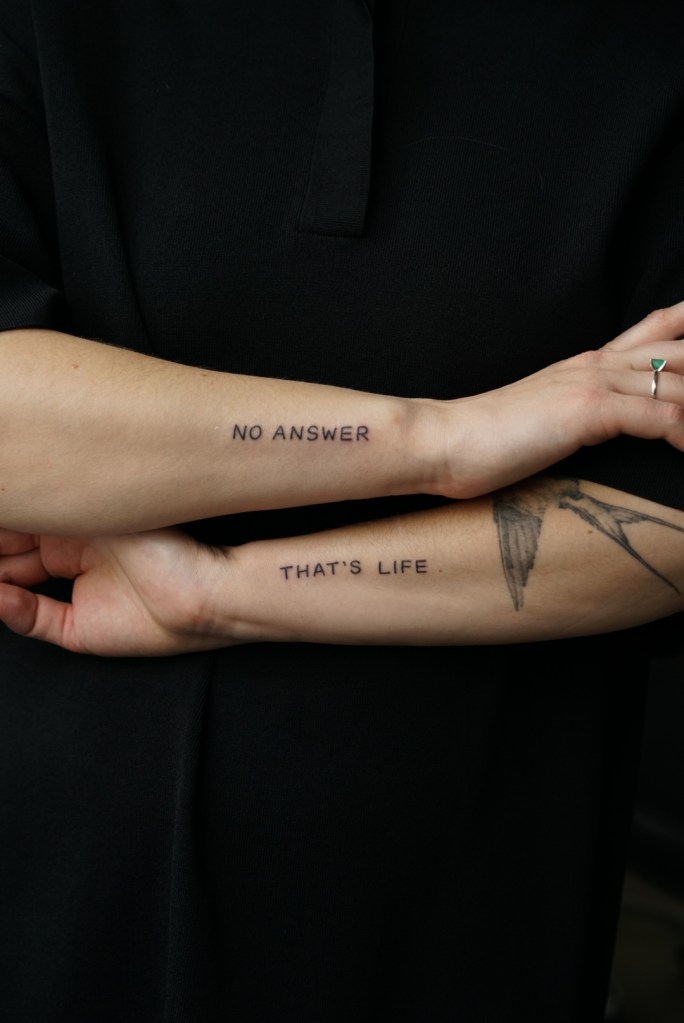
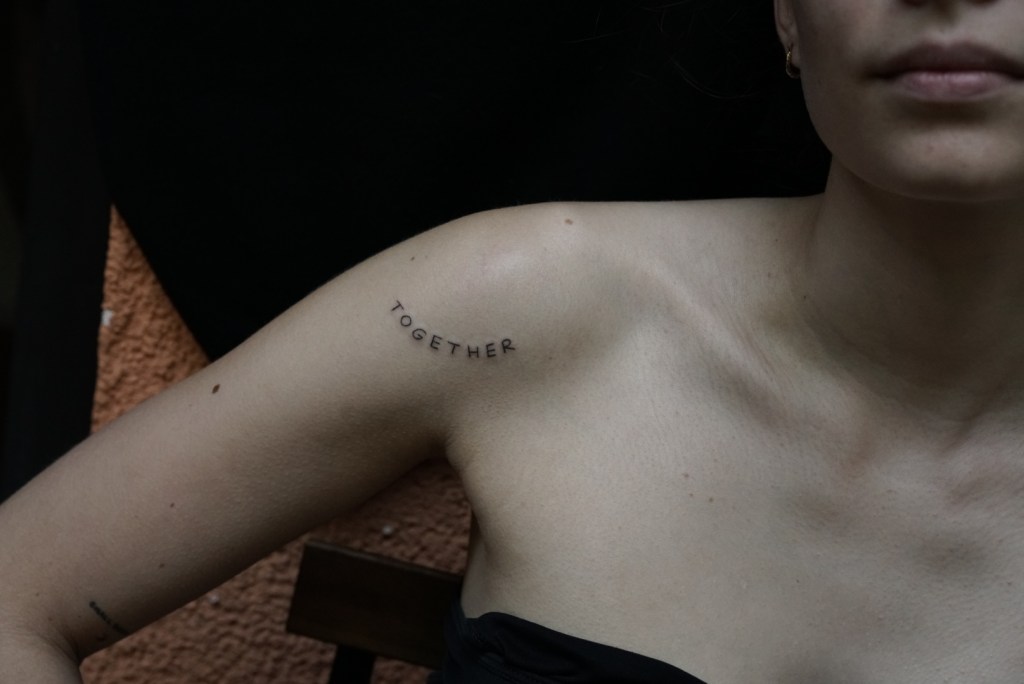
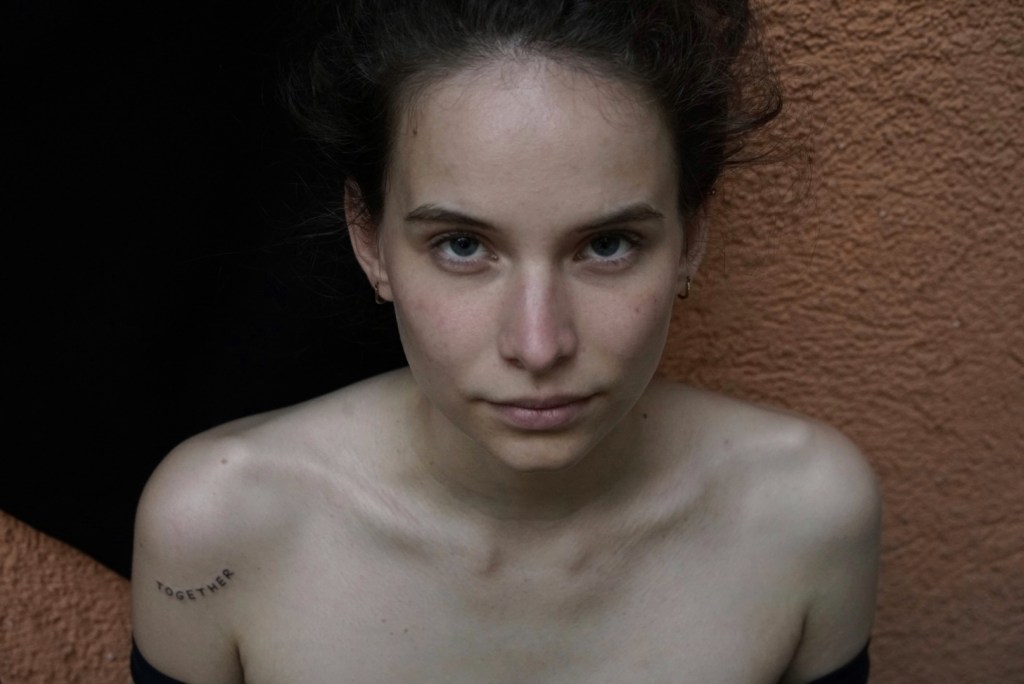
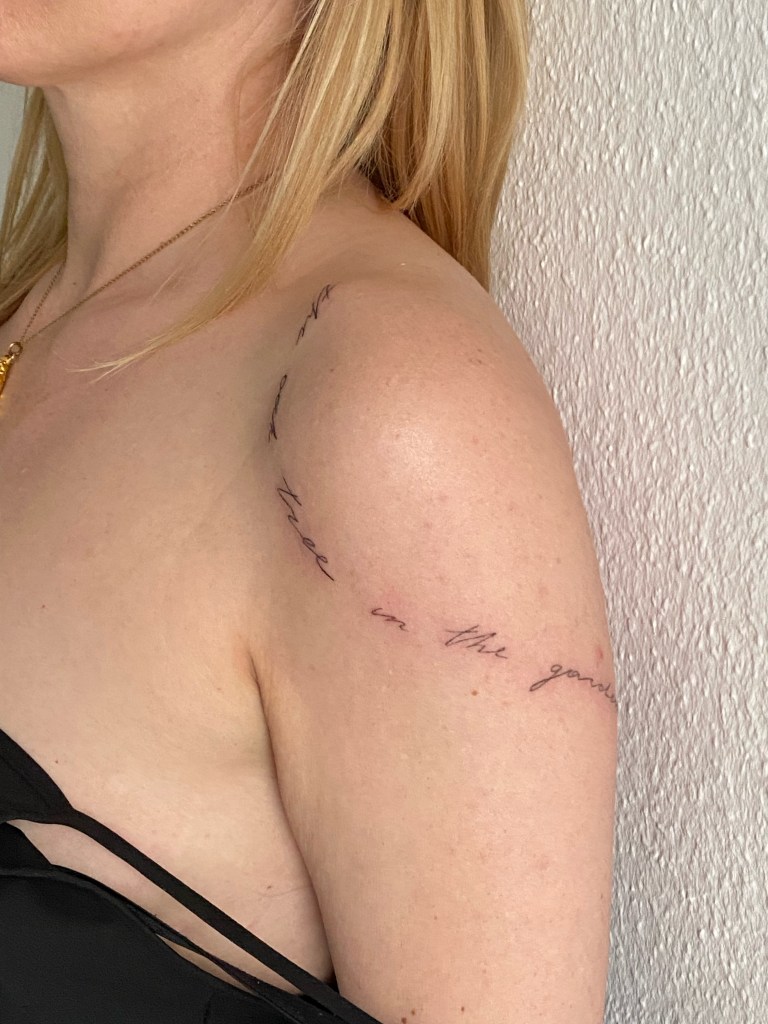
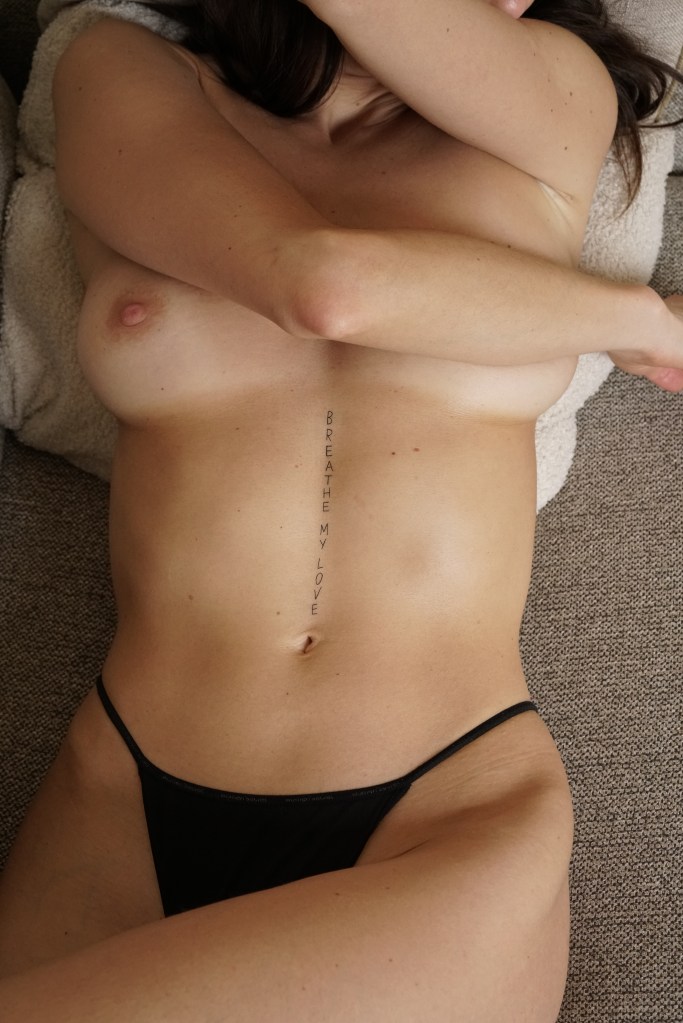
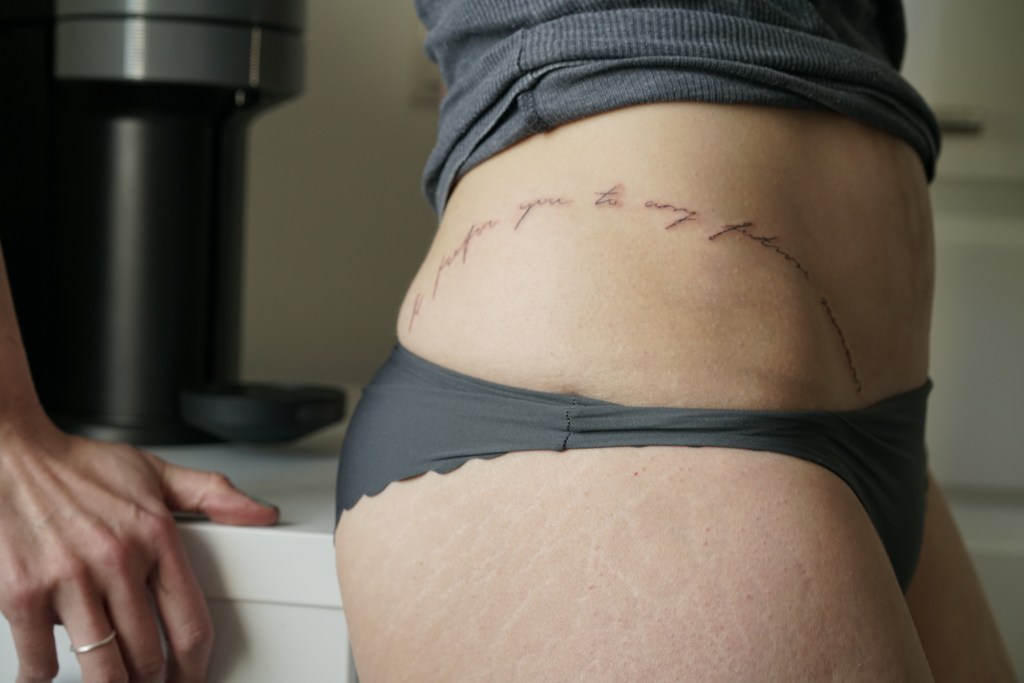
Zoé came for the second time. She paid the full fee again. You might remember her—she’s living with long Covid (https://yourstoryby.me/2024/06/10/zoe/).
Before we began, she smiled and asked, ‘Could you pull the blinds down? It’s very stressing for me.’ ‘Of course.’
The light softened. My two dogs lay close to her. The cat hid behind the blind.
What’s guilt to you? How does it feel? As if I’ve sinned against myself, and guilt is the need to atone, to align again with my principles.
What kind of principles? I have a strong principle of justice and responsibility. If you do something wrong, you can’t just forget it—you have to take steps to correct it, to make it right. I don’t know… I’ve lived through many situations where people harmed me and never took responsibility for what they did. Guilt is something I can feel even for small things. We were talking about eating something with dairy in it and feeling guilty. I think it comes from our personal way of treating people. I have an ex-friend because she manipulated me, saying, “Oh, you’re overreacting,” when she had done something terrible to me. She could never recognise that she did something wrong. If she had, maybe we could still be friends.
Can we blame someone for something they don’t see?(I think maybe I led her to answer no—with my voice, with the way I framed it.) No, because they don’t have the same sense of guilt or justice. I tried to explain it to her many times, but it only got worse. She would hurt me even more. There was no shared sense of justice we could stand on.
You said, “it comes from our personal way of treating people.” What if I say, “it comes from the way we treat ourselves?” Exactly. I’ve thought about that. And I realised that my friend actually hated herself. And to love the other, you have to love yourself. Maybe not perfectly, not all the time… but at least enough not to project that hatred outward. I don’t know if I’m being clear.
It makes sense to me that once you’re okay with yourself, you gain the capacity to turn away from yourself and toward the other. But I realised something else too: I have to treat others with more kindness than I treat myself, because honesty can easily become harshness. I’ve seen it in the moments I hurt someone with my straightforwardness, and it made me wonder whether I speak to myself the same way. When we evaluate ourselves, would we say the same words to a friend, or would we sit closer and offer support instead of calling them a piece of shit? Yeah, yeah, she laughed. We want to love them and not leave, so we try to be nice to them and make them happy. I feel like some people have a lot of empathy, and some just have a void. I was thinking again about this friend. She’s like a void: eating everything that comes her way, as if she has nothing inside her own life to hold her.
But look at dogs, for instance. They eat everything. Does that make them bad? We’re different, at least in theory, because in our society we can survive without killing. I don’t know how I’d react if I were a dog watching a friend dog eat a bird. Maybe I’d just sniff the air and move on. Humans, though, have abused animals far beyond hunger, so I’m okay with animals eating whatever they want—even if they eat humans. I’m joking, a little. What I try to remind myself and others: let everyone live the way they want as long as it doesn’t cause harm.
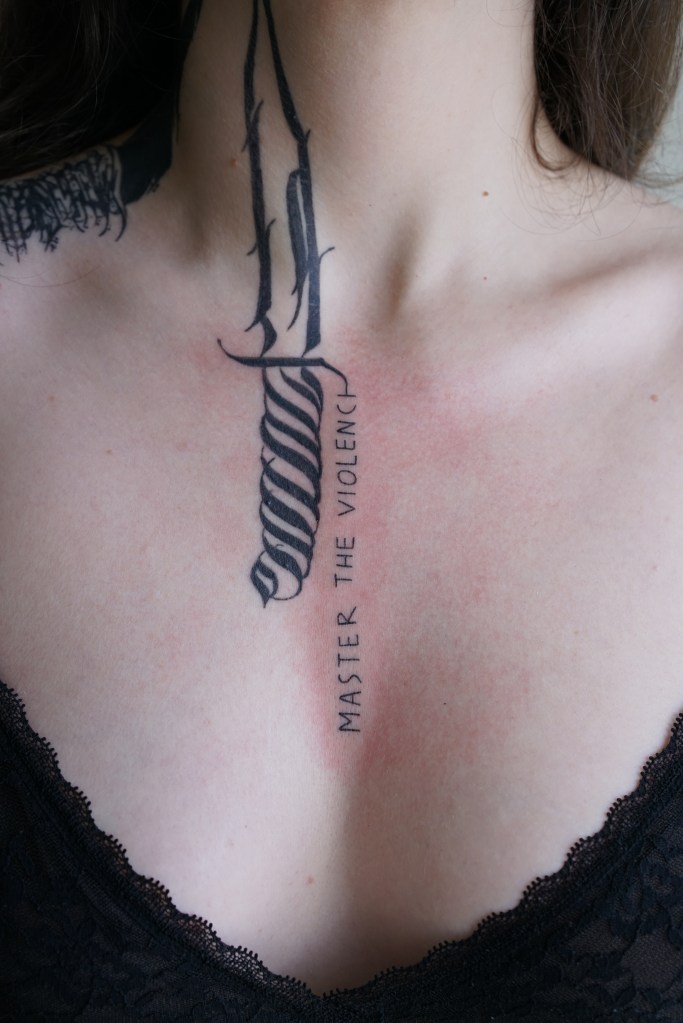
The other day I was thinking about humans witnessing violence. One person feels bad and sees that it’s wrong; another becomes violent instead, maybe for the same protective reason. And I’m not sure we can choose which one we’ll be in the moment it happens to us. Yeah. Do you express your violence, or do you stop it? Violence is a big thing for me. I grew up with it. My father was very violent toward me and my mother. I left home at 14 because I couldn’t stand it anymore. But I carried that violence inside me—maybe because I couldn’t defend myself back then. I realised that in some situations I was very prone to it. Once at school a guy was talking shit about me, and I told him to go fuck himself. He stood up and hit me, and I hit him back. I felt the violence inside me. I felt that I could have kept hitting him. But I hate violence. I don’t want to harm anyone. So when I recognised that violence within me, I decided I have to master it.
Is there any emotion present in you? I’m very nervous. I notice how calm you are, and I feel like my own energy is all around me. I almost want to steal some of your calm. What do you mean by ‘my energy is all around me’? I’m a loud person, she gasped. I don’t know the right word… When someone gets something from you? People often say they get nervous around me too. Do you know what I mean? Contagious? Yes!
But what’s loud about you? You don’t sound loud to me. Not in volume. I’m just very sensitive to noise, so I hate it. And I always feel like I’m a very big person, meters tall, visible to everyone, because I’m so loud and annoying. I’m always reflecting on how people react to me, how they see me, how they feel. Constantly trying to be acceptable for others, careful not to step on anyone’s foot.
I see a difference between reflecting on how people see you and being careful not to step on anyone’s foot. Thinking about how people see me helps me avoid stepping on their feet. Yes, but being aware of another person in front of you is one thing, while trying to imagine how someone sees you is another. The latter depends too much on your imagination. You can be careful with me, but it’s not up to you how I feel or how I see you. Hmhm, I can only think about things that annoy me—like loud noise, so I try not to speak too loud, not to make too much noise. But you’re right, when I think what people think of me is most likely not what they think. Isn’t a waste of time then? She smiled. Yeah.
Why do loud sounds annoy you? I don’t know. It’s always been like that. I’m actually thinking I could be on the autism spectrum—I’m still testing for it. I have ADHD. But music is a big thing in my life—I never go anywhere without my headphones, because music is the noise I can control.
Why is control important to you? I’ve lost control many times in my life. Some things happened to me. So every time I lose control I feel unsafe, and I need to hold on even harder not to lose it again.
What do you control now? You can’t control sounds, thoughts, feelings, me. That’s actually a big topic for me. I got raped when I was 13. Ever since I try to put myself only in situations where I lose control willingly—by giving it into the hands of another person—like in BDSM, when you give control willingly, you don’t really lose it, because it was your choice. That’s what I like in sex. I give control so no one can take it away from me.
I didn’t say anything, only texted her after she left, telling her I was sorry for what she’d been through. What happened to me that I wasn’t able to stay with her in that moment, and instead just reached for a sip of water?
She continued: In other situations, like when I’m on the train and a baby is crying, I just get off at the next station. That’s a kind of control I have over sounds. If someone annoys me, I just leave the place.
And if for some reason you can’t leave? That’s why I always have headphones or earplugs with me.
What happens to you when there’s a loud noise, and why do you want to leave? My whole body tightens up, every muscle goes rigid. I get a strong impulse to run away. I can’t think clearly—my mind just turns messy.
What’s the difference between a messy mind and a clear one? In silence I can follow my thoughts to the end. But when there are loud noises around me, all I hear is this scream: “Leave! Leave! Leave!”
And what does it mean, the end of a thought? Reaching a conclusion, even if it lasts only for a moment. May I ask where are your thoughts most of the time? Are you thinking more often about the future or past? Neither. I try to observe what comes to mind, label it as a thought, and move on. How would you answer to your question? I think about the past all the time and have little thoughts about the future. I’m an impulsive person, going with a flow like a fish following the stream.
Aren’t you out of the flow when you think of the past? No, it’s a way of prediction. When I look at the past and where the flow took me, I can predict where the stream could possibly take me. Isn’t a fifty fifty bet? A forecast you can’t rely on? Yeah. I don’t rely on it, but it gives the sense of control. What would be the difference if you just surrender to it? I wouldn’t be able to put myself in a better situation. I’m trying not to make the same mistakes twice.
What kind of mistakes? Like with dating. If I notice certain things a person does to me, then the next time I date someone else and see something similar, I feel like I already know how it’s going to end. For example, if a person screams at me or at others, it’s very likely they’ll become physical at some point — I see it as a chain of events waiting to happen.
I see what you mean, but I’ll try to disagree and say that not every dog that barks will bite. And also, if one dog happened to bite you before, it doesn’t mean another dog that looks similar will do the same. I think of it as a warning sign. And if there’s a risk, I don’t want to wait to see whether it’s true or false — I just leave. Maybe I’ve lost some really nice people because I left too early, but to me it’s still worth it. I’ve tried giving people second chances, but unfortunately, people don’t really change. They might change for a few seconds, maybe a few weeks. I dated guys with clear warning signs who convinced me to stay when I wanted to leave — they promised to change, but then they hurt me again, even worse than before. So I’ve learned to trust my gut.
Have you seen yourself change when you look back in retrospect? I don’t think so. I can handle some situations better now… but when a person says, “I’ll change for you,” — that’s impossible in such a short time. Of course, I’m a different person than when I was 10, but I won’t change completely within a month.
Maybe it’s not about time, but about specific experiences that change us dramatically? Yeah, sure — I’ve had experiences that changed me in the blink of an eye, but some things take time. For example, I cheated on two of my boyfriends, and that’s something I’m working on right now. I don’t want to go into another relationship until I feel I’ve outgrown that issue. So people do change. Yes. But then… when I was 15, I had a boyfriend and we used to fight a lot. And when we met again a few months ago — nearly ten years later — we still fought. So sometimes, nothing really changes.
I get what you mean.But what if I say that things can improve? Improve? For example, two people in certain circumstances always trigger the same feelings in each other. And, let’s say, one starts screaming. It’s impossible to avoid the trigger or the feeling — we just don’t have full control over it. But it’s possible to be so aware of it that you don’t let it out. So time is a factor?! Time to improve. I’m not sure. I’d say it’s more about the mindset you have before you’re triggered. It correlates, though — we need time to learn how to be aware of ourselves. I still don’t think it’s about time. Because even if you’ve learned to be aware of your emotions, it doesn’t mean you won’t fail the next time you’re triggered. Okay, now it sounds like people don’t change. Tell me, please — what’s love? Having the urge to give everything that you are and you have to another person. Everything that’s mine and that’s me is yours.
When you said you feel big, would you like to be smaller? Yes — both in physical and non-physical ways. Elaborate. Just having a smaller waist, a smaller body, weighing less. And in non-physical terms — I wish I wasn’t all over the place. People have told me I’m too loud, too annoying. I don’t want people to notice me. Being seen is a pressure to perform, to look nice, to act nice. I have enough pressure on my shoulders already, so much anxiety, so I want people to leave me alone. Only when I’m alone I can really breathe.
What matters the most in life? To make the best out of it. I tried to take my life twice, but I failed. I always thought I wouldn’t make it past 20. Now I’m 23, and every day I wake up, I’m surprised that I’m still here — so I try to make the best out of it.
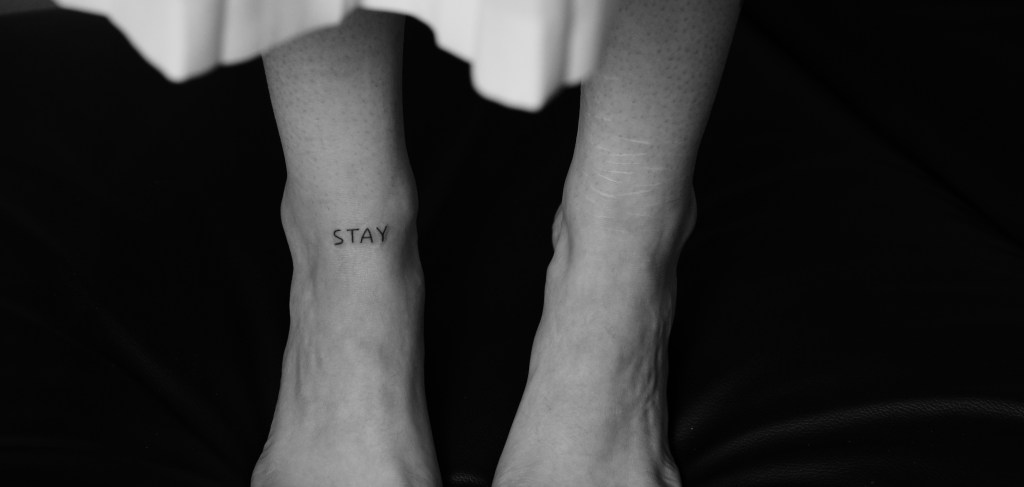
Is there a quality you’d like to cultivate in yourself? I want to perceive more. I spend too much time in my head, in my apartment. I want to be more open to people and things. Because — like we talked about warning signs — I leave very fast. If I see one thing that annoys me, I just leave. I’d like to be steadier — to have the strength to stay.
Polina was in Budapest for a few days and wanted to meet for a session. I was four hours away in Serbia with nothing better to do, so I cranked the old BMW and pointed it toward the border. Budapest still felt like a first date — tempting, with curly hair, lemonade, and green tip manicure.
We met on the curb outside her rented studio, deep in the city. She wore loose black pants and a white linen shirt. Her face was young, clear, and watching everything.
“Sorry, I got stuck at the border,” I said. “Mind if I eat before we start?” She shook her head. I pulled out a corn cob. “Want some?” “No,” she said. “It’ll get stuck in my teeth.” “Cucumber?” “Why not.”
Why are you interested in human rights?’ A feeling of necessity for justice.
What is justice? It’s impossible to explain. I just get overwhelmed when something isn’t the way I believe it should be for other people. I understand that it’s probably my problem, I’ve attached myself to all people and feel responsible for them, even though I know I can’t do anything.
Do you think we shouldn’t attach ourselves to everyone? I don’t think in terms of should or shouldn’t. Even though it’s a problem for me—not sleeping at night because of something that’s bothering me… Like what? My first memory of myself as a human being is lying in a room at night, and from the kitchen—our apartment was big, like 140 square meters—so the TV was pretty far away, but I could hear something about a war. And I was lying there thinking: I’m scared, I’m in pain. And that’s how it’s been ever since.
What were you scared of and what was painful? I don’t know. I guess as a child I was afraid for the future of the world—and for myself in it.
What exactly scares you about the future? That I exist in it. And at the same time—that I don’t. Do you see an image? No. Because if I imagine specific images of what might happen, I immediately think—okay, here’s an image of poverty, but people survive poverty, and I could too. Or the image of someone close dying—it’s hard, but still okay. More often, it’s everyday problems that get to me. Like, today something didn’t go right with this one person. That triggers a thought process: okay, if tomorrow everything goes downhill, then the day after tomorrow I don’t know what kind of relationship I’ll have with this person. I interpret that as most people my age having some kind of future goal to orient themselves by. I don’t have that, so I worry about too many things. Like, I arrived in Budapest—what if something works out? What if I don’t leave? What if I leave but don’t want to?
If you could change one thing globally, what would it be? The first thing that came to mind—ecology. Because nothing else matters if the planet’s gone. Second would be education.
Would you like to work on solving ecological problems? It just didn’t turn out that way, I guess. I don’t know why.
Do you have a dream? No. I kind of felt you were trying to find it. I smiled. You have a kind of sly expression on your face right now. Why does it seem that way to you? I don’t know. Some kind of spark—but not a sneaky one. I dropped the smile.
Would you like to have a reference point? Yes.
When you think of yourself, what do you see? I don’t know. I don’t feel proud of myself, but I’m not ashamed either. Detached. Because if I start thinking about myself too much, it leads to the same place. Can I ask where? I grew up with a problematic dad. He didn’t hit, but he was very scary and always intimidated everyone. Basically, he terrorized us. When you’re lying in your room and there’s shouting and screaming, and you hear a thud—you realize that’s not a person, it’s the wall. But who hit the wall? Who threw who? Did Marina throw Dad? Did Dad throw Marina? Or was it Dad and Mom? I’d text Marina—my older sister. “Hey Marina. Where are you? What’s going on there?” “Why don’t you come out and see?” “I don’t want to. Do you?” “Okay, I’ll go.” Dad hit the wall—okay. That’s it.
Why do you think you’re telling this with a smile? Because it’s madness. It shouldn’t be like that, but everyone’s so used to it. Like—yeah, there’s this sick person and we can’t do anything about it. So it’s lighter to treat it with humor. “Oh look, Dad’s lost his mind again.”
“Lighter” is a beautiful word. Yeah. And I’m a feather. Explain. As kids, we had this inside joke. Always trying to be skinny, beautiful. I was tall and fat. My friend was very tall. Another was super muscular. And we joked that we were all like feathers.
You said “I don’t exist” when I asked what scares you about the future. But if you don’t exist, there’s no fear. So maybe the place where you don’t exist—is the place of peace. Have you ever been under anesthesia? No. I have. Most people are terrified. I wasn’t.
What was the operation? It was abdominal surgery. I have a scar. And in general, after an open surgery in that area, the body becomes very fragile. If someone hits me—that’s why, unfortunately, I don’t go to protests: because you can’t really tell, but if someone hits me, I might die.
What was the operation for? Oh. I had skin removed from my stomach because I was fat as a child. I lost 40 kilos twice, very quickly. Even if I’d lost it slowly, like a normal person, the skin would’ve still needed to be cut off. And this kind of operation—they basically cut you open, lift the skin off the muscles that cover your organs, zip one part together, stretch the other. It changes a lot in the body. I had the operation in 2022, and I still get swelling sometimes—healing, inflammation comes and goes. I get it. I don’t do pull-ups.
Why did you want the skin removed? Because it was hard to look at myself since childhood. Did it help? Since I was ready for the scar—yes. At least in clothes, I feel like a normal person. But you became more fragile, right? Yes. But as a fat child—I could maybe win someone over with my charisma, but I couldn’t run anywhere—I’d jiggle. I couldn’t join in some activities just because I was fat. Then I lost weight—I was eleven—and I thought I’d be like the other girls. But it didn’t happen. I looked like a woman who had given birth to three kids. And you see that difference in the locker room, so I’d limit myself—wouldn’t sit down a certain way, stand up, dance, wear certain clothes.
How did you lose weight? In 4th or 5th grade, I made it my goal, started going to the gym and eating less—the standard approach. But then, when you’re going three times a week and need the weight to drop, you just start eating less and less, and slip into starvation—classic eating disorder. I went from 90 to 50 kilos. Then I started gaining weight again—as it usually happens—and I fell into a depression. The kind where you sit on the windowsill, your mom sits on the bed looking at you, and you just sit there, and sit, and sit. I gained it all back and then lost it again—more calmly that time.
Whatmatters the most in lifefor you? People. It just turns out that my people—since they’re around, they’re easier to think about than myself. Maybe it’s because when others are at peace, I am too. And I get an excuse for not working on myself—because I was busy with you. Not very nice, but it’s true.
What’s the most important lesson you’ve learned in life? Probably that you shouldn’t jump to conclusions. Don’t judge. Don’t condemn.
If you could change something in your past, would you? No. Even though there were moments where better decisions could’ve been made. But based on my current values, it’s not a big deal that I acted the way I did.
Have you ever wondered whether it was fair that you were fat? Of course. At first, I definitely thought of my parents… You thought it was their fault? Yeah. Their fault that I was fat, their fault that I had to lose weight, their fault for working, their fault for everything. And now? Well, what can you do? I don’t really like the concept of blame anymore, so it is what it is. It’s hard not to bring it up when you’re about to have surgery. You have to talk to your mom about it. And when you see in her eyes that I’m basically saying: “Mom, there’s no other option, because I’m trying to get back at least a little of what might have been if not obesity”—which may be your fault, but maybe not, it’s not certain, but it’s possible—and we’ll never really know.
What is beauty? And why do people worship it? An empty vessel? Or a flame flickering inside? I don’t know. I feel and see beauty in everything. If something catches my interest, it’s beautiful to me. I never thought of myself in terms of beauty, although I was called beautiful as a child—but it was always like, “such a pretty face—if only this or that.” And people don’t know that, because it’s hidden under clothes. So I always know when they think I’m beautiful, but I think something else. Even when they find out, they don’t understand why. And I have to explain that I have a difficult relationship with myself. That I have to make peace with myself, find myself within me.
Who is making peace with whom, and who are you searching for? I don’t know how to explain it. How important is your appearance to you? Do you care? Do you think about it? Sometimes. Well, when you’ve been obsessed with it for a long time, when it’s all you have, all you worry about—just that you don’t measure up. And then what? You have to tell yourself every time—so what? And then, seeing beauty in everything, why the hell should I think of myself as something I have to “come to terms with”? Why do I see beauty in an imperfect, off-cover person and think they’re beautiful—but not myself? I never found the answer. And since growing up like this caused me a lot of pain, it was a trigger every time. And it’s easier for me to look at the scary scar, the fake belly with stretch marks and a fake belly button, than at the memory of standing in front of the mirror with a knife, saying, “I’m going to cut this off right now!” That’s my little trauma.
Her eyes were wet, but she didn’t cry. She only smiled.
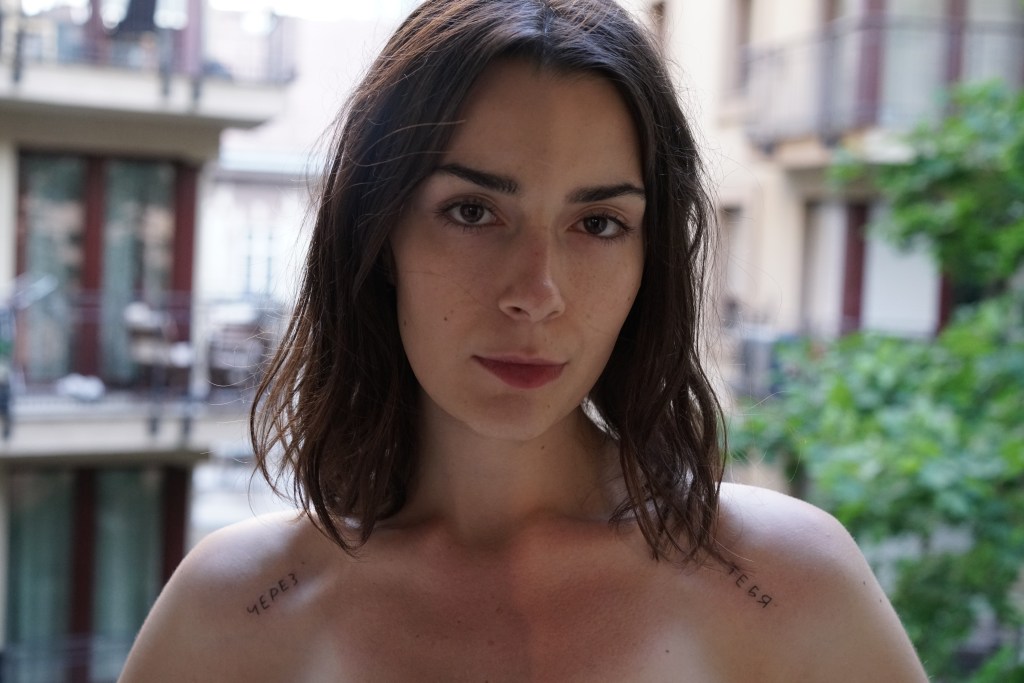
Our interview was in Russian. The tattoo says “through you.”
Most recently I did some work for an organisation who was trying to write a report about regeneration, and that’s working with mostly Indigenous people, capturing the process of how they’re working together.
Indigenous to which land? Lots of different ones, working across the world virtually. That noise is gonna get frustrating! — she said, as the dog Chewie began chewing his squeaky toy. But the leaders were from Brazil and India. And it was very interesting, but it got me thinking a lot about how I do research and how I need to decolonise my research practices—so it’s a lot. And I’m glad actually that we didn’t meet before and we’re meeting now, because it was a dark winter. This is a much better time, so thank you for getting in touch.
What was dark about your winter? I got quite sad sometimes when it’s dark. And we travelled a lot last year, so we spent lots of time in traffic, and I knew it was gonna be a hard winter because of the dark—but the work as well. It was very intense, and I got quite depressed.
She whistled to Chewie and, in a totally different voice, very sweet, said: Come here, join us! Chewie refused her proposal. Eh, no, she laughed. Yes, it’s sunny now, so I’m happy again. I was silent. She whispered, tapping the sofa: Come, sit.
Is it your permanent job—to do research? Nothing is permanent. For now I’m in another time of reinventing myself. So yes, I’m working a job technically for the university, but I’m about to go freelance again and see what happens.
Doing what? Consultancy work in the same space—but trying to get the people who fund conservation to do it better. So I’m trying to get the people with the money to work with the conservationists in a different way, which is kind of terrifying, but I’m gonna give it a try.
Do you mean forest conservation? I studied forestry, so mostly forests. But I work at a very high level. In Cambridge, where I live, there are a lot of different conservation organisations, and they work together to do quite big projects—so it’s often not even in one place. It’s like a big initiative. And I’ve worked for a number of these organisations, and now I want to bring funders to work directly with them, rather than just saying: I’m gonna fund a project and you have to do exactly this. It needs to be done differently, because it’s not working.
What’s your intention behind this job? Fix. Part of why it’s so broken.
Do you feel like you’re fixing it? At the moment—yeah. Slowly. I’m getting closer to work that I find actually really rewarding. I don’t make a lot of money, but I’m at peace with that, and I work more with people that I like, which is good. So yeah—I feel very lucky.
Why is it important for you to fix? I mean, what’s going right in the world at the moment? Nature is in trouble. Capitalism, generally—which I can’t fix myself—but trying to find better ways to…
Isn’t it we who are in trouble, not nature? Yeah, yeah. Our relationship with nature is in trouble. And helping people reconnect with each other—but also with nature. Unfortunately, there’s so little money in conservation. So that’s part of what I’m trying to fix: to find better ways to bring money in to actually do things in a way which acknowledges the complexity of it all.
Why is it important to reconnect with nature? Because we’re part of nature and we forgot that?
But if we’re part of it, how can we be disconnected from it? Oh, we just are. Most people. I mean, I don’t live in the centre of London, but although there are nice green spaces, people don’t realise that we are connected. They don’t think about it. They don’t spend time in nature. They don’t see that the things they do that are wasteful are not sustainable. Makes me sad.
So the connection with nature for you means understanding and realising that you’re part of it? Yeah. For me, I just—I’ve always understood that. But I think many people don’t, because they haven’t had the opportunity to see that or to understand that. It’s not my mission to help, you know, directly connect people with nature, but I hope that the work that I do—along with others—is helping, generally. Am I making sense?
You are. It’s nice to see my kids making a connection to nature—that’s a lovely thing.
How do you see that? Oh, small things. I think they get it because we talk about it a lot, and we’ve been very lucky to spend a lot of time in cool places outside. But even in our neighbourhood at home, you know, like—I don’t care if it’s the most common thing ever—they’re still excited by it. And it’s like, yes, exactly. It doesn’t need to be like… it’s just a ladybird, though! You know, the small things even amaze them. Like my daughter—she has stick insects now in her room and she just loves them. These small things matter.
What matters the most for you in life? In general—life, joy, and relationships. Obviously family. But I’m lucky to have lots of amazing people in my life and have relationships with them. But then also, work matters a lot to me. I need to feel like I’m doing something positive for society—which brings me joy.
Isn’t that just the story you tell yourself? You can do the job and feel like you’re doing something positive, but another day you could feel like there’s nothing positive in the very same job. Totally! And I wasn’t feeling very happy about it in the winter, she laughed. That’s for sure. But I think—even one piece of a shit time at work, and it’s not going well—you can still feel like you’re working towards something bigger and positive on a bigger scale. If I don’t have that, I find it hard. And it might not be that I’m making a big difference—I’m not being unrealistic in what I can achieve, I don’t think. I just—I need that in some way. But it comes in different ways, like—to get out of a job that I hated relatively recently, I quit it and I set up a painting business in my village. And that brought me joy for a while. It got me out of a bad situation and I met some lovely people in the village, so that was good—for a while.
When you place joy on the pedestal of paramount importance, how do you cope with joyless moments? When I say joy, I don’t mean that it’s always being happy and smiling and wonderful. Like I said—you know, if I’m stressed and working on a really big problem and I feel like I’m doing something, that’s still bringing me joy. So it’s not only like happy-blissful all the time. But how do I deal with moments where I’m not feeling joyful and I can’t find that—well, it’s hard. And I definitely have moments like that—I’m like this. I’ve never been just sturdy. My husband is very sturdy and calm—and I wouldn’t change it—but I’m all over the place. So yes, there’s definitely moments when there’s no joy. But I will get back there. And I have faith I’ll get back there.
What would be the opposite of joy? I don’t know. What’s the point of life if it’s not to have joy and pleasure?
You tell me. Some people would say the point is spiritual growth and helping others. True. I said relationships. It’s not just joy for me. It’s joy for the people around me. And I’m a person who absorbs a lot from the people around me emotionally. And I hope that helps. Maybe joy is not the right word—but helping the people around me, that’s important. Yeah. Someone said a word recently, which I hadn’t used in relation to myself—but I’d only just met her during work—and she said: “Oh, you’re an empath,” like it was obvious. And I was like—I have to look it up and think about it—and I was like yeah, I guess I am. I can really sense other people’s emotions. And when people have something they need to tell someone, they tend to come to me. Which can get heavy and be not joyful. But hopefully in those interactions, it’s helpful to others. Yeah, that’s important too. I find it hard to say a single thing. What is the purpose of life? I probably haven’t spent enough time thinking about it.
Let’s find the definition of joy. Hm, she paused, amused. I don’t know. It’s more than happiness. Because like I said, doing something difficult can bring joy. Fulfilment—maybe that’s a better word.
What fulfills you? Spending time with the people I love.
And what is love? You always ask people this—I noticed that. And I thought: what am I gonna say to that question? And I don’t know. I think people usually have a simple answer—and I don’t think it’s that simple. I think people tend to think of love between two people, and it’s just that typical thing where people accept one another for who they are. That’s one type of love, and that’s important. But you know, I can love a tree. Or I can love a stranger that I’ve just met. So what is love? Lots of things? Connection. Connection comes a lot.
Describe the loving connection. I’m trying to think. I think it’s obvious between people, but I’m trying to think—there’s a tree near my house. I love this tree. I love it. And it’s going to be cut down. And that makes me very sad. So how can I describe my connection to that tree? Appreciation? Just acknowledgement that it deserves to be there? Connection. Loving connection evolves depending on what the relationship is. And kind of stems in respect, I guess. I was saying to my husband the other day that, if anything, I feel guilty that I have lots of amazing connections in my life right now, particularly with lots of women—good friends, family members—and I don’t have enough time for a few of them.
What makes those connections amazing? We look out for one another. We accept each other for who we are. We enjoy being together or interacting or catching up. And there’s no guilt. That’s a big one for me. I definitely got rid of people in my life that made me feel guilty—because I feel guilty a lot.
Would you say the same thing in winter? In winter I don’t connect as much with people. I spend more time on my own.
What is happening with you when you connect with yourself? I feel I don’t have enough time to myself. As a mum trying to work too much—I love myself, but I don’t get as much time as I used to. I’m a person who loves being by myself and wandering. I said to you the first time we interacted that I’m a free spirit, but I don’t get a chance to do that anymore. And you were like, “Why aren’t you free?” And I am free compared to a lot of people.
What does it mean to be free? Well, I am free in many ways that many people in the world aren’t. My needs are met. I know when my meals are coming and all those things—that makes me free. I’m not afraid. I’m safe. But what I meant when I said a free spirit is that I’m a person who likes to just see where the wind takes me. Like today, in London—I wasn’t planning to go to that march, and then I realised it was happening when I went to meet some other people, and I went. But I don’t get a chance to do that, because I’ve got more responsibilities now. And that matters to me a lot—time to think, which I don’t have as much of as I should. Time to wander. To be opportunistic. I like uncertainty—but maybe not as much as you have when you don’t know where you’re going to stay next.
What is certain? I think a lot of people think a lot of things are certain. I’m at peace with the fact that they’re not.
But what do you know for certain? I’ll die one day.
You mean your body will die. Yeah. I hope that something will be planted over me. In fact, I’ve told my kids that they must plant a tree over me somehow. And I will become something else. And I do believe that. But I’ll be something different then. I won’t be “me” in the same sense.
Do you feel like you are your body, or you are something else inside your body? Hm. Something else. I’ve reached the age where I realise I’m not invincible. That moment already passed. And it is just a body, and it’s serving me well, and I’m grateful for that. But we’re more than our bodies.
And what is more? I don’t have a word for it. And I’m not a formally religious person, but I believe that in cycles of life, there’s an order to things that’s much bigger than us. I wouldn’t call it God. But I do believe that after I die, the essence of me will live on as something else—which brings me happiness, I guess. Because I don’t feel like it ends completely. It just goes into something different—it starts a different cycle for something else.
And what is your essence? She laughed. I was trying to avoid using a word for it. I don’t know—people would call it a soul. I don’t like that word.
But what’s wrong with it? It feels cheesy.
And what’s wrong with cheesy words? Good point. I don’t know. It just doesn’t capture it. I don’t have a better word, though. “Essence”—that’s all I’ve got. You know, we’re just atoms, and the atoms that make up you will make up something else. But it won’t be “me.” Sorry—I don’t know where we’re going with this.
Do you have a dream? My kids to be happy and to have fulfilling lives.
Do you feel that’s within your power? No. But I know that we’ll do our best and give them as much as we can. And I believe that they should do well, because they are good kids. But no, that’s not in my power. It shouldn’t be. But that’s hard.
Why did you decide on having kids? It just felt right. I’m in a very happy marriage, and we had happy upbringings, and we wanted to have kids. I don’t know. I think it was natural. Like we didn’t think too hard about it. I have friends who definitely don’t want kids. But for me, it was just—I’ve always wanted kids. And I found myself in a situation which I thought would be a good one to bring kids up in. If you think too hard about having kids, you probably would never have them—in my case, anyway—because it’s terrifying. So I’m glad I didn’t think too hard, and we just went for it. And my kids are very close together as well, so we didn’t think too far in between either, haha. They’re a year and a half apart.
Chewie came to her and started licking her bare knees. Oh, thank you. Kisses? I’m tasty, sweaty.
What does it mean to be a mother? She chuckled. Hmhm. What does it mean to be a mother? To be selfless. To be ready to give everything you have—and to want to. I don’t even know how to put it into words. It’s the most important job there is, to me. And it’s changed the way I see my own mother. I have even more respect now—for everything she sacrificed. I guess that’s what it is. Being a mother means being willing to give everything—to do whatever you can so your children… are happy.
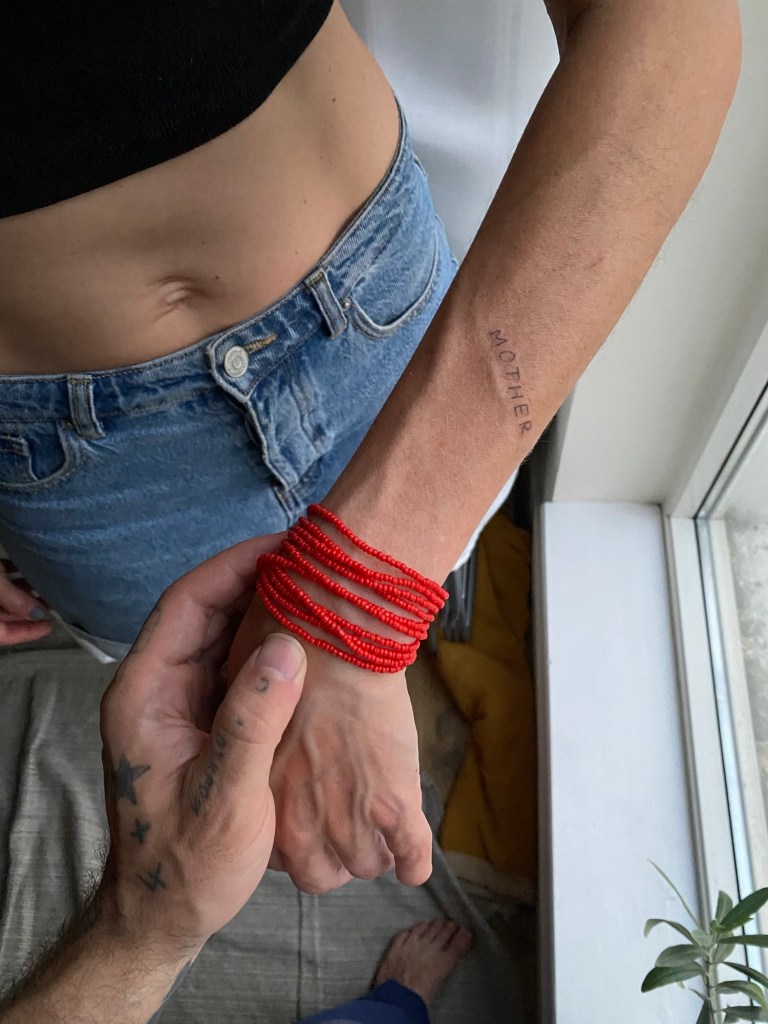
“A mother.” That’s the word I’d propose to you as a tattoo. Interesting. Why? Because it holds the meaning of what you do in general. Hm. Hm! Elaborate. No. I don’t want to elaborate on this one. She laughed. That’s not fair! Then after a pause: When you said “a mother,” I thought—yes, of course! But I also thought: I’m not just that. You say it like being a mother is something small. It’s not small. But it’s not everything about me. I see it differently. You said being a mother is being selfless. And that’s… bigger than self. Yeah. Yeah. Nature is a selfless mother. She smiled and nodded.
You said you feel hot. Elaborate on this feeling. Yeah, so, it’s the first summer since I’m cancer-free. My hemoglobin was so low I had to do three blood transfusions. For the past two years, I was always feeling cold. But now I’m back to feeling normal weather, so I feel hot. And that’s good. Really good. Because now the weather feels appropriate.
If I were a child, how would you describe the feeling of hot? Sticky, she laughed. You know, because you’re sweating, so you’re always sticky and everything sticks to you. You’re the child, so you always have your hands sticky with something, even if there’s no jam around.
Would you like to have kids? While I was going through removing my uterus, my friend in Italy had a boy, and I’m included in their family album as aunty. I never really wanted to have kids, but… also, now I’m 37 and the chances are slim. One thing is leaving the door open—you may not use it, but there’s a door there, you could cross it and have kids. But also you can decide not to use it. In my case, if I open it, I most likely die. So I find it unfair that I don’t have the choice to be a mother biologically. And I don’t know if I want to have kids now. I need to process this.
Do you have a dream? To have kids? In general. No, she paused. Yes, she laughed. Wait. I used to have dreams. Then, the past two years—completely black hole. All my energy was sucked into what we later discovered was a mass of ten centimeters in my uterus, which went undetected for eight years. ‘Just painful periods. It’s okay. Just take a Doliprane.’ So for years, everything was absorbed by that. And then I had to work on the fear of death. I’m not scared of it—it’s the only certain thing in life, and I find it consoling. But still, I had to work with that, because I had invasive surgery. And then I woke up, and cancer was gone. I had back my energy, my life. And I was like, okay… how do I live now? That’s still the feeling. So I’m cutting out certain people who were very toxic. I don’t speak with family because they were not there for me. All these years I was sick, I was told I should just lose weight. And I started dating—or, fucking is more accurate.
What’s the difference? It’s twofold. First, before I was diagnosed, I got a promotion to the headquarters of my company in London. I was supposed to leave on the 6th of January. I had surgery on the 15th. So I decided to stay in France. I’ll still move to London—they just postponed it. I’m not dating because I’m leaving. France is my fourth country of living. The UK will be the fifth. So I know the deal—I can’t put more than friendship on the plate. So… we fuck. Also, I haven’t been intimate with anyone for eight years, because the symptoms of my cancer were constant bleeding. And when I say constant bleeding, I mean every day. Including hemorrhagic episodes. So it was impossible for me to even think about intimacy. Now I thought, okay—we removed the problem, let’s be intimate with someone. So I’m not dating those people. We just meet at each other’s places. And what’s interesting is, from one side I got what I wanted—a man who’s interested in my physical type. I was born in a little village near Venice, she sighed, where fat-phobia is a must. So I had people saying, You should go with this guy because he likes you—you don’t have a choice, not many people will find you attractive. And now I’m on this app where lots of people find me attractive, sexy. And one guy, he said something that stuck in my brain like a flash. He was on a bed, I was doing my stuff, and he just looked at me and said: Tu es toujours trop habillée. Like, you’re still wearing too much. And this pierced my brain so much.
Why? Because no one ever told me anything like that. Literally no one. And I felt like, fuck, feels nice. But also, fuck, how sad my life was—to reach almost 40 and never feel like anybody thought you might be desirable. So we’re doing this until I leave, and that’s fine. It opened other doors of overthinking, but we’re working on that in therapy. Working on letting go. That’s also why I’m here—I need to let go.
To let go of what? I’m constantly thinking about what other people think of me. My head is full of this friend who said really bad things about me. She unleashed everything. I probably frustrated her, but she was mean. And it doesn’t matter how many times my other friends told me it’s not like that—her opinion weighs more than ten thousand positive ones, you know? Doesn’t matter how many times people say, you look better naked. Am I making sense to you?
Yes. Do you have moments when you feel attractive? I don’t. I never felt attractive. Even when the man said ‘Tu es toujours trop habillée’? Yeah. I don’t believe them. Like, are you sure? But it feels good though. I don’t know. It’s mixed.
What about love? Once I’m in London, this kind of dating will not apply anymore. Because I realized—I need someone who’s there for me regardless. I love you regardless you snore, you know? I love you regardless you’re annoying. All those regardless. So when I move to London, I’ll date to love. Because I need it. My friends did great. Without them, I would have quit. At some point, they were even coming to my house to cook, because I was not eating. But always in the back of my mind, I felt like I was bothering them. Like, they have their own life. So I need someone I can count on. Someone who shares the life with me. A companion. With whom you share your life… regardless.
What do you believe in? I believe that things should be fair. And good. I believe in kindness. We should be kind. It comes from my grandfather. He used to say, Kindness doesn’t cost a thing.
What is kindness? Being soft to others. Smiling. Bringing flowers. Or when you see someone lost in the street and you tell them which way to go. Kindness is caring about others.
Doesn’t it cost time? It doesn’t matter. Being kind is never a waste of time. And it feels good to be there for others. Not because you benefit… well yes, your soul benefits. Is it heavy sometimes? Yes. But it still feels good.
What is a soul? Soul is everything we’ve learned. Mistakes, lessons, pain. What happens to it when we leave? I don’t know. Maybe it becomes a wave. Goes back to the ocean. Becomes a star, like Pumbaa and Timon were saying.
What’s the most important lesson life has taught you? I really don’t want to say the first thing that came to mind—it’s very depressing. But it’s: you should walk alone.
Why is it depressing? Because we’re never really alone. And we shouldn’t walk alone.
How do you feel about the word ‘regardless’ for your tattoo? I feel good. Really, really good about it. I would never have thought of this word for a tattoo. You’re g-o-o-d. I was really anxious but you’re doing a good job—you put people at ease. I was silent. It was a compliment, she laughed. I don’t know if it passed through.
No worries. I just don’t take compliments personally. What do you mean? This is what I mean. You expressed how you feel about me. But it’s YOU who felt that. I could behave the same way with someone else, and it would leave a totally different impression. It’s YOUR perception of me—it has little to do with who I really am. So you don’t believe in compliments? It’s not that I don’t believe in them. They do boost my ego sometimes. But I’m more into eliminating it instead of boosting it. So you’re trying not to rely on others’ approval. Yeah. Also not on my own approval of myself. I agree and disagree. Hmm. That’s good food for thought. See? Now I’m saying you gave me good food for thought. But this is how I feel—ha!!—I get what you’re doing there!
Shall we move on to the tattoo bed? Yeah. Great. Just give me a moment. May I ask, where are you based? Nowhere. Well, I guess wherever my dog is. And now she’s in Serbia. Please, go up. Oh no, I’m gonna crash that. What’s your weight? 120. Let me check if there’s any info… nope, nothing. Okay—we could hear the crack! Only the middle is fragile. Start from the edge where the legs are, and crawl forward.
She climbed onto it, laughing. Oh well, if I’m not weird, it’s not me. My dignity is non-existent.
How are you feeling today? Good. I woke up feeling a bit sick, but it passed quickly. What was hurting? For some reason, my nose was swollen. I was all puffy, even though I drank very little yesterday—just a couple of glasses. And a lot is how much? A bottle. But it varies. If it’s a binge, then, well… What’s a binge? When I lose control. I used to be able to drink and drink until blackout. I’m probably trying not to drink like that anymore. Now I’m scared of losing control.
What do you do to avoid losing control? I try to drink less, I’ve been going to therapy for eight years. I’ve made pretty good progress, actually. I can’t say I have perfect self-control, but I have this irrational fear that I might get ‘cancelled,’ even though I haven’t grown to that level yet—who would even cancel me? One of my 400 followers? Laughable. But I guess I have some inner ambition to become great, so I watch what I say, how I say it, and sometimes I just don’t say anything.
What does it mean to become great? I think about that quite often. Maybe my greatness lies in how I’m able to be with people, to shape the space around me. What’s so great about how you are with people—something others might not have? That people feel accepted with me, safe. That I seem wise to them—I ask the right questions. And I ask the right questions because I listen without judgment.
Give an example of a right question. I don’t know. To be honest, this conversation has gone in a completely different direction than I wanted. I don’t know what a right question is. And a wrong question? Yeah, an insensitive one. Cruel. That’s how it feels in my head. I have this trait—I have borderline personality disorder—and with that, you tend to split the world into black and white. That’s why my thinking includes things like ‘right’ and ‘wrong.’
When you said black and white, I thought of this phrase: ‘Yellow is a light that’s been dampened by darkness; blue is a darkness weakened by light.’ I like the one about blue more. I’ve spent most of my life in depression. And now, literally for less than half a year, I’ve been enjoying life—in a different sense of the word. Of course I had good moments before, too, but considering that for as long as I remember, I didn’t want to live, and how much I’ve done to keep living and to improve the quality of my life… I didn’t want to suffer so much that there were three options: kill myself, wait to die, or improve my life.
Why didn’t you want to live? I still don’t. What makes you not want to live? I don’t know. Just the other day, I was walking home—I have surgery scheduled in April, because I snore really badly, and it’ll be on my nose and throat, under general anesthesia—and I was walking and thinking, ‘Well, I have this surgery coming up… how wonderful it would be if I just didn’t wake up from the anesthesia.’
Why did you choose to improve your life instead of ending it? Because I grew up in an Orthodox Christian family, and it’s impossible to just erase those religious beliefs. Are you afraid of going to hell? Yes. More than anything, I’m afraid of suffering. I really don’t want to suffer. That’s the most important thing for me—not to suffer. Even though I’m no longer religious and don’t live a religious life. Not religious, but what kind of life then—a sinful one? Yes, sinful. I started, and I’ve just continued. What is a sinful life? Not living according to God’s commandments. Which commandment have you broken? Probably the only one I haven’t broken is ‘Thou shalt not kill.’ And that doesn’t scare you—that you might go to hell? No, because there’s hope that if it’s not a sudden death, I’ll have time to repent. But with suicide, you don’t get that chance.
Was there something that triggered your depression? Yes. It started when I was 14, after I was raped. At the time, my parents were deeply immersed in Orthodoxy—though in recent years it’s softened, back then it was intense. After that, my dad started beating me, saying it was my fault, that I let it happen, that I wanted it. All of that. He beat me until I was 18. The desire not to live grew stronger and stronger, and eventually it led to three years of constant drinking, after which I began therapy.
If you could change something in your past, what would it be? Nothing. Why not? I like who I am now. What do you like most about yourself now? I like my way of thinking, the way I process feelings. I like how I see the world, how I respond to it. All of my experiences were necessary to become who I am now. Sometimes I ask myself, ‘Why me? Why did I become a victim of violence? Why didn’t my parents support me, but instead made everything worse?’ And what’s the answer? She sighed, resigned. There is no answer. That’s just life.
What is love? Love? she asked herself softly, and after a moment’s pause said, I don’t know the answer to that question.
What is non-suffering? When you feel hope that things will get better. Maybe not better, but different. Why hope for that if it’s a fact? Well, yes, it is a fact—it’s just that when you feel that hope, when there’s faith that things can be different, then you find the strength.
What’s the most important lesson life has taught you? That in the end, you’re left alone with yourself. For me, love is acceptance and gratitude. And loneliness? It’s wholeness and freedom.
“I’m here,” she texted me. I stood across the one-lane street from a six-storey white Bauhaus building, fronted by a tidy stretch of greenery and a low stone fence with metal mesh between the pillars. It was warm and sunny—one of those beautiful spring days. “I don’t see you,” I replied. I crossed the street and saw a woman raise her hand and walk toward me. She wasn’t tall, with a pretty face, a dark shock of curly hair, and skin untouched by age.
How do you feel? A bit nervous, uncomfortable. Why? My boyfriend couldn’t understand why I’m getting a tattoo from you—especially since I don’t even know what it will be. And given that, why do you want to get a tattoo from me? Because I’m curious.
Uncomfortable,I said aloud to myself.When there’s comfort, there’s no need to change anything. I don’t like changing stuff, she grinned. You don’t like the fact that it changes, or being the reason it changes? The second. For example? Sorry… Tears appeared in her eyes. I’m always like this. With people, or situations—when I’m the one who wants the change and it hurts them. When I make someone else uncomfortable by creating my own comfort.
Do you feel guilty? Yes. What is it you wanted to change that hurt someone? I let them go. No—I let myself go. So I broke up with them. Was it the right choice? Yeah. Then why does it still hurt? It happened not long ago. And I keep getting reminded—by my parents, or that person. She blew her nose into a tissue.
If you could change something in the past, what would it be? I wouldn’t jump into things so easily. Can you elaborate? I’d think more about the outcomes. Nothing really bad happened, and when I think of this person and the whole experience—it was a good thing. So what is it you’d change, then? Probably the ending. The way I handled it. I would have done it in person, not over a video call. Now you know. She smiled briefly.
Have you apologized? Yes. And it wasn’t just a word. I never meant to hurt the person, but the guilt doesn’t go away—because it was my fault. Do you take personally what others feel? Yes. It’s just how I am. That’s a heavy burden. I’m a very emotional person. I feel empathy for everyone. So it’s hard for me to let go. Do you express empathy toward yourself? Not so much. Why not? I don’t know. She smiled. I guess I’m a people-pleaser. Oh, sorry—do you have another tissue, by any chance?
We were sitting at a table on the balcony, so I went inside and brought back a pack of tissues.
What do you think your intention is, in pleasing people? Maybe to receive care in return? To be seen? To make them happy, so they’ll think of me as a good person. What does it mean to be a good person? When no one is angry with you. And what if people are angry with you because you’re a good person? Never thought about that. She chuckled gently, but the tears were still present in her grey eyes.
What makes you cry? Everything. She smiled. I usually can’t have a deep conversation without crying. What makes you cry right now? Right now? Her voice was wet. Just talking about my emotions and thoughts. I usually don’t express them out loud. But do you see any picture besides me and our surroundings—as if on a double screen? Probably. I mean, when we think, we often see our thoughts as scenes that overlay the present moment. Yeah. And what do you see there? Them crying. Not understanding why I’m doing this. But do you understand that it’s not real? They aren’t crying right now. That was in the past. I never thought of it that way—that this is the past, and they’re not crying anymore.
Do you have a dream? To see the world. What is ‘the world’ to you? Places. Cultures.
We talked about happiness, and how it differs from joy, and what friendship means.
Is there something you are missing in your life? Yes. Being here in Hungary, I miss the sea, the beach, and high mountains. What do you need to have that? More money. You can travel without money—hitchhike, find places to stay. I’m not saying it’ll be comfortable, just that it’s possible. True.
You said you met someone who quickly became your friend after she did your first stick-and-poke tattoo, and that you shared your secrets with her. May I ask—what kind of secrets? It was about a new experience of sex. Why did you call it a secret? Because I hadn’t talked about it with anyone else.
How do you define sex? It’s changed for me lately. Now I’d say it’s the pleasure of cumming. What makes that pleasure different from, say, the joy of a sunny day? The vulnerability. Being naked with someone. The intimacy. But you can orgasm when you masturbate, right? Sure—and that’s not sex. So what is? The act itself. You mean penetration? That’s the part that changed for me. It doesn’t have to be penetration. It can be hands, mouths—anything, really. As long as it’s shared. As long as it’s with someone.
Do you still feel nervous and uncomfortable? No. What’s changed? Time spent together. Where do you feel it—the comfort that’s come? In my muscles. They’re not as tense anymore. All your muscles, or a specific area? My shoulders.
Why did you break up? Because of the distance. Emotional or physical? Physical. How often do you need to see someone to not feel that distance? As much as possible. Every day? Yes. For the sake of pleasure? Like sex? No—more like joy. Happiness. Pleasure. She grinned.
What about love? That’s what I mean. But you don’t need to see a person every day to be in love with them, right? Yes, that’s true—but ideally, I’d see my lover every day.
How do you define love? To care. To accept them, with all their mistakes. Still, that doesn’t mean seeing each other every day. What is the pleasure in that daily presence? The physical touch. The shared moments. Describe that pleasure. Waking up together. Making breakfast.
A glass vintage German teapot with green tea and two cups sat between us. “You said you were ignoring your needs—what kind of needs?”I asked. “To… what are my needs? To bond, to feel secure, to have inner balance. I didn’t know what my desires were, because I was always with friends, family, boys, and… yeah.” Her voice was gravelly dry, raspy, burnt.
“How do you define bonding?” “My last relationship was when I was 25, and the older men afterward were only with me for a short time. I thought bonding would come, but in the end, they all left. When I reflect on it now, I see there was a mismatch with some of them—I was with them just so I wouldn’t be alone. But in recent years I realized that’s the wrong way to build a relationship. I was completely absorbed in the need for a man.”
“Would you change anything about your past?” “I’d look more into myself when I meet someone—be clearer, slower with my words and decisions. Take time to understand if I really feel good with someone, to get to know their personality.”
I picked up the teapot and poured the tea. “What are red flags for you when meeting a man?” “Racism. Intolerance. Men who try to control you or influence your opinions. Men who are cold, who don’t care.” She took a sip.
“Do you have any regrets?” “I had a lot in the past. But now—no. I don’t rush into things anymore.” “What is rushing, to you?” “When I’m fast, I’m not really with myself. But now, I follow my belly—or my mind. In the past, I went into the industrial sector because it paid well, but I didn’t follow my inner needs, my passion.”
“What is your passion?” “I like working with my hands. I love listening to music, sitting in the sun with a book. And I love being with people, taking care of them. So now I’ve started studying to become a youth educator. I want to work with children in group homes, and I feel really good about that decision.” “How did you come to that idea?” “It was a long journey. I went to a clinic and realized I wanted to care for people, to be there for them. I want to give back to society—not like my old job, where money just shifted between rich people.”
“What have you received from society that you want to give back?” “When you see children growing up in poor areas or with neglectful parents—if no one supports them, it’s unlikely they’ll help make the world better.” “How do you want to support them?” “By being very mindful and careful with them. By giving them the feeling of being seen. By bringing them joy.” “And how would you like others to support you?” “I want to be cared for, to be seen. To feel safe.”
“What does safety mean to you?” “It means: just stay with me. Be a friend.”
Maybe I was focused on something else. Maybe I still carried a trace of dissent about her words—children who are “unlikely to make the world better” because of their background. Or maybe I was distracted by the birdsong and the sunlight outside. Because just stay with me. Be a friend—those would be the words I’d choose for her tattoo, if we made it today.
“What is inner balance?” “I did a lot of therapy. I slowed down—stayed home more, started exercising, meditating. I began to enjoy simple things I never noticed before. You won’t feel balanced if you’re always out partying, sleeping too little, drinking too much. I used to be hectic, always on the run. I never went straight home after work—I’d meet friends. The only thing I did alone at home was sleep.”
“What was the reason for your depression?” “I think it started before I was even born. My father left my mother when she was pregnant. But the recent depression came when I stopped using drugs and finally had to face myself. That’s when I realized—I feel nothing. Before that, I was always around people, never really thinking about myself.”
“How come you didn’t think about yourself while with others?” “Because I talked a lot without reflecting on my feelings. I didn’t connect what I said to how I felt. Same at work. Same everywhere.”
“And how is it now?” “Now I give myself time. I write. I listen to myself. I try to do what I need.”
“How do you meditate?” “I do body scans in the evening. When I feel nervous and can’t sleep, it grounds me.”
I was trying to figure out what the “self” is to her. But she seemed to drift away from the topic, and I sensed she was bored. Still, I didn’t let it go. I wanted her to understand me. “The reason I asked about the self, is because you said when you meet someone, you look at yourself. But I think maybe you’re looking at your feelings. Are you your feelings—or are you the one observing them?” “Ouph.” The silence that followed was almost uncomfortable—and I knew I had caused it.
“What’s your dream?” “To have a loving home, a boyfriend, kids. To grow. I don’t like staying at the same level.” “Can you stay at one level?” “No.” “I mean, is it even possible?” “No.” “So whether you want it or not, staying at one level is impossible.” “Yeah. It’s impossible.”
I suddenly felt a pang of guilt—how unpleasant I might be for her. These questions were not about her story anymore, they were about me—my need to dissect words, concepts, definitions, beliefs. Not about compassion. Not about listening.
We fell into silence. The birdsong grew louder in my mind. I wanted to go outside and do nothing—to be the birdsong, to be the warmth of the sun.
“What happens when you’re alone?” “It depends. Sometimes I enjoy doing the things I like.”
I stood up and walked to the window. She chuckled. I returned and asked her a few more questions—useless ones. Maybe not useless in themselves, but useless for this. They didn’t help us reconnect. They didn’t spark her desire to talk. They didn’t belong in the space between us anymore.
“Do you remember your dream from last night?” “No, I slept like a stone.” She laughed.
I stood again, walked to the bed, and lay back. I’m not going to come up with anything by asking more questions, I thought. Leaning on my elbows, I rose halfway to look out the window: green grass, dandelions, the oak tree.
She took off her high-heeled, rhinestoned red boots and left them by the door. Her black leather coat and bag she dropped on the black massage table. “I don’t have a second chair,” I said. “So you can choose—chair or table.“ She sat on the table. Legs crossed, wrapped in black leggings.
“Do you mind if I record our conversation?“ “I don’t.” I placed the voice recorder in front of her.
“I feel a little uncomfortable,” she said, straightening her back, adjusting her shoulders. “But that’s okay,” she added. “Is it because of the recorder?“ She laughed. “Yes.” “Where do you feel it?“ “I don’t know. I’m not sure I can be fully me with you. Usually I can read people—feel how they are. But with you, I can’t. Haha. And I felt it instantly.”
What does it mean to be fully you? Maybe just fully comfortable. And I’m usually good at that—getting comfortable quickly. But right now, I don’t know why I’m not. It’s not bad, she added, louder, like she was trying to reassure me.
What’s your greatest fear? Being trapped in a plane. One that never lands? Yes. She smiled.
Are you scared of being trapped in a bus or an elevator? Not in an elevator. But in a crowded bus, with no escape—yes. Or the metro. So it’s not the plane—it’s being trapped with people. Yeah, (laughing loud). It’s weird.
What brings you comfort? Something warm. The sun. Fire. A blanket. Would you like a blanket now? No, I’m okay. Thank you, (smiling). You have a lot of tattoos. Did you do them all yourself? Some of them.
How would you describe your path? Are you heading somewhere? Maybe before, I wanted that—a path, a direction. But now I’m just… surrendering. Honestly, I don’t think I’m following any path. And that’s kind of scary.
So what motivates you to keep doing what you do? I don’t know. It just feels like something I have to do. Intuition. When I tried doing things with a purpose, it made me anxious—sad. I started out doing it because it was fun, meditative. But then I wanted to make it bigger, push it further, test my limits, make it better and better—but for a purpose. And it didn’t work. What purpose? Making it more than it is. Can you elaborate? Like turning my hobby into… A job? No, not a job. Just something more constant. Haha. I don’t know if art can be a job. You can’t force it. What can you force? I don’t know. Everything and nothing. But forcing creativity never works for me.
What makes you sad? People who can’t express their feelings. It builds up. Creates weight. Things left unsaid that grow heavy. And I don’t even want to start on how sad I am about war, animal abuse… there’s too much. She said it with a fate-touched smile, like someone making peace with things they wish were not true.
How do you cope with that sadness? I try not to watch. I’m not brave enough to act. So I shut my brain off. I found a way to run. How do you do that? I don’t know. I just choose not to think. And it works. Have you always been able to? No. Sometimes I still can’t. And I suffer. I can’t breathe. She laid her hand on her belly. I got sick from anxiety—three years of it. It showed up in other ways. I did hypnosis and things like that, just to calm down. That’s how I learned to breathe. So now, when it hits, I try not to fall into it. I just breathe. I wait. My heart slows down, and I realize it’s not killing me. It’s been three minutes, and I’m still here. Then it goes away on its own.
Is there something you want to achieve in life? Yeah, for sure. What is it? I don’t know. Hehe. I want something, I just don’t know what it is. But it’s there.
Do you want to have kids? She gasped, sharp and brief. Your questions are huge! I never wanted kids. But two years ago, something shifted. I have a strong relationship with my mother.. she had me very very young, in a complicated marriage. She feels more like a sister. It’s a bond that really matters to me. But it makes it harder to have other relationships. She paused, looked down. And I’m very much in love with my partner. And I think I could have kids with him. He’s different. But I’m not ready. You can’t have a baby too late. I feel young in my head, but my body’s not. And also, I’ve got too much unresolved things. She looked at me carefully now. My mother didn’t want me. She had a hard pregnancy, she was anxious, and I felt all of that. I don’t want to pass that on. So yes, I want kids. Just not now. When the time is ready. Yes.
Your smile is very warm and sincere. In the end, I didn’t feel like you were a stranger anymore—she texted after walking away.
The house sparrow was announcing that he possessed a nest, trying to attract females, while we sat across from each other in the shadow of the walls. She was silent, waiting for me to ask a question. Her neat fingernails were painted the same grey as her eyes. I didn’t know what to ask, so I waited too—for a question to appear in my mind.
“You said you were in a relationship for seven and a half years,” I began. “Yeah. We met while studying in Mainz. Then he had to move to Stuttgart because he found a master’s program there, while I started an internship in Mainz. But after a year and a half, I moved to Stuttgart. We finished our studies and moved to a nearby city. We got married and bought a house. But I think it wasn’t really my wish—I always felt it wasn’t necessary. I was sceptical about it, but he wanted that. And I wanted to be with him. I loved him. So I married him, and we bought a house, adopted a dog, started planning to have children.” The right corner of her lips quivered. “But every step we made was his idea. And in the end, he was the one who wasn’t happy. He started questioning whether we should even have kids. It began in October last year, and I think by then he already knew he didn’t want that. He called it ‘the whole married life.’ He imagined it differently. And now he wants a break from it. Do you need another pen?” she asked.
“No worries. I’m just trying to get the ink flowing—it’ll come. What was making you sceptical before the marriage?” “I was in a bad mental state. I felt pressured—we’d invited all these people, and the pandemic made it harder. He’s from Colombia and didn’t have German citizenship, so we planned to get married in Denmark—it’s easier there. And he’s very different from me, culturally. And he’s an artist—expressive, open, emotional. I felt overwhelmed, like I didn’t want to make any big decisions. But we went through with it.”
“Was it a mistake?” “I don’t think so. It felt right at the time. I got used to living in the country, and I loved having a dog. That made me sure I wanted to have kids with him. But for him, it was the opposite. I don’t know why. He said he didn’t feel free anymore, felt trapped by too much responsibility. He started questioning everything. I gave him time, but eventually I didn’t feel like he was trying to fix things. I felt like he didn’t want to spend time with me. I asked him many times to take a vacation together—with our dog. Yeah. At some point he said he couldn’t work on the relationship anymore. We did therapy twice, but he didn’t want to continue. He said he wasn’t in a hurry to decide or change anything. But I didn’t feel good in that limbo, so we decided we weren’t happy together. We broke up in January. Yeah.”
“What does love mean to you?” “That I love spending time with someone. That I imagine a future together.”
“Did I understand correctly that your scepticism or uncertainty came from the pressure of commitment?” “Maybe.” “Maybe? You loved him, even though you were different, and you envisioned a future with him. So I’m trying to understand—where did the uncertainty come from?” “Maybe the differences were too big.” “How do you know when it’s too big—and when it’s still within the normal range?” “I don’t know. I think it came from the fights we had in daily life. But we were trying to improve our communication. I had a sense that we were working on the relationship, but I didn’t know if that would be enough to make us happy together in the long run. And I think it’s not good when you need your partner to change just to feel happy yourself. We talked about this after the breakup—that we’d both been trying to change each other for a long time. I think I already sensed that before the marriage.”
“Didn’t you notice the differences when you first met him?” “Yes, but it felt exciting.” “The same differences?” “Some were the same. But others I only noticed later in daily life—like our values. For example, I’m vegan and he’s not. It wasn’t a big issue when we met, but when we moved in together, it was hard for me to see meat in the fridge. So he became vegan—for me. But later he went back to eating meat, because from the beginning he only did it for me. I didn’t understand that at the time—I didn’t want him to do it just for me. There were other things too, like how we related to family and friends. I try to sustain long friendships, even over distance. But he’s not like that. He’s, like I said, emotional—and sometimes he fought with people. I didn’t like that. Sometimes it was colleagues, sometimes friends. He could start fights over things I didn’t think were important. He also didn’t feel good in Germany—he found the rules too strict, didn’t understand them, didn’t want to follow them, and that caused problems at work. I imagined that if we had kids, it would only make things more complicated.”
“And what does love mean to you?” “Caring for each other. Accepting the other person without trying to change them. Being honest. Being there for one another. Wanting the best for them—even if that means breaking up.”
“Would you say you fell out of love with him?” “Yes. I think we both did.”
“When was the last time you cried?” “After the breakup. I cried every day for a week.” “Were you crying because the shared future you had planned suddenly felt impossible?” “Yes. I realised I needed a new aim in life—a new perspective on everything.”